Gwarancja zwrotu pieniędzy · 100 dni Darmowa dostawa na cały świat
449 582dzieła sztuki 30 616artyści 4 660muzea 32języki
Waluta
    Język
      Atelier · Est. 2015 · Paryż, Francja
      AllPaintingsStore
      allpaintingsstore.com
      Zobacz w skali 1:1 Zobacz w AR Przełącz na wersję drukowaną Przełącz na wersję cyfrową Wyślij
      Szczegóły Przewodnik Dodaj do ulubionych Pobierz plik obrazu Podobne obiekty RTG Pokaz slajdów Statystyki

      Cerberus (second version)

      Witness William Blake’s ‘Cerberus’ – a powerful depiction of the monstrous guardian. Explore this Romantic masterpiece's intricate details & mythical themes. A unique art investment.

      Poznaj wyjątkową twórczość Williama Blake'a - poeta i malarza romantyzmu! Jego dzieła pełne są symbolizmu, mistycyzmu i niezwykłej wizji świata. Odkryj jego dziedzictwo!

      Ręcznie malowana reprodukcja olejowa

      Ręcznie malowany obraz olejny na płótnie, wykonany na zamówienie przez naszych artystów w wybranym przez Ciebie wymiarze i oprawie. ( Przełącz na wersję drukowaną Przełącz na wersję cyfrową)

      Corner sample of the P118B picture frame: polistyren formowany, 5 cm wide and 3 cm thick
      P118B 10
      Corner sample of the P118H picture frame: polistyren formowany, 5 cm wide and 3 cm thick
      P118H 10
      Corner sample of the P118W picture frame: polistyren formowany, 5 cm wide and 3 cm thick
      P118W 10
      Corner sample of the P438Z picture frame: polistyren formowany, 5.5 cm wide and 3.5 cm thick
      P438Z 10
      Corner sample of the P508JH picture frame: polistyren formowany, 7 cm wide and 3.5 cm thick
      P508JH 12
      Corner sample of the P508YH picture frame: polistyren formowany, 7 cm wide and 3.5 cm thick
      P508YH 12
      Corner sample of the P805H picture frame: polistyren formowany, 5 cm wide and 3.5 cm thick
      P805H 10
      Corner sample of the P805Z picture frame: polistyren formowany, 5 cm wide and 3.5 cm thick
      P805Z 10
      Corner sample of the P919BZ picture frame: polistyren formowany, 7 cm wide and 3.5 cm thick
      P919BZ 10
      Corner sample of the P919G picture frame: polistyren formowany, 7 cm wide and 3.5 cm thick
      P919G 10
      Corner sample of the P919XJ picture frame: polistyren formowany, 7 cm wide and 3.5 cm thick
      P919XJ 10
      Corner sample of the P959ZH picture frame: polistyren formowany, 5 cm wide and 3 cm thick
      P959ZH 10
      Corner sample of the P968JZ picture frame: polistyren formowany, 6 cm wide and 4 cm thick
      P968JZ 12
      Corner sample of the W106C picture frame: lite drewno, 5 cm wide and 3 cm thick
      W106C 8
      Corner sample of the W218G picture frame: lite drewno, 5 cm wide and 3 cm thick
      W218G 10
      Corner sample of the W218JH picture frame: lite drewno, 5 cm wide and 3 cm thick
      W218JH 8
      Corner sample of the W218Y picture frame: lite drewno, 5 cm wide and 3 cm thick
      W218Y 10
      Corner sample of the W307PJ picture frame: lite drewno, 6 cm wide and 3 cm thick
      W307PJ 10
      Corner sample of the W316G picture frame: lite drewno, 6 cm wide and 3 cm thick
      W316G 10
      Corner sample of the W316PJ picture frame: lite drewno, 6 cm wide and 3 cm thick
      W316PJ 8
      Corner sample of the W316Y picture frame: lite drewno, 6 cm wide and 3 cm thick
      W316Y 10
      Corner sample of the W398PJ picture frame: lite drewno, 5 cm wide and 3 cm thick
      W398PJ 8
      Corner sample of the W4111J picture frame: lite drewno, 6.5 cm wide and 3.5 cm thick
      W4111J 10
      Corner sample of the W500HY picture frame: lite drewno, 7 cm wide and 5 cm thick
      W500HY 15
      Corner sample of the W500JH picture frame: lite drewno, 7 cm wide and 5 cm thick
      W500JH 15
      Corner sample of the W692G picture frame: lite drewno, 8 cm wide and 4 cm thick
      W692G 12
      Corner sample of the W849H picture frame: lite drewno, 5 cm wide and 3 cm thick
      W849H 8
      Corner sample of the W940BG picture frame: lite drewno, 7.5 cm wide and 4.5 cm thick
      W940BG 15
      Corner sample of the W953PJ picture frame: lite drewno, 6 cm wide and 3.5 cm thick
      W953PJ 8

      Standardowy
      na zamówienie
      CM
      INCH

      Wybierz spośród naszych standardowych rozmiarów, które zachowują oryginalne proporcje dzieła sztuki.

      szerokość
      wysokość

      Wpisz wymaganą szerokość i wysokość, aby obraz pasował do Twojej ramy lub ściany. Ponieważ jest to dzieło malowane ręcznie, w przypadku rozmiaru o innym proporcji artysta może domalować nieco więcej wokół obrazu lub przyciąć fragmenty — wybór należy do Ciebie. Przed rozpoczęciem pracy prześlemy Ci cyfrową wizualizację do zatwierdzenia. Obraz widoczny na tej stronie nie przedstawia rzeczywistego efektu — jedynie wizualizacja oddaje realny rezultat.

      Przykłady możliwych zmian: Zamień twarz na zdjęcie klienta; Dodaj zwierzę domowe (np. zamień kota na psa); Ukryj wiadomość w tle; Zmień krajobraz lub elementy tła.
      Po złożeniu zamówienia zespół AllPaintingsStore.com skontaktuje się z klientem drogą mailową w celu uzyskania instrukcji i prześle wizualizację projektu

      Dostawa na całym świecie () w ciągu 3–4 tygodni zamiast standardowych 5 tygodni. (21 Październik). Bez kompromisów w kwestii jakości.

      Bezpłatna ekspresowa wysyłka na cały świat
      Wysokiej jakości płótno lniane
      Pełne ubezpieczenie transportowe
      Gwarancja zwrotu należności celnych i podatków importowych
      Gwarancja idealnego odwzorowania barw
      100-dniowy okres na zwrot dzieła w przypadku wykrycia wad produkcyjnych
      Gwarancja 100% zwrotu pieniędzy
      Oferta przy zakupie wielu sztuk

      Cena całkowita

      zł 980

      Cerberus (second version)

      Technika wykonania

      Rozmiar reprodukcji

      -

      Suma do zapłaty

      zł 980

      Kluczowe informacje

      • title: Cerberus (second version)
      • artist: William Blake
      • notable elements: Multiple heads, figures interacting with the creature, rocks, bridge, tree.

      Quiz wiedzy o sztuce

      Do każdego pytania dotyczy tylko jedna poprawna odpowiedź.

      Pytanie 1:
      William Blake is most closely associated with which artistic movement?
      Pytanie 2:
      The subject of this artwork, 'Cerberus,' originates from what source?
      Pytanie 3:
      What is a defining characteristic of William Blake's artistic style?
      Pytanie 4:
      Based on the image description, what is happening in the scene depicted in 'Cerberus (second version)'?

      A Vision of the Underworld: William Blake’s *Cerberus (second version)*

      This striking painting by William Blake, *Cerberus (second version)*, plunges viewers into a dramatic and unsettling scene drawn from classical mythology. Unlike traditional depictions of the monstrous guardian of Hades, Blake's Cerberus is not simply a terrifying beast but a complex symbol interwoven with themes of creation, destruction, and the human condition. The artwork presents a multi-headed creature – reminiscent of a dragon as initially noted – actively consuming something amidst a gathering of figures, some cautiously observing while one daringly reaches out.

      Style & Technique: Romantic Imagination Unleashed

      Blake’s style is distinctly *Romantic*, characterized by intense emotion, vivid imagination, and a rejection of strict academic conventions. He wasn't merely illustrating mythology; he was reinterpreting it through the lens of his own unique spiritual and philosophical beliefs. The painting exhibits Blake’s characteristic energetic brushwork and use of color – though specifics are difficult to ascertain without knowing the original medium (watercolor or oil is likely). His technique often involved building up layers of paint, creating a luminous quality that enhances the otherworldly atmosphere. This version, as indicated by its title, suggests an evolution from an earlier iteration, hinting at Blake’s continual refinement of his artistic vision.

      Mythological Roots & Symbolic Depth

      Cerberus, in Greek mythology, is the multi-headed dog guarding the gates of the Underworld, preventing the dead from leaving and the living from entering without permission. Blake utilizes this potent symbol to explore deeper concepts. The act of *consumption* by Cerberus can be interpreted as representing the destructive forces inherent in existence – time, decay, or even societal corruption. The figures surrounding the beast are not merely witnesses; they represent humanity’s complex relationship with these forces: fear, curiosity, and a desperate attempt to understand or control them. The bridge and rocky landscape suggest a liminal space—a threshold between worlds, mirroring the psychological journey Blake often depicted in his work.

      Historical Context & Blake's Unique Vision

      William Blake lived during a period of immense social and political upheaval – the late 18th and early 19th centuries. He was deeply critical of industrialization, materialism, and rigid religious dogma. His art served as a vehicle for expressing his radical ideas about spirituality, imagination, and human liberation. While many artists of his time focused on neoclassical ideals or realistic portrayals, Blake deliberately cultivated a visionary style that drew inspiration from the Bible, mythology, and his own prophetic visions. He was largely unappreciated during his lifetime but is now recognized as one of the most important figures in British art history.

      Emotional Impact & Lasting Legacy

      *Cerberus (second version)* evokes a powerful emotional response – a mixture of awe, fear, and fascination. The painting’s unsettling imagery forces viewers to confront uncomfortable truths about mortality, destruction, and the darker aspects of human nature. However, it is not simply a depiction of despair. The reaching figure suggests a glimmer of hope—a desire for connection or understanding even in the face of overwhelming darkness. This artwork continues to resonate with audiences today because it taps into universal anxieties and aspirations, offering a profound meditation on the complexities of life and death. It’s a testament to Blake's genius that he could transform a classical myth into such a deeply personal and enduring work of art. For collectors and interior designers, a reproduction of this piece offers a bold statement, adding intellectual depth and dramatic flair to any space.

      Pytania i odpowiedzi

      W jaki sposób mogę uzyskać plik cyfrowy dzieła „Cerberus (second version)” autorstwa William Blake?

      Aby otrzymać plik cyfrowy dzieła „Cerberus (second version)” autorstwa William Blake, zamów wysokiej rozdzielczości cyfrowe zdjęcie do pobrania na stronie Obraz cyfrowy.

      Jak mogę pobrać obraz dzieła „Cerberus (second version)” autorstwa William Blake?

      Cerberus (second version)” autorstwa William Blake można pobrać ze strony Pobierz dzieła jako wysokiej rozdzielczości cyfrowe zdjęcie do pobrania.

      W jaki sposób tematyka dzieła "Cerberus (second version)" odnosi się do typowych motywów twórczości William Blake?

      Powracające motywy w twórczości William Blake obejmują blake's mythological vision, dark romantic symbolism, hellhound & medieval lore, religious allegory deep, critique of power structures, exploring human darkness, central to blake's style, visionary imagination; „Cerberus (second version)” koncentruje się na mythological creatures, dark fantasy, gothic art, blake’s style, hellhound, symbolism, medieval imagery, monster art.


      Biografia artysty

      William Blake - A Visionary’s Journey: The Life and Art of William Blake

      William Blake, born in London on November 28, 1757, was a figure perpetually out of step with his time, yet destined to become one of the most celebrated artists and poets of the Romantic Age. His life unfolded against the backdrop of a rapidly changing England—a world grappling with industrialization, political upheaval, and shifting spiritual beliefs. From humble beginnings as the son of a hosier, Blake’s early years were marked by an intensely vivid imagination and a propensity for visionary experiences that would profoundly shape his artistic trajectory. Though largely self-taught in formal academics, he received drawing instruction at a young age, quickly revealing a talent that hinted at the extraordinary path ahead. His apprenticeship with engraver James Basire proved pivotal, providing him not only with technical mastery but also an understanding of printmaking techniques he would later revolutionize. These early influences—the Gothic grandeur of Westminster Abbey, the classical forms of Raphael and Michelangelo—served as foundational elements in his developing aesthetic, though Blake was never one to remain bound by convention.

      Early Life and Artistic Training

      Blake’s formative years instilled within him a deep appreciation for both beauty and terror – sensations he would translate into unforgettable imagery throughout his artistic career. Despite lacking formal schooling, he possessed an innate aptitude for drawing, nurtured by encouragement from his father who recognized his son's exceptional talent. This early training honed his observational skills and established a bedrock of classical knowledge that informed his stylistic choices. His apprenticeship with James Basire, London’s leading engraver, was instrumental in developing his printmaking abilities—a craft he would elevate to an art form through his groundbreaking technique of illuminated printing. It wasn't merely copying existing designs; it demanded meticulous attention to detail and a profound understanding of tonal gradation, skills that would prove invaluable as he pursued his artistic vision.

      Illuminated Printing: A Revolutionary Technique

      Blake’s artistic innovation resided fundamentally in *how* he created—a departure from the prevailing methods of engraving prevalent during his era. Dissatisfied with conventional printing processes, he devised a unique method known as “illuminated printing,” which involved etching both text and illustrations onto copper plates before applying hand-colored inks to produce stunning prints. This wasn’t simply illustration accompanying poetry; it was an integrated art form where image and verse were inextricably linked, each enriching the meaning of the other. Blake's meticulous process demanded considerable labor—often taking weeks or months to complete—but it afforded him unparalleled artistic control over color, texture, and overall visual impact. This technique allowed for a level of expressive nuance unattainable through traditional methods, cementing his place as a pioneer in printmaking history. He skillfully combined etching with watercolor washes and gouache pigments, creating images that pulsed with vibrant hues and captivating detail—a stylistic hallmark that distinguishes his work from many of his contemporaries.

      Major Works and Artistic Style

      Blake’s oeuvre encompasses poetry, engravings, watercolors, drawings, and illuminated manuscripts—each reflecting his distinctive worldview and artistic sensibilities. Among his most celebrated works are *Songs of Innocence & Experience* (1794), a dual collection exploring themes of innocence and corruption through allegorical narratives; *The Marriage of Heaven & Hell* (1793), a provocative prose poem challenging societal morality with its embrace of energy, desire, and rebellion; and *Jerusalem*, an ambitious epic poem depicting a utopian vision of Albion—ancient name for Britain—inspired by biblical prophecy. His engravings are equally remarkable for their dramatic compositions, symbolic imagery, and masterful execution. Illustrations for Dante’s *Divine Comedy* exemplify his ability to translate complex literary narratives into powerful visual representations—a feat achieved through meticulous attention to detail and a deliberate rejection of linear perspective in favor of emotive symbolism. Blake's artistic style is characterized by its bold use of color, its incorporation of fantastical elements, and its unwavering commitment to conveying profound spiritual truths. He rejected the conventions of academic art, prioritizing imaginative vision over realistic representation—a stance that aligned him with the burgeoning Romantic movement and cemented his legacy as a visionary artist.

      Blake’s Enduring Influence

      Despite facing considerable obscurity during his lifetime, William Blake's influence on subsequent generations of artists and writers has proven to be profound. The Pre-Raphaelites, captivated by his stylistic innovations and symbolic depth, embraced him as a kindred spirit—drawing inspiration from his use of color, texture, and imaginative storytelling. Later movements—Symbolism and Modernism—found resonance in his exploration of psychological complexity and spiritual yearning—a testament to the enduring power of Blake’s artistic vision. Today, William Blake is recognized as a cornerstone of Romantic art, an artist whose uncompromising pursuit of creative freedom continues to inspire artists worldwide. His work serves as a reminder that true artistry lies not merely in technical skill but in conveying profound emotional truths—a legacy that transcends time and resonates powerfully with audiences across cultures.
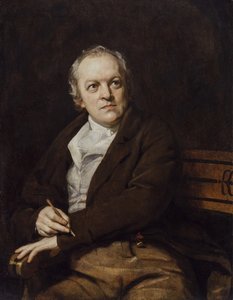
      William Blake

      William Blake

      1757 - 1827 , Wielka Brytania

      Najważniejsze informacje

      • Artistic Movement Or Style: Romanticizm
      • Artists Who Influenced This Artist:
        • Rafael
        • Michał Anioł
      • Date Of Birth: Londyn, Wielka Brytania (1757)
      • Date Of Death: Londyn, Wielka Brytania (1827)
      • Full Name: William Blake
      • Nationality: Brytyjski
      • Notable Artworks:
        • Pieśni Innocencji i Doświadczenia
        • Święcący Smok i Żona Ubierana na Słońce
        • Żądza i Jego Rodzina Odzyskuje Dobrobyt
      • Place Of Birth: Londyn
      Odkryj dzieła sztuki uporządkowane według tematów, stylów i cech charakterystycznych.