Gwarancja zwrotu pieniędzy · 100 dni Darmowa dostawa na cały świat
449 587dzieła sztuki 30 613artyści 4 660muzea 32język
Waluta
    Język
      Atelier · Est. 2015 · Paryż, Francja
      AllPaintingsStore
      allpaintingsstore.com
      Catalogue entry

      Glad Day

      Oil On Canvas.

      Fig. 1. William Blake, Glad Day. Shown as the reproduction you are specifying: , .

      § 1Catalogue data

      § 2Abstract

      Opis obiektu

      William Blake's 'Glad Day' depicts a joyful figure ascending amidst swirling skies – a vibrant symbol of spiritual awakening and Romantic idealism.

      Biografia artysty

      Poznaj wyjątkową twórczość Williama Blake'a - poeta i malarza romantyzmu! Jego dzieła pełne są symbolizmu, mistycyzmu i niezwykłej wizji świata. Odkryj jego dziedzictwo!

      § 3Commentary

      Glad Day by William Blake: A Vision of Joyful Ascension

      William Blake's "Glad Day," often referred to as "The Dance of Albion," is a captivating artwork that embodies the spirit of Romanticism and showcases Blake’s unique blend of artistic vision and profound symbolism. Created around 1803-1810, this piece transcends mere representation; it offers a glimpse into Blake's personal mythology and his exploration of spiritual awakening.

      Subject and Composition

      The central figure in "Glad Day" is a male form, often interpreted as Albion – a symbolic representation of England or humanity itself. He stands upon rocky formations that appear to float amidst a celestial landscape. The man's posture is dynamic; one arm reaches upwards towards the sky, while the other extends downwards, suggesting an act of offering or connection between earthly and divine realms. His wings, depicted in shades of blue, further emphasize his elevated state and potential for ascension. The composition is divided into distinct zones: a bright yellow area above, transitioning to red in the middle, and culminating in a dark blue/black base. This color scheme contributes significantly to the artwork's overall emotional impact.

      Style and Technique

      "Glad Day" exemplifies Blake’s distinctive artistic style – a fusion of neoclassical precision with Romantic expressiveness. He employed techniques such as etching and engraving, often incorporating hand-coloring to achieve vibrant hues and intricate details. The lines are bold yet graceful, creating a sense of movement and energy within the composition. Blake's use of color is particularly noteworthy; the yellows and reds evoke feelings of warmth, passion, and spiritual illumination, while the blues and blacks suggest depth, mystery, and the vastness of the cosmos. This combination creates a visually striking and emotionally resonant image.

      Symbolism and Interpretation

      The artwork is rich in symbolic meaning. Albion's upward gesture can be interpreted as an aspiration towards enlightenment or divine connection. The rocky landscape represents challenges overcome on the path to spiritual growth. The colors themselves carry symbolic weight: yellow often signifies intellect and clarity, red embodies passion and energy, and blue represents spirituality and transcendence. Some scholars suggest that the figure’s pose alludes to a dance – a celebration of life, freedom, and the union of body and spirit. Blake's personal mythology, interwoven with Christian and classical themes, adds layers of complexity to the artwork's interpretation.

      Emotional Impact and Legacy

      "Glad Day" evokes a sense of joy, liberation, and spiritual awakening. The vibrant colors and dynamic composition create an uplifting and inspiring atmosphere. Blake’s ability to convey profound philosophical ideas through visual imagery is remarkable. Today, "Glad Day" remains one of his most celebrated works, admired for its beauty, symbolism, and enduring message of hope and transcendence. It continues to inspire artists and art enthusiasts alike, solidifying William Blake's legacy as a visionary artist and poet.

      Pytania i odpowiedzi

      Jaka paleta barw została wykorzystana w „Glad Day” – William Blake?

      Paleta dzieła „Glad Day” – William Blake jest opisywana jako Earthy. Stanowi ona zwięzłe zestawienie barw użytych w pracy.

      Jaki jest dominujący kolor dzieła „Glad Day” – William Blake?

      Dominującym odcieniem w „Glad Day” – William Blake jest Golden Yellow Range.

      Jakie emocje budzi "Glad Day"?

      Emocjonalny ton przypisany do „Glad Day” – William Blake to Spiritual. Oddaje on emocje, jakie wyraża to dzieło.
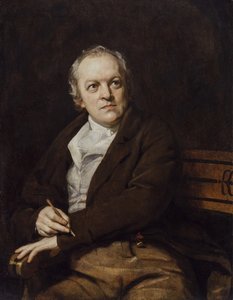
      § 4The artist

      William Blake

      William Blake

      1757 - 1827, Wielka Brytania

      Quick facts about William Blake

      • Artistic Movement Or Style: Romanticizm
      • Artists Who Influenced This Artist:
        • Rafael
        • Michał Anioł
      • Date Of Birth: Londyn, Wielka Brytania (1757)
      • Date Of Death: Londyn, Wielka Brytania (1827)
      • Full Name: William Blake
      • Nationality: Brytyjski
      • Notable Artworks:
        • Pieśni Innocencji i Doświadczenia
        • Święcący Smok i Żona Ubierana na Słońce
        • Żądza i Jego Rodzina Odzyskuje Dobrobyt
      • Place Of Birth: Londyn

      Biografia artysty

      William Blake - A Visionary’s Journey: The Life and Art of William Blake

      William Blake, born in London on November 28, 1757, was a figure perpetually out of step with his time, yet destined to become one of the most celebrated artists and poets of the Romantic Age. His life unfolded against the backdrop of a rapidly changing England—a world grappling with industrialization, political upheaval, and shifting spiritual beliefs. From humble beginnings as the son of a hosier, Blake’s early years were marked by an intensely vivid imagination and a propensity for visionary experiences that would profoundly shape his artistic trajectory. Though largely self-taught in formal academics, he received drawing instruction at a young age, quickly revealing a talent that hinted at the extraordinary path ahead. His apprenticeship with engraver James Basire proved pivotal, providing him not only with technical mastery but also an understanding of printmaking techniques he would later revolutionize. These early influences—the Gothic grandeur of Westminster Abbey, the classical forms of Raphael and Michelangelo—served as foundational elements in his developing aesthetic, though Blake was never one to remain bound by convention.

      Early Life and Artistic Training

      Blake’s formative years instilled within him a deep appreciation for both beauty and terror – sensations he would translate into unforgettable imagery throughout his artistic career. Despite lacking formal schooling, he possessed an innate aptitude for drawing, nurtured by encouragement from his father who recognized his son's exceptional talent. This early training honed his observational skills and established a bedrock of classical knowledge that informed his stylistic choices. His apprenticeship with James Basire, London’s leading engraver, was instrumental in developing his printmaking abilities—a craft he would elevate to an art form through his groundbreaking technique of illuminated printing. It wasn't merely copying existing designs; it demanded meticulous attention to detail and a profound understanding of tonal gradation, skills that would prove invaluable as he pursued his artistic vision.

      Illuminated Printing: A Revolutionary Technique

      Blake’s artistic innovation resided fundamentally in *how* he created—a departure from the prevailing methods of engraving prevalent during his era. Dissatisfied with conventional printing processes, he devised a unique method known as “illuminated printing,” which involved etching both text and illustrations onto copper plates before applying hand-colored inks to produce stunning prints. This wasn’t simply illustration accompanying poetry; it was an integrated art form where image and verse were inextricably linked, each enriching the meaning of the other. Blake's meticulous process demanded considerable labor—often taking weeks or months to complete—but it afforded him unparalleled artistic control over color, texture, and overall visual impact. This technique allowed for a level of expressive nuance unattainable through traditional methods, cementing his place as a pioneer in printmaking history. He skillfully combined etching with watercolor washes and gouache pigments, creating images that pulsed with vibrant hues and captivating detail—a stylistic hallmark that distinguishes his work from many of his contemporaries.

      Major Works and Artistic Style

      Blake’s oeuvre encompasses poetry, engravings, watercolors, drawings, and illuminated manuscripts—each reflecting his distinctive worldview and artistic sensibilities. Among his most celebrated works are *Songs of Innocence & Experience* (1794), a dual collection exploring themes of innocence and corruption through allegorical narratives; *The Marriage of Heaven & Hell* (1793), a provocative prose poem challenging societal morality with its embrace of energy, desire, and rebellion; and *Jerusalem*, an ambitious epic poem depicting a utopian vision of Albion—ancient name for Britain—inspired by biblical prophecy. His engravings are equally remarkable for their dramatic compositions, symbolic imagery, and masterful execution. Illustrations for Dante’s *Divine Comedy* exemplify his ability to translate complex literary narratives into powerful visual representations—a feat achieved through meticulous attention to detail and a deliberate rejection of linear perspective in favor of emotive symbolism. Blake's artistic style is characterized by its bold use of color, its incorporation of fantastical elements, and its unwavering commitment to conveying profound spiritual truths. He rejected the conventions of academic art, prioritizing imaginative vision over realistic representation—a stance that aligned him with the burgeoning Romantic movement and cemented his legacy as a visionary artist.

      Blake’s Enduring Influence

      Despite facing considerable obscurity during his lifetime, William Blake's influence on subsequent generations of artists and writers has proven to be profound. The Pre-Raphaelites, captivated by his stylistic innovations and symbolic depth, embraced him as a kindred spirit—drawing inspiration from his use of color, texture, and imaginative storytelling. Later movements—Symbolism and Modernism—found resonance in his exploration of psychological complexity and spiritual yearning—a testament to the enduring power of Blake’s artistic vision. Today, William Blake is recognized as a cornerstone of Romantic art, an artist whose uncompromising pursuit of creative freedom continues to inspire artists worldwide. His work serves as a reminder that true artistry lies not merely in technical skill but in conveying profound emotional truths—a legacy that transcends time and resonates powerfully with audiences across cultures.

      § 5Comparanda

      § 6Questions

      Najważniejsze informacje

      • Influences: Neoclassical style
      • Artistic style: Visionary, Romantic
      • Title: Glad Day
      • Movement: Romanticism

      Quiz o sztuce

      Do każdego pytania dotyczy tylko jedna poprawna odpowiedź.

      Pytanie 1:
      What artistic movement is William Blake most associated with?
      Pytanie 2:
      According to the description, what does the raised arm of the figure in 'Glad Day' likely symbolize?
      Pytanie 3:
      What is a notable characteristic of Blake’s artistic style as demonstrated in 'Glad Day'?
      Pytanie 4:
      What is the significance of the colors used in 'Glad Day', particularly the reds, blues, yellows, and greens?
      Pytanie 5:
      What is one key aspect of William Blake’s artistic vision, as highlighted in the description?

      § 7Cite this entry

      AllPaintingsStore.com, “William Blake, Glad Day”, https://allpaintingsstore.com/pl/art/william-blake-glad-day-7Z4Q69-en/ (accessed 2 Październik 2026).

      § 8The reproduction

      Ręcznie malowana reprodukcja olejowa

      Ręcznie malowany obraz olejny na płótnie, wykonany na zamówienie przez naszych artystów w wybranym przez Ciebie wymiarze i oprawie. ( Przełącz na wydania drukowane Przejdź do wersji cyfrowej)

      It is specified on the order sheet in the margin; the present state of that sheet reads as follows.

      Glad Day

      Technika reprodukcji

      Wymiary reprodukcji

      -

      Wybitny mistrz artystyczny

      Większa szczegółowość, finezja i dodatkowy czas na realizację

      -

      Opcje oprawy reprodukcji

      -

      -

      W przypadku dzieł sztuki lub reprodukcji, których którykolwiek z boków przekracza 105 cm (około 41 cali), rama zostanie wysłana w formie zestawu do samodzielnego montażu. Metoda ta zapewnia bezpieczną dostawę i zapobiega uszkodzeniom podczas transportu.

      Wymagany profesjonalny montaż – nie jest to produkt typu DIY.
      Zestaw musi zostać złożony, a płótno naciągnięte przez doświadczonego profesjonalnego ramiarza, przy użyciu kleju do drewna (brak w zestawie), kleszczy do naciągania płótna oraz ścisków, które utrzymają krosna w równej pozycji podczas schnięcia kleju. Nieprawidłowy montaż lub nierównomierne napięcie płótna może trwale uszkodzić dzieło sztuki i nie podlega naszej gwarancji.

      • W zestawie znajdują się wszystkie listwy z litego drewna, precyzyjnie docięte do wymiarów.

      • Montaż odbywa się przy użyciu dołączonych wkrętów oraz kleju do drewna do łączenia narożników, którego zestaw nie zawiera i który musi zostać dostarczony przez ramiarza.

      • Wymagane są profesjonalne narzędzia, których nie ma w zestawie: kleszcze do naciągania płótna (napinacz) oraz zaciski, które pozwolą utrzymać listwy w równej pozycji podczas schnięcia kleju.

      Ważne:
      Do połączenia narożników niezbędny jest klej do drewna, listwy należy unieruchomić za pomocą ścisków do momentu całkowitego wyschnięcia kleju, a naciągnięcie płótna na złożoną ramę wymaga użycia kleszczy do naciągania płótna. Żaden z tych elementów nie jest dołączony do zestawu. Przed zamówieniem tego rozmiaru zalecamy konsultację z doświadczonym ramiarzem.

      Etykieta obiektu

      -

      -

      Lakier ochronny

      Lakier z połyskiem (pogłębia kolory, chroni przed światłem i wilgocią)

      -

      Personalizacja dzieła

      Przykłady możliwości personalizacji: zastąp twarz zdjęciem klienta; dodaj zwierzę domowe (np. zamień kota na psa); umieść ukrytą wiadomość w tle; zmień krajobraz lub elementy tła.

      -

      Ekspresowa

      Dostawa na cały świat () w ciągu 3–4 tygodni zamiast standardowych 5 tygodni. (31 Październik). Bez kompromisów w kwestii jakości.

      -

      Przesyłka ekspresowa

      Dostawa na cały świat () w ciągu 5 tygodni. (7 Listopad).

      W cenie

      Cena całkowita

      zł 1002

      Included with every order

      • Bezpłatna ekspresowa wysyłka na cały świat
      • Wysokiej jakości płótno lniane
      • Pełne ubezpieczenie przesyłki
      • Gwarancja zwrotu należności celnych i podatków importowych
      • Gwarancja wiernego odwzorowania kolorów
      • 100-dniowa polityka zwrotów (tylko w przypadku wad)
      • Gwarancja 100% zwrotu pieniędzy
      • Zniżka przy zakupie wielu sztuk
      Order sheet