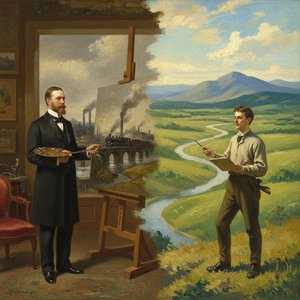
William Henry Crome: The Quiet Master of Norfolk’s Light
The Norwich School, a movement that profoundly shaped 19th-century British landscape painting, owes much to the dedication and singular vision of its members. Among them, William Henry Crome stands as a quietly powerful figure – a master of capturing the subtle nuances of Norfolk’s light and atmosphere, often overlooked in favor of his more celebrated brother, John. Born in Norwich on October 22nd, 1806, into a family deeply rooted in the city's artistic traditions, Crome’s journey was one marked by both personal tragedy and persistent creative pursuit.
Crome’s early life was inextricably linked to his father, John Crome, a respected artist known for his detailed depictions of Norwich’s streets and buildings. Tragically, John died when William was just fifteen years old, leaving the young artist with a profound sense of loss and a daunting responsibility – to continue his father's legacy. This early bereavement undoubtedly shaped Crome’s artistic sensibility, fostering a deep appreciation for the fleeting beauty of the natural world and an understanding of how light transforms familiar scenes.
Initially apprenticed to Francis Whisler, a house painter and sign maker, Crome quickly discovered his passion lay not in architectural embellishment but in capturing the essence of the Norfolk countryside. He found mentorship with John Opie, a prominent Romantic artist, and later benefited from the guidance of William Beechey, further honing his skills and expanding his artistic horizons. These connections exposed him to the prevailing trends of the time – particularly the influence of Dutch masters like Claude Lorrain, whose atmospheric landscapes provided a crucial foundation for Crome’s own style.
A Norfolk Vision: Subject Matter and Technique
Crome's paintings are defined by their intimate portrayal of Norfolk’s rural landscape. He eschewed grand vistas in favor of smaller, more contemplative scenes – glimpses of fields, streams, cottages, and the ever-present influence of the North Sea. Unlike his brother, who often depicted urban scenes, Crome focused almost exclusively on the countryside, creating a deeply personal and evocative record of his surroundings.
His technique is characterized by a remarkable sensitivity to light and color. Crome was particularly adept at capturing the subtle shifts in atmosphere – the hazy mornings, the golden afternoons, and the dramatic effects of rain or mist. He employed a delicate watercolor palette, layering washes of paint to create a sense of depth and luminosity. His brushwork is often loose and expressive, conveying a feeling of immediacy and spontaneity. He was known for his meticulous observation of detail, particularly in depicting textures – the rough bark of trees, the dampness of fields, and the weathered surfaces of cottages.
A key element of Crome’s style was his ability to imbue even the most ordinary scenes with a sense of quiet beauty. He wasn't interested in dramatic compositions or heroic subjects; instead, he sought to capture the simple pleasures of rural life – the tranquility of a summer afternoon, the warmth of a hearth fire, and the enduring connection between people and their land.
Influences and Development
Crome’s artistic development was shaped by a confluence of influences. As mentioned earlier, the Dutch masters, particularly Claude Lorrain, provided him with a foundational understanding of atmospheric perspective and color harmony. However, he also drew inspiration from Richard Wilson, another key figure in the Norwich School, whose depictions of the English countryside emphasized the sublime beauty of nature.
In his later years, Crome traveled to Brussels in 1854, seeking new artistic experiences and broadening his horizons. This trip exposed him to different landscapes and techniques, further refining his style and expanding his repertoire. He continued to paint prolifically throughout his life, producing a substantial body of work that reflects the changing seasons and moods of Norfolk.
Legacy and Historical Significance
Despite often being overshadowed by his more famous brother, William Henry Crome’s contribution to British landscape painting is significant. He was a key figure in the Norwich School, helping to establish a distinct regional style characterized by its sensitivity to light, color, and detail. His paintings offer a valuable glimpse into the lives of rural communities in 19th-century England, capturing both their beauty and their hardships.
Today, Crome’s work is held in public collections across Britain, including the Tate Gallery and the Norwich Castle Museum & Art Gallery. He remains an important figure in the history of British art, a testament to the power of observation, dedication, and a profound love for the natural world. His quiet mastery of light and atmosphere continues to resonate with viewers today, reminding us of the enduring beauty of Norfolk’s landscapes.


 Rozwiń treść


 Przełącz na wydania drukowane


 W przypadku dzieł sztuki lub reprodukcji, których którykolwiek z boków przekracza 105 cm (około 41 cali), rama zostanie wysłana w formie zestawu do samodzielnego montażu. Metoda ta zapewnia bezpieczną dostawę i zapobiega uszkodzeniom podczas transportu.