Gwarancja zwrotu pieniędzy · 100 dni Darmowa dostawa na cały świat
449 564dzieła sztuki 30 613artyści 4 660muzea 32język
Catalogue entry

Sloop, Bermuda

1899. Acrylic On Canvas. Metropolitan Museum of Art.

Fig. 1. Winslow Homer, Sloop, Bermuda, 1899. Shown as the reproduction you are specifying: , .

§ 1Catalogue data

§ 2Abstract

Opis obiektu

Biografia artysty

Winslow Homer (1836-1910): Ikoniczny amerykański realistyczny malarz słynący z obrazów morskich i krajobrazów XIX wieku. Odkryj arcydzieła takie jak "The Gulf Stream" i "Breezing Up".

§ 3Commentary

Sloop, Bermuda – A Watercolor Echo of Tranquility

Winslow Homer’s “Sloop, Bermuda,” housed within the Metropolitan Museum of Art’s impressive collection, isn't merely a depiction of a sailboat on the ocean; it’s an embodiment of American Romanticism distilled into a breathtaking watercolor. Created in 1899 during Homer’s prolific period, this painting transcends simple observation, inviting viewers to contemplate the sublime beauty found within everyday maritime life.

  • Subject Matter: The scene captures two boats – one larger and more dominant – gliding across a calm expanse of turquoise water. Scattered figures populate both vessels, engaged in leisurely activities; perhaps fishing or simply enjoying the invigorating sea breeze.
  • Artistic Style & Technique: Homer’s masterful use of watercolor exemplifies his signature style—characterized by soft tonal gradations and luminous washes that prioritize atmosphere over precise detail. The artist eschewed academic conventions, favoring instead a direct engagement with nature's textures and colors.

A small dog nestled near the smaller boat adds an element of warmth and domesticity to the composition, subtly reinforcing the theme of companionship and contentment. Homer’s deliberate brushstrokes convey a sense of stillness and serenity—a deliberate contrast to the turbulent narratives often explored in Romantic art.

Historical Context & The Spirit of Observation

Painted at the cusp of the 20th century, “Sloop, Bermuda” reflects Homer's unwavering commitment to portraying American life with honesty and sensitivity. He drew inspiration from his own experiences as a fisherman and illustrator, grounding his artistic vision in tangible observation. This approach aligns perfectly with the broader Romantic movement’s fascination with untamed landscapes and the profound connection between humanity and nature—a connection that Homer powerfully communicates through his watercolor.

  • Romantic Ideals: The painting embodies Romantic ideals of individualism, emotion, and reverence for the natural world. Homer's focus on capturing fleeting moments of beauty speaks to the movement’s belief in experiencing life fully and embracing its inherent contradictions.
  • Influence of Photography: Despite emerging during a period marked by advancements in photography—a medium capable of capturing reality with unprecedented accuracy—Homer deliberately avoided photographic realism, prioritizing instead expressive color and tonal variation.

Symbolism & Emotional Resonance

"Sloop, Bermuda" operates on multiple levels of symbolic meaning. The sea itself represents vastness, freedom, and the unknown – themes central to Romantic thought. The boats symbolize human endeavor and aspiration, albeit tempered by a quiet appreciation for the present moment. Homer’s masterful rendering of light and shadow contributes significantly to the painting's emotional impact, evoking feelings of peace, tranquility, and nostalgia.

Considered alongside other notable works like “Channel Bass” and “Four Boys on a Beach,” Homer’s “Sloop, Bermuda” stands as a testament to his enduring legacy—a celebration of American artistry and a poignant reminder that beauty can be found in the simplest of scenes. For those seeking to experience this masterpiece firsthand or acquire a stunning reproduction, AllPaintingsStore.com offers exceptional handmade oil painting reproductions of Homer’s celebrated pieces.

Pytania i odpowiedzi

Jaki poziom kontrastu prezentuje „Sloop, Bermuda” – Winslow Homer?

Kontrast jasności w dziele "Sloop, Bermuda" wynosi Bold. Kontrast określa stopień zróżnicowania między obszarami jasnymi a ciemnymi.

Jaka paleta i dominujący kolor definiują "Sloop, Bermuda"?

Kolorystyka dzieła „Sloop, Bermuda” – Winslow Homer: paleta Neutrals, w której dominuje Gray (#8b9c9e).

W którym roku powstało „Sloop, Bermuda” – Winslow Homer?

„Sloop, Bermuda” – Winslow Homer powstało w 1899.
§ 4The artist

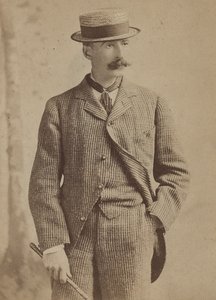
Winslow Homer

Winslow Homer

1836 - 1910, Stany Zjednoczone

Quick facts about Winslow Homer

  • Artistic Movement Or Style: Realizm amerykański
  • Artists Or Movements Influenced By This Artist: ['Amerykańskie malarstwo']
  • Artists Who Influenced This Artist:
    • École de Barbizon
    • Courbet
    • Millet
  • Date Of Birth: 24 lutego 1836
  • Date Of Death: 29 września 1910
  • Full Name: Winslow Homer
  • Nationality: Amerykański
  • Notable Artworks:
    • Breezing Up
    • The Gulf Stream
    • Innocence
  • Place Of Birth: Boston, USA

Biografia artysty

Winslow Homer (1836-1910): A Brush With the American Spirit

Winslow Homer, born in Boston in 1836, wasn’t sculpted by the traditional European art academies that shaped so many of his contemporaries. Instead, he emerged from a distinctly American experience, one rooted in practicality and observation. His journey began not with grand historical canvases, but as a commercial illustrator at the tender age of twelve for Harper's Weekly. This early apprenticeship was formative, honing an exceptional ability to capture scenes with clarity and detail – skills that would become hallmarks of his mature work. He wasn’t learning perspective in Paris; he was learning to *see* America, its people, and its unfolding story. The bustling streets of Boston, the quiet dignity of rural New England life, these were his first subjects, rendered with a precision born of necessity for the demands of print media. This foundation allowed him to transition into painting, initially in watercolor, before fully embracing the expressive potential of oil paints.

Early Life and Artistic Beginnings

Homer’s childhood was marked by a close relationship between his parents—Charles Savage Homer, a merchant with restless tendencies, and Henrietta Maria Benson Homer, a gifted amateur watercolorist who instilled in him a lifelong appreciation for artistic expression. His brother, Charles S. Homer Jr., pursued a successful career as a chemist, providing a contrasting perspective on the family’s ambitions. From a young age, Homer demonstrated an innate talent for drawing, sketching landscapes and portraits with remarkable accuracy. He began his formal artistic training at fourteen, studying briefly in Paris under Jean-Baptiste Camille Corot—a pivotal experience that exposed him to the Impressionist movement but ultimately solidified his commitment to a distinctly American aesthetic. This Parisian sojourn instilled in Homer a fascination with light and color, influencing his later paintings and establishing a foundation for his distinctive style.

The Civil War Years: Witnessing History Through Art

The outbreak of the Civil War profoundly impacted Homer’s artistic vision. Recognizing the opportunity to document the realities of conflict—rather than glorifying heroic battles—he accepted a commission from Harper's Weekly to chronicle life on the Union front lines. Unlike many artists of his time who idealized warfare, Homer eschewed grand narratives and focused instead on portraying the everyday experiences of soldiers and civilians—the quiet moments of grief, resilience, and camaraderie amidst devastation. His sketches and lithographs captured the grim beauty of battlefields—the mud, the smoke, the exhausted faces of men—offering a visceral portrayal of the human cost of war. This experience instilled in him an unwavering commitment to portraying truthfulness and compassion—values that would permeate his subsequent works. Homer’s Civil War drawings stand as unparalleled examples of journalistic art, demonstrating his ability to transform observation into powerful visual storytelling.

From Watercolor Landscapes to Monumental Oil Paintings

Initially experimenting with watercolor, Homer quickly mastered the medium's fluidity and luminosity, creating a prolific oeuvre of serene landscapes—primarily set in Maine—that celebrated the majesty of nature and captured the subtle nuances of light and atmosphere. His watercolors are characterized by delicate brushstrokes and vibrant colors—a testament to his meticulous attention to detail and his profound understanding of visual perception. However, Homer’s artistic ambition extended beyond watercolor; he sought to convey emotion and drama through larger canvases painted in oil. He achieved this goal with remarkable success, producing monumental paintings that commanded attention and evoked powerful responses from viewers. Works like *The Gulf Stream*—a dramatic depiction of a lone sailor battling the fury of the ocean—and *Breezing Up (A Fair Wind)*—a celebration of maritime life—demonstrate Homer’s mastery of technique and his ability to capture the sublime beauty of nature alongside its inherent dangers.

Legacy and Influence: An American Icon

Winslow Homer's enduring legacy rests on his unwavering commitment to portraying America with honesty and authenticity—rejecting romantic idealism in favor of a direct engagement with reality. He established himself as one of America’s foremost painters, influencing generations of artists who followed him—particularly those committed to realism and landscape painting. His distinctive style—characterized by solidity, texture, and masterful use of light—continues to inspire contemporary artists today. Homer's paintings remain treasured for their emotional depth and visual power—testaments to his profound understanding of the human condition and his ability to convey complex ideas through simple yet evocative imagery. He is remembered not merely as a painter but as a chronicler of American life, capturing its spirit and beauty with unwavering conviction.

§ 5Comparanda

§ 6Questions

Najważniejsze informacje

  • Influences: Hudson River School
  • Subject or theme: Coastal seascape; leisure activities
  • Location: The Metropolitan Museum of Art
  • Year: 1899
  • Artistic style: Serene, observational

Quiz o sztuce

Do każdego pytania dotyczy tylko jedna poprawna odpowiedź.

Pytanie 1:
What artistic style is Winslow Homer primarily known for?
Pytanie 2:
The watercolor technique employed by Homer in Sloop, Bermuda emphasizes:
Pytanie 3:
What is notable about Homer's depiction of a dog in Sloop, Bermuda?
Pytanie 4:
Where is Sloop, Bermuda housed?
Pytanie 5:
What role did Harper's Weekly play in Homer’s early artistic development?

§ 7Cite this entry

AllPaintingsStore.com, “Winslow Homer, Sloop, Bermuda (1899)”, https://allpaintingsstore.com/pl/art/winslow-homer-sloop-bermuda-8BX2QE-en/ArtistReproduction/ (accessed 5 Październik 2026).

§ 8The reproduction

Ręcznie malowana reprodukcja olejowa

Ręcznie malowany obraz olejny na płótnie, wykonany na zamówienie przez naszych artystów w wybranym przez Ciebie wymiarze i oprawie. ( Przełącz na wydania drukowane Przejdź do wersji cyfrowej)

It is specified on the order sheet in the margin; the present state of that sheet reads as follows.

Sloop, Bermuda

Technika reprodukcji

Wymiary reprodukcji

-

Wybitny mistrz artystyczny

Większa szczegółowość, finezja i dodatkowy czas na realizację

-

Opcje oprawy reprodukcji

-

-

W przypadku dzieł sztuki lub reprodukcji, których którykolwiek z boków przekracza 105 cm (około 41 cali), rama zostanie wysłana w formie zestawu do samodzielnego montażu. Metoda ta zapewnia bezpieczną dostawę i zapobiega uszkodzeniom podczas transportu.

Wymagany profesjonalny montaż – nie jest to produkt typu DIY.
Zestaw musi zostać złożony, a płótno naciągnięte przez doświadczonego profesjonalnego ramiarza, przy użyciu kleju do drewna (brak w zestawie), kleszczy do naciągania płótna oraz ścisków, które utrzymają krosna w równej pozycji podczas schnięcia kleju. Nieprawidłowy montaż lub nierównomierne napięcie płótna może trwale uszkodzić dzieło sztuki i nie podlega naszej gwarancji.

  • W zestawie znajdują się wszystkie listwy z litego drewna, precyzyjnie docięte do wymiarów.

  • Montaż odbywa się przy użyciu dołączonych wkrętów oraz kleju do drewna do łączenia narożników, którego zestaw nie zawiera i który musi zostać dostarczony przez ramiarza.

  • Wymagane są profesjonalne narzędzia, których nie ma w zestawie: kleszcze do naciągania płótna (napinacz) oraz zaciski, które pozwolą utrzymać listwy w równej pozycji podczas schnięcia kleju.

Ważne:
Do połączenia narożników niezbędny jest klej do drewna, listwy należy unieruchomić za pomocą ścisków do momentu całkowitego wyschnięcia kleju, a naciągnięcie płótna na złożoną ramę wymaga użycia kleszczy do naciągania płótna. Żaden z tych elementów nie jest dołączony do zestawu. Przed zamówieniem tego rozmiaru zalecamy konsultację z doświadczonym ramiarzem.

Etykieta obiektu

-

-

Lakier ochronny

Lakier z połyskiem (pogłębia kolory, chroni przed światłem i wilgocią)

-

Personalizacja dzieła

Przykłady możliwości personalizacji: zastąp twarz zdjęciem klienta; dodaj zwierzę domowe (np. zamień kota na psa); umieść ukrytą wiadomość w tle; zmień krajobraz lub elementy tła.

-

Ekspresowa

Dostawa na cały świat () w ciągu 3–4 tygodni zamiast standardowych 5 tygodni. (2 Listopad). Bez kompromisów w kwestii jakości.

-

Przesyłka ekspresowa

Dostawa na cały świat () w ciągu 5 tygodni. (9 Listopad).

W cenie

Cena całkowita

zł 1005

Included with every order

  • Bezpłatna ekspresowa wysyłka na cały świat
  • Wysokiej jakości płótno lniane
  • Pełne ubezpieczenie przesyłki
  • Gwarancja zwrotu należności celnych i podatków importowych
  • Gwarancja wiernego odwzorowania kolorów
  • 100-dniowa polityka zwrotów (tylko w przypadku wad)
  • Gwarancja 100% zwrotu pieniędzy
  • Zniżka przy zakupie wielu sztuk
Order sheet