

- Início

- Impressão em tela
- Felipe Bigarny
- Main Altar

 Preview
 Enviar
 Compartilhar
 Detalhes da obra

 Baixar
 Semelhantes
 Raio X
 Slideshow
Main Altar


 Ver mais
Giclê / Impressão de Arte
Impressão giclée ou em tela de qualidade de museu, com produção rápida e opções flexíveis de acabamento. ( Switch to hand made Painting Switch to Image)




































Escolha entre os nossos tamanhos pré-definidos que respeitam as proporções originais da obra de arte.

Você pode inserir suas próprias dimensões para se ajustar a uma moldura ou espaço específico. Se o tamanho selecionado não corresponder às proporções da imagem original, iremos recortar a obra de arte ou estender a imagem com uma borda espelhada ou preenchimento sólido. Um mockup digital será enviado para sua aprovação antes do início da produção.
Por favor, observe que a visualização na tela não reflete o recorte ou a extensão real. Apenas o mockup mostrará com precisão a composição final.
Embora tamanhos personalizados estejam disponíveis, recomendamos selecionar uma dimensão da lista predefinida para preservar as proporções originais.
Entrega mundial () em 2 semanas, em vez das 4/5 semanas padrão. (28 Julho)

Envio Expresso Gratuito para todo o Mundo

Tela de Linho Premium

Seguro de envio completo

Garantia de Reembolso de Impostos Alfandegários

Garantia de Fidelidade de Cores

Política de Devolução de 60 Dias (Apenas para Defeitos)

Garantia de 100% de Reembolso

Desconto para múltiplas unidades
 A opção de vidro está disponível apenas para tamanhos inferiores a 110 cm

Main Altar
Giclê / Impressão de Arte
Dimensões da Reprodução
-


Preço Total Final
$ 64
Obras Relacionadas


Biografia do Artista
The Sculptor of the Spanish Renaissance
In the grand tapestry of the Spanish Renaissance, few names resonate with as much structural and artistic authority as Felipe Bigarny. A master whose hands shaped the very soul of Spanish sacred spaces, Bigarny was far more than a mere carver of stone; he was an architect of devotion and a bridge between the fading echoes of the Gothic era and the burgeoning light of the Renaissance. Born in Langres, Burgundy, around 1475, his early life was marked by a nomadic artistic education that would eventually define his unique aesthetic. His youth took him to Italy, where the air of Rome likely instilled in him the classical proportions and anatomical precision that would later breathe life into his Spanish commissions. This profound synthesis of Flemish detail, Burgundian tradition, and Italian grace allowed him to transcend local styles, creating a visual language that felt both intimately familiar to the Spanish faithful and strikingly modern.
The trajectory of Bigarny’s career shifted irrevocably in 1498 when, at the age of twenty-three, he embarked on the pilgrimage to Santiago de Compostela. This journey led him to settle in Burgos, a city that would become the stage for his greatest triumphs. It was here that his technical mastery first captured the attention of the ecclesiastical elite. His execution of the incredibly precise reliefs within the main retrochoir of the Burgos Cathedral served as a definitive calling card, establishing him not just as a skilled artisan, but as the preeminent sculptor of his generation. This prestige soon paved his way to the highest echelons of Spanish power, leading to his appointment as the master sculptor and carver for one of Spain's most significant religious landmarks.
A Legacy Carved in Stone and Wood
Bigarny’s professional life was characterized by an extraordinary industriousness that allowed him to operate several studios simultaneously. This organizational brilliance enabled him to undertake massive, multi-decade projects for the Crown of Castile, effectively shaping the visual identity of a nation. His work was remarkably versatile, spanning various sculptural genres and mediums; he moved with equal grace between the rugged permanence of stone and the delicate, emotive potential of polychromed wood. This versatility ensured that his influence permeated every corner of Spanish liturgical art, from grand altarpieces to intimate devotional figures.
His most significant architectural and sculptural contributions can be seen in several monumental sites:
- Toledo Cathedral: In 1499, under the patronage of Cardinal Archbishop Francisco Jiménez de Cisneros, Bigarny designed the fundamental structure of the cathedral's main altarpiece. His work on this project, including the creation of figures such as Saint Mark the Evangelist, showcased his ability to manage complex, large-scale theological narratives through sculpture.
- University of Salamanca: During the early 16th century, he expanded his reach by producing a series of profound sculptures for the university's altarpiece, including depictions of Saint Augustine, Saint Barbara, and Saint Jerome, further cementing his role as a primary educator of the visual arts through his work.
- Palencia Cathedral: His involvement in the chapel of the sanctuary at Palencia demonstrated his role as a director of artistic vision. While much of the heavy labor was delegated to his skilled studio, Bigarny personally oversaw the most vital elements, meticulously sculpting the faces and hands to ensure the emotional resonance of the work remained true to his hand.
The Architect of an Era
Beyond the chisel, Bigarny functioned as an architect, a role that required him to understand the spatial relationship between sculpture and the structures they inhabited. This dual mastery allowed him to create works that were not merely placed within buildings but were integral to their very architecture. His ability to blend the intricate, almost overwhelming detail of the Flemish style with the balanced, harmonious compositions of the Italian Renaissance created a tension that defined the Spanish aesthetic of the 16th century. He brought a sense of movement and humanism to religious iconography, making the divine feel tangible and present.
By the time of his death in 1542, Felipe Bigarny had achieved a level of wealth and renown that few artists of his era could claim. His legacy is not found merely in individual statues, but in the very atmosphere of the great Spanish cathedrals. Through his tireless work for the Church and the Crown, he helped transition Spain from the medieval mindset into the modern age, leaving behind a monumental heritage of stone and wood that continues to inspire awe in all who walk through the shadows of his masterpieces.

Felipe Bigarny
1475 - 1542 , Spain
Informações Rápidas
- Artistic Movement Or Style: Renaissance
- Artists Or Movements Influenced By This Artist:
- Flemish Renaissance
- Burgundian Renaissance
- Artists Who Influenced This Artist: ['Lodovico Mazzolino']
- Date Of Birth: ca. 1475
- Date Of Death: 1542
- Full Name: felipe bigarny
- Nationality: Spanish
- Notable Artworks:
- Main Altar
- Circumcision
- Place Of Birth: Toledo, Spain
Artigos Relacionados

Theatricality & Triumph: Baroque Drama in Painting & Sculpture
Explore the dramatic world of Baroque art! Discover its history, defining characteristics, & lasting influence on painting & sculpture. Expert insights into Caravaggio, Zurbarán, and Bernini – plus high-quality reproductions at AllPaintingsStore.

The Golden Age Reforged: Dramatic Realism & Religious Zeal in Spanish Baroque Art
Explore the dramatic world of Spanish Baroque art! Discover masters like Zurbarán & the powerful influence of religious zeal on painting techniques – a guide for collectors and enthusiasts.

Luca della Robbia: Renaissance Sculpture & the Innovation of Terracotta Glazing
Discover the innovative terracotta glazing techniques of Luca della Robbia, a Renaissance master sculptor. Explore his iconic works, legacy, and collecting tips with AllPaintingsStore.

As 10 Obras em Bronze Mais Icônicas que Transformaram a História da Arte | AllPaintingsStore
Descubra as 10 esculturas em bronze mais influentes da história! Explore a arte de Rodin, Michelangelo e outros mestres. Reproduções de alta qualidade para decorar sua casa com elegância. AllPaintingsStore.
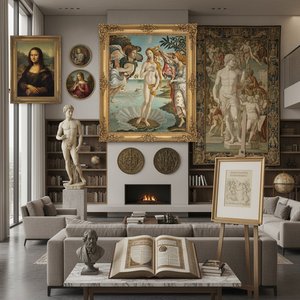
Renascimento Humanista: 10 Obras-Primas que Moldaram a Arte Moderna | AllPaintingsStore
Descubra as 10 obras-primas do Renascimento Humanista! Explore a história de Leonardo da Vinci, Michelangelo e Rafael. Encontre reproduções de arte exclusivas para decorar sua casa com elegância. AllPaintingsStore: beleza atemporal ao seu alcance.



