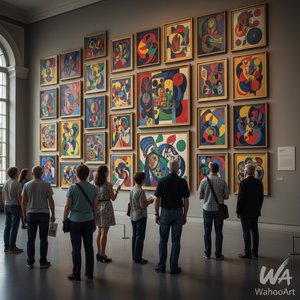
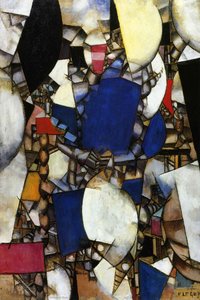
1914. Acrylic On Canvas, 80.0 x 65.0 cm.

§ 1Dados do catálogo

- 80.0 x 65.0 cm


§ 2Abstrato
Descrição do Item
Fernand Léger’s "Composition VIII" embodies the energy of industrial progress through bold geometric shapes and vibrant hues—a cornerstone of abstract expressionism.
 Ler mais
Biografia do Artista
Descubra Fernand Léger (1881-1955): Pioneiro do Cubismo & 'Tubismo'! Explore obras vibrantes que celebram a vida moderna, máquinas e a forma humana – um precursor da Pop Art.
§ 3Comentário
Fernand Léger’s “Composition VIII”: A Symphony of Steel and Soul
Fernand Léger’s “Composition VIII,” completed in 1914, stands as an emblem of the burgeoning Expressionist movement and a profound reflection on the transformative influence of industrialization upon artistic sensibilities. Painted during a period marked by unprecedented technological advancements – the rise of automobiles, factories churning out goods at breathtaking speed – Léger sought to distill the frenetic energy of this new era into a visual vocabulary that transcended mere imitation.
- Subject Matter: The canvas explodes with geometric forms—circles, squares, triangles—arranged in a dynamic interplay of overlapping planes. These shapes aren’t merely decorative; they represent abstracted representations of machinery – pistons, gears, wheels – capturing the rhythm and repetition inherent in industrial production.
- Style: Léger’s style is undeniably Expressionist, prioritizing emotional impact over meticulous realism. He abandons traditional perspective, opting instead for a flattened surface that emphasizes the materiality of pigment and creates a sense of immediacy and unrestrained energy.
- Technique: Léger employed a bold palette dominated by yellows, oranges, reds, and blacks—colors deliberately chosen to convey heat, movement, and dissonance. His technique involved applying paint thickly onto canvas, layering colors and textures to build up sculptural surfaces that resist conventional notions of flatness.
Historical Context: Léger’s artistic endeavors coincided with the burgeoning anxieties surrounding the rapid pace of industrial progress. Artists like Picasso and Matisse were grappling with similar questions about how to depict the modern world, rejecting academic conventions in favor of subjective expression. “Composition VIII” embodies this spirit of rebellion against established norms.
- Symbolism: The geometric shapes themselves carry symbolic weight, representing not only machines but also fundamental principles of order and chaos—the forces shaping human civilization. Léger’s deliberate use of contrasting colors underscores the tension between beauty and ugliness, harmony and discord – mirroring the complexities of life in the industrialized age.
Emotional Impact: Viewing “Composition VIII” evokes a visceral response—a feeling of disorientation mingled with exhilaration. Léger’s masterful manipulation of color and texture compels the viewer to confront the unsettling grandeur of the machine age, prompting contemplation on its transformative effects on human experience. It's a painting that refuses easy categorization, demanding engagement and rewarding repeated observation.
Interior Designer Considerations: “Composition VIII” lends itself beautifully to interior spaces seeking a bold statement piece. Its vibrant hues and sculptural surfaces can inject energy into minimalist interiors or serve as a counterpoint to ornate baroque styles—creating an unforgettable visual dialogue.
Perguntas e Respostas
As cores de "Contrast of forms", de Fernand Léger são saturadas ou suaves?
As cores de "Contrast of forms", de Fernand Léger possuem uma saturação Balanced Soft. A saturação descreve o quão vívidas ou suaves são as cores.
Quão harmoniosas são as cores de "Contrast of forms", de Fernand Léger?
"Contrast of forms", de Fernand Léger apresenta uma harmonia de cores Discordant Palette.
Posso examinar "Contrast of forms" com mais detalhes?
A visualização em Raio-X de "Contrast of forms", de Fernand Léger está disponível na página Raio X da obra: um exame interativo da imagem através de onze camadas ópticas.





 Alternar para Impressão


 Para obras de arte ou reproduções com mais de 105 cm (aproximadamente 41 polegadas) em qualquer um dos lados, a moldura será enviada como um kit desmontado. Este método garante uma entrega segura e evita danos durante o transporte.