Garantia de Reembolso · 100 dias Entrega gratuita para todo o mundo
449.582obras de arte 30.618artistas 4.705museus 32idiomas
Moeda
    Idioma
      Ateliê · Desde 2015 · Paris, França
      AllPaintingsStore
      allpaintingsstore.com
      Visualizar em escala Visualizar em RA Alternar para Impressão Ver Imagem Digital Enviar
      Ver detalhes Guia de Obras do Aluno Adicionar aos favoritos Baixar imagem Semelhantes Raio X Apresentação de slides Estatísticas

      The Sphinx

      Gustave Moreau's 'The Sphinx' is a mesmerizing Symbolist masterpiece blending myth and mystery. Explore its intricate composition, vibrant colors, and profound symbolism – a captivating journey into the artist’s dreamlike world.

      Explore a obra singular de Gustave Moreau (1826-1898), mestre do simbolismo francês! Mitologia, religião e sonhos em pinturas exuberantes e enigmáticas. Influenciou Matisse & Rouault.

      Reprodução em Óleo Feita à Mão

      Óleo sobre tela pintado à mão no tamanho e moldura de sua escolha, feito sob encomenda pelos nossos artistas. ( Alternar para Impressão Ver Imagem Digital)

      Corner sample of the P118B picture frame: moulded polystyrene, 5 cm wide and 3 cm thick
      P118B 10
      Corner sample of the P118H picture frame: moulded polystyrene, 5 cm wide and 3 cm thick
      P118H 10
      Corner sample of the P118W picture frame: moulded polystyrene, 5 cm wide and 3 cm thick
      P118W 10
      Corner sample of the P438Z picture frame: moulded polystyrene, 5.5 cm wide and 3.5 cm thick
      P438Z 10
      Corner sample of the P508JH picture frame: moulded polystyrene, 7 cm wide and 3.5 cm thick
      P508JH 12
      Corner sample of the P508YH picture frame: moulded polystyrene, 7 cm wide and 3.5 cm thick
      P508YH 12
      Corner sample of the P805H picture frame: moulded polystyrene, 5 cm wide and 3.5 cm thick
      P805H 10
      Corner sample of the P805Z picture frame: moulded polystyrene, 5 cm wide and 3.5 cm thick
      P805Z 10
      Corner sample of the P919BZ picture frame: moulded polystyrene, 7 cm wide and 3.5 cm thick
      P919BZ 10
      Corner sample of the P919G picture frame: moulded polystyrene, 7 cm wide and 3.5 cm thick
      P919G 10
      Corner sample of the P919XJ picture frame: moulded polystyrene, 7 cm wide and 3.5 cm thick
      P919XJ 10
      Corner sample of the P959ZH picture frame: moulded polystyrene, 5 cm wide and 3 cm thick
      P959ZH 10
      Corner sample of the P968JZ picture frame: moulded polystyrene, 6 cm wide and 4 cm thick
      P968JZ 12
      Corner sample of the W106C picture frame: solid wood, 5 cm wide and 3 cm thick
      W106C 8
      Corner sample of the W218G picture frame: solid wood, 5 cm wide and 3 cm thick
      W218G 10
      Corner sample of the W218JH picture frame: solid wood, 5 cm wide and 3 cm thick
      W218JH 8
      Corner sample of the W218Y picture frame: solid wood, 5 cm wide and 3 cm thick
      W218Y 10
      Corner sample of the W307PJ picture frame: solid wood, 6 cm wide and 3 cm thick
      W307PJ 10
      Corner sample of the W316G picture frame: solid wood, 6 cm wide and 3 cm thick
      W316G 10
      Corner sample of the W316PJ picture frame: solid wood, 6 cm wide and 3 cm thick
      W316PJ 8
      Corner sample of the W316Y picture frame: solid wood, 6 cm wide and 3 cm thick
      W316Y 10
      Corner sample of the W398PJ picture frame: solid wood, 5 cm wide and 3 cm thick
      W398PJ 8
      Corner sample of the W4111J picture frame: solid wood, 6.5 cm wide and 3.5 cm thick
      W4111J 10
      Corner sample of the W500HY picture frame: solid wood, 7 cm wide and 5 cm thick
      W500HY 15
      Corner sample of the W500JH picture frame: solid wood, 7 cm wide and 5 cm thick
      W500JH 15
      Corner sample of the W692G picture frame: solid wood, 8 cm wide and 4 cm thick
      W692G 12
      Corner sample of the W849H picture frame: solid wood, 5 cm wide and 3 cm thick
      W849H 8
      Corner sample of the W940BG picture frame: solid wood, 7.5 cm wide and 4.5 cm thick
      W940BG 15
      Corner sample of the W953PJ picture frame: solid wood, 6 cm wide and 3.5 cm thick
      W953PJ 8

      Padrão
      sob medida
      CM
      INCH

      Escolha entre os nossos tamanhos pré-definidos que respeitam as proporções originais da obra de arte.

      largura
      altura

      Pode inserir as suas próprias dimensões para se adequar a uma moldura ou espaço específico. Se o tamanho selecionado não corresponder às proporções da imagem original, iremos cortar a obra de arte ou estender a pintura com elementos adicionais pintados à mão. Um esboço digital será enviado para sua aprovação antes do início da produção.
      Tenha em atenção que a pré-visualização no ecrã não reflete o corte ou extensão real. Apenas o esboço mostrará com precisão a composição final.
      Embora tamanhos personalizados estejam disponíveis, recomendamos selecionar uma dimensão da lista predefinida para preservar as proporções originais.

      Exemplos do que pode ser personalizado: Substituir o rosto pela foto do cliente; Adicionar um animal de estimação (ex: substituir gato por cão); Incluir uma mensagem oculta no fundo; Alterar a paisagem ou elementos do fundo.
      Após o pedido, a equipa AllPaintingsStore.com enviará um e-mail ao cliente para solicitar instruções e fornecer uma prévia do esboço.

      Entrega mundial () em 3 a 4 semanas, em vez das 5 semanas padrão. (9 Outubro). Sem comprometer a qualidade.

      Envio expresso gratuito para todo o mundo
      Tela de Linho Premium
      Seguro de transporte total
      Garantia de Reembolso de Impostos Alfandegários
      Garantia de Fidelidade de Cor
      Política de Devolução em 100 Dias (Apenas para Defeitos)
      Garantia de reembolso de 100%
      Desconto para múltiplas unidades

      Preço Total

      € 222

      The Sphinx

      Técnica de Reprodução

      Dimensões da Reprodução

      -

      Preço Total

      € 222

      Detalhes Rápidos

      • Artistic style: Dreamlike, allegorical
      • Title: The Sphinx
      • Medium: Oil on canvas
      • Year: 1864
      • Subject or theme: Mystery, intrigue
      • Notable elements: Mythological figures
      • Movement: Symbolism

      Teste de Conhecimentos Artísticos

      Cada pergunta possui apenas uma resposta correta.

      Questão 1:
      What is the primary symbolic representation depicted in Gustave Moreau’s ‘The Sphinx’?
      Questão 2:
      In what artistic movement is Gustave Moreau primarily associated?
      Questão 3:
      What material was the Sphinx depicted in ‘The Sphinx’ primarily created from?
      Questão 4:
      According to the description, what is the Sphinx's posture and location within the painting?
      Questão 5:
      The painting ‘The Sphinx’ was created in which year?

      A Dream Weaver’s Vision: Introducing The Sphinx

      Gustave Moreau's The Sphinx, painted in 1864, isn’t merely a depiction of the legendary creature; it’s an immersion into a realm of potent myth and deeply personal symbolism. This captivating work, housed within the Clemens-Sels-Museum in Neuss, Germany, stands as a cornerstone of the Symbolist movement – a period defined by its rejection of realism in favor of exploring the hidden depths of the human psyche and the power of allegory. Moreau, a master of evocative imagery and layered meaning, invites us into a world where gods and mortals intertwine, and mysteries linger just beyond our grasp.

      The Sphinx by Gustave Moreau

      Decoding the Symbol: The Sphinx as Guardian

      Moreau’s Sphinx isn't a straightforward representation of the ancient Greek beast; it’s a carefully constructed embodiment of enigma and protection. Seated atop a rugged, almost primordial cliff face overlooking an endless expanse of ocean, she embodies a watchful guardianship. Her wings, reminiscent of both angels and birds of prey, suggest a connection to the divine yet also hint at a predatory instinct. The figures surrounding her – angelic forms and other mythological creatures – aren’t merely decorative; they contribute to the painting's atmosphere of otherworldly wonder and underscore the Sphinx’s role as a gatekeeper between realms.

      The central mystery lies in what she guards. While the exact nature of this secret remains deliberately obscured, it speaks to the core themes of Moreau’s Symbolist work: the pursuit of hidden knowledge, the confrontation with the unknown, and the inherent ambiguity of existence. The composition itself is meticulously crafted – a deliberate layering of visual cues designed to stimulate interpretation and contemplation.

      A Masterclass in Symbolism: Technique and Influence

      Moreau’s technique is as captivating as his subject matter. Executed in oil on canvas, the painting showcases his mastery of rich color palettes—deep blues, ochres, and greens—and intricate brushwork that creates a palpable sense of texture and depth. He employs a technique reminiscent of Renaissance masters like Mantegna, imbuing the scene with an archaic quality while simultaneously forging a distinctly modern Symbolist aesthetic. The use of muted tones and carefully placed highlights draws the viewer’s eye to key elements, guiding their gaze through the complex composition.

      The Sphinx profoundly influenced subsequent generations of artists, including Matisse and Rouault, who were drawn to Moreau's ability to infuse everyday subjects with symbolic weight. It stands as a testament to his pioneering role in shaping the Symbolist movement and his enduring legacy as a visionary artist.

      Beyond the Canvas: Context and Legacy

      Considered one of Moreau’s earlier works, The Sphinx foreshadows the more elaborate and intensely personal symbolism that would characterize his later paintings. It's important to note that Moreau was deeply influenced by mythology, religion, and literature—particularly the works of Dante and Shakespeare—and these influences permeate his art. His fascination with the darker aspects of human experience – loss, despair, and the struggle for meaning – is powerfully conveyed through this evocative image.

      Today, reproductions of The Sphinx offer a unique opportunity to bring Moreau’s dreamlike world into your home or office. AllPaintingsStore offers meticulously hand-painted reproductions that capture the painting's original beauty and symbolic depth, allowing you to experience the power of this iconic artwork firsthand.

      Perguntas e Respostas

      Que técnica e estilo caracterizam "The Sphinx" de Gustave Moreau?

      Em "The Sphinx", a técnica de Acrylic On Canvas encontra o movimento Symbolist Painting.

      Quem criou "The Sphinx"?

      "The Sphinx" é atribuída a Gustave Moreau.

      Como as cores de "The Sphinx" de Gustave Moreau se relacionam com a sua emoção?

      Em "The Sphinx", cores de Earthy acompanham um sentimento Mysterious.

      Com que idade Gustave Moreau criou "The Sphinx"?

      Gustave Moreau tinha 38 anos quando criou "The Sphinx" em 1864. A idade é calculada a partir do ano de nascimento do artista, 1826.

      Como o contraste e a harmonia se combinam em "The Sphinx"?

      Em "The Sphinx", um Statement contraste é acompanhado por uma Strong Color Unity harmonia.

      "The Sphinx" de Gustave Moreau é uma pintura, um desenho ou uma gravura?

      "The Sphinx" de Gustave Moreau é classificado como WallArt. A categoria descreve o tipo de obra de arte que a peça original representa.

      Qual é a data de criação de "The Sphinx" de Gustave Moreau?

      "The Sphinx" de Gustave Moreau foi criado em 1864.


      Biografia do Artista

      A Dream Weaver of Symbolism: The Life and Art of Gustave Moreau

      Gustave Moreau, a name inextricably linked to the ethereal beauty and profound mysteries of Symbolist painting, emerged from 19th-century Paris as an artist utterly distinct in his vision. Born in 1826 into a comfortable bourgeois family—his father an architect and archivist—Moreau’s early life was steeped in intellectual curiosity and a deep appreciation for aesthetics. From a remarkably young age, he displayed a prodigious talent for drawing, nurtured through the rigorous training of the École des Beaux-Arts under masters like François-Édouard Picot. However, Moreau's artistic trajectory swiftly diverged from the prevailing Realist and Impressionist currents of his time. He wasn’t driven by a desire to capture fleeting moments or represent objective reality; instead, he sought to unlock the hidden realms of myth, religion, and the intricate workings of the human psyche through a deeply personal and symbolic visual language. His journey was one of inward exploration, translating subjective emotions and spiritual yearnings onto canvas with an almost obsessive attention to detail and a palette often rich in vibrant, unexpected hues.

      The Forge of Imagination: Influences and Artistic Development

      Moreau’s artistic development wasn't forged in isolation. While consciously rejecting the dominant trends of his era, he drew inspiration from a remarkably diverse range of sources. The dramatic use of color and exotic subject matter found in the works of Eugène Delacroix ignited within him a passionate interest in narrative painting imbued with intense emotionality. He held Renaissance masters—Michelangelo and Leonardo da Vinci, in particular—in high regard, deeply admiring their mastery of composition, anatomical precision, and their remarkable ability to penetrate the complexities of human psychology. Yet, Moreau wasn’t merely imitating these giants; he was skillfully synthesizing their influences into something entirely new, a distinctly personal style. His pivotal journey to Italy during the 1850s proved transformative, immersing him in the art of antiquity and the Renaissance. This experience provided an unparalleled wealth of motifs and stylistic cues that would subsequently populate his paintings—a treasure trove of imagery he meticulously studied and absorbed. He undertook countless copies of Old Master works, not as mere reproductions, but as a means of understanding their techniques and unlocking the secrets behind their enduring power. This dedication to meticulous study, combined with an increasingly fervent interest in mythology and literature, formed the bedrock of his unique artistic vision.

      A World of Symbols: Themes and Techniques

      Moreau’s paintings are not simply illustrations of myths or biblical stories; they are complex allegories designed to provoke contemplation and interpretation. He didn't aim to retell these narratives literally but rather to explore their underlying psychological and spiritual truths. His canvases are often teeming with symbolic imagery—serpents representing temptation, jewels signifying earthly desires, and figures embodying abstract concepts such as grief, loss, or redemption. He masterfully created an atmosphere of dreaminess through intricate detail, rich textures, and a frequently unsettling juxtaposition of light and shadow. Moreau’s technique was characterized by a deliberate layering of paint—a painstaking process that resulted in surfaces shimmering with iridescent colors and evoking a sense of otherworldly beauty. His skillful use of gold leaf further enhanced this effect, lending his works a Byzantine quality that underscored their spiritual dimension. Crucially, Moreau wasn't concerned with capturing realistic textures or perspectives; instead, he prioritized the expressive power of color and form to convey mood and meaning—a deliberate departure from conventional artistic practices.

      Notable Works and Lasting Legacy

      Throughout his prolific career, Gustave Moreau produced a remarkable body of work, including iconic paintings such as *Salome Dancing before Herod*, *Jupiter and Semele*, *Orpheus*, *The Apparition*, and *Desdemona*. *Salome Dancing before Herod*, perhaps his most celebrated painting, exemplifies his opulent style and enduring fascination with biblical narratives. *Jupiter and Semele* showcases his masterful command of composition and color, while *Orpheus* explores the themes of loss and artistic inspiration through multiple iterations. Moreau’s influence extended far beyond his own lifetime. He accepted a professorship at the École des Beaux-Arts in 1893, where he profoundly impacted generations of artists, including Henri Matisse and Georges Rouault, encouraging them to embrace imagination, symbolism, and individual expression. Despite initially facing mixed reactions from critics, Moreau’s work gained increasing recognition in the decades following his death in 1898, culminating in the establishment of the Musée Gustave Moreau in Paris—a dedicated space for showcasing his extraordinary artistic legacy. Today, Gustave Moreau is widely regarded as a pivotal figure in the Symbolist movement and a significant precursor to modern art, his paintings continuing to captivate audiences with their evocative beauty and profound psychological depth.
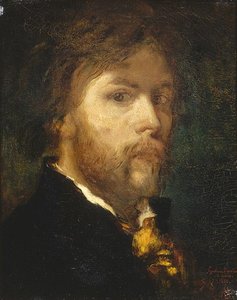
      Gustave Moreau

      Gustave Moreau

      1826 - 1898 , França

      Informações Rápidas

      • Artistic Movement Or Style: Simbolismo
      • Artists Or Movements Influenced By This Artist:
        • Matisse
        • Rouault
      • Artists Who Influenced This Artist:
        • Delacroix
        • Michelangelo
        • Leonardo
      • Date Of Birth: 6 de abril de 1826
      • Date Of Death: 18 de abril de 1898
      • Full Name: Gustave Moreau
      • Nationality: Francês
      • Notable Artworks:
        • Salomé Dançando
        • Júpiter e Semele
        • Orfeu
        • A Aparição
        • Desdemona
      • Place Of Birth: Paris, França
      Explore obras de arte organizadas por temas, estilos e características.