


 Visualizar na parede
 Compartilhar
 Compartilhar
 Detalhes
 Guia
Guia

 Baixar imagem
 Semelhantes
 Raio X
 Ver diaporama
 Perguntas e Respostas
 Estatísticas
Untitled (ARJEDA)


 Ler mais
Giclée / Impressão de Arte
Impressão giclée ou em tela de qualidade de museu, com produção rápida e opções flexíveis de acabamento. ( Comprar pintura feita à mão Alternar para Imagem Digital)




P118B €10

P118H €10

P118W €10

P438Z €10

P508JH €12

P508YH €12

P805H €10

P805Z €10

P919BZ €10

P919G €10

P919XJ €10

P959ZH €10

P968JZ €12

W106C €8

W218G €10

W218JH €8

W218Y €10

W307PJ €10

W316G €10

W316PJ €8

W316Y €10

W398PJ €8

W4111J €10

W500HY €15

W500JH €15

W692G €12

W849H €8

W940BG €15

W953PJ €8




Escolha entre os nossos tamanhos pré-definidos que respeitam as proporções originais da obra de arte.

Insira a largura e a altura desejadas para se ajustarem à sua moldura ou parede. Uma impressão pode ser apenas cortada, nunca ampliada além da imagem original; portanto, um tamanho com proporções diferentes resultará na perda de parte da imagem. Enviamos uma maquete digital para sua aprovação antes de realizarmos a impressão. A imagem exibida nesta página não mostra o corte real — apenas a maquete o faz.
Entrega mundial () em 2 semanas, em vez das 4/5 semanas padrão. (3 Novembro)

Envio expresso gratuito para todo o mundo

Tela de Linho de Alta Qualidade

Seguro de transporte completo

Garantia de Reembolso de Impostos Alfandegários

Garantia de Fidelidade Cromática

Política de Devolução em 100 Dias (Apenas para Defeitos)

Garantia de reembolso de 100%

Oferta de desconto por quantidade
 A opção de vidro está disponível apenas para tamanhos inferiores a 110 cm

Untitled (ARJEDA)
Giclée / Impressão de Arte
Tamanho da Reprodução
-


Preço Total
€ 58
A Glimpse into the Dreamscape: Unveiling "Untitled (ARJEDA)" by Gustave Moreau
Gustave Moreau’s “Untitled (ARJEDA)” is not merely a depiction of a woman beneath a moonlit tree; it's an immersion into the heart of Symbolist painting, a portal to a realm where myth and emotion intertwine. Painted during his prolific career – from 1826 to 1898 – this artwork embodies Moreau’s profound fascination with the esoteric and the spiritual, reflecting a deliberate rejection of the naturalism favored by his contemporaries. The scene unfolds with an almost unsettling serenity, dominated by the cool luminescence of the full moon and the silent grandeur of the ancient tree, elements frequently employed by Moreau to evoke a sense of timelessness and mystery.
- Subject Matter: A solitary female figure stands as the focal point, her gaze directed upwards towards the celestial body. The presence of other figures, rendered smaller and less defined, suggests she exists within a larger, perhaps more significant, narrative – one rooted in folklore or religious allegory.
- Style & Technique: Moreau’s meticulous brushwork and rich color palette are hallmarks of his Symbolist style. He employs a layered technique, building up translucent glazes to create an ethereal effect, particularly evident in the depiction of the moon's glow and the woman’s garments. The composition is deliberately dense with detail, reflecting a desire to overwhelm the viewer with symbolic imagery.
The Symbolist Vision: Myth, Religion, and the Psyche
Moreau was deeply influenced by the burgeoning Symbolist movement, which sought to express subjective emotions and spiritual truths rather than objective reality. He drew heavily from sources such as medieval legends, classical mythology, and esoteric traditions – notably the writings of Dante and the symbolism of the Kabbalah. The woman in “Untitled (ARJEDA)” can be interpreted as a representation of the soul seeking enlightenment or perhaps a devotee lost in contemplation. The tree itself is often associated with wisdom, longevity, and connection to the divine, further reinforcing this symbolic reading.
His artistic training at the École des Beaux-Arts provided him with a solid foundation in traditional academic techniques, but Moreau quickly surpassed these conventions, forging his own unique path. He deliberately avoided clear narratives or easily decipherable meanings, preferring to create images that would resonate on a deeper, more intuitive level.
Historical Context: Paris at the Dawn of Symbolism
"Untitled (ARJEDA)" was created during a period of significant artistic and intellectual ferment in Paris. The rise of Symbolism coincided with advancements in psychology – particularly the work of Sigmund Freud – which explored the unconscious mind and the power of dreams. Moreau’s paintings reflect this interest in the hidden depths of human experience, offering a visual language for exploring themes of desire, fear, and spirituality.
Moreau's work stood apart from the prevailing trends of Realism and Impressionism, which were focused on depicting observable reality. Instead, he sought to create images that would evoke emotion and stimulate the imagination, anticipating many of the concerns of later movements such as Surrealism.
Emotional Resonance & Artistic Value
The enduring appeal of “Untitled (ARJEDA)” lies in its ability to transport the viewer to a realm of mystery and contemplation. The painting’s serene atmosphere and evocative imagery invite us to ponder questions about our place in the universe, the nature of beauty, and the power of dreams. A hand-painted reproduction offers an unparalleled opportunity to experience the full impact of Moreau's artistic vision – a testament to his mastery of Symbolist technique and his profound understanding of the human psyche.
Perguntas e Respostas
Para qual ambiente "Untitled (ARJEDA)", de Gustave Moreau é recomendado, considerando as suas cores?
Com sua paleta de cores Dark, "Untitled (ARJEDA)" é uma sugestão ideal para um(a) Living Room.
Posso usar realidade aumentada para ver "Untitled (ARJEDA)", de Gustave Moreau no meu ambiente?
"Untitled (ARJEDA)" possui uma prévia em realidade aumentada: a página de Prévia em RA da obra permite visualizá-la no seu próprio espaço através de um dispositivo compatível.
Que emoção a obra "Untitled (ARJEDA)" do Symbolist Painting transmite?
"Untitled (ARJEDA)" carrega um tom emocional Ethereal dentro do movimento Symbolist Painting.
Obras Relacionadas


Biografia do Artista
A Dream Weaver of Symbolism: The Life and Art of Gustave Moreau
Gustave Moreau, a name inextricably linked to the ethereal beauty and profound mysteries of Symbolist painting, emerged from 19th-century Paris as an artist utterly distinct in his vision. Born in 1826 into a comfortable bourgeois family—his father an architect and archivist—Moreau’s early life was steeped in intellectual curiosity and a deep appreciation for aesthetics. From a remarkably young age, he displayed a prodigious talent for drawing, nurtured through the rigorous training of the École des Beaux-Arts under masters like François-Édouard Picot. However, Moreau's artistic trajectory swiftly diverged from the prevailing Realist and Impressionist currents of his time. He wasn’t driven by a desire to capture fleeting moments or represent objective reality; instead, he sought to unlock the hidden realms of myth, religion, and the intricate workings of the human psyche through a deeply personal and symbolic visual language. His journey was one of inward exploration, translating subjective emotions and spiritual yearnings onto canvas with an almost obsessive attention to detail and a palette often rich in vibrant, unexpected hues.The Forge of Imagination: Influences and Artistic Development
Moreau’s artistic development wasn't forged in isolation. While consciously rejecting the dominant trends of his era, he drew inspiration from a remarkably diverse range of sources. The dramatic use of color and exotic subject matter found in the works of Eugène Delacroix ignited within him a passionate interest in narrative painting imbued with intense emotionality. He held Renaissance masters—Michelangelo and Leonardo da Vinci, in particular—in high regard, deeply admiring their mastery of composition, anatomical precision, and their remarkable ability to penetrate the complexities of human psychology. Yet, Moreau wasn’t merely imitating these giants; he was skillfully synthesizing their influences into something entirely new, a distinctly personal style. His pivotal journey to Italy during the 1850s proved transformative, immersing him in the art of antiquity and the Renaissance. This experience provided an unparalleled wealth of motifs and stylistic cues that would subsequently populate his paintings—a treasure trove of imagery he meticulously studied and absorbed. He undertook countless copies of Old Master works, not as mere reproductions, but as a means of understanding their techniques and unlocking the secrets behind their enduring power. This dedication to meticulous study, combined with an increasingly fervent interest in mythology and literature, formed the bedrock of his unique artistic vision.A World of Symbols: Themes and Techniques
Moreau’s paintings are not simply illustrations of myths or biblical stories; they are complex allegories designed to provoke contemplation and interpretation. He didn't aim to retell these narratives literally but rather to explore their underlying psychological and spiritual truths. His canvases are often teeming with symbolic imagery—serpents representing temptation, jewels signifying earthly desires, and figures embodying abstract concepts such as grief, loss, or redemption. He masterfully created an atmosphere of dreaminess through intricate detail, rich textures, and a frequently unsettling juxtaposition of light and shadow. Moreau’s technique was characterized by a deliberate layering of paint—a painstaking process that resulted in surfaces shimmering with iridescent colors and evoking a sense of otherworldly beauty. His skillful use of gold leaf further enhanced this effect, lending his works a Byzantine quality that underscored their spiritual dimension. Crucially, Moreau wasn't concerned with capturing realistic textures or perspectives; instead, he prioritized the expressive power of color and form to convey mood and meaning—a deliberate departure from conventional artistic practices.Notable Works and Lasting Legacy
Throughout his prolific career, Gustave Moreau produced a remarkable body of work, including iconic paintings such as *Salome Dancing before Herod*, *Jupiter and Semele*, *Orpheus*, *The Apparition*, and *Desdemona*. *Salome Dancing before Herod*, perhaps his most celebrated painting, exemplifies his opulent style and enduring fascination with biblical narratives. *Jupiter and Semele* showcases his masterful command of composition and color, while *Orpheus* explores the themes of loss and artistic inspiration through multiple iterations. Moreau’s influence extended far beyond his own lifetime. He accepted a professorship at the École des Beaux-Arts in 1893, where he profoundly impacted generations of artists, including Henri Matisse and Georges Rouault, encouraging them to embrace imagination, symbolism, and individual expression. Despite initially facing mixed reactions from critics, Moreau’s work gained increasing recognition in the decades following his death in 1898, culminating in the establishment of the Musée Gustave Moreau in Paris—a dedicated space for showcasing his extraordinary artistic legacy. Today, Gustave Moreau is widely regarded as a pivotal figure in the Symbolist movement and a significant precursor to modern art, his paintings continuing to captivate audiences with their evocative beauty and profound psychological depth.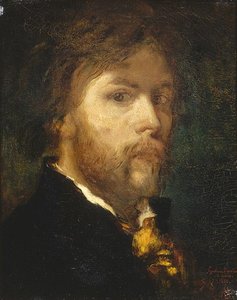
Gustave Moreau
1826 - 1898 , França
Dados Rápidos
- Artistic Movement Or Style: Simbolismo
- Artists Or Movements Influenced By This Artist:
- Matisse
- Rouault
- Artists Who Influenced This Artist:
- Delacroix
- Michelangelo
- Leonardo
- Date Of Birth: 6 de abril de 1826
- Date Of Death: 18 de abril de 1898
- Full Name: Gustave Moreau
- Nationality: Francês
- Notable Artworks:
- Salomé Dançando
- Júpiter e Semele
- Orfeu
- A Aparição
- Desdemona
- Place Of Birth: Paris, França
Artigos Relacionados

AllPaintingsStore.com F.A.Q.: Elevate Your Decor with Premium Textured Giclée Prints
Discover the distinction of AllPaintingsStore.com premium textured Giclée prints. Expertly crafted with archival 12-color pigments and museum-grade substrates, our prints offer unparalleled vividness for the discerning collector seeking luxury, durability, and timeless elegance.


