

1913. Acrilic pe pânză întinsă.

§ 1Date catalog


§ 2Abstract
Descriere obiect de colecție
Descoperă splendida pictură "Șarpele întors" de Franz Marc, un simbol al expresionismului german și al conexiunii spirituale cu natura. Admira culorile vibrante și stilul unic al acestui maestru artistic.
 Vezi mai mult
Biografie artist
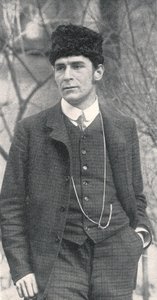
Franz Marc (1880-1916): pictor german expresionist, renumit pentru operele sale cu animale simbolice și culori vibrante. Descoperă spiritualitatea dincolo de realitate prin arta sa!
§ 3Comentariu
A Symphony of Color and Spirit: Exploring Franz Marc’s Lying Stag
Franz Marc, born in Munich in 1880, stands as a pivotal figure in the genesis of German Expressionism—a movement that sought to convey raw emotion and psychological truth through art. His artistic journey began with an initial fascination for theology, reflecting a profound contemplation on faith and existence before he decisively embraced painting at the Academy of Fine Arts in Munich. This formative period instilled within him a conviction that art could serve as a vehicle for spiritual experience, influencing his entire oeuvre. Marc’s stylistic evolution culminated in the creation of “Lying Stag,” painted in 1913—a watercolor masterpiece that encapsulates the essence of Expressionist aesthetics and continues to resonate with audiences today.The Bold Vision of Expressionism
“Lying Stag” exemplifies the core tenets of Expressionism, rejecting academic conventions in favor of subjective interpretation and emotional intensity. Marc’s approach mirrored that of fellow artists like Edvard Munch and Wassily Kandinsky—a deliberate departure from representational accuracy to prioritize feeling and intuition. The painting abandons meticulous detail, opting instead for simplified forms and vibrant hues designed to evoke visceral responses. This stylistic choice wasn't merely aesthetic; it represented a fundamental belief in the power of art to communicate inner states and grapple with existential questions.Color as Emotion: Marc’s Palette
Marc’s masterful use of color is arguably the artwork’s most striking feature. The dominant yellow background pulsates with warmth and luminosity, creating a dramatic contrast against the earthy reds and blacks of the stag itself. This juxtaposition isn't accidental; it’s a deliberate strategy to convey tension and dynamism—a visual embodiment of Marc’s artistic philosophy. As observed in other works like “Red and Blue Horse” and “Two Wild Cats,” color served as more than just decorative embellishment; it functioned as a symbolic language, mirroring the emotional landscape of the depicted subjects. The artist meticulously blended pigments to achieve luminous shades that capture the fleeting beauty of nature while simultaneously conveying profound psychological depth.Symbolism Rooted in Nature’s Essence
“Lying Stag” draws inspiration from Marc's deep reverence for the natural world and his conviction that animals possessed a spiritual significance beyond mere physicality. He believed they represented primal instincts and pure emotions—a perspective mirrored in numerous paintings where animals are depicted not as objects of observation but as conduits for human experience. The stag’s posture—relaxed yet alert—suggests contemplation and vulnerability, mirroring the artist's own quest for understanding. Furthermore, the birds circling above symbolize freedom and transcendence, reinforcing the artwork’s overarching theme of spiritual awakening.A Legacy Enduring Through Reproduction
Franz Marc’s influence extends far beyond his immediate contemporaries; he paved the way for subsequent generations of artists experimenting with Expressionist techniques to explore complex psychological narratives. If you wish to experience the transformative power of Marc's vision firsthand, consider commissioning a high-quality reproduction from AllPaintingsStore.com – https://AllPaintingsStore.com – where you can immerse yourself in the beauty and emotional depth of “Lying Stag” and discover other exceptional artworks by Marc and fellow Expressionist masters. Explore more about Marc’s life and artistic legacy on Wikipedia: https://en.wikipeÎntrebări și răspunsuri
Ce armonie de culori prezintă "Șarpele întors" de Franz Marc?
"Șarpele întors" de Franz Marc prezintă o armonie cromatică Unitate cromatică puternică.
Cât de cunoscută este opera „Șarpele întors” de Franz Marc?
"Șarpele întors" este clasificată ca Iconice.
Din ce curent artistic face parte "Șarpele întors" de Franz Marc?
„Șarpele întors” este o operă de German Expressionism. Acest curent indică tradiția artistică din care face parte lucrarea.


 Comută pe versiunea Print


 Pentru opere de artă sau reproduceri care depășesc 105 cm (aproximativ 41 de inch) pe oricare dintre laturi, cadrul va fi livrat demontat, sub formă de kit. Această metodă asigură o livrare sigură și previne deteriorarea în timpul transportului.


