


 Trimite
 Distribuie
 Detalii
 Guide
Guide

 Descarcă
 Produse similare
 Diaporama
 Statistici
Horseman in the Woods


 Citește mai mult
Giclée / Imprimare artistică
Printuri giclée sau pe canvas de calitate muzeală, cu proces de producție rapid și opțiuni flexibile de finisare. ( Comandă pictură realizată manual Treci la imagine digitală)




































Alegeți dintre dimensiunile noastre prestabilite, care respectă proporțiile originale ale operei de artă.

Puteți introduce propriile dimensiuni pentru a se potrivi unui anumit cadru sau spațiu. Dacă dimensiunea selectată nu corespunde proporțiilor imaginii originale, vom decupa lucrarea de artă sau vom extinde imaginea cu margini oglindite sau cu o culoare uniformă. Un mockup digital va fi trimis pentru aprobarea dumneavoastră înainte de începerea producției.
Vă rugăm să rețineți că previzualizarea de pe ecran nu reflectă decuparea sau extinderea reală. Doar mockup-ul va arăta cu exactitate compoziția finală.
Deși dimensiunile personalizate sunt disponibile, vă recomandăm să selectați o dimensiune din lista predefinită pentru a păstra proporțiile originale.
Livrare în întreaga lume () în 2 săptămâni, în loc de cele 4/5 săptămâni standard. (21 Septembrie)

Livrare expres gratuită la nivel mondial

Pânză de in premium

Asigurare completă pentru transport

Garanție de rambursare a taxelor vamale

Garanția fidelității culorilor

Politica de retur în 100 de zile (doar pentru defecte)

Garanție de rambursare 100%

Reducere pentru comenzi multiple
 Opțiunea cu sticlă este disponibilă doar pentru dimensiuni de sub 110 cm

Horseman in the Woods
Giclée / Imprimare artistică
Dimensiune reproducere
-


Preț total
$ 64
A Moment of Rural Tranquility: Corot’s “Le Grand Cavalier Sous Bois”
Jean-Baptiste-Camille Corot's "Le Grand Cavalier Sous Bois" – often translated as “The Large Horseman in the Woods” – is more than just a depiction of a horse and rider; it’s a profound meditation on light, atmosphere, and the enduring connection between humanity and the natural world. Painted around 1854, this iconic work exemplifies Corot's signature style: a deliberate eschewal of dramatic narrative in favor of capturing the subtle nuances of landscape – the way sunlight filters through foliage, the hazy distance created by atmospheric perspective, and the quiet dignity of rural life.
The scene itself is deceptively simple. A lone rider, presumably a forester or shepherd, traverses a wooded path, his horse moving with a measured grace. The composition isn’t about action; it's about stillness. Corot masterfully employs a muted palette – predominantly greens, browns, and greys – to evoke a sense of profound tranquility. The artist’s meticulous attention to detail is evident in the rendering of the trees, each one subtly different, contributing to an overall impression of organic complexity rather than precise botanical accuracy. This approach was revolutionary for its time, moving away from the idealized landscapes favored by earlier Romantic painters.
Technique and Impressionistic Roots
Corot’s technique is central to understanding the impact of “Le Grand Cavalier Sous Bois.” He utilized a broken brushstroke method, applying paint in short, irregular dashes rather than blending colors smoothly. This created a textured surface that captured the play of light and shadow with remarkable sensitivity. It's this deliberate lack of finish, this visible trace of the artist’s hand, that gives the painting its ethereal quality – it feels as though the scene is constantly shifting under the influence of the breeze and the changing sunlight. This technique foreshadowed many developments in Impressionism, solidifying Corot’s position as a pivotal figure in the transition from Romanticism to this new artistic movement.
The use of *cliché verre* – glass negatives – was also crucial to Corot's process. He would meticulously study these images, analyzing their tonal values and atmospheric effects before transferring them onto canvas. This method allowed him to control the overall composition with greater precision while still retaining a degree of spontaneity in his brushwork.
Symbolism and the Romantic Ideal
While seemingly straightforward, “Le Grand Cavalier Sous Bois” carries significant symbolic weight within the context of 19th-century French landscape painting. The solitary figure represents humanity’s relationship with nature – a theme frequently explored by Romantic artists seeking solace and spiritual renewal in the wilderness. The horse itself is often interpreted as a symbol of freedom, strength, and connection to the earth.
Corot's choice of subject matter—a humble rural scene—was deliberate. He rejected grand historical or mythological narratives, instead focusing on the beauty of everyday life and the power of nature to inspire awe and contemplation. This focus aligned with the Romantic ideal of finding spiritual truth in the natural world, a sentiment deeply resonant with the era’s philosophical currents.
Emotional Impact and Artistic Legacy
"Le Grand Cavalier Sous Bois" continues to captivate viewers today because it taps into something fundamental within our human experience – a longing for peace, simplicity, and connection with the natural world. The painting's quiet dignity and atmospheric beauty evoke a sense of nostalgia and serenity, inviting us to slow down and appreciate the subtle wonders that surround us. Corot’s influence on subsequent generations of landscape painters is undeniable, cementing his place as one of the most important figures in the history of art. A hand-painted reproduction offers an unparalleled opportunity to experience the profound beauty and emotional resonance of this timeless masterpiece within your own space.
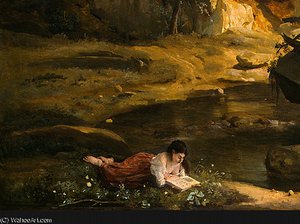
Opere similare




Biografie artist
A Life Immersed in Light and Landscape
Jean-Baptiste-Camille Corot, a name that resonates with the tranquil beauty of 19th-century French landscape painting, was born into a comfortable Parisian bourgeois family on July 16, 1796. Though initially steered towards a commercial path, destiny – and perhaps an innate artistic sensibility – intervened. His early years were marked by an unconventional upbringing; entrusted to the care of a nurse in the countryside near L’Isle-Adam until age four, he developed a profound connection with nature that would indelibly shape his artistic vision. This initial immersion in rural tranquility stood in stark contrast to the bustling city life awaiting him, yet it laid the foundation for a lifelong pursuit of capturing the ephemeral qualities of light and atmosphere. His parents, successful milliners, provided financial stability, allowing Corot the freedom to explore his burgeoning passion for painting after an unsuccessful attempt at mercantile pursuits – a rare privilege for aspiring artists of that era. This support was crucial, enabling him to dedicate himself fully to artistic training without the immediate pressures of earning a livelihood.From Academic Foundations to Plein-Air Innovation
Corot’s formal artistic education began with studies under Achille Etna Michallon and later Jean-Victor Bertin, both esteemed landscape painters steeped in the neoclassical tradition. This grounding instilled in him a meticulous approach to composition and form, emphasizing clarity and structure. However, Corot wasn't content merely replicating established styles; he yearned for something more authentic, a way to convey not just *what* he saw, but *how* it felt to be immersed within the landscape. A pivotal moment arrived with his first journey to Italy in 1825. The Roman Campagna, bathed in golden light and steeped in history, ignited his imagination. He spent years sketching and painting en plein air – directly from nature – a practice that was still relatively uncommon at the time. This dedication to direct observation allowed him to capture the subtle nuances of light and shadow, the delicate atmospheric effects that would become hallmarks of his style. He wasn’t simply recording topographical details; he was striving to evoke a mood, a feeling of tranquility and harmony. His early Italian works demonstrate a clarity of form and bright palette influenced by classical ideals, yet already hint at the softer, more evocative approach that would define his mature style. He meticulously studied the masters, copying their work in the Roman galleries, but always filtered these lessons through his own increasingly sensitive perception of nature.A Bridge Between Traditions
Corot’s artistic development wasn't linear; it was a delicate balancing act between tradition and innovation. He exhibited regularly at the Paris Salon, initially gaining recognition for works rooted in neoclassical conventions. However, as he continued to explore plein-air painting, his style began to evolve. He moved away from highly finished, detailed compositions towards looser brushwork and a more muted palette. This shift wasn’t a rejection of academic principles entirely; rather, it was an attempt to infuse them with the immediacy and emotional resonance of direct observation. He became a master of tonalism, using subtle variations in value to create depth and atmosphere. His landscapes weren't about dramatic narratives or grand gestures; they were about quiet contemplation, the beauty of everyday scenes – a forest glade, a sun-dappled meadow, a tranquil riverbank. This approach resonated with a growing audience seeking respite from the rapid industrialization and social upheaval of 19th-century France. He skillfully blended elements of realism with an almost poetic sensibility, creating landscapes that felt both familiar and deeply personal. His works often featured solitary figures – shepherds, peasants, or women – lost in contemplation amidst the vastness of nature, reflecting a sense of human vulnerability and connection to the natural world. He wasn’t interested in grand pronouncements or political statements; his art was about finding beauty in the ordinary, elevating the commonplace to a realm of serene contemplation.Major Achievements and Influences
Corot's career spanned several decades, during which he produced an enormous body of work – over 800 paintings, numerous drawings, and pastels. He achieved significant recognition throughout his lifetime, winning medals at the Salon and establishing himself as a leading figure in the Barbizon school, a movement that championed plein-air painting and a direct engagement with nature. His influence extended far beyond the Barbizon school; he served as a crucial link between the neoclassical tradition and the emerging Impressionist movement. Artists like Monet, Pissarro, and Sisley deeply admired his ability to capture the fleeting effects of light and atmosphere, and they built upon his innovations in their own groundbreaking work. Corot’s emphasis on direct observation and plein-air painting paved the way for the Impressionists' radical departure from studio-based practices. However, Corot wasn’t simply a precursor to Impressionism; he was a unique and significant artist in his own right. His vast output – encompassing landscapes, portraits, and figure studies – continues to captivate audiences with its serene beauty and emotional depth. His works can be found in major museums around the world, including the Musée des Beaux-Arts in Dunkirk and the Musée Courbet in Ornans, France, as well as the National Gallery in London and the Metropolitan Museum of Art in New York.Legacy and Enduring Influence
Jean-Baptiste-Camille Corot’s influence on subsequent generations of artists is immeasurable. He fostered a spirit of artistic freedom and encouraged younger artists to find their own voice. His legacy extends beyond painting; he embodied a philosophy of observing, feeling, and translating the beauty of nature onto canvas with honesty and sensitivity. The works “The Repose,” “Interrupted Reading,” and “Agostina” remain iconic examples of his mastery, showcasing his ability to capture both the physical world and the inner life of his subjects with remarkable sensitivity and grace. He died on February 22, 1875, leaving behind a body of work that continues to inspire artists and art lovers alike – a testament to the enduring power of light, landscape, and quiet contemplation.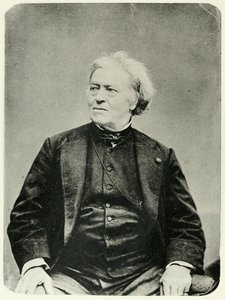
Jean-Baptiste-Camille Corot
1796 - 1875 , Franța
Informații rapide
- Artistic Movement Or Style: Realism, Impressionism
- Artists Or Movements Influenced By This Artist:
- Monet
- Pissarro
- Artists Who Influenced This Artist:
- Michallon
- Bertin
- Date Of Birth: 16 iulie 1796
- Date Of Death: 22 februarie 1875
- Full Name: Jean-Baptiste-Camille Corot
- Nationality: Francez
- Notable Artworks:
- Repaus
- Cititoare
- Pescari
- Place Of Birth: Paris, Franța
Articole conexe

Top 10 Capodopere Impresioniste: Peisaje care au Schimbat Arta | AllPaintingsStore.ro
Descoperă top 10 capodopere impresioniste care au revoluționat arta! Monet, Manet, Renoir și alți maeștri ai peisajului. Reproduceri de tablouri canvas de calitate muzeală pentru un decor inspirat. Explorează colecția completă pe AllPaintingsStore.com!

Top 10 Capodopere Alb-Negru: Frumusețe Atemporală în Artă | AllPaintingsStore.ro
Descoperă top 10 picturi celebre dominate de alb, de la Monet la Kandinsky! Explorează istoria artei, tehnicile artistice și frumusețea atemporală a capodoperelor clasice. Reproduceri de calitate muzeală pe AllPaintingsStore.com – inspiră-ți decorul!

Capturing the Soul: The Most Emotionally Moving Impressionist and Post-Impressionist Masterpieces
Discover the profound emotional depth of Impressionist and Post-Impressionist masterpieces. Explore how legends like Monet, Van Gogh, and Gauguin captured light and soul through evocative landscapes and vibrant brushwork for a timeless connection to art history.

Golden Fields & Sun-Drenched Meadows: Capturing the Soul of Impressionist Landscapes
Immerse yourself in the luminous world of Impressionist landscapes. Discover how masters like Monet and Gauguin captured ephemeral light through plein air painting, and learn to bring the soul of sun-drenched meadows into your home with exquisite, hand-painted oil reproductions.
Top 10 Capodopere Impresioniste: Peisaje care au Definit Arta Modernă | AllPaintingsStore.ro
Descoperă top 10 capodopere impresioniste care au revoluționat arta! Monet, Manet, Renoir și alți maeștri ai peisajului. Reproduceri de tablouri de calitate muzeală pentru un decor inspirat. Explorează colecția completă pe AllPaintingsStore.com!


