


 Previzualizare

 Trimite prin felicitare
 Distribuie
 Detalii despre lucrare
 Fișă informativă


 Descarcă imaginea
 Produse similare
 Radiografie
 Galerie foto
 Întrebări și răspunsuri

 Statistici
6th Lord Byron


 Vezi mai mult
Obțineți un fișier gata de imprimare care depășește cu mult calitatea previzualizării web. Fiecare imagine digitală pe care o vindem provine dintr-un master de înaltă rezoluție din baza noastră de date — având, de regulă, o lățime între 5.000 și 15.000 de pixeli — astfel încât să puteți printa în format mare, să decupați strâns sau să reproduceți detalii fine cu încredere.
Niciun fișier nu părăsește studioul nostru fără să fie tratat. Un expert digital verifică nuanțele de culoare în raport cu pictura originală și le corectează acolo unde este necesar, apoi îmbunătățește claritatea și detaliile folosind instrumente profesionale de retușare — rămânând întotdeauna fidel gestului pictural și stilului artistului. Rezultatul este o imagine care seamănă cu tabloul propriu-zis, nu cu o scanare filtrată.
Aprobați înainte de finalizare: expertul nostru vă va trimite imaginea prin e-mail în termen de 72 de ore pentru revizuire. Nu sunteți mulțumit? Solicitați îmbunătățiri sau corecturi, ori cereți o restituire a plății dacă calitatea nu este pe măsura așteptărilor.
Aceasta este calitatea pe care se bazează editorii, studiourile de design, galeriile și tipăriturile.
Imagine Digitală
Descărcați un fișier la rezoluție înaltă pentru afișare personală, imprimare și proiecte creative. ( Comandă printuri Pictură în ulei
)
Inclus în fiecare comandă de imagini digitale
Livrare digitală de expertiză, garantată
Când alegeți AllPaintingsStore.com, nu primiți doar o simplă imagine – primiți o operă de artă digitală îmbunătățită profesional, creată cu precizie și susținută de o garanție de satisfacție. Iată tot ceea ce primești odată cu comanda ta, în mod automat:

Livrare rapidă prin e-mail
Fișierul imaginii digitale la rezoluție înaltă vă va fi trimis prin e-mail în termen de 72 de ore de la finalizarea comenzii – gata pentru utilizare imediată.

Fișier digital optimizat prin IA
Opera ta de artă este optimizată profesional prin intermediul unor instrumente AI avansate și al editării manuale, asigurând un nivel maxim de detalii, claritate și acuratețe a culorilor.

Retransmitere gratuită pe viață
Ai șters sau ai pierdut din greșeală fișierul? Nu îți face griji – ți-l vom retrimite oricând, gratuit.

Fără taxe de import – Întotdeauna
Bucură-te instant de noua ta operă de artă, fără taxe vamale, taxe de import sau costuri de livrare – descărcările digitale sunt întotdeauna fără taxe.

Garanția acurateții culorilor
Asigurăm o reflectare cât mai fidelă a culorilor originale în imaginea ta digitală, prin utilizarea unor instrumente profesionale și a proceselor de gestionare a culorii.

Garanție de satisfacție de 100 de zile
Dacă nu sunteți mulțumit de imaginea digitală achiziționată, o vom revizui sau vă vom returna 100% în termen de 100 de zile – fără nicio întrebare.

Garanție de returnare 100% a banilor
Nu ești mulțumit? Primești rambursarea integrală în termen de 100 de zile de la primirea fișierului digital – fără nicio întrebare.

Reduceri pentru comenzi în volum
Cumpără 3 imagini, economisește 10% - Cumpără 5, economisește 15% - Cumpără 10+, economisește 20%. Ideal pentru proiecte creative, galerii și agenții.
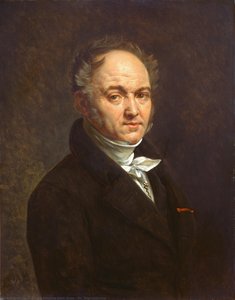
The Portrait of the 6th Lord Byron
In this portrait, titled 6th Lord Byron, the English painter Thomas Phillips captures the likeness of George Gordon Byron, 6th Baron Byron. The work presents a formal study of the man, focusing on his upper body and his steady, serious gaze. Phillips, who was born in Dudley, United Kingdom, in 1770, brings a meticulous attention to the subject's features and the textures of his attire. The sitter is positioned slightly off-center, looking toward his left, which lends a sense of quiet introspection to the composition.
The artist, who passed away in London on 20 April 1845, utilizes a dark, receding background to ensure the viewer's attention remains fixed upon the subject. This choice of lighting creates a chiaroscuro effect, highlighting the contours of the face and the white of the shirt against the darker tones of the coat. There is a palpable sense of dignity in the subject's expression, a quality Phillips often sought when portraying the prominent figures of his era. The painting remains a significant example of the artist's ability to render both physical presence and character through oil on canvas.
Composition and Visual Elements
The composition focuses on the subject's upper body, with the figure cropped just below the waist. He is positioned slightly off-center, gazing toward his left with a serious expression that suggests a sense of dignity and status. This deliberate placement avoids a static, frontal view, lending a quiet gravity to his presence. The dark background recedes into obscurity, which serves to emphasize the figure and create a palpable sense of depth within the frame.
Lighting is used with precision, concentrated primarily on the man's face and upper body. This creates a chiaroscuro effect, where strong contrasts between light and shadow define his features and the folds of his attire. The interplay of light and dark provides a sculptural quality to the portrait, pulling the viewer's attention toward the sitter's contemplative gaze and the subtle textures of his clothing.
Technique and Artistic Style
Executed in oil on canvas, this portrait adheres closely to the formal traditions of the late 18th and early 19th centuries. The artist employs a meticulous realism, focusing on the precise rendering of the subject's features and the specific textures of his attire. Through a disciplined application of paint, the work achieves a smooth finish where brushstrokes remain largely invisible to the eye. This controlled approach allows the viewer to focus entirely on the character and presence of the sitter rather than the hand of the painter.
The technical proficiency is most evident in the handling of light and material. There is a sophisticated contrast between the surfaces depicted; the artist has successfully captured the subtle sheen of the white shirt against the matte quality of the dark coat. This interplay of light and shadow, achieved through careful blending and the layering of paint, provides the figure with a tangible, three-dimensional presence. The result is a portrait that prioritizes a quiet, dignified accuracy over dramatic flourish.
Related Works by Thomas Phillips
The artist's engagement with the Romantic era is perhaps most visible through his various depictions of the poet. In 1813, he produced Lord Byron in Albanian Dress, a work that captures the subject in traditional costume. This particular theme was revisited in a 1835 version of Lord Byron in Albanian Dress, which is currently held in the National Portrait Gallery, London. He also completed a Portrait of Lord Byron in 1814, offering a different perspective on the same figure.
Beyond his portraits of literary figures, Phillips demonstrated a keen ability to render the likenesses of significant intellectuals and professionals. His 1807 portrait of William Blake remains a notable example of his skill. He continued this practice into the following decades, producing a portrait of Sir Francis Chantrey in 1818 and a work featuring George Crabbe in 1819.
Întrebări și răspunsuri
Ce paletă și ce culoare dominantă definesc "6th Lord Byron"?
„6th Lord Byron” este definit de o paletă Earthy, dominată de culoarea Black (#060201).
Cât de armonios interacționează culorile din "6th Lord Byron"?
Culorile din "6th Lord Byron" de Thomas Phillips prezintă o armonie Strong Color Unity. Armonia descrie modul în care culorile interacționează între ele.
Din ce materiale este realizată "6th Lord Byron" și în ce stil?
În "6th Lord Byron", tehnica Oil On Canvas întâlnește mișcarea Romanticism.
Opere similare




Biografie artist
Early Life and Artistic Foundations
Thomas Phillips, born in Dudley, Worcestershire, in 1770, emerged from relatively modest beginnings to become a prominent figure in the British art scene of the late 18th and early 19th centuries. His initial artistic training wasn’t within the traditional confines of painting, but rather in the craft of glass-painting under Francis Eginton in Birmingham. This foundational experience instilled in him a meticulous attention to detail and an understanding of color and light – skills that would prove invaluable when he later transitioned to portraiture. The intricate designs and vibrant hues of stained glass demanded precision and a keen eye for composition, qualities Phillips readily absorbed. A pivotal moment arrived in 1790 when he journeyed to London, armed with an introduction to Benjamin West, a leading artist of the time and a key figure in the Royal Academy. West’s guidance proved transformative, opening doors to opportunities that would shape his artistic trajectory. He was immediately placed on the painted-glass windows of St George's Chapel at Windsor Castle – a project that allowed him to hone his skills within a grand architectural context, working alongside master craftsmen and absorbing the techniques of large-scale decorative art. This early exposure to intricate patterns, rich colors, and collaborative design fostered a deep appreciation for narrative storytelling through visual means. It also instilled in him an understanding of how light interacts with surface, a crucial element in his later portraiture.A Rising Portraitist: Style and Subject Matter
Phillips quickly found his niche in portraiture, though not without navigating a competitive landscape already populated by renowned artists like Thomas Lawrence and John Hoppner. Initially, his sitters were largely unknown individuals – tradesmen, local dignitaries, and members of the gentry who sought to capture their likenesses for posterity. However, through dedication, technical skill, and an innate ability to discern character, he steadily ascended the social ladder, attracting increasingly prominent figures to his studio. His style was characterized by a meticulous realism, reflecting both the influence of his early training in glass-painting – particularly its emphasis on detail and color – and the prevailing artistic tastes of the era. He possessed an uncanny ability to capture not just physical likeness, but also something of the sitter’s personality, their social standing, and even their inner thoughts. This wasn't merely a replication of appearance; it was an attempt to distill the essence of a person onto canvas. His portraits were often imbued with a subtle sense of drama or emotion, achieved through careful manipulation of pose, expression, and lighting. He favored a restrained palette, typically employing muted tones that allowed his subjects’ features to emerge from the shadows. His compositions were generally balanced and harmonious, reflecting a classical sensibility tempered by a distinctly British aesthetic.Royal Patronage and Academic Recognition
The year 1804 marked a significant turning point in Phillips's career with his election as an associate of the Royal Academy, alongside William Owen. This recognition, a testament to his growing reputation, solidified his position within the established art world. Shortly thereafter, he moved to 8 George Street, Hanover Square – a prestigious address that would become his home and studio for the next four decades. The move signaled a shift from working primarily on commissions to establishing himself as an independent artist with a dedicated workspace. His clientele continued to expand dramatically, encompassing members of the royal family, including Prince Frederick (later King William IV), as well as prominent figures from across British society – politicians, writers, scientists, and explorers. He painted portraits of the Prince of Wales (later George IV), the Marchioness of Stafford, Lord Thurlow, and numerous other notable individuals. These commissions demanded not only technical skill but also a keen understanding of social etiquette and the nuances of aristocratic life. His ability to capture both outward appearance and inner character made him highly sought after by those who wished to immortalize themselves in paint.Major Achievements and Artistic Legacy
Phillips’s most celebrated works include his portrait of William Blake, painted in 1807 and now housed in the National Portrait Gallery – a remarkably sensitive depiction of the poet's intense gaze and visionary spirit. The painting is considered by many to be one of Phillips’s finest achievements, capturing not just Blake’s physical appearance but also something of his intellectual depth and spiritual intensity. He also produced several striking portraits of Lord Byron, including a particularly evocative rendition in Albanian costume that remains a favorite among art historians. In 1808, he achieved full academician status, presenting *Venus and Adonis* as his diploma work – a bold departure from the traditional portraiture that had characterized much of his earlier career. This mythological subject demonstrated a willingness to experiment with scale and narrative, showcasing a broader artistic range. Phillips’s legacy extends beyond individual works; he played a crucial role in shaping the development of British portraiture during the early 19th century, establishing a standard of realism and psychological insight that influenced generations of artists. His meticulous attention to detail, combined with his ability to capture the essence of his subjects, continues to resonate with viewers today.Later Years: Professorship and Reflection
In 1825, Phillips was appointed Professor of Painting at the Royal Academy, succeeding Henry Fuseli – a position he held until 1832. This role allowed him to share his knowledge and expertise with aspiring artists, shaping the next generation of British painters. He published *Lectures on the History and Principles of Painting* in 1833, offering insights into his artistic philosophy and pedagogical approach. Despite a slight decline in public acclaim during his later years, Phillips remained a respected figure within the art community until his death in 1845. His studio at 8 George Street became a gathering place for artists and intellectuals, fostering a vibrant exchange of ideas and perspectives. Thomas Phillips died peacefully at his home, leaving behind a substantial body of work that continues to be admired for its technical skill, psychological depth, and enduring beauty. His portraits offer not just likenesses but glimpses into the lives and minds of some of Britain’s most influential figures – a testament to the power of art to capture both appearance and essence.
Thomas Phillips
1770 - 1845 , Regatul Unit
Detalii rapide
- Artistic Movement Or Style: Romanticism
- Artists Or Movements Influenced By This Artist: ['William Blake']
- Artists Who Influenced This Artist: ['Benjamin West']
- Date Of Birth: 1770
- Date Of Death: 1845
- Full Name: Thomas Phillips
- Nationality: British
- Notable Artworks:
- Venus Adonis
- Lord Byron
- Place Of Birth: Dudley, UK