

6th Lord Byron (Томас Филлипс)
Oil On Canvas.

Холсты и художественные принты от $44 при размере 36 x 28 cm
Репродукция маслом ручной работы от $187
- Бесплатная международная доставка в течение 3–4 недель
- Срок доставки принтов в тубусе — от 3 до 4 недель
- Возврат в течение 100 дней и возврат средств
- Рейтинг 4.9/5 на основе 241 отзывов покупателей на ArtShopReviews.com
§ 1Данные каталога


§ 2Абстракция
6th Lord Byron, художник Томас Филлипс, описание картины
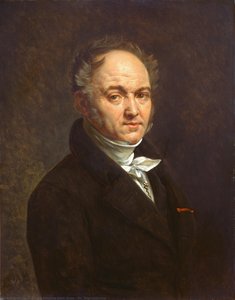
A somber oil portrait of a man in a dark coat and white cravat, rendered with soft blending and dramatic chiaroscuro lighting.
 Читать полное описание работы 6th Lord Byron художника Томас Филлипс
Томас Филлипс: биография
Томас Филлипс (1770-1845) – выдающийся британский художник-портретист, известный своей реалистичностью и портретами знатных людей эпохи романтизма. #британскоеискусство #портрет
§ 3Комментарий
The Portrait of the 6th Lord Byron
In this portrait, titled 6th Lord Byron, the English painter Thomas Phillips captures the likeness of George Gordon Byron, 6th Baron Byron. The work presents a formal study of the man, focusing on his upper body and his steady, serious gaze. Phillips, who was born in Dudley, United Kingdom, in 1770, brings a meticulous attention to the subject's features and the textures of his attire. The sitter is positioned slightly off-center, looking toward his left, which lends a sense of quiet introspection to the composition.
The artist, who passed away in London on 20 April 1845, utilizes a dark, receding background to ensure the viewer's attention remains fixed upon the subject. This choice of lighting creates a chiaroscuro effect, highlighting the contours of the face and the white of the shirt against the darker tones of the coat. There is a palpable sense of dignity in the subject's expression, a quality Phillips often sought when portraying the prominent figures of his era. The painting remains a significant example of the artist's ability to render both physical presence and character through oil on canvas.
Composition and Visual Elements
The composition focuses on the subject's upper body, with the figure cropped just below the waist. He is positioned slightly off-center, gazing toward his left with a serious expression that suggests a sense of dignity and status. This deliberate placement avoids a static, frontal view, lending a quiet gravity to his presence. The dark background recedes into obscurity, which serves to emphasize the figure and create a palpable sense of depth within the frame.
Lighting is used with precision, concentrated primarily on the man's face and upper body. This creates a chiaroscuro effect, where strong contrasts between light and shadow define his features and the folds of his attire. The interplay of light and dark provides a sculptural quality to the portrait, pulling the viewer's attention toward the sitter's contemplative gaze and the subtle textures of his clothing.
Technique and Artistic Style
Executed in oil on canvas, this portrait adheres closely to the formal traditions of the late 18th and early 19th centuries. The artist employs a meticulous realism, focusing on the precise rendering of the subject's features and the specific textures of his attire. Through a disciplined application of paint, the work achieves a smooth finish where brushstrokes remain largely invisible to the eye. This controlled approach allows the viewer to focus entirely on the character and presence of the sitter rather than the hand of the painter.
The technical proficiency is most evident in the handling of light and material. There is a sophisticated contrast between the surfaces depicted; the artist has successfully captured the subtle sheen of the white shirt against the matte quality of the dark coat. This interplay of light and shadow, achieved through careful blending and the layering of paint, provides the figure with a tangible, three-dimensional presence. The result is a portrait that prioritizes a quiet, dignified accuracy over dramatic flourish.
Related Works by Thomas Phillips
The artist's engagement with the Romantic era is perhaps most visible through his various depictions of the poet. In 1813, he produced Lord Byron in Albanian Dress, a work that captures the subject in traditional costume. This particular theme was revisited in a 1835 version of Lord Byron in Albanian Dress, which is currently held in the National Portrait Gallery, London. He also completed a Portrait of Lord Byron in 1814, offering a different perspective on the same figure.
Beyond his portraits of literary figures, Phillips demonstrated a keen ability to render the likenesses of significant intellectuals and professionals. His 1807 portrait of William Blake remains a notable example of his skill. He continued this practice into the following decades, producing a portrait of Sir Francis Chantrey in 1818 and a work featuring George Crabbe in 1819.
Вопросы и ответы
Эта репродукция 6th Lord Byron написана вручную или это печать?
Печать: 6th Lord Byron воспроизводится методом струйной печати (жикле) на хлопковом холсте или на архивной бумаге Epson.
Какой размер выбрать для 6th Lord Byron?
Размеры варьируются от 35.9 x 27.9 cm ($44) до 245.4 x 190.7 cm ($439); в таблице на этой странице указаны основные этапы и их стоимость.
Сколько времени занимает доставка?
Принт в тубусе доставляется бесплатно обычной почтой в течение 3–4 недель; доставка на подрамнике или в раме занимает 4–5 недель. Экспресс-доставка курьером доступна только при выборе платной опции «Экспресс-доставка», представленной на этой странице. Вы можете вернуть товар в течение 100 дней и получить полный возврат средств без каких-либо условий.
В какой технике выполнена работа Томас Филлипс «6th Lord Byron»?
Oil On Canvas




 Картина маслом


 Для произведений искусства или репродукций, размер которых превышает 105 см (приблизительно 41 дюйм) по любой из сторон, рама будет доставлена в разобранном виде (в виде комплекта). Этот метод обеспечивает безопасную доставку и предотвращает повреждения при транспортировке.


