- Hem

- Reproduktion av oljemålning
- Hans Holbein den yngre
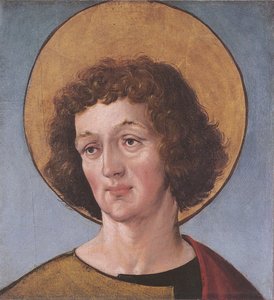
- Head of a Female Saint

 Köp tryck Köp högupplöst digital bild
 Skicka
 Dela
Dela
 Visa detaljer
 Lägg till i favoriter

 Ladda ner
 Liknande objekt
 Röntgen
 Bildspel
Head of a Female Saint
 Akryl på duk
- Väggkonst
- Northern Renaissance
 1516
1516- Renässansen
 24.0 x 22.0 cm
 Kunstmuseum Basel
 Visa mer
Handgjord oljereproduktion
Handmålad olja på duk i din valda storlek och ram, tillverkad efter beställning av våra konstnärer.




P118B $10

P118H $10

P118W $10

P438Z $10

P508JH $12

P508YH $12

P805H $10

P805Z $10

P919BZ $10

P919G $10

P919XJ $10

P959ZH $10

P968JZ $12

W106C $8

W218G $10

W218JH $8

W218Y $10

W307PJ $10

W316G $10

W316PJ $8

W316Y $10

W398PJ $8

W4111J $10

W500HY $15

W500JH $15

W692G $12

W849H $8

W940BG $15

W953PJ $8




Välj bland våra förinställda storlekar som motsvarar konstverkets ursprungliga proportioner.

Du kan ange egna mått för att passa en specifik ram eller yta. Om den valda storleken inte matchar originalbildens proportioner kommer vi antingen att beskära konstverket eller utöka målningen med ytterligare handmålade element. En digital skiss skickas till dig för godkännande innan produktionen påbörjas.
Observera att förhandsvisningen på skärmen inte återspeglar den faktiska beskärningen eller utökningen. Endast skissen visar den slutgiltiga kompositionen korrekt.
Även om anpassade storlekar är möjliga, rekommenderar vi att du väljer en dimension från den fördefinierade listan för att bevara originalproportionerna.
Efter beställning kommer AllPaintingsStore.com team att mejla kunden för instruktioner och tillhandahålla en skissförhandsvisning
Leverans över hela världen () på 3–4 veckor istället för standard 5 veckor. (16 juli). Inga kompromisser med kvaliteten.

Fri expressfrakt över hela världen

Högkvalitativ linnecanvas

Fullständig fraktförsäkring

Garantier för återbetalning av tullavgifter

Garantier för exakt färgåtergivning

60 dagars returrätt (endast vid fabrikationsfel)

100% pengarna tillbaka-garanti

Mängdrabatt erbjuds
 Glasalternativet är endast tillgängligt i storlekar under 110 cm.

Head of a Female Saint
Teknik för reproduktion
Storlek på reproduktion
-


Slutgiltigt pris
-
Beskrivning av konstverket
Head of a Female Saint – A Masterpiece of Northern Renaissance Portraiture
Hans Holbein the Younger’s “Head of a Female Saint,” created around 1516, stands as an emblem of artistic achievement during the High Renaissance's northern reach. More than just a portrait, it embodies the humanist ideals that shaped the era and showcases Holbein’s unparalleled skill in capturing psychological depth within meticulously rendered detail. Located at Kunstmuseum Basel, Switzerland, this tempera on panel artwork offers a profound glimpse into both artistic innovation and spiritual contemplation.Style and Technique: The Essence of Northern Renaissance Precision
Holbein's approach to portraiture distinguishes him from his contemporaries; he eschewed idealized representations in favor of realism—a characteristic deeply rooted in the Northern Renaissance tradition. Unlike Italian artists preoccupied with classical beauty, Holbein focused on portraying subjects as they truly appeared, imbued with inner life and emotion. The painting’s technique exemplifies this commitment: tempera on panel allows for layering pigments to achieve remarkable luminosity and textural richness. Holbein skillfully blended colors—primarily golds and reds—to create a harmonious visual experience that transcends mere imitation. Careful observation of anatomy and drapery contributes to the artwork's palpable sense of presence, mirroring Holbein’s meticulous attention to detail throughout his oeuvre.Historical Context: Reformation Ideals Reflected in Artistic Expression
“Head of a Female Saint” emerged during Basel’s turbulent period—the early 16th century—when the Protestant Reformation challenged papal authority and reshaped religious beliefs. Holbein, working primarily for humanist clients like Erasmus, absorbed these intellectual currents into his artistic practice. The saint depicted possesses an aura of serenity and introspection—qualities reflecting the humanist emphasis on moral virtue and rational thought. Furthermore, the crown adorning her head symbolizes spiritual dignity and reinforces the painting’s theological significance. Holbein's patronage by reformers underscores his adaptability and commitment to conveying complex ideas through visual art.Symbolism: Layers of Meaning Beyond Appearance
Beyond its surface beauty lies a wealth of symbolic references that enrich “Head of a Female Saint’s” narrative. The golden crown signifies holiness and divine grace, elevating the saint's status beyond earthly concerns. Her gaze—direct yet contemplative—suggests inner reflection and spiritual awareness—themes central to humanist philosophy. Holbein’s masterful use of color contributes to this symbolic dimension; gold evokes illumination and purity, while red symbolizes passion and sacrifice—elements interwoven into Christian iconography. These subtle cues invite viewers to engage in a deeper contemplation of the artwork's themes and ideas.Emotional Impact: Capturing the Soul Within Form
Ultimately, “Head of a Female Saint” succeeds in conveying an extraordinary emotional resonance—a testament to Holbein’s ability to capture the essence of human psychology within formal constraints. The saint’s serene expression embodies tranquility and inner peace—qualities prized during the Renaissance as emblems of spiritual virtue. Holbein's meticulous rendering of facial features—particularly the eyes—creates a palpable sense of immediacy, drawing viewers into the subject’s gaze and fostering empathy. This profound emotional impact distinguishes “Head of a Female Saint” from mere decorative art; it elevates it to a timeless masterpiece that continues to inspire admiration and contemplation centuries later.- Artist: Hans Holbein the Younger
- Date: c.1516
- Medium: Tempera on Panel
- Location: Kunstmuseum Basel, Basel, Switzerland
- Dimensions: 23.5 x 21.5 cm
Related Works by Hans Holbein the Younger
- The Passion - Portrait of Jakob Meyer zum Hasen - A School Teacher Explaining the Meaning of a Letter to Illiterate WorkersConclusion
“Head of a Female Saint” remains an unparalleled achievement in portraiture—a symbol of Holbein’s artistic genius and his contribution to Northern Renaissance art. Its enduring beauty, psychological depth, and symbolic richness solidify its place among the most revered artworks of the era. For those seeking inspiration or delving into the history of visual culture, exploring Kunstmuseum Basel's collection offers invaluable insight into this extraordinary masterpiece.Further Exploration
To immerse yourself in Holbein’s broader artistic legacy, visit AllPaintingsStore: AllPaintingsStore and discover more treasures from the Renaissance at Kunstmuseum Basel: Kunstmuseum Basel.Liknande konstverk


Konstnärsbiografi
A Life Etched in Detail: The World of Hans Holbein the Younger
Hans Holbein the Younger (1497/8 – 1543) was a German-Swiss painter and printmaker who worked in the Northern Renaissance—a master portraitist whose work continues to resonate with breathtaking realism and psychological depth. His upbringing within an artistically gifted family laid the foundation for his exceptional talent; his father, Hans Holbein the Elder, was a respected painter and printmaker who instilled in young Hans a meticulous approach to observation and technique. This early training wasn’t merely about mastering brushstrokes or mixing pigments—it was about learning to *see*, to capture not just likeness but the very essence of a subject. Holbein's initial artistic explorations occurred within his father’s workshop, where he honed his skills before embarking on a journey that would lead him through Switzerland and ultimately to the heart of the English court.From Basel to the Tudor Court: A Rising Star
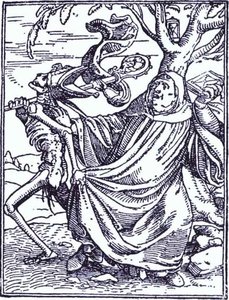
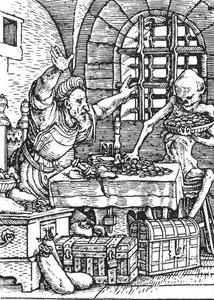
Holbein’s formative years were spent in Basel, Switzerland, where he established himself as an independent artist with a burgeoning reputation. He excelled not only in portraiture but also in religious art—creating monumental murals and stained glass windows that showcased his mastery of color and composition. Perhaps most strikingly, Holbein designed the *Dance of Death* series, a macabre depiction of mortality featuring exquisitely detailed figures representing every stratum of society. These early works reveal a profound fascination with capturing human emotion and exploring themes of life and death—qualities that would permeate his entire artistic career. The influence of Italian Renaissance humanist ideals is palpable in Basel’s artistic milieu during this period, shaping Holbein's stylistic choices and broadening his intellectual horizons.The Art of Perception: Style and Masterpieces
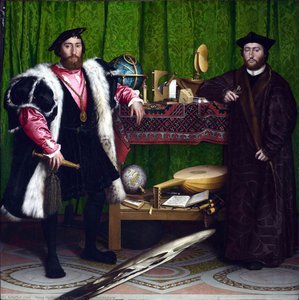
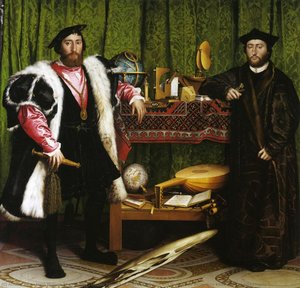
Holbein’s distinctive style is characterized by an unparalleled commitment to realism—a pursuit achieved through painstaking attention to detail in rendering textures, fabrics, and the subtle nuances of facial expressions. He didn’t simply *paint* portraits; he meticulously constructed them, layering upon layer, capturing not just physical appearances but also the personality and inner life of his sitters. His innovative compositions further enhanced the impact of his work—often employing symbolic objects or backgrounds to convey deeper meaning. The Ambassadors (1533), arguably Holbein’s most celebrated masterpiece, exemplifies this approach—a complex and symbolically rich double portrait showcasing both Holbein’s technical brilliance and intellectual depth. The anamorphic skull subtly embedded within the painting serves as a stark *memento mori*, reminding viewers of the inevitability of death. This masterful use of perspective and detail elevates the image beyond mere representation, inviting contemplation on themes of mortality and human ambition. His portraits of Henry VIII—particularly his depiction of the king’s coronation robes—became iconic representations of royal power and solidified Holbein's reputation as one of the foremost portraitists of his time.Historical Significance: A Legacy Enduring Through Time
Holbein’s artistic journey coincided with a period of profound intellectual and religious upheaval—the Reformation—and he skillfully utilized his art to convey messages of faith and authority. His depictions of Erasmus of Rotterdam capture the humanist scholar's erudition and moral integrity, reflecting the values of the Renaissance humanism movement. Furthermore, Holbein’s meticulous documentation of historical events—such as Henry VIII’s reign—provides invaluable insights into the political landscape and cultural sensibilities of Tudor England. He remains one of the most admired and studied painters of the Renaissance—a master whose legacy continues to inspire artists today. His work transcends mere technical skill; it embodies intellectual curiosity, artistic innovation, and a profound understanding of the human condition—qualities that cemented his place as a cornerstone of Northern Renaissance art history. He didn't merely record appearances—he captured moments in time, preserving them for posterity.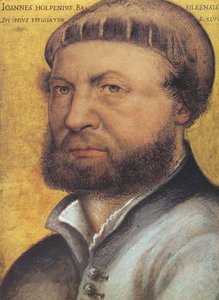
Hans Holbein den yngre
1497 - 1543 , Tyskland
Kortfattad information
- Artistic Movement Or Style: Nordländska renässansen
- Artists Or Movements Influenced By This Artist: ['Later portrait artists']
- Artists Who Influenced This Artist: ['Albrecht Dürer']
- Date Of Birth: c. 1497
- Full Name: Hans Holbein den Yngre
- Nationality: Tysk
- Notable Artworks:
- Ambrosius Holbein
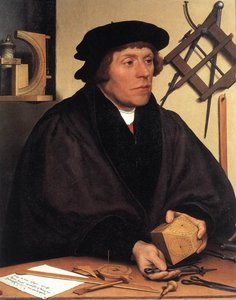
- Nikolaus Kratzer
- The Ambassadors
- Place Of Birth: Augsburg, Germany
Relaterade artiklar
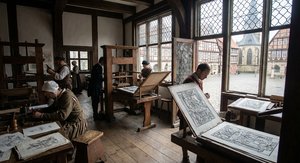
The Northern Awakening: Artistic Innovation & Cultural Transformation in the German Renaissance
Explore the artistic innovation of the German Renaissance! Discover Dürer, the Danube School & Reformation art. Learn about techniques, materials & lasting influence. Find museum-quality reproductions at AllPaintingsStore.

Albrecht Dürer: A Renaissance Master's Legacy of Innovation and Self-Portraiture
Explore the life & art of Albrecht Dürer, a pivotal German Renaissance master. Discover his groundbreaking printmaking techniques, iconic self-portraits, and lasting influence on Western art history. A deep dive into innovation & symbolism.

The Northern Renaissance: A Flourishing of Realism, Religious Reform & Artistic Innovation
Explore the Northern Renaissance! Discover Jan van Eyck's innovations, religious shifts, & key artists of this influential period. Expert analysis and insights into Early Netherlandish painting at AllPaintingsStore.

Agnolo Bronzino: Mastering Courtly Portraiture & the Enigmatic Gaze of Renaissance Florence
Explore the captivating world of Agnolo Bronzino, Renaissance master portraitist. Discover his elegant style, symbolic depth & lasting influence on art history. Expert insights for collectors.

Nordrenässansens 10 Mästerverk: Konsthistoriens Höjdpunkter för Hemmet
Utforska nordrenässansens 10 mest inflytelserika mästerverk! Lär känna Jan van Eyck, Dürer & Holbein. Upptäck symboliken och tekniken bakom tidlösa tavlor. Köp reproduktioner av högsta kvalitet på AllPaintingsStore.com.