


 Förhandsvisa
 Skicka
 Dela
Dela
 Visa detaljer
 Guide
Guide

 Ladda ner
 Liknande objekt
 Röntgen
 Bildspel
 Q&A
Q&A Statistik
untitled (5500)

 Visa mer
Giclée / Konsttryck
Giclée- eller canvasprint av museumskvalitet med snabb produktion och flexibla ytbehandlingsalternativ. ( Beställ handmålad reproduktion Byt till digital bild)




P118B Skr10

P118H Skr10

P118W Skr10

P438Z Skr10

P508JH Skr12

P508YH Skr12

P805H Skr10

P805Z Skr10

P919BZ Skr10

P919G Skr10

P919XJ Skr10

P959ZH Skr10

P968JZ Skr12

W106C Skr8

W218G Skr10

W218JH Skr8

W218Y Skr10

W307PJ Skr10

W316G Skr10

W316PJ Skr8

W316Y Skr10

W398PJ Skr8

W4111J Skr10

W500HY Skr15

W500JH Skr15

W692G Skr12

W849H Skr8

W940BG Skr15

W953PJ Skr8




Välj bland våra förinställda storlekar som motsvarar konstverkets ursprungliga proportioner.

Ange den bredd och höjd du behöver för att passa din ram eller vägg. Ett tryck kan endast beskäras, aldrig göras större än originalbilden, vilket innebär att ett format med en annan proportion leder till att en del av bilden går förlorad. Vi skickar en digital mockup för godkännande innan vi påbörjar tryckningen. Bilden som visas på denna sida visar inte den faktiska beskärningen — det är endast mockuppen som gör det.
Leverans över hela världen () på 2 veckor istället för standard 4/5 veckor. (2 november)

Fri expressfrakt över hela världen

Högkvalitativ linnecanvas

Fullständig fraktförsäkring

Garantier för återbetalning av tullavgifter

Garantier för exakt färgåtergivning

100 dagars returrätt (endast vid fel)

100% pengarna tillbaka-garanti

Mängdrabatt erbjuds
 Glasalternativet är endast tillgängligt i storlekar under 110 cm.

untitled (5500)
Giclée / Konsttryck
Storlek på reproduktion
-


Slutgiltigt pris
Skr 643
A Window into Tudor Intrigue: Hans Holbein’s “Untitled (5500)”
Hans Holbein the Younger's "Untitled (5500)" is not merely a group portrait; it’s a meticulously crafted tableau of power, faith, and subtle symbolism—a frozen moment within the opulent world of 16th-century England. This remarkable painting, depicting Jesus surrounded by his disciples at a shared meal, transcends simple representation to offer a profound glimpse into the political and religious currents of its time. The sheer scale of the composition – an unknown size but undoubtedly commanding – immediately draws the viewer in, inviting them to become part of this intimate scene. Holbein’s mastery is evident not just in his astonishingly realistic depiction of each figure, but also in the way he uses light and shadow to create a palpable sense of depth and atmosphere, reminiscent of the masterful works of Jan van Eyck.
The painting unfolds around a richly appointed dining table, laden with bowls, knives, and various instruments of learning – a deliberate arrangement that speaks volumes about the intellectual climate of the Tudor court. Three bowls are strategically placed, hinting at shared sustenance and fellowship, while the knife suggests both practicality and perhaps, a subtle undercurrent of tension. The figures themselves are rendered with an almost unsettling level of detail; each face is etched with individual character, reflecting not just likeness but also personality and status. The seated disciples, ranging from the youthful to the seasoned, embody a diverse group united by their devotion to Jesus. Notably, Jesus himself is positioned at the head of the table, asserting his central role within this community.
Renaissance Realism and Psychological Depth
Holbein’s artistic genius lies in his ability to capture not just outward appearances but also the inner lives of his subjects. This painting exemplifies his signature style – a blend of meticulous observation and psychological insight. He was renowned for his portraits, particularly those commissioned by Henry VIII and Anne Boleyn, and this work demonstrates his skill at conveying character through subtle gestures, expressions, and clothing choices. The use of oil paints allowed him to achieve an unprecedented level of detail and luminosity, capturing the textures of fabrics, the sheen of metal, and the nuances of skin tones with remarkable accuracy.
The technical brilliance is further enhanced by Holbein’s innovative approach to perspective and composition. He masterfully employs atmospheric perspective – creating a sense of distance through variations in color and detail – to draw the viewer's eye into the scene. The arrangement of figures around the table, with Jesus at its center, establishes a clear hierarchy while simultaneously fostering a feeling of intimacy and shared experience. It’s a carefully orchestrated visual narrative that invites contemplation.
Symbolism and Historical Context
Beyond its aesthetic qualities, “Untitled (5500)” is rich in symbolic meaning. The inclusion of scientific instruments – globes, sundials, and quadrants – reflects the burgeoning interest in astronomy and navigation during the Renaissance, a period marked by both exploration and intellectual curiosity. The reference to Rome through the Cosmati pavement pattern, likely incorporated as a gift for Anne Boleyn, subtly alludes to the political tensions between England and the Papal States. The lute with its broken string is a potent symbol of discord, perhaps representing the religious divisions that were fracturing Europe at the time.
The presence of Martin Luther’s hymnbook, open on facing pages referencing Law and Grace, adds another layer of complexity to the painting's interpretation. It suggests a dialogue between faith and reason, tradition and reform – themes that were central to the Protestant Reformation. Even the seemingly simple act of sharing a meal becomes imbued with significance, representing not just sustenance but also fellowship, community, and spiritual nourishment.
A Timeless Masterpiece: Reproduction Possibilities
AllPaintingsStore offers meticulously crafted hand-painted reproductions of Hans Holbein’s “Untitled (5500),” allowing you to bring this extraordinary artwork into your home or office. Our skilled artisans replicate Holbein's intricate details, vibrant colors, and atmospheric depth with unparalleled precision. Whether you are an art collector, a design enthusiast, or simply someone who appreciates the beauty of Renaissance art, our reproduction provides a stunning and authentic representation of this iconic masterpiece. Explore the available sizes and canvas options to find the perfect way to experience the power and allure of “Untitled (5500).”
Frågor och svar
Är "untitled (5500)" av Hans Holbein Den Yngre ett ljust eller mörkt konstverk?
Den upplevda ljusstyrkan i "untitled (5500)" av Hans Holbein Den Yngre är balanced. Den kan anpassas efter ljuset i det avsedda rummet.
Vilken konstnär tillskrivs "untitled (5500)"?
"untitled (5500)" skapades av Hans Holbein Den Yngre. Informationen på denna sida beskriver Hans Holbein Den Yngres originalverk.
Vem säljer handmålade kopior av "untitled (5500)" av Hans Holbein Den Yngre?
Du kan beställa en handmålad reproduktion av "untitled (5500)" av Hans Holbein Den Yngre direkt på dess Handmålad reproduktion-sida: en handmålad oljereproduktion på linneväv, tillverkad efter beställning.
Liknande konstverk


Konstnärsbiografi
Ett liv etsat i detaljer: Hans Holbeins yngre värld
Född omkring 1497 i den livliga konstnärliga knutpunkten Augsburg, Tyskland, framträdde Hans Holbein den yngre som en definierande gestalt inom den nordeuropeiska renässansen – en mästerlig porträttmålare vars verk än idag resonerar med en svindlande realism och psykologiskt djup. Hans uppväxt i en konstnärligt begåvad familj lade grunden för hans exceptionella talang; hans far, Hans Holbein den äldre, var en respekterad målare och gravör som ingöt ett noggrant förhållningssätt till observation och teknik hos unge Hans. Denna tidiga träning handlade inte enbart om att bemästra penseldrag eller blanda pigment – det handlade om att lära sig att se, att fånga inte bara likhet utan själva essensen av ett motiv. Holbeins första konstnärliga utforskningar ägde rum i faderns verkstad, där han förfinade sina färdigheter innan han påbörjade den resa som skulle föra honom genom Schweiz och slutligen till hjärtat av det engelska hovet.Från Basel till Tudorhovet: En stigande stjärna
Efter att ha fullbordat sin lärlingsutbildning reste Holbein omfattande genom Schweiz och etablerade sig som en självständig konstnär med ett växande rykte. Han tillbringade flera formativa år i Basel, där han skapade inte bara slående porträtt utan även religiösa verk och intrikata träsnitt – mest märkbart den kusliga serien som skildrar Dödsdansen. Dessa tidiga verk uppvisar en framväxande mästerskap i komposition och en utvecklande fascination för att fånga mänskliga känslors komplexitet. Det var år 1526 som ödet ingrep och drog Holbein mot England, en händelse som oåterkalleligt skulle förändra hans konstnärliga bana. Han anlände med ett introduktionsbrev från Erasmus, den berömta humanistiska lärde, vilket öppnade dörrar till de inflytelserika kretsarna i det engelska samhället. Hans talang fångade snabbt framstående gestalter som Sir Thomas More, som blev både beskyddare och motiv för flera fängslande porträtt. Denna koppling visade sig vara avgörande och ledde till att Holbein utnämndes till hovmålare åt kung Henrik VIII år 1536 – en position han innehade, med vissa avbrott, fram till sin förtidiga död 1543.Perceptionens konst: Stil och mästerverk
Holbeins konstnärliga stil kännetecknas av en extraordinär hängivenhet till realismen, uppnådd genom en mödosam uppmärksamhet på detaljer vid återgivningen av texturer, tyger och ansiktsdragens subtila nyanser. Han målade inte bara porträtt; han konstruerade dem noggrant, lager för lager, och fångade inte bara det yttre utseendet utan även personligheten och den inre livskraften hos sina modeller. Hans innovativa kompositioner förstärkte ytterligare verkens genomslagskraft, ofta genom att använda symboliska föremål eller bakgrunder för att förmedla djupare mening. Ambassadörerna (1533) står som ett testamente till detta tillvägagångssätt – ett komplext och symboliskt rikt dubbelporträtt som uppvisar både Holbeins tekniska briljans och intellektuella djup. Den anamorfiska dödskallen som är subtilt inbäddad i målningen fungerar som en påtaglig memento mori, som påminner betraktaren om dödens oundviklighet. Hans talrika porträtt av Henrik VIII etablerade en bestående bild av Tudor-maktens glans, medan hans skildring av Erasmus av Rotterdam fångar lärdomens djupa intellektuella tyngd. Andra betydelsefulla verk inkluderar det storslagna Porträtt av Nikolaus Kratzer (1528), ett mästerverk av realism och vetenskaplig detaljrikedom.Arv och inflytande: Ett bestående intryck
Holbeins konstnärliga resa formades av en sammanflätning av influenser, där den tyska konsttraditionens precision blandades med den italienska renässansens kompositionsprinciper. Han beundrade arbetet hos Albrecht Dürer och andra tyska mästare, samtidigt som han studerade italiensk konst under sina resor, absorberade deras tekniker och införlivade dem i sin egen unika stil. Hans arv är djuptgående; Holbeins porträtt satte en ny standard för realism och psykologisk insikt inom porträttkonsten och påverkade generationer av efterföljande konstnärer. Hans skildringar av nyckelpersoner under Tudor-perioden ger ovärderliga inblickar i de liv och personligheter som formade Englands historia. Han dokumenterade inte bara utseenden – han fångade ögonblick i tiden och bevarade dem för eftervärlden. Hans arbete fungerar som ett kraftfullt vittnesbörd om konstens bestående förmåga att dokumentera, tolka och belysa det förflutna.Ett sista penseldrag: Historisk betydelse
Hans Holbein den yngre dog i London 1543 och lämnade efter sig en produktion som fortsätter att fängsla publiken århundraden senare. Hans porträtt är mer än bara vackra bilder; de är historiska dokument som erbjuder glimtar av de politiska intrigerna, religiösa omvälvningarna och kulturella skiftena under Tudor-eran.- Hans skildringar av Henrik VIII blev ikoniska representationer av kunglig makt.
- Hans porträttkonst erbjuder ett fönster in i livet för framstående humanister som Erasmus och More.
- Hans innovativa användning av symbolism tillför lager av mening till hans verk och bjuder in betraktaren att reflektera över djupare teman.
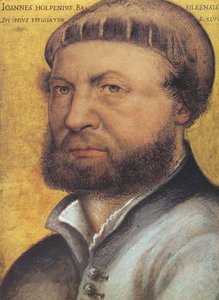
Hans Holbein Den Yngre
1497 - 1543 , Italien
Kortfakta
- Artistic Movement Or Style: Nordländska renässansen
- Artists Or Movements Influenced By This Artist: ['Later portrait artists']
- Artists Who Influenced This Artist: ['Albrecht Dürer']
- Date Of Birth: c. 1497
- Full Name: Hans Holbein den Yngre
- Nationality: Tysk
- Notable Artworks:
- Ambrosius Holbein
- Nikolaus Kratzer
- The Ambassadors
- Place Of Birth: Augsburg, Germany
Relaterade artiklar

Aesthetic Gastronomy: The Role of Curated Art Collections in Shaping Perceptions of Michelin-Starred Dining Experiences
Discover how curated art collections elevate Michelin-starred dining experiences. Expert insights on sensory branding, emotional intelligence & ROI for luxury restaurants and hotels. Transform your space with AllPaintingsStore.

Visual Gastronomy: Curating Art Experiences Across Dining Zones – A Tasting Menu Approach to Bar, Lounge & Restaurant Design
Elevate your dining space with art! Discover how strategic curation & bespoke commissions transform bars, lounges & restaurants into immersive experiences. Expert insights for hotel designers & commercial projects.

The Palate and the Palette: Exploring the Psychological Impact of Visual Design on Dining Perception and Appetite
Explore the science of dining! Discover how visual design impacts appetite & perception. Expert insights for hotel designers & restaurateurs to elevate the customer experience.

Cultivating Ambiance: Selecting Art Reproductions for the Dining Room – A Historical & Aesthetic Guide
Elevate your dining room with expertly curated art reproductions! Explore historical context, aesthetic considerations & modern applications for a captivating space. Discover the perfect artwork to inspire conversation and enhance every meal.

Hans Holbein the Younger: A Renaissance Portraitist's Mastery of Realism & Psychological Insight
Explore the life & art of Hans Holbein the Younger, a Renaissance master renowned for his strikingly realistic portraits and psychological insight. Discover iconic works like 'The Ambassadors' and delve into his lasting legacy.


