- Додому

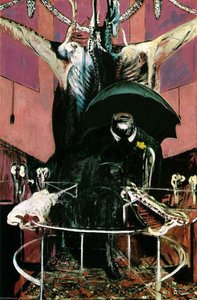
- Репродукція картини олією
- Марсель Дюшан
- Алегорія гендеру (Джордж Вашингтон)

 Замовити друк Купити цифрове зображення
 Надіслати
 Поділитися
 Деталі витвору
 Додати до улюблених

 Завантажити
 Схожі вироби
 Рентгенівське дослідження
 Слайд-шоу
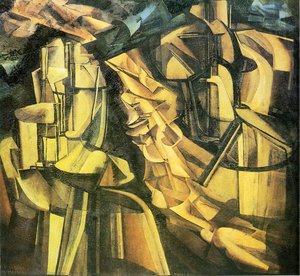
Алегорія гендеру (Джордж Вашингтон)


 Розгорнути текст
Олійная репродукція ручної роботи
Написана вручну олією на полотні у вашому розмірі та рамі, виготовлена на замовлення нашими художниками.




P118B $10

P118H $10

P118W $10

P438Z $10

P508JH $12

P508YH $12

P805H $10

P805Z $10

P919BZ $10

P919G $10

P919XJ $10

P959ZH $10

P968JZ $12

W106C $8

W218G $10

W218JH $8

W218Y $10

W307PJ $10

W316G $10

W316PJ $8

W316Y $10

W398PJ $8

W4111J $10

W500HY $15

W500JH $15

W692G $12

W849H $8

W940BG $15

W953PJ $8




Обирайте з наших стандартних розмірів, що відповідають оригінальним пропорціям твору мистецтва.

Ви можете вказати власні розміри, щоб репродукція підійшла до конкретної рами або інтер'єру. Якщо вибраний вами розмір не відповідає пропорціям оригіналу, ми або обріжемо полотно, або доповнимо картину додатковими елементами, промальованими вручну. Цифровий макет буде надіслано вам на затвердження перед початком виробництва.
Зверніть увагу, що попередній перегляд на екрані не відображає фактичне обрізання або розширення зображення. Тільки макет точно покаже остаточну композицію.
Хоча ми можемо виготовити виріб у нестандартному розмірі, для збереження оригінальних пропорцій рекомендуємо обирати варіанти зі встановленого списку.
Після оформлення замовлення команда AllPaintingsStore.com зв'яжеться з клієнтом електронною поштою для отримання інструкцій та надасть попередній макет
Доставка по всьому світу () за 3–4 тижні замість стандартних 5 тижнів. (16 Липень). Без жодних компромісів у якості.

Безкоштовна експрес-доставка по всьому світу

Високоякісне лляне полотно

Повне страхове покриття доставки

Гарантія відшкодування митних зборів

Гарантія точного відтворення кольорів

Політика повернення протягом 60 днів (лише у разі виявлення дефектів)

Гарантія повернення 100% коштів

Знижка на багатоелементні замовлення
 Скляний варіант доступний лише для розмірів до 110 см

Алегорія гендеру (Джордж Вашингтон)
Матеріал репродукції
Розмір репродукції
-


Підсумкова ціна
-
Опис твору
A Haunting Reverie: Deconstructing American Iconography – Alegoría de Género (George Washington) by Marcel Duchamp
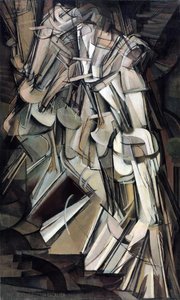
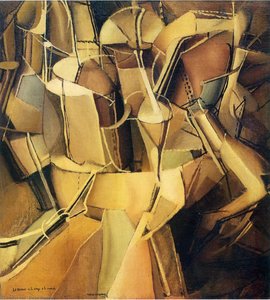
Marcel Duchamp’s “Alegoría de Género (George Washington)” is not merely a portrait; it's an invitation to a profound meditation on the nature of representation, history, and the very essence of American identity. This arresting work transcends the conventional boundaries of traditional portraiture, plunging instead into a realm of spectral ambiguity and unsettling beauty. Duchamp, a master provocateur who relentlessly challenged artistic norms, doesn’t offer a straightforward likeness of the first president. Instead, he presents a dissolving, almost ethereal image – a fragmented echo emerging from a swirling darkness, forcing us to confront not just *what* is depicted, but *how* we perceive it and what that perception reveals about our own understanding of the past.
The artwork’s core lies in its deliberate subversion. Duchamp, deeply fascinated by the complexities of gender roles and societal constructs within American culture, masterfully juxtaposes the iconic figure of George Washington with the concept of “gender.” This isn't a simple assertion; it’s a critical deconstruction – questioning not only *who* we choose to celebrate as national heroes but also the very foundations upon which that celebration rests. The scattered, star-like shapes that punctuate the composition—perhaps alluding to the stars on the American flag or hinting at a broader, more expansive cosmic or spiritual dimension—add layers of symbolic richness and invite endless interpretation.
Style & Technique: A Fusion of Surrealism and Expressive Impasto
“Alegoría de Género” exists at the fascinating intersection of Surrealism and Expressionism. While Duchamp resisted rigid categorization, this piece undeniably embodies characteristics of both movements. The dreamlike atmosphere, a hallmark of Surrealism, is coupled with an intense emotional resonance—a prioritization of feeling over precise representation, characteristic of Expressionism. Duchamp’s masterful technique is immediately apparent in his use of impasto – building up thick, tactile layers of oil paint to create a palpable texture that seems almost sculptural. This isn't simply paint applied to canvas; it’s a dynamic surface, imbued with the weight of history and the inevitable erosion of time. The visible brushstrokes are not concealed but celebrated as integral components of the artwork’s expressive power – they speak volumes about the artist’s process and his deliberate engagement with the material.
Symbolism & Historical Context: A Provocative Allegory
The title itself, “Allegory of Gender (George Washington),” is deliberately provocative and layered with meaning. Duchamp's interest in gender roles was a constant thread throughout his career, often manifesting in works that challenged conventional expectations. The juxtaposition of the revered figure of Washington with the concept of "gender" suggests a critical examination of American heroism – questioning not only *who* we choose to elevate as national figures but also the very foundations upon which that elevation rests. The composition’s somber background evokes a sense of mystery and melancholy, hinting at the inherent complexities and contradictions within the nation's history. Created during a period of significant social and political upheaval in America – the early 20th century – this work reflects Duchamp’s skepticism towards established norms and authority, mirroring a broader cultural questioning of traditional values.
Emotional Impact & Interior Design Considerations
"Alegoría de Género" is not intended for passive viewing; it demands active engagement. The ambiguous form and muted color palette evoke feelings of introspection, contemplation, and perhaps even a subtle unease – a gentle challenge to our preconceived notions. It’s a piece that sparks conversation and compels viewers to confront their own biases and assumptions about history, identity, and the nature of representation itself. In an interior design context, this artwork would serve as a powerful focal point in a study, library, or living space with a modern or eclectic aesthetic. Its subdued color scheme complements neutral palettes while adding depth and sophistication. The textural richness provides visual interest without overwhelming the surrounding décor. Strategic lighting will further enhance the impasto’s effect, drawing attention to the artwork's dynamic surface and emphasizing its evocative qualities. This piece is ideal for those who appreciate art that provokes thought and invites ongoing interpretation – a true statement piece that transcends mere decoration.
About the Artist: Marcel Duchamp (1887-1968)
Born in France, Marcel Duchamp was a pivotal figure in 20th-century art. Initially experimenting with Post-Impressionism, he quickly evolved into a key innovator of Cubism, Dada, and Conceptual Art – though he fiercely resisted any single label. His most famous work, *Fountain* (1917), a signed urinal presented as sculpture, remains one of the most influential and controversial artworks ever created, fundamentally challenging traditional notions of art itself. Duchamp’s legacy lies in his relentless questioning of artistic conventions and his pioneering exploration of ideas over aesthetics. He was a true visionary, forever altering our understanding of what art could be.
Схожі витвори мистецтва


Біографія митця
Marcel Duchamp: A Revolutionary Spirit
Marcel Duchamp, born Henri-Robert-Marcel Duchamp in 1887 in Blainville-Crevon, Normandy, was more than an artist; he was a philosophical provocateur who fundamentally altered the course of modern art. His early life, though seemingly conventional – nurtured within a family that appreciated artistic expression with both brothers pursuing successful careers as artists – hinted at the iconoclasm to come. Duchamp initially pursued formal training, mastering traditional techniques and experimenting with post-impressionist styles. However, this academic foundation served not as an end in itself, but as a springboard for questioning the very nature of art, its purpose, and its definition. He wasn’t content merely to depict the world; he sought to challenge how we perceive it, and what constitutes artistic value. This restless intellectual curiosity would become the defining characteristic of his prolific career.Early Artistic Explorations: Cubism and Impressionism
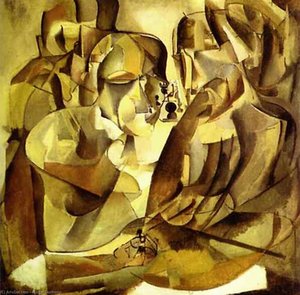
Duchamp's initial foray into art began with a fascination for Cubism, spearheaded by Pablo Picasso and Georges Braque. Influenced by Cézanne’s exploration of geometric forms and spatial relationships, Duchamp produced works like *Portrait of Chess Players* (1911), demonstrating an early grasp of fragmented perspectives and multiple viewpoints—a decisive departure from the single-point perspective dominant in traditional painting. Yet, he swiftly recognized that simply rearranging visual elements wasn't sufficient to address the deeper philosophical concerns animating him. He diligently honed his skills in watercolor and gouache, mastering techniques that allowed for nuanced tonal gradations and subtle textural variations – skills that would prove invaluable throughout his artistic journey. These formative experiences instilled in him a profound appreciation for craftsmanship while simultaneously fueling his desire to transcend mere representation.The Dadaist Rebellion: Challenging Artistic Conventions
The horrors of World War I profoundly impacted Duchamp’s worldview, shattering his faith in reason and prompting him to embrace Dadaism—a movement born out of utter disillusionment and vehement rejection of logic, rationality, and the established artistic conventions of the time. Dadaists like Tristan Tzara and Hugo Ball sought to dismantle bourgeois values and satirize societal hypocrisy through absurdist poetry, performance art, and collage. Duchamp wholeheartedly embraced this rebellious spirit, producing provocative pieces that deliberately defied aesthetic standards and questioned the role of the artist in society. His Dadaist output included collages incorporating found objects—such as newspaper clippings and photographs—that juxtaposed disparate images to create jarring visual effects. This period solidified his conviction that art should provoke thought and confront uncomfortable truths.The Birth of Conceptual Art: The Readymade Revolution
Duchamp’s most enduring contribution to the history of art arrived in 1917 with the introduction of the ‘readymade.’ Recognizing that artistic creativity didn't necessarily reside in skillful execution but rather in conceptual innovation—the idea behind the artwork—he selected an ordinary manufactured object – Marcel Duchamp famously chose a urinal (*Fountain*) – signed “R. Mutt,” and submitted it to an exhibition organized by Guy Debord and Tristan Tzara. This audacious act challenged the very definition of art, arguing that it was the artist’s intention, not its physical form, that conferred artistic significance. The resulting uproar solidified Duchamp's position as a pioneer of Conceptual Art—a movement that prioritized intellectual discourse over visual aesthetics.Later Works and Legacy: Exploring Symbolism and Complexity
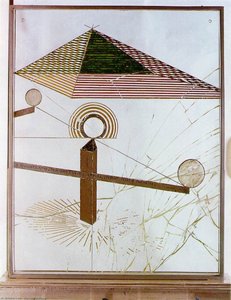
Throughout his subsequent career, Duchamp continued to explore complex themes and intricate visual puzzles. His monumental *The Large Glass* (1915–1923), a labyrinthine assemblage of glass panels adorned with enamel paint and miniature sculptures, represents an ambitious attempt to synthesize Cubist fragmentation with Surrealist dreamlike imagery—a testament to his unwavering commitment to artistic experimentation. He meticulously crafted intricate geometric patterns and explored the interplay between light and shadow, demonstrating a mastery of technique that belied his philosophical stance. Duchamp’s influence extended far beyond the confines of Conceptual Art, inspiring artists across disciplines to question established norms and embrace unconventional approaches. His legacy endures as a symbol of artistic freedom and intellectual courage—a reminder that art can challenge conventions and provoke profound contemplation. He died in Paris in 1968, leaving behind an unparalleled body of work that continues to fascinate and inspire audiences worldwide.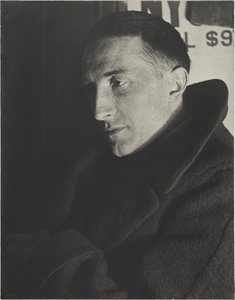
Марсель Дюшан
1887 - 1968 , Франція
Короткі факти
- Artistic Movement Or Style:
- Кубізм
- Дадаїзм
- Концептуальне мистецтво
- Artists Or Movements Influenced By This Artist:
- Концептуальне мистецтво
- Поп арт
- Мінімалізм
- Date Of Birth: 28 липня 1887 р.
- Date Of Death: 2 жовтня 1968 р.
- Full Name: Marcel Duchamp
- Nationality: Французький
- Notable Artworks:
- Фонтан
- Л.Х.О.О.К.
- Велике скло
- Боîte-en-valise
- Place Of Birth: Блейнвіль-сюр-Мер, Франція
Пов'язані статті

From Concept to Canvas: Leveraging Digital Mockups for Precision & Client Satisfaction in Custom Oil Painting Reproduction
Transform your vision into reality with AllPaintingsStore's custom oil painting reproductions. Experience precision & peace of mind through our expert digital mockup process, ensuring a flawless masterpiece tailored to your style. Discover the art of bespoke creation today!

Marcel Duchamp: Challenging Conventions & Redefining Art in the 20th Century
Explore the revolutionary art of Marcel Duchamp! Discover how his Dadaist readymades challenged artistic conventions & redefined modern art. A deep dive into 'Fountain', conceptual shifts, and his lasting impact.

Від миттєвого знімка до вічного полотна: мистецтво перетворення туристичної фотографії на безсмертний олійний живопис
Перетворіть ваші улюблені фотографії на безсмертні олійні живописи ручної роботи! Професійні художники, висока якість, індивідуальний підхід. Замовте ексклюзивний подарунок або прикрасьте свій інтер'єр шедевром від AllPaintingsStore.com.

From Imagination to Canvas: Commissioning Bespoke Fantasy Art with Traditional Oil Painting Techniques
Commission breathtaking bespoke fantasy art with skilled oil painters. Explore techniques, artist selection & preservation tips. Invest in a unique masterpiece today!
Топ-10 легендарних шедеврів олійного живопису, які змінили мистецтво назавжди | AllPaintingsStore.com
Відкрийте для себе 10 легендарних шедеврів олійного живопису, які змінили світ мистецтва! Історія Ван Гога, Моне та інших геніїв. Репродукції картин преміум-класу для вашого дому на AllPaintingsStore.com. Дослідіть колекцію онлайн!