


 Переглянути в інтер'єрі
 Надіслати як листівку
 Поділитися
 Деталі витвору
 Посібник

 Завантажити
 Схожі екземпляри
 Рентгенівське дослідження
 Слайд-шоу
 Питання та відповіді
 Статистика
Procession

- 100.0 x 100.0 cm


 Розгорнути текст
Гікле / Художній принт
Друк جيкле або на полотні музейної якості з оперативним виготовленням та різноманітними варіантами фінішної обробки. ( Замовити картину ручної роботи Перейти до цифрових зображень)




P118B ₴10

P118H ₴10

P118W ₴10

P438Z ₴10

P508JH ₴12

P508YH ₴12

P805H ₴10

P805Z ₴10

P919BZ ₴10

P919G ₴10

P919XJ ₴10

P959ZH ₴10

P968JZ ₴12

W106C ₴8

W218G ₴10

W218JH ₴8

W218Y ₴10

W307PJ ₴10

W316G ₴10

W316PJ ₴8

W316Y ₴10

W398PJ ₴8

W4111J ₴10

W500HY ₴15

W500JH ₴15

W692G ₴12

W849H ₴8

W940BG ₴15

W953PJ ₴8




Обирайте з наших стандартних розмірів, що відповідають оригінальним пропорціям твору мистецтва.

Введіть необхідну ширину та висоту, щоб принт ідеально підійшов до вашої рами або стіни. Принт можна лише обрізати, але не можна зробити більшим за оригінал, тому при зміні пропорцій частина зображення буде втрачена. Перед друком ми надсилаємо вам цифровий макет для затвердження. Зображення на цій сторінці не відображає реальну обрізку — її можна побачити лише на макеті.
Доставка по всьому світу () за 2 тижні замість стандартних 4/5 тижнів. (13 Листопад)

Безкоштовна експрес-доставка по всьому світу

Високоякісне лляне полотно

Повне страхове покриття доставки

Гарантія повернення митних зборів

Гарантія точного відтворення кольорів

Політика повернення протягом 100 днів (лише у разі виявлення дефектів)

Гарантія повернення 100% коштів

Пропозиція на оптові замовлення
 Скляний варіант доступний лише для розмірів до 110 см

Procession
Гікле / Художній принт
Розмір репродукції
-


Підсумкова вартість
₴ 2927
An Unsettling Dance of Life and Mortality
In the hauntingly beautiful masterpiece "Procession," created in 1911, Egon Schiele invites us into a psychological landscape where the boundaries between reality and inner turmoil dissolve. This seminal work of Expressionism serves as much more than a mere depiction of a group of figures; it is an immersive descent into the anxieties of the early twentieth century. As we gaze upon the canvas, we are immediately struck by the tension held within the composition. Schiele masterfully positions two women in the foreground, their presence anchoring an otherwise fragmented and surreal environment. One woman cradles a sleeping infant, a tender moment of maternal instinct that feels strangely fragile against the backdrop of unsettling, skeletal forms and heavy, somber tones. The painting captures a profound sense of human interaction, yet it is an interaction steeped in a quiet, existential dread.
The emotional weight of the piece is amplified by Schiele’s revolutionary use of line and form. Eschewing the polished perfection of traditional realism, he employs bold, angular, and often jagged lines that seem to vibrate with nervous energy. The figures are characterized by elongated limbs and distorted proportions, a hallmark of the Expressionist style designed to communicate raw, unadulterated feeling rather than anatomical accuracy. Through these deliberate distortions, Schiele creates a sense of instability, mirroring the psychological fragmentation of his subjects. The color palette, dominated by muted ochres, deep browns, and earthy tones, wraps the scene in a melancholic shroud, ensuring that every brushstroke contributes to the overarching atmosphere of somber reflection.
Symbolism and the Cycle of Existence
Beyond its striking visual impact, "Procession" is a profound meditation on the stages of human life and the inevitability of fate. Scholars often interpret the figures within the work as symbolic representations of existence itself. The presence of the infant suggests the beginning of life, while the more emaciated, weathered faces of the older figures hint at the progression toward decay. Some even see a deeply personal narrative woven into the paint—a reflection of Schiele’s own family history, where the figures might represent his father and mother, caught in an eternal, ghostly parade. This layer of symbolism transforms the painting from a historical snapshot into a timeless allegory of mortality, making it a piece that resonates deeply with anyone who has contemplated the fleeting nature of time.
For the discerning collector or interior designer, "Procession" offers a unique opportunity to introduce a conversation piece of immense intellectual and aesthetic depth into a space. A high-quality reproduction of this work does not merely decorate a wall; it commands attention, providing a focal point that invites contemplation and evokes a sense of historical gravity. Whether placed in a contemporary gallery setting or a classic study, the painting’s ability to balance raw emotion with sophisticated technique makes it an enduring choice for those who appreciate art that challenges the soul and enriches the environment with its complex, haunting beauty.
Питання та відповіді
Якому етапу кар'єри Еґон Шіле відповідає дата створення «Procession» (1911 рік)?
Зважаючи на дату створення — 1911, твір "Procession" належить до Mature Period творчості Еґон Шіле.
Який формат у "Procession"?
«Procession» роботи Еґон Шіле має Квадрат формат. Формат визначає пропорції композиції.
Де найкраще повісити репродукцію «Procession» роботи Еґон Шіле?
Завдяки своїй формі Квадрат, репродукція «Procession» чудово підійде для Вітальня.
Схожі твори мистецтва


Біографія митця
Життя Еґона Шілеля
Тулн у Нижній Австрії стає місцем, де починається шлях Еґона Шілеля. Народившись 12 червня 1890 року, він приходить у світ, зумовлений жорсткими структурами Австро-Угорської імперії. Його батько, Адольф Шілель, працює начальником місцевої станції Австрійських федеральних залізниць. Мати, Марія, відома під дівочим прізвищем Соукуп. У межах сім'ї Еґон росте разом зі трьома сестрами: Ельвірою, Мелані та Гертрудою.
Стабільність цього домашнього життя руйнується ще в ранньому віці. Тінь хвороби проноситься крізь оселю, залишаючи незгладимий слід у психіці юного митця. Ці особисті потрясіння не просто минають — вони проникають у саму суть його майбутніх творів. Він іде світом з такою чутливістю до смертності, яка згодом визначить його місце в австрійському експресіонізмі. Його існування перетворюється на нескінченну боротьбу, на спробу перенести внутрішню напругу на поверхню полотна.
Його шлях веде його до самого серця мінливого європейського ландшафту. Він прокладає свій маршрут крізь напругу між традиційними академічними очікуваннями та невблаганною потребою у сирій, психологічній правді. Життя Еґона Шілеля — це серія інтенсивних, часто некомфортних зіткнень із людським буттям. Він не прагне зобразити світ таким, яким він постає перед оком, але таким, яким він вібрує в людській нервовій системі.
Ранні роки, сім'я та навчання
Стабільність юності Шілеля руйнується у 1904 році. Його батько, Адольф Шілель, начальник станції, помирає від сифілісу. Ця хвороба, підхоплена під час медового місяця в Трісті, залишає сім'ю збіднілою, а психіку юного митця — позначеною тінню батьківського ментального розладу та гніву. Еґон росте разом зі своїми трьома сестрами, Ельвірою, Мелані та Гертрудою, під опікою свого дядька по дружині, Леопольда Цігачека. Навіть у ці буремні роки в ньому зберігається захоплення потягами — мотив, який згодом з'явиться у його творчості.
Формальне навчання починається під керівництвом репетитора Людвіга Карла Штрауха. До 1906 року Шілель переїжджає до Відня, щоб навчатися в Академії образотворчих мистецтв (Akademie der bildenden Künste). Атмосфера там надзвичайно сувора. Він дедалі більше відчуває розлад із ультраконсервативним підходом професора Крістіана Гріпенкерля. Це протистояння стає нестерпним. Після трьох років перебування в полоні жорстких академічних традицій, Шілель повністю залишає Академію, щоб прокласти свій власний, незалежний шлях.
Переломний момент настає під час зустрічі з Густавом Клімтом. Визнаний майстер стає його наставником, надаючи молодому художнику моделей та знайомлячи його з колами Віденського сецесіону. Цей зв'язок стає точкою переходу від студента, що бореться з традицією, до центральної постаті бурно зростаючого авангарду.
Художній розвиток у Відні
Відень стає епіцентром творчого протистояння Еґона Шілеля. Прокладаючи свій шлях крізь мистецькі кола міста, він зрештою зустрічає Густава Клімта. Ця зустріч стає поворотним моментом у його траєкторії. Хоча він вбирає у себе вплив свого наставника, Шілельє не просто відтворює декоративні візерунки Сецесії. Натомість він починає позбавлятися зайвого оздоблення, прагнучи знайти більш вісцеральну, первісну істину. До 1909 року він вже активно кидає виклик усталеному порядку, стаючи співзасновником Neues Wiener Kunstgruppe та Neukunstgruppe. Ці мистецькі об'єднання стають маніфестом його розриву з традицією.
Його перебування у місті характеризується невпинним рухом між урбаністичними центрами та тихими околицями. Він працює у Відні, Кремсі, Клостернойбурзі, Нойленгбаху та Празі. Цей географічний розмах стає дзеркалом психологічного розширення його духу. Мистецтво Шілеля еволюціонує від формальних обмежень раннього навчання до сирого, незахищеного дослідження людського буття. Напруга тієї епохи чітко простежується у його еволюції ескізів та композицій.
- Портрет Леопольда Цігачека, 1907
- Портрет арткритика Артура Росслера, 1910
- Композиція з трьома чоловічими нагими, 1910
Техніка та експресіоністський стиль
Лінія є головним двигуном візії Шілеля. Вона не просто окреслює форму, а вібрує нервовою, неспокійною енергією. Він використовує експресивні лінії, щоб картографувати психологічну напругу, що часто виливається у викривлені пози та покручену форму тіла. Фігури здаються подовженими, їхні кінцівки розтягнуті поза межами природних пропорцій, щоб передати відчуття тривоги. Це не прагнення анатомічної досконалості, а спроба оголити внутрішній стан об'єкта. Відтінки шкіри часто виглядають виснаженими або хворобливими, підкреслюючи відчуття крихкості та фізичної вразливості.
Його технічний підхід змінюється залежно від матеріалу, проте інтенсивність залишається незмінною. У своїх акварелях він використовує вільні кольорові розмиви для створення глибини та настрою, часто залишаючи значну частину паперу порожньою, щоб посилити відчуття ізоляції. Працюючи олією на полотні, він використовує той самий гострий, різкий мазок, що і в його графіці. Виходячи за межі двовимірного простору, він також досліджував форму через скульптуру, працюючи з глиною та гіпсом, щоб зафіксувати вагомість людської присутності.
Ключові твори та тематика
Полотно перетворюється на простір психологічних розкопок. Через призму безкомпромісної чесності Еґон Шілельє протистоїть важкій присутності смерті, сексуальності, тривоги та самотності. У 1915 році він створює Смерть і дівчину — твір, де присутність смертності переплітається з еросом. Фігури перебувають у стані напруги, що відображає внутрішню боротьбу, яка визначає його художнє бачення. Він часто повертається до людської форми, щоб зафіксувати ці невидимі стани, використовуючи тіло як посудину для складнощів буття.
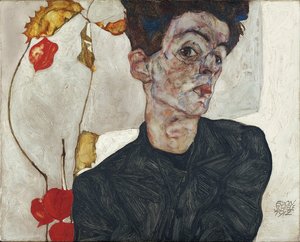
Автопортрет у його творчості виступає постійним методом інтроспекції. Він не прагне представити вилизаний, ідеалізований образ, а натомість показує вразливість, часто зображуючи себе у викривлених або виснажених станах. У Автопортреті з фізалісом він використовує рослину фізаліс як повторюваний мотив. Ця рослина з її тендітною, паперовою оболонкою символізує скороминущність і крихкість життя. Цей ботанічний елемент підкреслює його одержимість темою розпаду та мінливою природою людського існування.
Його інтимні зв'язки також знаходять своє відображення в композиціях. У 1915 році він пише Портрет Едіт Шілельє, закарбовуючи свою дружину у манері, що відображає його специфічну експресивну мову. Його об'єкти рідко бувають статичними; вони пульсують нервовою енергією, що дзеркально відображає мінливі соціальні та психологічні ландшафти тієї епохи. Нижче наведено твори, що є знаковими віхами у дослідженні цих тем:
- Смерть і дівчина (1915)
- Автопортрет з фізалісом
- Портрет Едіт Шілельє (1915)
Пізні роки та смерть
Ландшафт життя Еґона Шілеля змінюється з наближенням Першої світової війни. Він одружується з Едіт Хармс — цей союз стає важливим особистим переходом у його долі. Проте стабільність сімейного життя швидко переривається вимогою конфлікту. Його призивають на військову службу — період, що занурює художника у хаос, який неминуче несе з собою війна.
Кінець приходить раптово, з жорстокою біологічною нещадністю. У 1918 році Відень охоплює пандемія іспанського грипу. Вірус забирає життя Еґона Шілеля, коли йому лише 28 років. Він помирає 31 жовтня 1918 року. Його кончина стається невдовзі після смерті його дружини Едіт, яка також не витримала цієї хвороби. Життя митця обривається раптово, залишаючи по собі спадок творчості, що втілює напругу світу, який перебуває на межі краху.
Спадщина та мистецький вплив
Еґон Шілельє постає з епохи початку XX століття як провідна поста австрійського експресіонізму. Його відхід від декоративного золота сецесії у бік більш вісцерального, психологічного дослідження людської форми докорінно змінив траєкторію фігуративного живопису. Він знімав зовнішню оболонку, щоб закарбувати на полотні нервову систему, використовуючи гострі, неспокійні лінії для передачі трепету тривоги та пристрасті. Цей фокус на внутрішньому ландшафті, а не на ідеалізованій красі, утвердив його як одного з найвидатніших фігуративних художників тієї епохи.
Вплив його творчості виходить далеко за межі Відня. Наступні покоління митців знаходили приклад у його радикальній чесності, особливо ті, кого притягували темніші та складніші шари людської психіки. Його здатність перетворювати особисту травму та екзистенційну напругу на універсальну візуальну мову гарантує йому місце в дискурсі сучасного мистецтва. Сьогодні його картини зберігаються у провідних музейних колекціях по всьому світу, залишаючись незамінними свідченнями психологічних зсувів його часу.
- Автопортрет з фізалісом
- Пара в обіймах
- Пейзаж поля (Кройцберг біля Крумау)
- Смерть і дівчина
Де можна побачити ці твори сьогодні
Велич та емоційна напруга спадщини Шілеля найсильніше відчуваються у Відні. Музей Леопольда зберігає величезну концентрацію його творів, невпинно оберігаючи первісну енергію його ескізів та полотен. Неподалік, у Австрійській галереї Бельведер, розміщені знакові полотна, серед яких Смерть і дівчина (1915). Інституційна спадщина міста продовжує охороняти його творчий шлях через Історико-художній музей та Альбертину, обидва з яких володіють ключовими витворами з його творчого корпусу.
За межами австрійської столиці, у чеському містечку Чешський Крумлов, відкритий Центр мистецтва Еґона Шілеля, що пропонує спеціалізований простір для вивчення його творчості. Цей музей простежує еволюцію художника через постійну колекцію, що включає акварелі та графіку тушшю. У цій атмосфері відвідувачі можуть відчути особливу інтенсивність його ліній, що зосереджена на розкритті його експресивного стилю.
- Смерть і дівчина (1915)
- Автопортрет з фізалісом
- Пара в обіймах
- Сім'я
Еґон Шіле
1890 - 1918 , Австрія
Короткі факти
- Artistic Movement Or Style: Австрійський експресіонізм
- Artists Or Movements Influenced By This Artist: ['Австрійський експресіонізм']
- Artists Who Influenced This Artist: ['Густав Клімт']
- Date Of Birth: 1890
- Date Of Death: 1918
- Full Name: Еґон Шілельє
- Nationality: Австрієць
- Notable Artworks:
- Автопортрет з фізалісом
- Пара, що обіймається
- Пейзаж поля (Кройцберг біля Крумау)
- Смерть і дівчина
- Place Of Birth: Відень, Хорватія
Пов'язані статті

Unveiling Raw Emotion: The Top 25 Masterpieces by Egon Schiele
Immerse yourself in the raw emotion of Egon Schiele. Explore 25 iconic masterpieces of Austrian Expressionism, from haunting portraits to legendary sketches. Find inspiration for your collection with museum-quality art reproductions. Discover all masterpieces on AllPaintingsStore.com.


