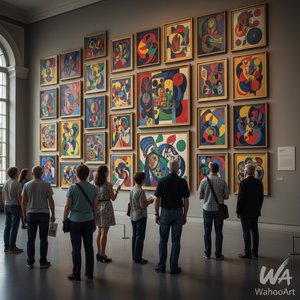
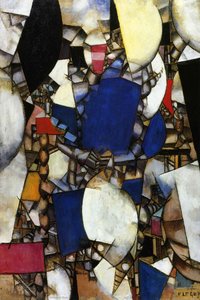
1914. Acrylic On Canvas, 80.0 x 65.0 cm.

§ 1Дані каталогу

- 80.0 x 65.0 cm


§ 2Абстракція
Опис експоната
Fernand Léger’s "Composition VIII" embodies the energy of industrial progress through bold geometric shapes and vibrant hues—a cornerstone of abstract expressionism.
 Розгорнути текст
Біографія митця
Фернан Леже (1881-1955) – французький художник, піонер кубізму та "Тюбізму". Його картини відображають сучасність, механіку та людську фігуру – передісторія поп-арту!
§ 3Коментар
Fernand Léger’s “Composition VIII”: A Symphony of Steel and Soul
Fernand Léger’s “Composition VIII,” completed in 1914, stands as an emblem of the burgeoning Expressionist movement and a profound reflection on the transformative influence of industrialization upon artistic sensibilities. Painted during a period marked by unprecedented technological advancements – the rise of automobiles, factories churning out goods at breathtaking speed – Léger sought to distill the frenetic energy of this new era into a visual vocabulary that transcended mere imitation.
- Subject Matter: The canvas explodes with geometric forms—circles, squares, triangles—arranged in a dynamic interplay of overlapping planes. These shapes aren’t merely decorative; they represent abstracted representations of machinery – pistons, gears, wheels – capturing the rhythm and repetition inherent in industrial production.
- Style: Léger’s style is undeniably Expressionist, prioritizing emotional impact over meticulous realism. He abandons traditional perspective, opting instead for a flattened surface that emphasizes the materiality of pigment and creates a sense of immediacy and unrestrained energy.
- Technique: Léger employed a bold palette dominated by yellows, oranges, reds, and blacks—colors deliberately chosen to convey heat, movement, and dissonance. His technique involved applying paint thickly onto canvas, layering colors and textures to build up sculptural surfaces that resist conventional notions of flatness.
Historical Context: Léger’s artistic endeavors coincided with the burgeoning anxieties surrounding the rapid pace of industrial progress. Artists like Picasso and Matisse were grappling with similar questions about how to depict the modern world, rejecting academic conventions in favor of subjective expression. “Composition VIII” embodies this spirit of rebellion against established norms.
- Symbolism: The geometric shapes themselves carry symbolic weight, representing not only machines but also fundamental principles of order and chaos—the forces shaping human civilization. Léger’s deliberate use of contrasting colors underscores the tension between beauty and ugliness, harmony and discord – mirroring the complexities of life in the industrialized age.
Emotional Impact: Viewing “Composition VIII” evokes a visceral response—a feeling of disorientation mingled with exhilaration. Léger’s masterful manipulation of color and texture compels the viewer to confront the unsettling grandeur of the machine age, prompting contemplation on its transformative effects on human experience. It's a painting that refuses easy categorization, demanding engagement and rewarding repeated observation.
Interior Designer Considerations: “Composition VIII” lends itself beautifully to interior spaces seeking a bold statement piece. Its vibrant hues and sculptural surfaces can inject energy into minimalist interiors or serve as a counterpoint to ornate baroque styles—creating an unforgettable visual dialogue.
Питання та відповіді
Кольори «Contrast of forms» роботи Леже насичені чи приглушені?
Кольори твору «Contrast of forms» роботи Леже мають Balanced Soft насиченість. Насиченість визначає, наскільки яскравими або приглушеними є кольори.
Наскільки гармонійними є кольори у творі «Contrast of forms» роботи Леже?
«Contrast of forms» роботи Леже демонструє Discordant Palette колірну гармонію.
Чи можу я детальніше розглянути "Contrast of forms"?
Рентгенівський зріз «Contrast of forms» роботи Леже представлений на сторінці Рентгенівське дослідження твору: це інтерактивне дослідження зображення крізь одинадцять оптичних шарів.





 Перейти до друку


 Для творів мистецтва або репродукцій, розмір яких перевищує 105 см (приблизно 41 дюйм) з будь-якого боку, рама доставляється у вигляді розібраного комплекту. Такий метод гарантує безпечну доставку та запобігає пошкодженням під час транспортування.