


 Надіслати як листівку
 Поділитися
 Деталі витвору
 Посібник

 Завантажити
 Схожі екземпляри
 Слайд-шоу
 Питання та відповіді
 Статистика
Apolinere Enamelled

- 33.0 x 25.0 cm


 Розгорнути текст
Мистецький твір, представлений на цій сторінці, захищений законом про авторське право, що унеможливлює легальне створення або продаж його ідентичної репродукції. Цей захист забезпечується відповідно до міжнародних угод, таких як Бернська конвенція та національним законодавством, зокрема положеннями, що викладені в Законодавство США про авторське право — Розділ 17. Всі права захищені. Будь-яке використання без дозволу заборонено.
Цей метод повністю відповідає нормам авторського права, оскільки він не передбачає копіювання чи дублювання захищеного твору мистецтва. Натомість це творче переосмислення — створення нового малюнка під впливом оригіналу, який не є його точним відтворенням.
Гікле / Художній принт
Друк جيкле або на полотні музейної якості з оперативним виготовленням та різноманітними варіантами фінішної обробки. ( Замовити картину ручної роботи Перейти до цифрових зображень)




































Обирайте з наших стандартних розмірів, що відповідають оригінальним пропорціям твору мистецтва.

Введіть необхідну ширину та висоту, щоб принт ідеально підійшов до вашої рами або стіни. Принт можна лише обрізати, але не можна зробити більшим за оригінал, тому при зміні пропорцій частина зображення буде втрачена. Перед друком ми надсилаємо вам цифровий макет для затвердження. Зображення на цій сторінці не відображає реальну обрізку — її можна побачити лише на макеті.
Доставка по всьому світу () за 2 тижні замість стандартних 4/5 тижнів. (3 Листопад)

Безкоштовна експрес-доставка по всьому світу

Високоякісне лляне полотно

Повне страхове покриття доставки

Гарантія повернення митних зборів

Гарантія точного відтворення кольорів

Політика повернення протягом 100 днів (лише у разі виявлення дефектів)

Гарантія повернення 100% коштів

Пропозиція на оптові замовлення
 Скляний варіант доступний лише для розмірів до 110 см

Apolinere Enamelled
Гікле / Художній принт
Розмір репродукції
-


Підсумкова вартість
₴ 2930
A Quiet Rebellion in Enamel
In the vast, often turbulent landscape of early twentieth-century modernism, Marcel Duchamp’s “Apolinère Enamelled” stands as a profound moment of deceptive stillness. At first glance, the viewer is greeted by a scene of domestic tranquility: a young girl seated upon a white bed, framed by the soft, sunny presence of yellow rails. There is an undeniable charm to this tableau, a sense of innocence captured in a moment of repose. Yet, for those who look beneath the luminous surface, the painting reveals itself as much more than a simple portrait. It is a calculated piece of intellectual architecture, a work that uses the language of serenity to whisper—and sometimes shout—a rebellion against the very foundations of traditional art.
Executed in 1916, during the height of the First World War, the painting breathes the spirit of Dadaism. While the world outside was fracturing under the weight of global conflict, Duchamp was busy dismantling the sanctity of the "retinal" experience—art that exists solely for the pleasure of the eye. Through this work, he began his lifelong journey of prioritizing the concept over the craft, inviting us to question why we find certain objects beautiful and others mundane. The presence of everyday items, such as the simple bowls and the unassuming chair, serves to elevate the commonplace, challenging the viewer to find profound meaning within the ordinary.
The Elegance of Minimalist Precision
Technically, “Apolinère Enamelled” is a masterclass in restrained composition. Duchamp employs a style that leans toward the simplified geometries of early Cubism, yet he strips away the characteristic fragmentation and complexity found in the works of Picasso or Braque. Instead, he offers a clean, almost architectural clarity. The palette is intentionally muted, dominated by soothing whites and warm, sun-drenched yellows that lend the scene an ethereal, polished glow. This effect is heightened by the use of the enamel technique, which imparts a smooth, glass-like sheen to the surface, making the light appear as though it is trapped within the paint itself.
For the discerning collector or interior designer, this painting offers a unique versatility. Its minimalist aesthetic and luminous texture allow it to serve as a sophisticated focal point in contemporary spaces. The work does not demand attention through aggressive colors or chaotic movement; rather, it commands the room through its poised elegance and structural balance. It possesses that rare quality of being both a calming presence and a conversational catalyst—a piece that anchors a room with its quiet strength while inviting deep intellectual engagement.
A Legacy of Conceptual Brilliance
To possess a reproduction of this work is to hold a fragment of art history’s most radical revolution. Duchamp’s ability to blend the aesthetic beauty of an enamel finish with the subversive intellect of the Dada movement creates a tension that remains as potent today as it was in 1916. The painting acts as a bridge between the classical tradition of portraiture and the avant-garde future of conceptual art. It reminds us that true artistic value resides not just in the skill of the hand, but in the audacity of the mind.
Whether displayed in a curated gallery setting or integrated into a modern living space, “Apolinère Enamelled” brings with it an atmosphere of thoughtful sophistication. It is an invitation to pause, to look closer, and to find beauty in the quiet, subversive moments of existence. For those seeking to surround themselves with art that inspires both the soul and the intellect, this masterpiece remains an essential cornerstone of the modern collection.
Питання та відповіді
Кольори «Apolinere Enamelled» роботи Марсель Дюшан насичені чи приглушені?
Кольори твору «Apolinere Enamelled» роботи Марсель Дюшан мають Clear Color Presence насиченість. Насиченість визначає, наскільки яскравими або приглушеними є кольори.
Хто створив "Apolinere Enamelled" і в якому році?
«Apolinere Enamelled» було створено Марсель Дюшан у 1916 році.
Яким чином твір "Apolinere Enamelled" перегукується з іншими роботами Марсель Дюшан?
У творчому спадку Марсель Дюшан твір "Apolinere Enamelled" витриманий у стилі Cubist Surrealism та перегукується з темами formalism, conceptual challenge, questioning tradition values, iconoclasm artistic critique, fountain, dada legacy.
Схожі твори мистецтва


Біографія митця
Дух революціонера: Життя та мистецтво Марселя Дюшана
Марсель Дюшан, який народився під іменем Анрі-Робер-Марсель Дюшан у 1887 році в Блейнвіль-сюр-Мер, Нормандія, був не просто художником; він був філософським провокатором, що докорінно змінив хід розвитку сучасного мистецтва. Його ранні роки, хоча й здавалися звичайними — він виріс у родині, де цінували мистецьку експресію, а обидва його брати побудували успішні кар'єри митців — вже тоді приховували ознаки майбутнього іконоборства. Спочатку Дюшан проходив класичну підготовку, опановуючи традиційні техніки та експериментуючи з постімпресіоністськими стилями. Однак цей академічний фундамент став не самоціллю, а трампліном для переосмислення самої природи мистецтва, його мети та визначення. Він не бажав просто відтворювати світ; він прагнув кинути виклик тому, як ми його сприймаємо, і що саме створює художню цінність. Ця невпинна інтелектуальна допитливість стала визначальною рисою його плідної творчості.Від кубізму до дадаїзму: Відмова від умовностей
Мистецький шлях Дюшана позначений постійною еволюцією, свідомим позбавленням усталених норм. Його перше залучення до кубізму, що проявилося в таких роботах, як Портрет гравців у шахи (1911), продемонструвало інтерес до фрагментованих форм і множинних перспектив — відхід від традиційної репрезентації. Проте він швидко вийшов за межі суто естетичних турбот, усвідомивши, що простого перерозподілу візуальних елементів недостатньо для вирішення глибинних питань, що вирували в його душі. Жахи Першої світової війни підживили це невдоволення, змусивши Дюшана прийняти дадаїзм — рух, народжений із розчарування та відмови від логіки, розуму й традиційних художніх цінностей. Саме в межах дадаїзму Дюшан по-справжньому почав демонтувати загальноприйняті уявлення про мистецтво. Його не цікавило створення красивих об'єктів; він прагнув провокувати думку, кидати виклик припущенням і викривати довільність естетичного судження. Цей період став часом народження його найбільш радикальної інновації: «ready-made» (готового речі).Ready-mades та підрив основ мистецтва
Впровадження ready-mades — звичайних промислових об'єктів, обраних і представлених як мистецтво — стало найважливішим внеском Дюшана у XX століття. Це не були просто знайдені предмети; це були навмисні акти художнього підриву. Взявши повсякденну річ, таку як пісуар (Фонтан, 1917), підписавши його «R. Mutt» і подавши на мистецьку виставку, Дюшан кинув виклик самому визначенню художньої майстерності та авторства. Чи була це рука художника, що створила твір, чи це була ідея художника? Це питання стало центральним у його практиці та заклало фундамент для концептуалізму. Інші відомі ready-mades, як-от L.H.O.O.Q. (1919) — репродукція листівки з Мона Лізою, на якій з'явилися вуса та еспаньйолка — були грайливою, але гострою критикою історії мистецтва та встановлених культурних ікон. Ці роботи не призначалися для милування їхніми естетичними якостями; вони мали провокувати дискусії та змушувати глядачів переглянути свої упередження про те, що є мистецтвом. Дюшан вірив, що мистецтво має жити в розумі, а не лише в очах.Спадщина та безсмертний вплив
Вплив Марселя Дюшана на наступні покоління митців є безмірним. Він фундаментально змінив наше розуміння мистецтва, проклавши шлях таким напрямам, як концептуалізм, мінімалізм, поп-арт та багатьом іншим. Його акцент на ідеї художника — концепції, що стоїть за твором — над його естетичними якостями продовжує надихати митців і сьогодні.- Кубізм: ранні дослідження роздроблених форм та просторової репрезентації.
- Дадаїзм: відмова від логіки, розуму та традиційних художніх цінностей у відповідь на Першу світову війну.
- Концептуальне мистецтво: акцент на ідеї художнього твору, а не на його естетичних характеристиках.
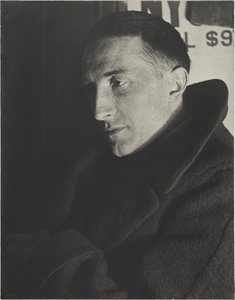
Марсель Дюшан
1887 - 1968 , Франція
Короткі факти
- Artistic Movement Or Style:
- Кубізм
- Дадаїзм
- Концептуальне мистецтво
- Artists Or Movements Influenced By This Artist:
- Концептуальне мистецтво
- Поп арт
- Мінімалізм
- Date Of Birth: 28 липня 1887 р.
- Date Of Death: 2 жовтня 1968 р.
- Full Name: Marcel Duchamp
- Nationality: Французький
- Notable Artworks:
- Фонтан
- Л.Х.О.О.К.
- Велике скло
- Боîte-en-valise
- Place Of Birth: Блейнвіль-сюр-Мер, Франція
Пов'язані статті

Deconstructing Reality: Cubism's Evolution, Impact & Enduring Legacy
Explore the revolutionary world of Cubism with expert insights from AllPaintingsStore. Discover Picasso & Braque's groundbreaking techniques, its philosophical roots, and lasting impact on modern art. Expert appraisal & custom reproductions available.

Marcel Duchamp: Challenging Conventions & Redefining Art in the 20th Century
Explore the revolutionary art of Marcel Duchamp! Discover how his Dadaist readymades challenged artistic conventions & redefined modern art. A deep dive into 'Fountain', conceptual shifts, and his lasting impact.

Jean Dominique Antony Metzinger: Pioneering Cubism & the Evolution of Abstract Form
Explore the life & work of Jean Metzinger, a pivotal Cubist painter and theorist. Discover his innovations in proto-Cubism, 'Du Cubisme,' and Crystal Cubism – a journey through modern art's evolution.

Deconstructing Reality: A Comprehensive Exploration of Synthetic Cubism's Evolution & Impact
Explore the revolutionary world of Synthetic Cubism! Discover its origins, key artists like Picasso & Braque, techniques, and lasting impact on modern art. A comprehensive guide for enthusiasts.

Deconstructing Reality: Cubism's Revolutionary Impact on 20th-Century Art
Explore the revolutionary world of Cubism with AllPaintingsStore. Discover Picasso & Braque's groundbreaking techniques, its philosophical roots, and lasting impact on modern art. Expert insights for collectors.


