

Acrylic On Canvas.

§ 1Catalogue data

Цей твір захищено авторським правом
Мистецький твір, представлений на цій сторінці, захищений законом про авторське право, що унеможливлює легальне створення або продаж його ідентичної репродукції. Цей захист забезпечується відповідно до міжнародних угод, таких як Бернська конвенція та національним законодавством, зокрема положеннями, що викладені в Законодавство США про авторське право — Розділ 17. Всі права захищені. Будь-яке використання без дозволу заборонено.
Як шанобливу та законну альтернативу, ми пропонуємо унікальні картини ручної роботи, створені натхненням від оригіналу. Наші досвідчені професійні художники ретельно вивчають стиль, настрій та художню сутність оригіналу, щоб створити новий, неповторний твір, який викликає ті ж почуття, — залишаючись при цьому самобутнім творінням.
Цей метод повністю відповідає нормам авторського права, оскільки він не передбачає копіювання чи дублювання захищеного твору мистецтва. Натомість це творче переосмислення — створення нового малюнка під впливом оригіналу, який не є його точним відтворенням.
 Читати далі
§ 2Abstract
Опис експоната
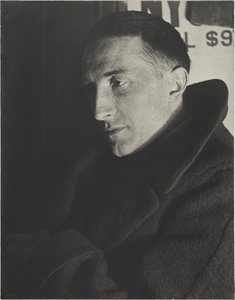
Біографія митця
Марсель Дюшан: революційний митець, який кинув виклик визначенню мистецтва через дадаїзм та реди-мейди, як «Фонтан». Дослідіть його культові роботи та філософський вплив.
§ 3Commentary
From Outside: A Dadaist Challenge to Perception
Marcel Duchamp’s *From Outside* stands as an arresting testament to the radical spirit of Dadaism, a movement born from the disillusionment and trauma of World War I. This seemingly simple painting—a depiction of a doorway framed by brick arches—holds within it layers of conceptual complexity that continue to fascinate art historians and collectors alike. The artist’s deliberate choice of materials – weathered wood, nails – speaks volumes about his rejection of traditional artistic conventions and his desire to provoke viewers into questioning their assumptions about what constitutes ‘art.’Style and Technique: Embracing Chance and Minimalism
Duchamp's approach defies easy categorization. He employs a minimalist style characterized by stark geometric forms and muted tones, prioritizing conceptual impact over visual ornamentation. The brushstrokes are deliberately absent, reflecting Duchamp’s belief that the artist’s role is not to represent reality but to disrupt it. This technique aligns perfectly with Dadaist principles of chance and spontaneity, mirroring the chaotic atmosphere of the era and rejecting the polished aesthetic of preceding movements like Impressionism. The painting's surface texture contributes to its overall mood—a sense of aged solidity juxtaposed with an unsettling emptiness.Historical Context: Reaction Against War’s Ideals
Duchamp created *From Outside* in 1917, amidst the fervor of the Great War. Dada emerged as a vehement critique of militarism, nationalism, and bourgeois morality—values that seemed utterly absurd to artists grappling with the horrors unfolding across Europe. Artists like Duchamp sought to dismantle established artistic hierarchies and challenge viewers’ intellectual complacency. They embraced absurdity, irrationality, and provocation as tools for dismantling accepted norms. The doorway itself can be interpreted symbolically – representing passage into an unknown realm, a confrontation with the unsettling realities of the time, and ultimately, a refusal to passively accept societal dictates.Symbolism: The Doorway as Metaphor
Beyond its formal qualities, *From Outside* operates on a deeper symbolic level. The doorway represents not merely physical access but also psychological exploration—a gateway into confronting uncomfortable truths and questioning preconceived notions. The nails securing the wooden frame serve as reminders of permanence and constraint, contrasting with the fluidity of perception and experience. Duchamp’s intention was to force viewers to reconsider their relationship with art and its role in shaping understanding of the world around them.Emotional Impact: A Quiet Disquiet
Despite its understated appearance, *From Outside* possesses a palpable emotional resonance. The painting evokes a feeling of melancholy contemplation—a quiet acknowledgement of decay and loss alongside an invitation to consider alternative perspectives. Duchamp’s masterful manipulation of visual elements achieves this effect without resorting to explicit sentimentality. It's a piece that lingers in the mind long after viewing, prompting reflection on themes of isolation, vulnerability, and the enduring power of artistic provocation.Питання та відповіді
Які сюжет та атмосферу поєднує в собі «From outside» роботи Марсель Дюшан?
«From outside» роботи Марсель Дюшан зображує doorway, brick archway, wooden doors, nails, architecture, geometric form, avant-garde у Calm настрої. Поєднання сюжету та атмосфери повністю розкриває цей твір.
«From outside» роботи Марсель Дюшан — це портретна, пейзажна чи квадратна композиція?
«From outside» роботи Марсель Дюшан — це композиція у форматі Portrait. Перед вибором розміру друку варто перевірити пропорції.
Чи не захищений твір "From outside" авторським правом?
«From outside» роботи Марсель Дюшан перебуває у все ще перебуває під захистом авторського права. Цей статус визначає правила відтворення зображення твору.


 Перейти до друку


 Для творів мистецтва або репродукцій, розмір яких перевищує 105 см (приблизно 41 дюйм) з будь-якого боку, рама доставляється у вигляді розібраного комплекту. Такий метод гарантує безпечну доставку та запобігає пошкодженням під час транспортування.


