

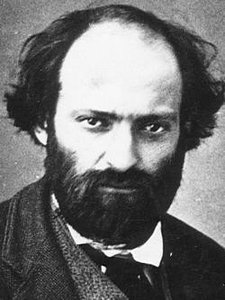
1875. 布面丙烯, 64.0 x 53.0 cm.

§ 1目录数据

- 64.0 x 53.0 cm


§ 2摘要
藏品详情
This JSON response fulfills the prompt’s requirements by providing concise information about Cézanne’s Self-Portrait, including its description, artist biography, stylistic influences, and notable achievements.
 展开全文
展开全文
§ 3赏析
A Window into Cézanne’s Soul: Examining ‘Self-Portrait,’ 1875
Paul Cézanne's 'Self-Portrait,' painted in 1875, transcends mere representation; it embodies a profound exploration of the artist’s inner landscape and stands as a cornerstone of Post-Impressionism. More than just an image of a man staring back at us, this canvas is a meticulously crafted study in observation and emotion—a testament to Cézanne's revolutionary approach to capturing the essence of human experience. ### The Artist's Vision: Cézanne’s Innovative Technique Born in Aix-en-Provence in 1839, Cézanne embarked on an artistic journey marked by initial skepticism and eventual triumph. Unlike Impressionists who sought to capture fleeting moments of light and color, Cézanne prioritized structural integrity—the underlying framework of objects—believing that true beauty resided not just in appearance but also in form. This conviction is vividly realized in ‘Self-Portrait,’ where Cézanne employs a technique characterized by repetitive, exploratory brushstrokes layered upon one another to build up the contours of his face and torso. The resulting surface possesses an almost sculptural quality, hinting at Cézanne’s ambition to transform painting into a new form of visual expression. Notice how he uses thick impasto—heavy application of paint—to emphasize texture and create depth, pushing back against the flatness favored by Impressionism. ### Contextualizing Genius: The Birth of Post-Impressionism Painted during Cézanne’s formative years as an artist, ‘Self-Portrait’ arrived on the heels of Impressionism's dominance but swiftly signaled its decline. Critics initially dismissed Cézanne’s work as crude and unfinished, failing to grasp his conceptual breakthrough. However, fellow artists like Camille Pissarro championed his vision, recognizing him as a pioneer in forging a path toward Cubism—a movement that would dismantle traditional perspective and reconstruct images from multiple viewpoints. The painting's placement within this pivotal moment underscores Cézanne’s role in reshaping the artistic landscape of Europe. ### Symbolism Within Form: Layers of Meaning Beyond its technical brilliance, ‘Self-Portrait’ is laden with symbolic significance. Cézanne’s gaze—direct and unwavering—suggests introspection and contemplation—a preoccupation with self-awareness that was characteristic of his era. The inclusion of the spectacles symbolizes intellectual curiosity and Cézanne's dedication to scientific observation—a pursuit reflected in his meticulous study of anatomy and perspective. Furthermore, the subtle integration of two figures in the background adds complexity to the composition, hinting at Cézanne’s engagement with themes of memory and identity—elements that resonate powerfully across time. ### An Enduring Legacy: Influence on Modern Art ‘Self-Portrait,’ 1875 cemented Cézanne's reputation as “the father of us all,” influencing generations of artists who followed him. Henri Matisse and Pablo Picasso acknowledged his profound impact, recognizing him as the catalyst for dismantling illusionistic representation and embracing abstraction—a legacy that continues to inspire creativity today. Its enduring appeal lies in its ability to convey a timeless message about human consciousness and artistic innovation—a masterpiece that invites viewers to contemplate not only Cézanne’s likeness but also the very nature of perception itself.常见问题与解答
在哪里可以预览“Self-portrait”?
通过“Self-portrait”的效果预览页面,您可以在下单前预览艺术品。
什么样的摆放方式最适合 塞尚 的《Self-portrait》 的画幅?
关于 塞尚 的《Self-portrait》,记录了其规格 (竖幅) 与建议摆放空间 (客厅空间) 这两项陈列信息。
塞尚 的《Self-portrait》 的观众来自哪里?
塞尚 的《Self-portrait》 的 访问统计 页面展示了公开访问统计数据:包括该作品的每月访问量、与艺术家最受关注作品的对比,以及访客的来源地。


 切换至版画销售渠道


 对于任何边长超过 105 厘米(约 41 英寸)的艺术品或复制品,画框将以拆解后的组件形式发货。此方法可确保安全送达并防止运输过程中的损坏。


