

Oil On Canvas.

§ 1目录数据


§ 2摘要
藏品详情
Discover Paul Cézanne’s ‘Self-Portrait (Phillips)’ – a pivotal Post-Impressionist work showcasing his innovative style and geometric approach to art. Explore its rich details & influence on modern art at AllPaintingsStore.
 展开全文
展开全文
§ 3赏析
A Window Into the Soul: Paul Cézanne’s Self-Portrait (Phillips)
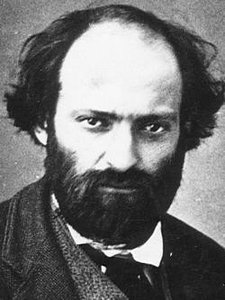
Paul Cézanne's Self-Portrait, painted between 1878 and 1880 – a remarkably intimate work housed within the esteemed Phillips Collection in Washington D.C. – stands as more than just a likeness; it’s a profound meditation on artistic identity, the passage of time, and the very nature of perception. This pivotal piece, belonging to the burgeoning Post-Impressionist movement, offers a rare glimpse into the mind of an artist grappling with his own place within the evolving landscape of European art. Cézanne wasn't simply documenting his appearance; he was constructing a visual statement, meticulously layering observation and emotion onto the canvas.
Emerging from the shadows of Impressionism – that movement’s focus on fleeting light and ephemeral moments – Cézanne sought to delve deeper, to uncover the underlying structure of reality. He rejected the purely optical approach of his predecessors, instead prioritizing form, line, and color as fundamental building blocks. This is strikingly evident in this self-portrait; the simplified background, a muted yellow wall that provides a warm, almost sculptural counterpoint to the figure, directs all attention towards Cézanne himself. The brushstrokes are deliberately visible, not blended into seamlessness but rather retaining their individual character, creating a textured surface that invites close scrutiny.
The Geometry of Being: Cézanne’s Innovative Technique
Cézanne's technique in this portrait is revolutionary for its time. He employed a method he termed “alla prima,” working directly onto the canvas with minimal underpainting, building up color and form rapidly. This approach resulted in a dynamic interplay of planes and angles – a deliberate departure from the smooth, atmospheric effects favored by Impressionists. Notice how Cézanne breaks down his face into geometric shapes: the bald patch on his head is rendered as a distinct plane, the contours of his nose and mouth are sharply defined, and even the folds of his clothing are constructed with careful attention to volume and perspective. This isn’t merely a realistic depiction; it's an exploration of how we *see* – a translation of three-dimensional space onto a two-dimensional surface.
The use of color is equally significant. Cézanne employs a restrained palette, dominated by earthy tones—ochres, browns, and blues—that lend the portrait a sense of quiet dignity. However, within this muted range, he skillfully utilizes subtle shifts in hue to create depth and volume. The warm yellows of the background contrast with the cooler tones of the figure’s skin, drawing the eye inward and emphasizing his presence. He was particularly interested in capturing the effects of light on color, a concept that would profoundly influence later artists like Matisse and Picasso.
A Portrait of Reflection: Symbolism and Emotional Resonance
The direct gaze of Cézanne’s self-portrait is remarkably arresting. He meets the viewer with an expression of quiet intensity – a mixture of seriousness and introspection. There's a hint of melancholy in his eyes, perhaps reflecting the challenges he faced as an artist during a period of critical rejection. Yet, there’s also a sense of resilience, a determination to pursue his artistic vision despite the odds. The portrait isn’t simply about presenting a likeness; it’s about revealing something of Cézanne's inner world – his thoughts, his struggles, and his unwavering commitment to art.
Considering the context of Post-Impressionism, this self-portrait represents a pivotal moment in artistic history. Cézanne was laying the groundwork for modern art, challenging traditional notions of representation and paving the way for abstraction. His work continues to resonate with viewers today because it speaks to universal themes of identity, perception, and the human condition. A high-quality reproduction of this masterpiece offers a tangible connection to one of the most influential artists of all time – an opportunity to bring a touch of timeless elegance and intellectual depth into your home or office.
Bringing Cézanne Home: High-Quality Reproductions
AllPaintingsStore.com is proud to offer meticulously crafted, hand-painted reproductions of Paul Cézanne’s Self-Portrait. Our artisans employ traditional oil painting techniques and archival-quality materials to faithfully recreate the nuances of this iconic work. Each reproduction captures not only the visual details but also the emotional depth and artistic intent of the original. Whether you are an art enthusiast, a collector, or simply seeking a stunning piece of décor, our reproductions provide a beautiful and authentic way to experience the genius of Paul Cézanne.
常见问题与解答
塞尚 的《Self-Portrait (Phillips)》 这件作品的色调是明亮的还是深沉的?
就视觉亮度而言,塞尚 的《Self-Portrait (Phillips)》 呈现出 deep_shadow 的效果。
"Self-Portrait (Phillips)" 属于哪种艺术风格?
“Self-Portrait (Phillips)”是一件Post-Impressionism时期的作品。该艺术流派体现了作品所属的艺术传统。
哪种尺寸的 塞尚 的《Self-Portrait (Phillips)》 打印件更适合推荐的房间?
在Living Room中,建议将"Self-Portrait (Phillips)"打印为Large的大小。


 切换至版画销售渠道


 对于任何边长超过 105 厘米(约 41 英寸)的艺术品或复制品,画框将以拆解后的组件形式发货。此方法可确保安全送达并防止运输过程中的损坏。


