

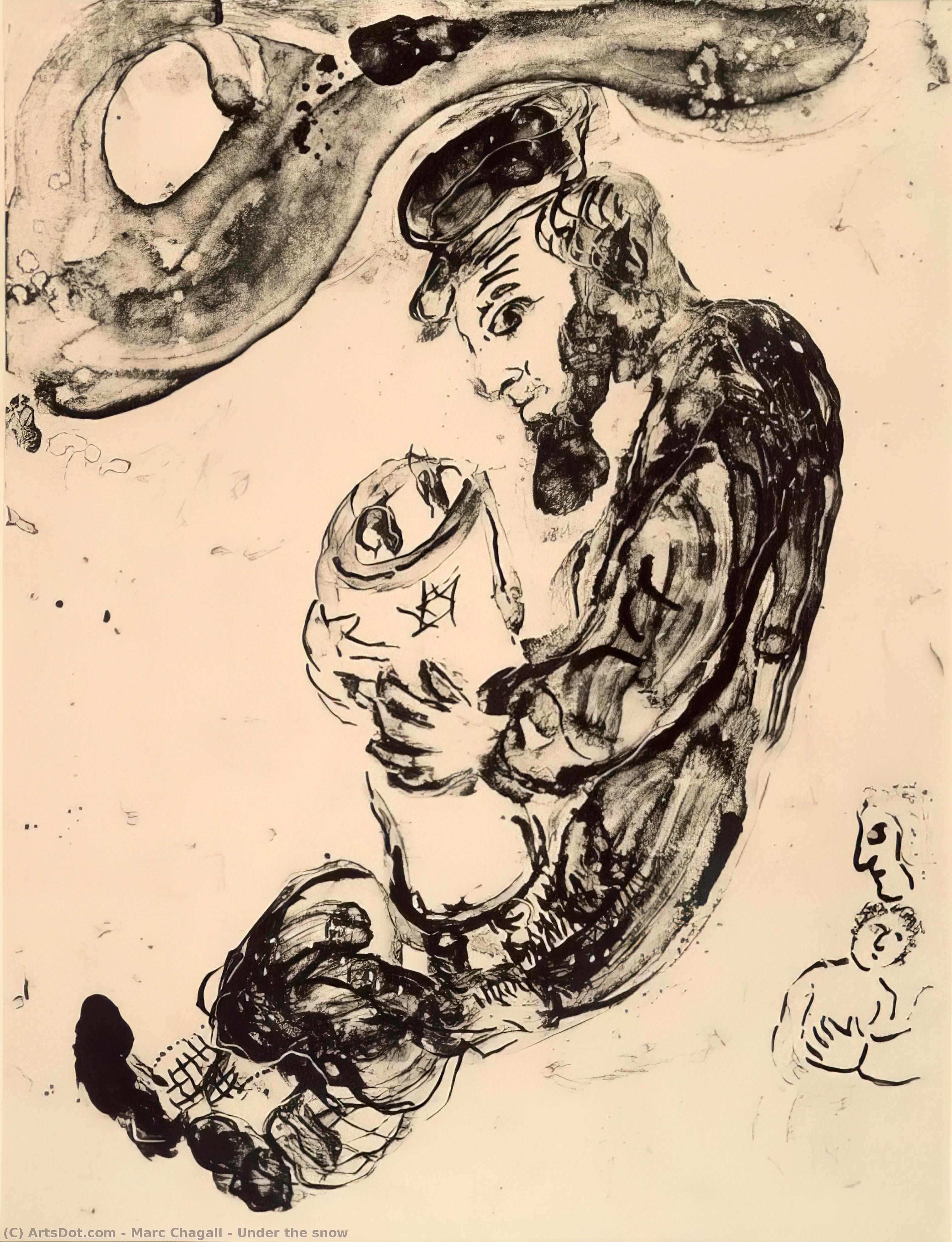
1964. Lithograph, 76.0 x 56.0 cm.
§ 1Catalogue data

- 76.0 x 56.0 cm


Dette kunstværk er ophavsretsbeskyttet
Kunstværket vist på denne side er beskyttet af ophavsretsloven, hvilket betyder, at vi ikke lovligt kan skabe eller sælge en identisk reproduktion. Denne beskyttelse håndhæves i henhold til internationale aftaler som f.eks. den Bernerkonventionen og af nationale love, herunder de bestemmelser, der er fastlagt i Amerikansk ophavsretslov - Titel 17.
Som et respektfuldt og lovligt alternativ tilbyder vi skræddersyede, håndmalede kunstværker inspireret af originalen. Vores dygtige og professionelle kunstnere studerer omhyggeligt originalens stil, stemning og kunstneriske essens for at skabe et nyt, unikt værk, der fremkalder den samme følelse – samtidig med at det forbliver en original skabelse i egen ret.
Denne metode overholder fuldt ud ophavsretsreglerne, da den ikke indebærer kopiering eller duplikering af det beskyttede kunstværk. I stedet er der tale om en kreativ nytolkning – et nyt maleri, som er inspireret af det oprindelige, men ikke identisk med det.
 Læs mere
§ 2Abstract
Beskrivelse af samlerobjektet
Marc Chagall’s ‘Under the Snow’ – a poignant naïve art lithograph depicting tender human connection. Explore this evocative 1964 piece & Chagall's legacy.
Kunstnerbiografi
Udforsk Marc Chagall (1887-1985)'s fantastiske verden af drømmebilleder og jiddisk folklore! Oplev hans ikoniske værker og den unikke kunstners præstation inden for moderne kunst.
§ 3Commentary
A Winter’s Embrace: Decoding Marc Chagall's *Under the Snow*
Marc Chagall, a master of lyrical abstraction and poignant storytelling, invites us into a world veiled in winter’s quietude with his 1964 lithograph, *Under the Snow*. This work is more than just a depiction of a snowy scene; it's an exploration of familial love, memory, and the enduring human spirit.Naïve Art & Chagall’s Unique Voice
*Under the Snow* resides comfortably within the realm of naïve art – sometimes called primitivism – a style characterized by its apparent simplicity and often, a lack of formal artistic training. However, to categorize Chagall solely as a “naïve” artist is limiting. He *consciously* employed elements of this aesthetic—its directness, flattened perspective, and vibrant color—to convey profound emotional truths. He wasn’t untrained; rather, he deliberately chose to bypass academic conventions in favor of a more personal, evocative visual language. This approach allowed him to tap into universal themes with disarming sincerity. Chagall's work often blurs the lines between reality and dreamscape, creating an atmosphere that is both familiar and otherworldly.Deconstructing the Composition
The lithograph presents a tender scene: a bearded man, cradling a baby in one arm while holding what appears to be a vase or jug in the other. Two smaller figures are subtly suggested in the background, likely children, adding another layer of familial warmth. The composition isn’t conventionally balanced; it feels deliberately off-kilter, contributing to the dreamlike quality. The stark contrast between the black ink and white paper emphasizes the figures and their emotional connection against the implied expanse of snow. The 76 x 56 cm size allows for intimate viewing, drawing the observer into this private moment.Technique & Artistic Style
Chagall’s mastery of lithography is evident in *Under the Snow*. The technique—using a greasy crayon on a stone surface to repel ink—allows for nuanced tonal variations and expressive linework. The lines are loose and gestural, imbuing the scene with movement and vitality despite its stillness. His style blends elements of Cubism (in the fragmented forms) with Symbolism (in the evocative imagery), all filtered through his unique artistic sensibility. The use of black and white isn’t a limitation here; it heightens the emotional intensity, focusing attention on form and gesture.Symbolism & Emotional Resonance
The symbolism within *Under the Snow* is rich and open to interpretation. The man can be seen as representing protection, nurturing, and tradition. The baby symbolizes innocence, hope, and the continuation of life. The vase or jug could represent sustenance, abundance, or even a vessel for memories. Snow itself often carries symbolic weight—representing purity, isolation, and the passage of time. The overall emotional impact is one of profound tenderness and quiet joy. It’s a scene that resonates with universal themes of family, love, and the enduring power of human connection.Chagall's Legacy & Collecting Considerations
Marc Chagall (1887-1985) was an incredibly prolific artist whose work spanned painting, stained glass, stage design, and printmaking. Other notable works include *So I came forth of the Sea*, *Lovers in the sky of Nice*, and *Musicians on a green background*. His art continues to captivate audiences worldwide with its vibrant colors, dreamlike imagery, and deeply human themes. For collectors and interior designers, a reproduction of *Under the Snow* offers a touch of poetic grace and emotional depth. Its monochromatic palette makes it versatile for various interiors, while its subject matter evokes feelings of warmth and serenity. It’s a piece that invites contemplation and adds a layer of artistic sophistication to any space.Further Exploration
- Explore more works by Marc Chagall at AllPaintingsStore.
- Delve deeper into the Naïve Art (Primitivism) movement for historical context.
- Consider how this piece complements other artworks in your collection or design project.
Spørgsmål og svar
Kan jeg bestille en oliereproduktion af "Under the snow"?
Håndmalede kopier af "Under the snow" af Marc Chagall kan købes hos denne hjemmeside: en håndmalet oliereproduktion på lærred af hør, via deres Håndmalet reproduktion-side.
Findes der værker, der ligner "Under the snow"?
Se lignende værker til "Under the snow" på siden Lignende værker.
Hvad forestiller "Under the snow" af Marc Chagall?
"Under the snow" af Marc Chagall forestiller: winter scene, family love, human connection, naive art, chagall style, symbolic imagery, black and white, pastoral theme.


 Skift til printsalg


 For kunstværker eller reproduktioner, der er større end 105 cm (ca. 41 tommer) på en hvilken som helst side, vil rammen blive leveret som et adskilt sæt. Denne metode sikrer sikker levering og forhindrer skader under transport.


