


 Vorschau anzeigen
 Versenden
 Teilen
 Details anzeigen
 Leitfaden

 Herunterladen
 Ähnliche Objekte
 Röntgenaufnahme
 Diashow
 Statistiken
Untitled (792)

 Weiterlesen
Giclée / Kunstdruck
Giclée- oder Leinwanddruck in Museumsqualität mit schneller Produktion und flexiblen Veredelungsoptionen. ( Handgemalte Reproduktion bestellen Zum digitalen Bild wechseln)




P118B €10

P118H €10

P118W €10

P438Z €10

P508JH €12

P508YH €12

P805H €10

P805Z €10

P919BZ €10

P919G €10

P919XJ €10

P959ZH €10

P968JZ €12

W106C €8

W218G €10

W218JH €8

W218Y €10

W307PJ €10

W316G €10

W316PJ €8

W316Y €10

W398PJ €8

W4111J €10

W500HY €15

W500JH €15

W692G €12

W849H €8

W940BG €15

W953PJ €8




Wählen Sie aus unseren vordefinierten Formaten, die den ursprünglichen Proportionen des Kunstwerks entsprechen.

Geben Sie die benötigte Breite und Höhe an, damit der Druck perfekt in Ihren Rahmen oder an Ihre Wand passt. Ein Druck kann nur beschnitten, aber niemals größer als das Originalbild angefertigt werden; daher verliert ein Format mit anderen Proportionen einen Teil des Bildes. Wir senden Ihnen ein digitales Mockup zur Freigabe, bevor wir den Druck ausführen. Das auf dieser Seite gezeigte Bild zeigt nicht den tatsächlichen Beschnitt – dies ist nur im Mockup ersichtlich.
Weltweiter Versand () innerhalb von 2 Wochen statt der üblichen 4/5 Wochen. (26 Oktober)

Kostenloser weltweiter Expressversand

Hochwertige Leinenleinwand

Umfassender Versicherungsschutz beim Versand

Zollgebühren-Rückerstattungsgarantie

Garantie für exakte Farbtreue

100 Tage Rückgaberecht (nur bei Mängeln)

100% Geld-zurück-Garantie

Mengenrabatt verfügbar
 Die Glasoption ist nur für Größen unter 110 cm verfügbar.

Untitled (792)
Giclée / Kunstdruck
Format der Reproduktion
-


Endpreis
€ 56
A Cry from Within: Decoding Egon Schiele’s Untitled (792)
Egon Schiele's untitled (792) is not merely a painting; it’s a visceral outpouring of emotion, a raw and unflinching exploration of the human condition rendered in swirling lines and unsettling color. The work depicts a solitary female figure, dramatically posed with arms raised – an ambiguous gesture that can be interpreted as supplication, ecstasy, or even despair. Her body, painted in a striking shade of yellow, dominates the canvas, its form both vulnerable and defiant. This isn’t a celebration of the nude in the classical sense; rather, it's a psychological portrait, a window into an interior landscape fraught with tension and longing. The presence of two figures in the background, seemingly detached observers or perhaps participants in her emotional turmoil, adds to the painting’s enigmatic quality.
The Expressionist Tempest: Style and Technique
Schiele was a pivotal figure in Austrian Expressionism, a movement that sought to convey subjective emotion and experience rather than objective reality. untitled (792) exemplifies this approach through its distorted forms, jarring color palette, and energetic brushwork. The artist eschews traditional notions of beauty and anatomical accuracy, prioritizing instead the conveyance of inner turmoil. His lines are often jagged and angular, creating a sense of unease and instability. The yellow hue enveloping the figure is particularly significant; it can be seen as representing illness, decay, or perhaps even a feverish intensity of feeling – all themes frequently explored in Schiele’s oeuvre. He wasn't interested in replicating what he *saw*, but rather translating what he *felt* onto the canvas. This painting isn’t about precise representation; it’s about emotional resonance.
A Life Etched in Art: Historical Context and Personal Turmoil
To understand Schiele’s work, one must consider the context of his tragically short life (1890-1918). Born into a world grappling with societal upheaval and personal loss – including the early death of his father to syphilis and a complex upbringing under the control of an uncle – Schiele channeled his experiences into art. His work often reflects themes of sexuality, mortality, and alienation. He was deeply influenced by Gustav Klimt, who served as a mentor, but quickly surpassed his teacher in terms of radical experimentation and emotional intensity. Schiele’s willingness to confront taboo subjects and depict the human body with such unflinching honesty led to controversy during his lifetime; he even faced obscenity charges for his work. Yet, this very boldness is what continues to captivate audiences today.
The Language of Gesture: Symbolism and Emotional Impact
The raised arms in untitled (792) are a powerful symbol open to multiple interpretations. They could represent a reaching out for salvation, a desperate plea for connection, or even an expression of liberation. The figure’s nakedness isn't simply about physical exposure; it symbolizes vulnerability and emotional rawness. The painting doesn’t offer easy answers or comforting resolutions. Instead, it invites the viewer to confront their own anxieties and desires. It is a work that lingers in the mind long after viewing, prompting introspection and challenging conventional notions of beauty and representation. The overall effect is profoundly moving – a testament to Schiele's ability to translate the complexities of the human psyche onto canvas.
Death and the Maiden (Schiele)
This painting embodies Schiele’s fascination with mortality, mirroring the pervasive anxieties of his time—a period marked by widespread illness and societal instability. The artist skillfully employs a Renaissance motif – juxtaposing death and the maiden – to convey profound psychological depth. Unlike Klimt's opulent depictions, Schiele eschews grandeur, focusing instead on capturing the raw emotion inherent in human experience. The muted color palette contributes to the painting’s somber mood, emphasizing the fragility of life and confronting viewers with uncomfortable truths.
Similar Paintings
- Death and the Maiden (Schiele): Wikipedia
- The Bride of the Wind (Kokoschka): AllPaintingsStore
Explore Schiele’s legacy through reproductions available at AllPaintingsStore.com.
Fragen & Antworten
Welcher Raum eignet sich aufgrund der Farben von "Untitled (792)" von Egon Schiele am besten?
Aufgrund seiner Neutrale Töne Farben wird „Untitled (792)“ für ein Wohnbereich empfohlen.
Welchen Stellenwert nimmt "Untitled (792)" innerhalb der Expressionism ein?
"Untitled (792)" wird im Katalog als Anerkannt unter den Werken der Expressionism geführt.
Welche Farbpalette wird in "Untitled (792)" verwendet?
Die Farbpalette von "Untitled (792)" von Egon Schiele wird als Neutrale Töne beschrieben. Es handelt sich um eine kompakte Beschreibung der Farben des Werkes.
Ähnliche Kunstwerke


Künstlerbiografie
Egon Schiele: Leben und Werk
Frühes Leben und Einflüsse
- Geboren am 12. Juni 1890 in Tulln an der Donau, Niederösterreich, erlebte Egon Schiele ein Kindheitsleben, das von künstlerischem Interesse und persönlicher Notlage geprägt war.
- Sein Vater, Adolf Schiele, war Stationsmeister und vermittelte seinem Sohn eine Faszination für Züge – ein Motiv, das sich später subtil in seiner Arbeit wiederfinden würde.
- Der frühe Tod seines Vaters durch Syphilis im Alter von 14 Jahren hatte einen tiefgreifenden Einfluss auf ihn und führte zu seiner Erziehung durch seinen Onkel mütterlicherseits, Leopold Czihaczek.
- Czihaczek bot Unterstützung, übte aber auch eine kontrollierende Einflüsse aus, die zur komplexen emotionalen Landschaft beitrugen, die in Schieles Kunstwerke reflektiert werden.
Künstlerische Reise und Entwicklung
- Schieles künstlerisches Ausbildung begann an der Kunstgewerbeschule (Kunstgewerbeschule) in Wien, aber er wechselte bald an die Akademie der bildenden Künste (Akademie der Bildenden Künste).
- Er wurde schnell disillusioned mit dem konservativen Ansatz der Akademie und fand ihn behindernd für seine ausdrucksstarke Vision. Er verließ schließlich die formale Ausbildung.
- Frühe Einflüsse waren Gustav Klimt, eine führende Figur der Wiener Secession, dessen dekorativer Stil und die Erforschung von Symbolik Schiele resonierten. Schiele entwickelte jedoch bald einen eigenständigen Stil.
- Seine frühen Werke zeigten oft verstörender Portraits und Selbstporträts, die durch verzerrte Figuren und intensive Emotionalität gekennzeichnet waren.
Wesentliche Merkmale und Themen
- Schieles Kunst ist bekannt für ihre Rohheit, Ehrlichkeit und psychologische Tiefe. Er erforschte mutig Themen wie Sexualität, Tod, Angst und Isolation.
- Sein unverwechselbarer Stil zeichnet sich durch verlängerte Figuren, verzerrte Posen und ausdrucksstarke Linien aus, die ein Gefühl von Verletzlichkeit und emotionalem Aufruhr vermitteln.
- Selbstporträts machen einen bedeutenden Teil seines Œuvres aus und bieten intime Einblicke in seine innere Welt.
- Er schuf auch zahlreiche Porträts anderer Personen, die oft mit unverblümender Realismus und psychologischem Verständnis dargestellt wurden.
- Landschaftsbildung spielte eine Rolle in seiner Arbeit und demonstrierte sein Können in Form und Farbe, obwohl sie weniger zentral war als seine figurativen Werke.
Wichtige Leistungen und Anerkennung
- Trotz Zensur und rechtlicher Herausforderungen (einschließlich einer kurzzeitigen Inhaftierung wegen angeblichen Korrupterns von Minderjährigen mit seiner Kunst) erlangte Schiele innerhalb der Wiener Avantgarde Anerkennung.
- Er gründete 1909 die Neues Wiener Kunstgruppe (Neue Wiener Künstlergruppe) und präsentierte seine Werke neben anderen progressiven Künstlern.
- Signifikante Werke sind unter anderem Selbstporträt mit Physalis, Paar Umarmend und Feldschlag (Kreuzberg bei Krumau).
- Bis zu seinem frühzeitigen Tod hatte sich Schiele als eine führende Figur des österreichischen Expressionismus etabliert.
Historische Bedeutung und Vermächtnis
- Egon Schiele starb 1918 während der Spanischen Grippeepidemie im Alter von 28 Jahren und beendete damit eine vielversprechende Karriere.
- Seine Arbeit beeinflusste nachfolgende Generationen von Künstlern, insbesondere diejenigen, die sich für die Erforschung psychologischer Themen und die Herausforderung konventioneller künstlerischer Normen interessierten.
- Schieles mutiger Ansatz in Bezug auf Form und Gegenstandsmaterial spiegelt sich bis heute wider und macht ihn zu einer der wichtigsten und einflussreichsten Figuren der frühen 20. Jahrhunderts Kunst.
- Seine Gemälde werden heute in wichtigen Museumsammlungen weltweit aufbewahrt, und Reproduktionen seiner Werke sind weit verbreitet, was sein künstlerisches Vermächtnis sicherstellt.
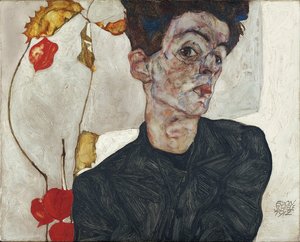
Egon Schiele
1890 - 1918 , kroatien
Kurzinfos
- Beeinflusste Künstler: ['Nachfolgende Generationen']
- Bemerkenswerte Werke:
- Selbstporträt mit Wucherblume
- Paar Umarmend
- Feldbild (Kreuzberg bei Krumau)
- Einflussreiche Künstler: ['Gustav Klimt']
- Geburtsdatum: 12. Juni 1890
- Geburtsort: Tulln, Österreich
- Künstlerische Richtung: Expressionismus
- Nationalität: Österreichisch
- Todatum: 1918
- Vollständiger Name: Egon Schiele
Ähnliche Artikel

Egon Schiele: Ausdrucksstil, Angst und die Moderne – Eine umfassende Betrachtung
Entdecken Sie die tiefgründige Welt von Egon Schiele! Unsere umfassende Analyse beleuchtet seinen expressiven Stil, die Darstellung von Angst und seinen Einfluss auf die Moderne. Jetzt lesen!
Egon Schiele: Die 25 Meisterwerke des Expressionismus für Ihr Zuhause | AllPaintingsStore
Entdecken Sie die 25 bedeutendsten Gemälde von Egon Schiele! Tauchen Sie ein in die Welt des Expressionismus, erfahren Sie mehr über seine Technik und emotionale Tiefe. Hochwertige Kunstdrucke & Leinwandbilder auf AllPaintingsStore.com.
Chromgelb in der Kunstgeschichte: Die 10 berühmtesten Gemälde & ihre Meister
Entdecken Sie die 10 berühmtesten Gemälde, dominiert von der leuchtenden Farbe Chromgelb! Von Van Gogh bis Monet – erfahren Sie Geschichten hinter Meisterwerken & finden Sie Ihre perfekte Kunst-Reproduktion auf AllPaintingsStore.com.

Expressionismus: Die 10 Meisterwerke, die eine Ära prägten – Kunst für Ihr Zuhause |
Entdecken Sie die 10 prägendsten Meisterwerke des Expressionismus! Von Munch bis Kandinsky – erfahren Sie die Geschichten hinter den berühmtesten Gemälde und Künstler. Hochwertige Kunstdrucke online bei kaufen & Ihr Zuhause mit Emotionen füllen.
Expressionismus: Die 10 Meisterwerke, die eine Kunstepoche prägten | AllPaintingsStore
Entdecken Sie die 10 prägendsten Meisterwerke des Expressionismus! Von Munchs Schrei bis Kandinskys Abstraktionen – erfahren Sie die Geschichten berühmter Maler und ihre emotionale Farbgebung. Kunstreproduktionen in Museumsqualiät auf AllPaintingsStore.com.


