


Introduction
To gaze upon these ten canvases is to step into a realm where emotion reigns supreme, where the very act of painting became a visceral outpouring of the human spirit. The Abstract Expressionist movement, born in the aftermath of World War II, wasn't merely a stylistic shift; it was a seismic rupture from tradition, a defiant embrace of subjectivity in a world grappling with unprecedented trauma and uncertainty.
Emerging from the New York art scene in the 1940s and 50s, Abstract Expressionism rejected representational painting in favor of spontaneous, automatic, or subconscious creation. Artists like Jackson Pollock, Mark Rothko, Willem de Kooning, and others sought to express inner states – anxieties, passions, and existential questions – directly onto the canvas, often on a monumental scale. This was art stripped bare, liberated from narrative constraints, and fueled by a profound sense of individual freedom.
The cultural landscape of post-war America profoundly shaped this movement. The horrors of global conflict had shattered old certainties, leaving artists questioning established norms and searching for new ways to articulate the complexities of human experience. Simultaneously, the rise of psychoanalysis, particularly the work of Carl Jung, encouraged exploration of the unconscious mind, influencing the emphasis on intuition and improvisation in Abstract Expressionist techniques.
These weren’t simply paintings; they were events – physical manifestations of intense emotional labor. The scale demanded a bodily engagement from both artist and viewer, inviting a direct, almost primal connection with the work. The legacy of these artists extends far beyond the canvas. They redefined the possibilities of painting, challenged conventional notions of beauty, and paved the way for subsequent generations of artists to explore abstraction and personal expression.
What follows is an exploration of ten masterpieces that encapsulate the essence of Abstract Expressionism – works that continue to resonate with their raw power, emotional depth, and enduring relevance. Prepare to be immersed in a world of color, gesture, and profound human feeling as we journey through this pivotal chapter in art history.
Number 1, 1949 - Paul Jackson Pollock
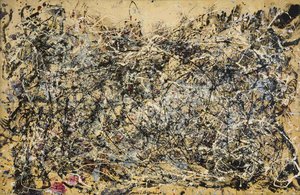 Number 1, 1949 - Paul Jackson Pollock
Jackson Pollock’s Number 1, 1949 isn't simply a painting; it’s a frozen moment of pure energy, a testament to the power of unfiltered expression. This monumental work, a cornerstone of Abstract Expressionism, embodies the movement’s radical departure from tradition and its embrace of the subconscious.
Pollock famously abandoned easel painting, instead laying his canvases on the floor and employing an innovative “drip” technique – pouring, flinging, and splattering paint with sticks, brushes, and even knives. This wasn't about *representing* something; it was about the act of creation itself becoming the subject. The resulting web of interwoven lines, a complex dance of black, brown, ochre, and subtle hints of red, draws you into its depths.
The sheer scale of Number 1, 1949 is captivating, demanding a bodily engagement from the viewer. It’s an all-over composition that rejects traditional focal points, inviting prolonged contemplation and personal interpretation. Look closely – the layers reveal a delicate balance between chaos and control, spontaneity and intention.
Today, Pollock's influence resonates in everything from bold textile designs to dynamic interior spaces. The energy of his work finds echoes in contemporary fashion’s embrace of abstract patterns and expressive color palettes. Number 1, 1949 remains a powerful reminder that art can be born not from meticulous planning, but from the raw, unbridled forces within.
Composition VIII - Wassily Kandinsky
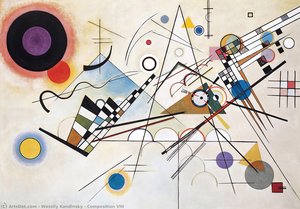 Composition VIII - Wassily Kandinsky
Wassily Kandinsky’s Composition VIII is a visual symphony, a radiant exploration of inner harmony and spiritual resonance. Created in 1923, this masterpiece transcends mere representation, inviting us into a world where color and form speak directly to the soul.
As a pioneer of abstract art, Kandinsky believed that painting could evoke emotions as powerfully as music. In Composition VIII , geometric shapes – circles, triangles, squares – dance across the canvas in a dynamic interplay of fiery reds, cool blues, and earthy yellows. These aren’t random arrangements; they are carefully orchestrated elements designed to create a sense of rhythm, movement, and depth.
The painting's enduring power lies in its ability to bypass intellectual analysis and connect directly with our emotions. It’s an invitation to lose yourself in the interplay of color and form, to discover your own interpretations within its abstract landscape. Kandinsky sought to express “inner necessity,” a belief that art should spring from the artist's spiritual core.
At , we are dedicated to preserving the emotional depth and vibrant energy of works like Composition VIII through faithful reproductions. Bring this iconic piece into your home and experience the transformative power of abstract expressionism firsthand – a timeless testament to the beauty of pure form and color.
Waterfall - Arshile Gorky
 Waterfall - Arshile Gorky
Unveiling Arshile Gorky’s Waterfall is akin to discovering a hidden poem, a cascade of emotion rendered in subtle shades of grey and blue. Created in 1943, this work isn't merely an abstract composition; it’s a deeply personal exploration of trauma, memory, and the subconscious—a pivotal moment in the evolution of Abstract Expressionism.
Gorky masterfully employs fluid lines and biomorphic shapes to evoke the energy of flowing water, yet resists literal representation. Hints of anatomical forms emerge from washes of color, tantalizingly ambiguous and fragmented. This deliberate abstraction broke with convention, paving the way for a new language of emotional expression in art.
The painting’s muted palette—grays, whites, blacks, and pale blues punctuated by coral red—creates a melancholic yet subtly vibrant mood. It speaks to a period of profound personal turmoil for Gorky, reflecting broader anxieties surrounding World War II.
Today, Waterfall resonates with a timeless elegance that complements refined interiors. Its sophisticated use of color and form adds depth and intrigue to any space. At , we faithfully reproduce this masterpiece, allowing you to experience the emotional power and lasting legacy of Arshile Gorky’s vision.
Woman I - Willem de Kooning
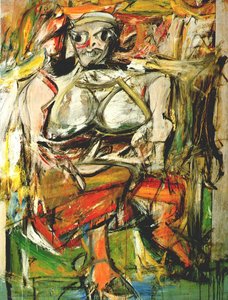 Woman I - Willem de Kooning
To encounter Willem de Kooning’s Woman I is to confront a raw and unsettling beauty, a monumental expression of post-war anxiety rendered in swirling brushstrokes and clashing colors. Painted between 1950 and 1952, this iconic work transcends portraiture, becoming a visceral exploration of the female form – and, by extension, a reflection on societal pressures and fractured identity.
De Kooning’s vigorous application of thick impasto creates a textured surface that pulsates with energy. The figure is deliberately distorted and fragmented, barely recognizable as a conventional representation of the human body. This rejection of serene beauty was a hallmark of Abstract Expressionism, shifting the focus from aesthetic perfection to emotional honesty.
The jarring color palette – vibrant reds, greens, yellows, and whites punctuated by stark blacks – mirrors the painting’s internal turmoil. Today, Woman I continues to resonate with its powerful imagery and bold composition. Its influence can be seen in contemporary fashion's embrace of deconstructed forms and expressive palettes.
At , we faithfully reproduce this masterpiece, allowing you to experience the emotional depth and lasting legacy of De Kooning’s vision. Bring a touch of raw energy and intellectual intrigue into your home with this iconic work of Abstract Expressionism.
Anthropometry of the blue period - Yves Klein
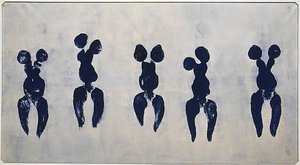 Anthropometry of the blue period - Yves Klein
Unveiling Yves Klein’s Anthropometry of the Blue Period is to encounter a primal vision, a radical exploration of the human form and its connection to the spiritual realm. Created in 1960, this striking artwork embodies Klein's revolutionary approach to artmaking – and his signature International Klein Blue (IKB) pigment.
Instead of brushes, Klein directed models covered in IKB to imprint their bodies onto the canvas, transforming them into archetypal silhouettes. This groundbreaking technique bypassed traditional artistic skill, emphasizing the act of creation itself and evoking a sense of ancient ritual. The resulting figures aren’t portraits but rather pure expressions of energy and gesture.
The simplified forms, arranged in a rhythmic row, suggest a connection to our ancestors or fundamental human archetypes. Today, Anthropometry resonates with its minimalist aesthetic and bold color, complementing modern interiors while adding depth and intrigue. Its influence can be seen in contemporary design’s embrace of reductive forms and evocative palettes.
At , we faithfully reproduce this masterpiece, allowing you to experience the emotional power and lasting legacy of Yves Klein's vision – a testament to the transformative potential of color and gesture within Abstract Expressionism.
The Liver is the Cock's Comb - Arshile Gorky
 The Liver is the Cock's Comb - Arshile Gorky
Imagine stepping into a room bathed in the warm glow of reds and oranges, where fragmented figures dance on the canvas like echoes of a forgotten celebration. Arshile Gorky’s The Liver is the Cock's Comb isn’t merely a painting; it’s a visceral outpouring of emotion, a landmark achievement within Abstract Expressionism.
Created in 1944, this monumental work dismantles traditional representation, opting instead for swirling lines and ambiguous spaces. Figures dissolve into dynamic poses, barely suggested rather than fully formed – a reflection of Gorky’s exploration of subconscious imagery and his attempt to convey inner states.
The canvas explodes with vibrant energy, punctuated by cooler blues and purples. This isn't chaos; it’s a carefully balanced composition that draws you into its depths. Today, The Liver is the Cock's Comb resonates with its bold color palette and expressive brushwork.
At , we faithfully reproduce this masterpiece, allowing you to experience the emotional power of Gorky’s vision – a testament to the transformative potential of art within Abstract Expressionism. Bring a touch of raw energy and psychological depth into your home with this iconic work.
On White II - Wassily Kandinsky
 On White II - Wassily Kandinsky
To gaze upon Wassily Kandinsky’s On White II is to enter a realm of pure feeling, a symphony of form and color that transcends the visible world. Created in 1923 during his influential tenure at the Bauhaus school, this dynamic composition isn't about *what* it depicts; it’s an invitation to experience emotion through visual language.
Kandinsky masterfully employs geometric shapes – triangles, rectangles, and circles – arranged against a luminous off-white background. These aren’t rigid forms but rather energetic elements that appear to float and interact, creating a sense of dynamic harmony. The painting's influence can be seen in contemporary design’s embrace of abstract patterns and bold color palettes.
While entirely non-representational, On White II is rich in symbolic potential. Kandinsky believed colors possessed inherent spiritual qualities – yellow evoking warmth, blue representing depth, and red signifying energy. Today, this artwork resonates with its timeless elegance and enduring power.
At , we faithfully reproduce this masterpiece, allowing you to experience the emotional depth and lasting legacy of Kandinsky’s vision within your own space—a testament to the transformative potential of abstract expressionism.
Abstract Painting 805-4 - Gerhard Richter
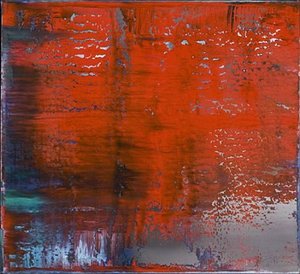 Abstract Painting 805-4 - Gerhard Richter
Gerhard Richter’s Abstract Painting 805-4 is a silent explosion of color and texture, a mesmerizing landscape where emotion takes form. This dynamic artwork embodies the spirit of abstract expressionism, inviting viewers to lose themselves in its captivating composition.
Dominated by fiery reds, oranges, and browns, the painting pulsates with energy. Subtle hints of blue, green, and white add depth and visual intrigue. Richter’s mastery of texture is evident in the thick, bold strokes and delicate lines that create a sense of movement across the canvas.
More than just an aesthetic object, Abstract Painting 805-4 evokes feelings of passion, intensity, and contemplation. Its loose composition allows for personal interpretation, making it a deeply engaging experience. Today, this artwork resonates with its timeless elegance and enduring power.
At , we faithfully reproduce this masterpiece, allowing you to bring the emotional depth and lasting legacy of Richter’s vision into your home—a testament to the transformative potential of abstract expressionism.
First Abstract Watercolor, Collection of Mad - Wassily Kandinsky
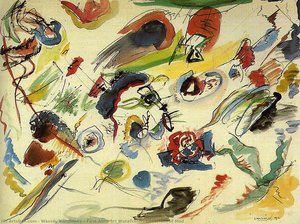 First Abstract Watercolor, Collection of Mad - Wassily Kandinsky
Wassily Kandinsky’s First Abstract Watercolor is a whisper of color and form, a pivotal moment where art liberated itself from representation and embraced pure feeling. Created in 1910, this dynamic composition marks the artist's groundbreaking transition into abstraction—and its place among the Top 10 masterpieces of abstract expressionism.
Fluid brushstrokes dance across the paper, creating a sense of movement and spontaneity. Vibrant reds, blues, yellows, and greens intertwine, evoking joy, energy, and a profound connection to the artist’s inner vision. The absence of a clear focal point invites viewers to engage with the artwork on an emotional level.
Today, First Abstract Watercolor resonates with its timeless elegance and enduring power. Its influence can be seen in contemporary design’s embrace of organic forms and bold color palettes. Bring this pioneering work into your home—a testament to the transformative potential of abstract expressionism.
Convergence - Paul Jackson Pollock
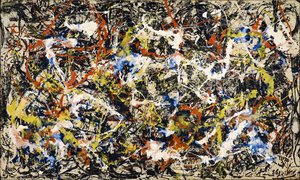 Convergence - Paul Jackson Pollock
Jackson Pollock’s Convergence isn't simply a painting; it’s an immersive experience—a monumental testament to abstract expressionism and a defining work of post-war American art. Created during a pivotal moment in art history, this piece embodies innovation, challenging traditional notions of representation and inviting viewers into a dynamic world of color and energy.
Convergence boldly rejects conventional subject matter, presenting an “all-over” composition—a boundless field where the entire canvas pulsates with activity. Layers upon layers of splattered, poured, and dripped paint interweave, creating a complex network of lines, shapes, and textures. This deliberate lack of structure fosters an immersive engagement.
Pollock’s groundbreaking “drip painting” technique—a radical departure from established methods—is fully realized here. He moved *around* and *over* the surface, allowing gravity and gesture to dictate the flow of pigment. Today, Convergence resonates with its raw energy and enduring power.
Conclusion
As we conclude our journey through these ten defining works of Abstract Expressionism, it’s clear that their power extends far beyond historical significance. These paintings aren't merely relics of a past era; they are living presences—dynamic fields of color and emotion that continue to move hearts, challenge perceptions, and ignite the imagination.
Each canvas we’ve explored represents a bold leap into the unknown, a testament to the human spirit’s capacity for innovation and self-expression. They remind us that art isn't about replicating reality but about conveying feeling—about translating the intangible depths of our inner world onto a tangible surface.
At , we believe in making these masterpieces accessible, not as distant icons locked away in museums, but as vibrant partners in your own creative endeavors. Whether you’re envisioning a striking focal point for a hotel lobby, curating an inspiring atmosphere within a private villa, or simply seeking to infuse your home with beauty and emotion, our hand-painted reproductions offer a unique opportunity to connect with these iconic works on a deeply personal level.
Our team of skilled artists meticulously recreates each painting, ensuring museum-quality detail and authenticity. We also provide custom collections tailored to your specific vision, art mockups to visualize the impact within your space, and expert guidance every step of the way. Explore our full collection and discover how these timeless works can transform your project into an artistic statement—a reflection of your own unique sensibility.


