

Early Life and Academic Foundations: The Genesis of a Landscape Painter
Alfred Worthington, born in 1834, emerged from a Britain steeped in the traditions of meticulous realism yet poised on the cusp of radical artistic change. His early life, though not extensively documented, clearly laid the groundwork for a career dedicated to capturing the essence of the English countryside. Unlike many artists who gravitated towards London’s Royal Academy immediately, Worthington initially pursued a more localized education, honing his skills through private tuition and observation of the natural world surrounding him. This formative period instilled in him a deep appreciation for detail – a hallmark of Victorian art – but also fostered an independent spirit that would later allow him to subtly break from established norms. The academic foundations he did receive emphasized draftsmanship and accurate representation, qualities readily apparent in his early works. However, it was the Welsh landscape itself—its dramatic hills, verdant valleys, and ever-changing light—that proved to be Worthington’s most influential teacher. This initial immersion would define not only his subject matter but also the very *feeling* he sought to convey within his paintings.
The Welsh Hunting Scenes: Worthington’s Rise to Prominence in Victorian Art
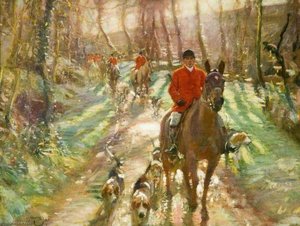
Worthington first achieved significant recognition for his depictions of hunting scenes, particularly those set amidst the rugged terrain of Wales. These weren't merely sporting pictures; they were carefully constructed narratives that captured a specific social milieu and a romanticized vision of rural life. Gogerddan Hunt, painted in 1875, exemplifies this approach. The composition is dynamic, filled with horses and riders surging across the landscape, yet it’s the meticulous attention to detail – the texture of the horses' coats, the expressions on the faces of the huntsmen, the atmospheric perspective of the hills—that truly captivates. These paintings resonated deeply with a Victorian audience that valued both skill and subject matter. Hunting represented not just a pastime but also a symbol of British identity, land ownership, and social order. Worthington’s ability to portray this world with authenticity and a touch of romanticism secured his place within the established art scene. He skillfully balanced the energy of the chase with a serene depiction of the Welsh countryside, creating works that were both exciting and aesthetically pleasing.
A Shift in Style: Embracing Impressionistic Techniques and Light
As the 19th century progressed, Worthington’s style underwent a subtle but significant transformation. While he never fully abandoned the meticulous detail of his earlier work, he began to experiment with looser brushstrokes, a heightened sense of color, and a greater emphasis on capturing the fleeting effects of light. This shift reflects the growing influence of Impressionism, which was sweeping across Europe. Worthington’s embrace of these techniques wasn't abrupt; it was a gradual evolution driven by his own artistic curiosity and observation of nature. He didn’t simply copy the French Impressionists but rather adapted their principles to suit his own aesthetic sensibilities and subject matter. The result is a unique style that blends Victorian realism with elements of early modern painting. His canvases began to shimmer with light, capturing the atmosphere of a summer afternoon or the drama of an approaching storm. This newfound focus on light wasn’t merely technical; it was also symbolic, representing the ephemeral beauty of nature and the passage of time.
Worthington's Mastery of Rural England: Themes, Motifs, and Artistic Vision
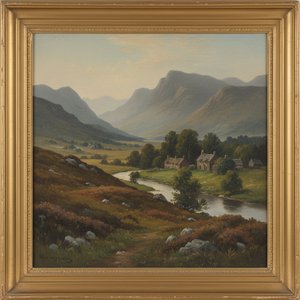
Beyond hunting scenes, Worthington developed a profound affinity for portraying the broader landscape of rural England. His paintings often feature sheep grazing in sun-dappled meadows, castles perched atop dramatic hillsides—such as Aberystwyth Castle—and quiet country lanes winding through verdant valleys. These weren’t idealized landscapes; they were grounded in careful observation and a deep understanding of the English countryside. Recurring motifs include trees – often depicted with intricate detail – and bodies of water, which Worthington used to reflect light and create a sense of depth. His artistic vision was rooted in a desire to capture the *spirit* of place—the feeling of tranquility, the beauty of nature, and the connection between humans and the land. He wasn’t interested in grand historical narratives or dramatic allegories; his focus was on the everyday moments that defined rural life. This quiet intimacy is what sets his work apart and continues to resonate with viewers today.
Critical Reception and Legacy: Placing Worthington within the Landscape Tradition
Throughout his career, Worthington received generally positive critical attention, though he wasn’t always considered a groundbreaking innovator. His paintings were praised for their technical skill, authenticity, and atmospheric quality. However, some critics found his work to be too traditional, lacking the radical experimentation of more avant-garde artists. Nevertheless, Worthington maintained a loyal following among collectors who appreciated his ability to capture the beauty of the English countryside. Today, he is recognized as an important transitional figure—a painter who bridged the gap between Victorian realism and early modern Impressionism. His work offers a fascinating glimpse into a changing artistic landscape, reflecting both the traditions of the past and the innovations of the future. He occupies a unique position within the broader landscape tradition, demonstrating a mastery of technique combined with a subtle but significant shift in aesthetic sensibility.
Collecting Alfred Worthington Today: A Guide for Enthusiasts
For those seeking to acquire works by Alfred Worthington, a range of options exists. Paintings from his most prolific period – the late 19th and early 20th centuries – are readily available through auction houses and art dealers. Prices vary depending on size, subject matter, and condition, but generally fall within a reasonable range for collectors seeking quality Victorian and Impressionistic landscapes. Hunting scenes tend to command higher prices due to their historical significance and popularity. However, his quieter rural landscapes offer equally compelling aesthetic value. When evaluating a Worthington painting, pay close attention to the brushwork – look for evidence of his meticulous technique and subtle use of color. Also, consider the provenance of the work—its history of ownership can provide valuable insights into its authenticity and value. AllPaintingsStore.com offers high-quality reproductions of Worthington’s most celebrated works, allowing enthusiasts to experience the beauty of his paintings firsthand. Whether you are a seasoned collector or simply appreciate fine art, Alfred Worthington's landscapes offer a timeless glimpse into the heart of rural England.