

Introduction
Imagine stepping back in time to a nation grappling with rapid industrialization, urbanization, and social change. This was America in the late 19th and early 20th centuries – a period of immense upheaval and profound questioning. The prevailing artistic currents of romanticism and idealism began to feel distant from the lived experiences of everyday people. A new movement arose, one that sought not to depict an idealized world, but rather the raw, unvarnished truth: American Realism.
American Realism wasn’t simply about replicating what the eye saw; it was a conscious rejection of artifice and a commitment to portraying life as it was . Artists turned their attention to the working class, rural communities, and the often-overlooked corners of society. They captured the dignity and hardship of labor, the beauty in the mundane, and the complexities of human relationships with unflinching honesty.
These weren’t paintings meant to soothe or inspire grand emotions; they were invitations to observe, to reflect, and to confront the realities of a changing nation. The brushstrokes often carry a weightiness, a sense of empathy, and sometimes, even social commentary. They challenged viewers to see themselves – and their fellow Americans – in new ways.
The artworks that emerged from this era continue to resonate deeply today because they speak to universal themes of human struggle, resilience, and the search for meaning. They offer a powerful glimpse into a pivotal moment in American history, reminding us of both how far we’ve come and how much remains unchanged.
Over the following list, we will explore ten masterpieces that defined the American Realism movement – paintings that not only captured their time but continue to shape our understanding of it. Prepare to be moved by stories etched in oil and canvas, portraits of a nation finding its voice, and reflections on the enduring human spirit.
Nighthawks, The Art Institute of Chicago, Chica - Edward Hopper
 Nighthawks, The Art Institute of Chicago, Chica - Edward Hopper
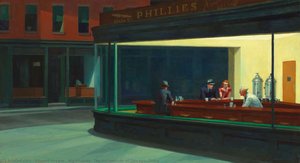
To encounter Nighthawks by Edward Hopper is to stand before a silent poem of urban existence, a work that has indelibly shaped our collective visual vocabulary. Painted in 1942, this masterpiece transcends its seemingly simple depiction of a late-night diner scene to become a profound meditation on modern alienation and the quiet dignity of solitude.
Hopper’s genius lies in his ability to distill complex emotions through meticulous realism. He wasn't interested in grand narratives; instead, he focused on capturing the subtle nuances of everyday American life – the loneliness of anonymous city dwellers, the weight of unspoken stories, and the haunting beauty found within the commonplace. The stark geometry of the diner, bathed in an almost theatrical light, creates a compelling visual barrier between the figures inside and the darkness beyond.
The painting’s enduring appeal stems from its universality. It speaks to our shared human experience of isolation, even amidst connection. In contemporary interiors, Nighthawks adds a layer of sophisticated introspection – a reminder of the beauty in quiet moments and the power of evocative storytelling. Its muted palette and masterful use of light complement refined aesthetics, lending an air of timeless elegance to any space.
As a cornerstone of the American Realism movement, Nighthawks continues to inspire artists and captivate audiences worldwide. It’s more than just a painting; it's a cultural icon—a poignant reflection on the American Scene , and a testament to Hopper’s enduring legacy in modern art . Owning a reproduction of this work is not merely acquiring an image, but inviting a piece of history – and a profound emotional experience – into your home.
Snap the Whip - Winslow Homer
 Snap the Whip - Winslow Homer
Imagine a sun-drenched field, alive with the shouts and laughter of children locked in playful competition. This is the world Winslow Homer invites us into with Snap the Whip , painted in 1872 – a captivating snapshot of rural American life that resonates with an enduring sense of joy and vitality.
More than just a depiction of a game, this masterpiece captures a fleeting moment of pure energy and camaraderie. Homer’s masterful composition, anchored by strong diagonal lines and a vibrant palette of earthy greens and reds, draws the eye across the canvas, mirroring the dynamic pull of the rope. The visible brushstrokes imbue the scene with a palpable sense of movement, bringing the children – and their spirited contest – to life.
As a pivotal work within the American Realism movement, Snap the Whip offers a poignant glimpse into a disappearing way of life. The red schoolhouse in the background symbolizes community and education, while the lush landscape evokes a deep connection to nature. In a modern home, this painting adds warmth and nostalgia – a reminder of simpler times and the enduring power of youthful exuberance.
A reproduction of Snap the Whip isn’t simply an aesthetic addition; it's an invitation to embrace a sense of American Scene charm. It speaks to universal themes of childhood, community, and the beauty found in everyday moments, elevating any space with its timeless elegance and emotional depth. This is a piece that sparks conversation, inspires reflection, and celebrates the enduring spirit of 19th-century art .
Sunlight in a Cafeteria - Edward Hopper
 Sunlight in a Cafeteria - Edward Hopper
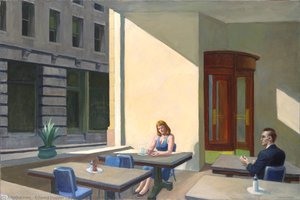
A single shaft of sunlight, falling across a quiet cafeteria – this is the world Edward Hopper captures in Sunlight in a Cafeteria (1958), a moment suspended in time that speaks volumes about the human condition. More than just a depiction of an everyday scene, it’s a poignant meditation on connection and isolation in the modern age.
Hopper's genius lies in his ability to evoke profound emotion through subtle details. Two figures sit at separate tables, bathed in the warm glow of light yet profoundly alone. The deliberate positioning – facing away from each other – amplifies this sense of disconnection, inviting us to contemplate the unseen narratives unfolding within each individual’s mind.
As a cornerstone of American Realism , Sunlight in a Cafeteria exemplifies Hopper's meticulous attention to form and his masterful use of light and shadow. The dramatic interplay between brilliance and darkness creates visual depth and underscores the emotional weight of the scene, enhancing feelings of introspection. In contemporary interiors, this painting adds a layer of sophisticated stillness – a reminder that beauty can be found in quiet moments.
A reproduction of Sunlight in a Cafeteria isn’t merely an aesthetic addition; it's an invitation to embrace the power of American Scene art. It speaks to universal themes of loneliness, connection, and the search for meaning, elevating any space with its timeless elegance and emotional resonance. This is a piece that sparks conversation and invites quiet reflection on the complexities of modern life – a true testament to Hopper’s enduring legacy in modern painting .
Long Branch, New Jersey - Winslow Homer
 Long Branch, New Jersey - Winslow Homer
To encounter Long Branch, New Jersey by Winslow Homer is to step into a sun-drenched world of Victorian leisure and refined observation. Painted in 1869, this captivating scene transcends its depiction of a bustling beach community to become a poignant reflection on American society and the allure of the natural world.
Homer’s masterful composition draws the eye across a dynamic landscape, from the elegantly dressed figures perched atop the cliffs to the expansive ocean beyond. The delicate textures and soft palette – blues, greens, and warm sands – evoke a sense of tranquility and nostalgia. This is not merely a painting of people at the beach; it's a study in social interaction, capturing the subtle nuances of human connection amidst the beauty of nature.
As a cornerstone of American Realism , Long Branch, New Jersey showcases Homer’s ability to blend meticulous detail with an impressionistic flair. In contemporary interiors, this artwork adds a layer of sophisticated charm – a reminder of simpler times and the enduring power of beauty. Its vibrant yet serene depiction complements refined aesthetics, lending an air of timeless elegance to any space.
A reproduction of Long Branch, New Jersey isn’t simply an aesthetic addition; it's an invitation to embrace a piece of American Scene history. It speaks to universal themes of leisure, observation, and the joy of shared experiences, elevating any room with its emotional resonance and artistic legacy – a true testament to Homer’s enduring influence on 19th-century art .
Men of the Docks - George Wesley Bellows
 Men of the Docks - George Wesley Bellows
A chill wind whips off the water, carrying with it the grit and energy of a bustling port – this is the world George Wesley Bellows captures in Men of the Docks (1912), a powerful testament to American industry and the resilience of the working class.
More than just a depiction of dockside labor, this masterpiece embodies the spirit of an era. Bellows’ bold brushwork and atmospheric effects create a sense of immediacy and vitality, drawing us into the heart of the scene. The muted palette – cool grays and blues punctuated by earthy tones – evokes both the harshness and the beauty of urban life.
As a cornerstone of American Realism , Men of the Docks exemplifies Bellows’ commitment to portraying contemporary life with unflinching honesty. In modern interiors, this artwork adds a layer of sophisticated dynamism – a reminder of the power and dignity of human labor. Its expansive composition and evocative mood complement refined aesthetics, lending an air of timeless strength to any space.
A reproduction of Men of the Docks isn’t simply an aesthetic addition; it's an invitation to embrace a piece of American Scene history. It speaks to universal themes of perseverance, community, and the enduring human spirit, elevating any room with its emotional resonance and artistic legacy – a true testament to Bellows’ influence on early 20th-century art .
The fox hunt pensylvania academy of the fine arts - Winslow Homer
 The fox hunt pensylvania academy of the fine arts - Winslow Homer
There is a quiet power in solitude, a resilience etched into the very landscape – qualities Winslow Homer captures with breathtaking beauty in The Fox Hunt (1893). More than just a depiction of wildlife, this masterpiece embodies the spirit of survival and the delicate balance of nature.
Homer’s masterful composition draws us into a serene winter scene, where a solitary fox leaps across the snow-covered terrain. The dark raven overhead adds an element of mystery and emotional depth, inviting contemplation on themes of protection and freedom. As a cornerstone of American Realism , this work exemplifies Homer’s ability to evoke mood through subtle details and expressive brushwork.
In contemporary interiors, The Fox Hunt adds a layer of sophisticated tranquility – a reminder of the beauty found in quiet moments. Its muted palette and evocative atmosphere complement refined aesthetics, lending an air of timeless elegance to any space. At AllPaintingsStore, we are proud to offer faithful reproductions that preserve the emotion and texture of this iconic painting, allowing you to bring a piece of American Scene history into your home.
A reproduction of The Fox Hunt isn’t simply an aesthetic addition; it's an invitation to embrace the enduring legacy of 19th-century art . It speaks to universal themes of resilience, curiosity, and the power of nature – a true testament to Homer’s influence on generations of artists.
Max Schmitt in a Single Scull - Thomas Eakins
 Max Schmitt in a Single Scull - Thomas Eakins
A single scull gliding across a tranquil river – this is the world Thomas Eakins captures with breathtaking serenity in Max Schmitt in a Single Scull (1871). More than just a depiction of athletic prowess, this masterpiece embodies the spirit of focus, discipline, and harmony between humanity and nature.
Eakins’ meticulous brushwork and layered oil techniques create luminous depth and texture, drawing us into a quiet moment of contemplation. The soft blending of colors – earthy browns, muted greens, and gentle blues – evokes a sense of peaceful solitude. As a cornerstone of American Realism , this work exemplifies Eakins’ commitment to portraying contemporary life with unflinching honesty.
In contemporary interiors, Max Schmitt in a Single Scull adds a layer of sophisticated tranquility – a reminder of the beauty found in quiet moments. Its muted palette and evocative atmosphere complement refined aesthetics, lending an air of timeless elegance to any space. At AllPaintingsStore, we are proud to offer faithful reproductions that preserve the emotion and texture of this iconic painting, allowing you to bring a piece of American Scene history into your home.
A reproduction of Max Schmitt in a Single Scull isn’t simply an aesthetic addition; it's an invitation to embrace the enduring legacy of 19th-century art . It speaks to universal themes of perseverance, discipline, and the power of nature – a true testament to Eakins’ influence on generations of artists.
Under a Palm Tree - Winslow Homer
 Under a Palm Tree - Winslow Homer
Imagine a moment suspended in time – a gentle breeze rustling through palm fronds, dappled sunlight warming skin, and the quiet intimacy of a mother holding her child. This is the world Winslow Homer invites us into with Under a Palm Tree (1886), a watercolor masterpiece that transcends simple landscape painting to become an ode to peace and connection.
Homer’s delicate brushwork and luminous washes create an astonishingly serene atmosphere. The composition, deceptively simple yet remarkably effective, draws our eye to the central figure of the mother and child, framed by the sheltering canopy of the palm tree. As a cornerstone of American Realism , this work exemplifies Homer’s ability to capture fleeting moments with profound emotional depth.
In contemporary interiors, Under a Palm Tree adds a layer of tranquil beauty – a reminder of the power of human connection and the restorative embrace of nature. Its muted palette and evocative atmosphere complement refined aesthetics, lending an air of timeless elegance to any space. At AllPaintingsStore, we are proud to offer faithful reproductions that preserve the emotion and texture of this iconic painting, allowing you to bring a piece of American Scene history into your home.
A reproduction of Under a Palm Tree isn’t simply an aesthetic addition; it's an invitation to embrace the enduring legacy of 19th-century art . It speaks to universal themes of motherhood, serenity, and the beauty found in quiet moments – a true testament to Homer’s influence on generations of artists.
Red Shirt, Homosassa, Florida - Winslow Homer
 Red Shirt, Homosassa, Florida - Winslow Homer
A quiet river flows through a sun-dappled landscape, punctuated by the vibrant splash of a single red shirt – this is the world Winslow Homer captures with breathtaking serenity in Red Shirt, Homosassa, Florida (1904). More than just a depiction of a tropical scene, this watercolor embodies a profound sense of tranquility and invites us to contemplate the relationship between man and nature.
Homer’s delicate brushwork and luminous washes create an atmosphere of quiet observation. The composition, deceptively simple yet remarkably effective, draws our eye to the solitary figure on the bank, anchored within the vastness of the Florida landscape. As a cornerstone of American Realism , this work exemplifies Homer’s ability to capture fleeting moments with profound emotional depth.
At AllPaintingsStore, we are proud to offer faithful reproductions that preserve the emotion and texture of this iconic painting, allowing you to bring a piece of American Scene history into your home. Red Shirt, Homosassa, Florida isn’t simply an aesthetic addition; it's an invitation to embrace the enduring legacy of 19th-century art . It speaks to universal themes of serenity, contemplation, and the beauty found in quiet moments – a true testament to Homer’s influence on generations of artists.
High Cliff, Coast of Maine - Winslow Homer
 High Cliff, Coast of Maine - Winslow Homer
Winslow Homer’s High Cliff, Coast of Maine (1894) is a cornerstone of American landscape painting and a masterful distillation of the artist's signature style. Now housed at the National Gallery of Art in Washington, D.C., this oil on canvas transcends mere depiction—it embodies the spirit of rugged beauty and the sublime power of nature.
The painting immediately grabs the viewer’s attention with its dynamic arrangement. Homer skillfully employs a pyramidal composition, anchoring the scene with the imposing cliff face and culminating in the turbulent ocean. Two figures stand on the cliff edge, gazing out towards the sea, adding a human element that underscores the grandeur of the landscape. This deliberate positioning isn’t accidental; Homer aimed to convey not just what he saw but also how he *felt* witnessing such an awe-inspiring vista.
At AllPaintingsStore, we are proud to offer faithful reproductions that preserve the emotion and texture of this iconic painting, allowing you to bring a piece of American Scene history into your home. High Cliff, Coast of Maine isn’t simply an aesthetic addition; it's an invitation to embrace the enduring legacy of 19th-century art . It speaks to universal themes of nature’s power and human contemplation – a true testament to Homer’s influence on generations of artists.
Conclusion
As the light fades, and these visions of America’s past begin to recede, we are left with something more than a collection of celebrated canvases. We hold echoes of resilience, quiet dignity, and an unwavering gaze upon the human condition – themes that resonate as powerfully today as they did when first brushed onto linen. These artists didn't simply *show* us America; they invited us to feel it, to question it, to understand its complexities with a newfound depth.
The power of American Realism lies not just in its historical significance, but in its enduring ability to connect us to something universal. It’s a reminder that beauty can be found in the everyday, that truth often resides in the unvarnished moments of life, and that art has the capacity to transcend time itself.
And so, as you step back into your own world, carry with you these whispers of emotion, these glimpses of a nation’s soul. Perhaps you'll find yourself drawn to recreate a similar atmosphere within your own space – to invite that same sense of quiet contemplation and enduring beauty into your home. Explore our full collection and discover the masterpiece that speaks most deeply to *your* heart, ready to become a living presence in your life for generations to come.