


The Genesis of Automatism: Masson’s Early Experiments
André Masson, a name synonymous with the radical artistic explorations of the early 20th century, didn't arrive at his groundbreaking style through deliberate planning but rather through a conscious dismantling of conventional approaches. Born in 1896, his initial training was steeped in Cubism, yet he quickly found himself restless within its structured confines. The trauma of World War I proved pivotal; the horrors witnessed left an indelible mark, fostering a deep-seated desire to access and express the raw, unfiltered energies residing beneath the surface of consciousness. This quest led him toward automatism – a method championed by the Surrealists, but one Masson uniquely pioneered in visual form. His earliest experiments, dating back to 1924, involved relinquishing control, allowing his pen to wander freely across the paper without preconceived subject matter or composition. These weren’t sketches leading *to* something; they *were* something – a direct transcription of psychic impulses. The resulting ink drawings, delicate webs of lines and fragmented forms, were not merely abstract exercises but nascent landscapes of the subconscious, hinting at figures and objects emerging from an internal chaos. MoMA's “Automatic Drawing” (1924) exemplifies this period; it’s a captivating example of how Masson sought to bypass reason and tap into the wellspring of unconscious thought, a process he likened to a medium channeling unseen forces.
Surrealism's Embrace: Collaboration, Theory & Artistic Practice
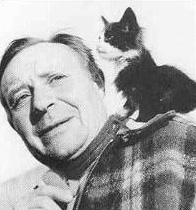 Wikipedia: André Masson
André-Aimé-René Masson (French: [ɑ̃dʁe ɛme ʁəne masɔ̃]; 4 January 1896 – 28 October 1987) was a French artist. == Biography == Masson was born in Balagny-sur-Thérain, Oise, but when he was eight his father's work took the family first briefly to L...
The burgeoning Surrealist movement, led by André Breton, provided both intellectual validation and fertile ground for Masson’s explorations. Breton’s 1924 *Manifesto of Surrealism* articulated a desire to unlock the creative potential of dreams, free association, and the irrational – principles perfectly aligned with Masson's automatist techniques. He became deeply involved in collaborative projects, most notably with writers like Philippe Soupault, engaging in *écriture automatique* (automatic writing) which further fueled his visual investigations. Masson wasn’t simply illustrating Surrealist ideas; he was actively shaping them through his art. His studio became a hub for intellectual exchange and experimentation, attracting figures such as Joan Miró, Georges Bataille, Michel Leiris, and Antonin Artaud. These encounters fostered a dynamic environment where the boundaries between painting, writing, and psychoanalysis blurred. The emphasis wasn’t on creating aesthetically pleasing objects but on revealing the hidden workings of the mind. This period saw Masson pushing the limits of automatism, attempting to translate fleeting thoughts and emotions directly onto canvas, often working in altered states of consciousness – a practice intended to bypass conscious control and access deeper psychological realms.
Violence and the Subconscious: Decoding Masson’s Imagery
Automatism may refer to: Automatic behavior, spontaneous verbal or motor behavior Automatism (law), a defense used in criminal law Automatism (toxicology), when an individual repeatedly takes a medication because the individual forgets previous dose...
While Surrealism celebrated the liberation of the unconscious, Masson's work frequently grappled with darker themes. The trauma of war remained a potent undercurrent, manifesting in imagery often characterized by fragmentation, distortion, and violence. His paintings are rarely serene; instead, they pulse with an unsettling energy, populated by dismembered bodies, grotesque figures, and ambiguous symbols. “The Meals” (1932), for example, presents a disturbing tableau of fragmented forms and visceral textures, evoking a sense of primal brutality. This wasn’t gratuitous shock value but rather a raw expression of the psychological wounds inflicted by conflict. Masson's exploration of eroticism also played a significant role, often intertwined with themes of violence and metamorphosis. He saw sexuality as a powerful force – both creative and destructive – capable of unlocking hidden depths within the psyche. The recurring presence of hands, eyes, and mouths in his work suggests a fascination with bodily experience and the primal instincts that drive human behavior. His imagery isn’t easily deciphered; it resists straightforward interpretation, inviting viewers to confront their own subconscious anxieties and desires.
Sand Paintings and Beyond: Expanding the Boundaries of Technique
By the mid-1920s, Masson began experimenting with unconventional materials and techniques, seeking new ways to express his automatist impulses. His most radical innovation was the introduction of sand into his painting process. He would throw glue onto canvas, then scatter sand over it, creating textured surfaces that served as a foundation for subsequent oil paintings. This method allowed him to relinquish even more control, embracing chance and spontaneity. The resulting works – like “The Labyrinth” (1938) – possess a unique physicality, their rough textures evoking geological formations or primordial landscapes. This wasn’t merely about creating visually interesting surfaces; it was about disrupting traditional notions of artistic authorship and control. Masson saw the sand as an agent in itself, shaping the composition alongside his own hand. He continued to evolve his techniques throughout his career, incorporating elements of collage, frottage, and other experimental approaches. His willingness to push boundaries and embrace new materials demonstrated a relentless pursuit of authentic expression, always seeking ways to bypass conscious control and tap into the subconscious.
Masson’s Legacy: Influence on Abstract Expressionism and Contemporary Art
André Masson's influence extends far beyond the confines of Surrealism. His pioneering work in automatism laid the groundwork for many subsequent artistic movements, most notably Abstract Expressionism. Artists like Jackson Pollock, who similarly embraced chance and spontaneity in their painting process, acknowledged a debt to Masson’s explorations. The emphasis on gesture, physicality, and the subconscious resonated deeply with American painters seeking new forms of expression after World War II. Masson's impact isn’t limited to Abstract Expressionism; his exploration of violence, eroticism, and psychological trauma continues to inspire contemporary artists grappling with similar themes. His willingness to challenge conventional notions of artistic representation and embrace unconventional techniques paved the way for a more experimental and interdisciplinary approach to artmaking. Today, Masson's work stands as a testament to the power of the subconscious and the enduring relevance of Surrealist ideals. AllPaintingsStore offers meticulously hand-painted reproductions of Masson’s iconic works, allowing you to experience the raw energy and psychological depth of his art firsthand. Explore our collection and discover the captivating world of André Masson – a true visionary who redefined the boundaries of artistic expression.





