





The Genesis of Abstraction: From Modernism to Post-War Expression
Abstract expressionism in the United States emerged as a distinct art movement in the aftermath of World War II and gained mainstream acceptance in the 1950s, a shift from the American social realism of the 1930s influenced by the Great Depression an...
The story of abstract painting isn’t a sudden rupture with the past, but rather a gradual unfolding—a liberation born from decades of artistic experimentation and societal upheaval. To understand its power, we must first trace its roots back to the fertile ground of early modernism. Artists like Wassily Kandinsky, Piet Mondrian, and Kazimir Malevich began dismantling traditional representation in the early 20th century, driven by a desire to express inner spiritual realities rather than merely depict the external world. Kandinsky’s pioneering explorations of color and form, devoid of recognizable objects, were deeply influenced by Theosophy and a belief in the inherent power of abstraction. Mondrian sought universal harmony through geometric simplification, reducing painting to its essential elements—lines, squares, and primary colors. Malevich's Suprematism pushed this even further, culminating in his iconic “Black Square,” an attempt to represent pure feeling. These were not simply aesthetic exercises; they were philosophical statements about the nature of reality itself.
However, it was the seismic shifts following World War II that truly catalyzed the birth of Abstract Expressionism in America. The horrors of global conflict shattered pre-existing notions of order and meaning, leaving artists grappling with a profound sense of loss and alienation. Traditional modes of representation felt inadequate to convey the depth of human experience in this new era. The American social realism of the 1930s, heavily influenced by Mexican muralists, gave way to a more inward-looking exploration of emotion and subconscious thought. Robert Coates first applied the term 'Abstract Expressionism' to American art in 1946, marking a turning point. Key figures like Arshile Gorky, Jackson Pollock, Franz Kline, Mark Rothko, Norman Lewis, Willem de Kooning, Adolph Gottlieb, Clyfford Still, Robert Motherwell, Theodoros Stamos, and Lee Krasner formed the core of the New York School, challenging conventional artistic boundaries.
Action Painting & The Canvas as Arena: Pollock, De Kooning, and Beyond
Within Abstract Expressionism, a particularly potent strand emerged—Action Painting. This wasn’t merely about what was painted, but *how* it was painted. Jackson Pollock, perhaps the most iconic figure of this movement, revolutionized artistic process by abandoning traditional brushes and easels altogether. He laid canvases on the floor and poured, dripped, and splattered paint directly onto them, engaging in a dynamic dance with gravity and chance. This method eliminated premeditation, allowing for a spontaneous and visceral expression of energy. The act of painting became as important—if not more so—than the finished product. His studio wasn’t simply a workspace; it was an arena where he wrestled with his inner demons, translating raw emotion into swirling patterns of color.
While Pollock is often synonymous with Action Painting, other artists explored similar territory in their own unique ways. Willem de Kooning, though employing brushes, also emphasized gestural brushwork and dynamic compositions that conveyed a sense of power and immediacy. His “Woman” series, for example, are not portraits in the traditional sense but rather explorations of feminine energy—often raw, aggressive, and unsettling. These techniques were deeply influenced by Surrealist automatism, aiming to tap into the subconscious mind and bypass rational control.
Color Field Painting: Rothko, Newman, and the Pursuit of Emotional Resonance
As a counterpoint to the energetic gestures of Action Painting, Color Field painting emerged as a distinct branch of Abstract Expressionism. Artists like Mark Rothko and Barnett Newman sought to create works that transcended narrative representation altogether, focusing solely on the power of color to evoke emotional responses. Rothko’s paintings are characterized by luminous rectangles of color that seem to float on the canvas, inviting contemplation and introspection. He aimed to create a meditative experience for the viewer, believing that color could directly access the subconscious mind.
Barnett Newman similarly employed large fields of color, often punctuated by vertical ‘zips,’ which he believed represented spiritual presence. These zips weren’t simply compositional elements; they were intended to be felt—as pathways to a deeper understanding of existence. Unlike Pollock and de Kooning's frenetic energy, Color Field painting prioritized stillness and emotional resonance through subtle variations in hue and tone. The goal wasn’t to depict something *about* emotion but to *evoke* it directly within the viewer.
Surrealist Roots: Automatism, Dreams, and the Unconscious in Abstract Art
The influence of Surrealism on Abstract Expressionism was profound, acting as a crucial catalyst for its development. Surrealism, with its emphasis on the unconscious mind and exploration of dreams, provided artists with new tools and techniques to access their inner worlds. Techniques like automatism—spontaneous mark-making without conscious control—were adopted by artists seeking to tap into their subconscious impulses. Arshile Gorky’s early work demonstrates a clear influence from Surrealist biomorphic forms, while Jackson Pollock’s ‘drip’ paintings can be seen as a visual manifestation of automatic writing.
The goal was to bypass rational thought and access a more primal level of creativity. Artists believed that by relinquishing control, they could unlock hidden truths and express emotions that were beyond the reach of language. This fascination with the unconscious mind also led to explorations of dream imagery and symbolism, further distancing abstract art from the constraints of representational depiction.
Contemporary Abstraction: Diverse Voices and Evolving Concepts
Contemporary art is a term used to describe the art of today, generally referring to art created from the 1970s onwards. Contemporary artists work in a globally influenced, culturally diverse, and technologically advancing world. Their art is a dynam...
Since the 1970s, contemporary abstract art has become increasingly eclectic and globally influenced. There is no single unifying principle or ‘-ism’ defining the movement; instead, it's a vibrant tapestry of diverse approaches and perspectives. Artists work with a wide range of materials—from traditional oil paints to found objects and digital media—reflecting a broader cultural dialogue concerning personal identity, community, and nationality. Claudia Walde (MadC)’s vibrant watercolor washes demonstrate dynamic movement and intense color layering, while artists like Samia Halaby blend Islamic architecture influences into her abstract compositions. Joe Marcus Johnson's work showcases the intersection of athleticism and creativity through bold palettes.
This diversity reflects a world that is increasingly interconnected and complex. Contemporary abstraction isn’t about adhering to a specific style but rather about exploring new possibilities and challenging traditional boundaries. It’s a testament to the enduring power of abstract art to adapt, evolve, and reflect the ever-changing human experience.
Gesturality & Philosophical Undercurrents: Decoding Emotion and Meaning
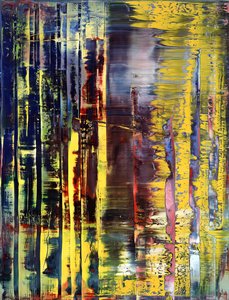
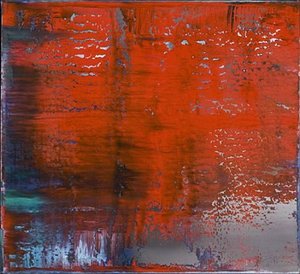
At its core, abstract painting is an exploration of gesturality—the visible energy and movement within the artwork. It’s about conveying emotion through brushwork, composition, and color. Franz Kline’s bold black strokes, for example, convey a sense of power and immediacy, while Grace Gardner's paintings utilize textured impasto to create dynamic blues and reds, evoking emotional depth through tactile surfaces. Paul Jenkins’ layered color and lyrical forms demonstrate gesturality through fluid compositions.
However, the philosophical undercurrents are equally important. Abstract Expressionism emerged in a post-war world grappling with existential questions about meaning and purpose. Artists like Mark Rothko sought to create works that transcended narrative representation, inviting viewers to contemplate their own existence. The emphasis on individual expression reflected a rejection of rigid societal structures and a pursuit of personal freedom. Exploring these themes through abstraction allows for a deeply personal and subjective experience—one where the viewer is invited to find their own meaning within the artwork.
At AllPaintingsStore.com, we believe in making the world of art accessible to everyone. Whether you’re a seasoned collector or just beginning your journey, our curated selection of museum-quality reproductions and original paintings offers something for every taste and budget. Explore our collection today and discover the power of abstract art to transform your space and inspire your soul. Our team of experts is available to provide personalized consultations and help you find the perfect piece to match your vision. We offer custom framing options, secure shipping worldwide, and a 100% satisfaction guarantee. Begin your exploration now at AllPaintingsStore.com.





