




Introduction
To gaze upon these ten masterpieces is to encounter a profound resurgence—a deliberate turning back, yet simultaneously a bold leap forward. They represent the heart of Contemporary Realism, an art movement born from a desire to reconnect with tangible reality after decades dominated by abstraction and conceptualism. It’s a story of artists who felt compelled not to dismantle perception, but to deepen it.
The late 20th and early 21st centuries witnessed an explosion of digital imagery, fleeting trends, and increasingly fragmented experiences. In response, Contemporary Realism emerged as a powerful counter-narrative—a yearning for authenticity in a world saturated with simulation. It wasn’t simply about replicating what the eye sees; it was about capturing the weight of existence, the subtle nuances of human emotion, and the often-overlooked beauty within the everyday.
This movement didn't spring from a vacuum. Its roots lie in the meticulous techniques of the Old Masters—Caravaggio’s dramatic chiaroscuro, Vermeer’s quiet intimacy, Courbet’s unflinching social commentary—but it quickly evolved into something distinctly its own. Contemporary Realists embraced new technologies and materials while retaining a commitment to representational skill. They sought to bridge the gap between tradition and innovation, creating works that were both technically brilliant and emotionally resonant.
These artworks continue to hold such power today because they speak to our fundamental human need for connection—connection to ourselves, to others, and to the world around us. In an age of increasing detachment, they offer a grounding presence, inviting us to slow down, observe closely, and contemplate the complexities of life. They remind us that beauty can be found in imperfection, vulnerability, and the raw honesty of the human experience.
Over the following pages, we will embark on a journey through ten exceptional paintings that define Contemporary Realism—each one a testament to the enduring power of skill, vision, and the unwavering pursuit of truth. Prepare to be captivated by their detail, moved by their stories, and inspired by their profound impact on the art world.
Freedom from want - Norman Rockwell
 Freedom from want - Norman Rockwell
Norman Rockwell’s “Freedom from Want” isn't merely a depiction of Thanksgiving dinner; it’s an enduring symbol of American gratitude and the fundamental human desire for security and connection. Painted in 1942, amidst the hardships of World War II, this artwork transcends its historical context to become a universal celebration of family, abundance, and hope—a poignant reminder of what we cherish most.
Its inclusion among the Top 10 masterpieces of Contemporary Realism stems from Rockwell’s unparalleled ability to capture the emotional core of American life. He wasn't striving for abstract innovation but for a profound realism rooted in empathy and observation. The meticulous detail—from the glistening turkey to the warm expressions on each face—draws us into the scene, inviting us to share in their joy.
Rockwell’s mastery lies not just in his technical skill but in his storytelling. “Freedom from Want” is part of his “Four Freedoms” series, inspired by FDR's address, and powerfully embodies economic security—the right to a decent standard of living. The painting speaks volumes about the values we strive for, even during times of adversity.
Today, this artwork continues to resonate deeply. It reminds us that beauty can be found in the everyday moments, in the simple act of sharing a meal with loved ones. Incorporating prints or reproductions into modern spaces evokes a sense of warmth and nostalgia, prompting reflection on our own blessings and the importance of familial bonds—a timeless conversation between culture, decor, and the enduring spirit of humanity.
Reflection with Two Children (Self-Portrait) - Lucian Freud
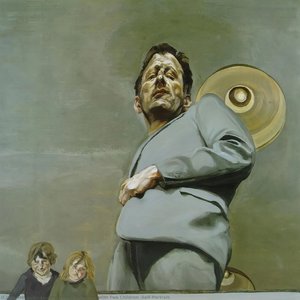
Before us hangs a silence—a weighty presence captured not through absence, but through an almost brutal honesty. This is Lucian Freud’s “Reflection with Two Children (Self-Portrait),” painted in 1965, and it stands as a testament to the power of unflinching self-examination within Contemporary Realism.
Freud’s departure from idealized representation—his commitment to portraying the raw physicality and psychological weight of his subjects—solidified his place among the movement's most important figures. The monumental scale of the artist himself, coupled with the smaller, almost spectral forms of the children, creates a dynamic tension that speaks volumes about familial relationships and emotional distance.
The thick impasto, visible brushstrokes, and muted olive-green palette contribute to the painting’s somber mood. It's not a portrait designed to flatter; it’s an exploration of vulnerability, introspection, and perhaps even unease. The golden circular form—a possible mirror or symbol of unattainable ideals—adds another layer of complexity.
“Reflection with Two Children” transcends mere depiction, inviting us to contemplate our own inner landscapes. Its inclusion in the Top 10 reflects its enduring power to provoke thought and emotion. Today, incorporating such works into a space isn’t simply about aesthetics; it's about fostering dialogue—a timeless conversation between art, perception, and the complexities of the human condition.
First Steps - Georgios Jakobides
 First Steps - Georgios Jakobides
There is a quiet reverence within Georgios Jakobides’ “First Steps”—a tender moment frozen in time, radiating warmth and familial love. Painted in 1892, this artwork transcends its realistic depiction of a childhood milestone to become a universal symbol of growth, support, and the enduring bonds that shape our lives.
As a cornerstone of the Munich School’s tradition, Jakobides masterfully captures texture and light, creating a tangible sense of reality. The soft glow illuminating the scene isn't merely descriptive; it symbolizes hope and guidance as the child ventures into the unknown, held steadfastly by her grandmother.
The composition—balanced yet intimate—draws us into this private world. The presence of an older sibling observing with eager anticipation underscores the importance of intergenerational connection. Subtle symbolism, like the crucifix on the wall, adds layers of meaning and spiritual resonance.
“First Steps” rightfully earns its place among the Top 10 masterpieces of Contemporary Realism for its ability to evoke such profound emotion. At , we believe in preserving this timeless beauty—offering faithful reproductions that capture not only the technical skill but also the warmth and tenderness that make Jakobides’ work so deeply cherished.
Benefits Supervisor Sleeping (also known as Big Sue) - Lucian Freud
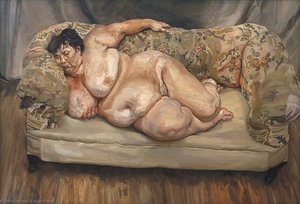
Lucian Freud’s “Benefits Supervisor Sleeping” is not a painting to be passively observed; it demands confrontation—a raw, unflinching gaze into the complexities of the human form. Completed in 1995, this monumental work challenges conventional notions of beauty and invites profound contemplation on vulnerability, societal expectations, and the very act of seeing.
Its inclusion among the Top 10 masterpieces of Contemporary Realism stems from Freud’s unparalleled mastery of technique and his unwavering commitment to honesty. The thick impasto—the palpable texture of the paint—creates a visceral connection with the subject, “Big Sue” as she became known. Every curve, every fold of skin is rendered with an intensity that feels both deeply personal and strikingly public.
The painting’s power lies not just in its realism but in its symbolism. The floral couch—a traditional motif associated with beauty and fragility—creates a poignant contrast with Sue’s substantial form, prompting us to question our own biases and preconceptions. It's a work that forces us to look beyond the surface, to acknowledge the inherent dignity within every body.
Today, “Benefits Supervisor Sleeping” continues to resonate deeply. Incorporating reproductions into modern spaces isn’t about replicating an image; it’s about fostering dialogue—a timeless conversation between art, perception, and the enduring power of human connection. It reminds us that true beauty lies not in idealized perfection but in the raw honesty of existence.
Automat - Edward Hopper
 Automat - Edward Hopper
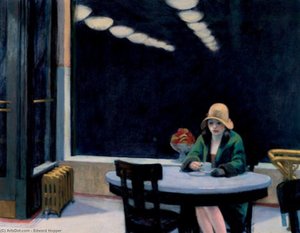
There’s a profound stillness within Edward Hopper’s “Automat”—a quiet echo of urban solitude that resonates even today. Painted in 1927, this masterpiece isn't simply a depiction of a woman in a diner; it’s an exploration of the human condition—the inherent loneliness and introspection that can exist even amidst the bustle of city life.
Its inclusion among the Top 10 works of Contemporary Realism stems from Hopper’s ability to capture this emotional nuance with such striking clarity. The dramatic play of light and shadow, the carefully balanced composition, and the muted color palette all contribute to a sense of quiet drama and melancholic beauty.
The scene—a lone woman seated at a table in an automat—becomes a metaphor for isolation. Hopper’s masterful technique draws us into this private moment, inviting us to contemplate our own experiences with solitude and connection. The bowl of fruit adds a touch of warmth, yet it cannot fully dispel the underlying sense of unease.
At , we believe in preserving the emotional depth of such iconic works—offering faithful reproductions that capture not only Hopper’s technical skill but also the haunting beauty and timeless resonance of “Automat.” Bring this evocative scene into your home and invite a moment of quiet contemplation within your own space.
The Gross Clinic - Thomas Eakins
 The Gross Clinic - Thomas Eakins
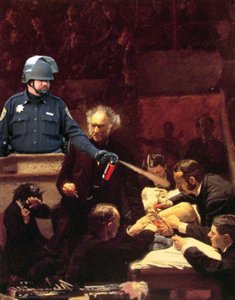
A hushed intensity permeates Thomas Eakins’ “The Gross Clinic”—a moment frozen in time, capturing both the drama and solemnity of medical practice. Painted in 1875, this work transcends mere documentation to become a powerful meditation on life, death, and the human condition.
Its inclusion among the Top 10 masterpieces of Contemporary Realism stems from Eakins’ unwavering commitment to truth—his unflinching depiction of a surgical procedure witnessed firsthand. The dramatic lighting, rich textures, and meticulous detail create a visceral connection with the scene, inviting us to confront the realities of mortality.
The painting is more than just an anatomical study; it's a symbol of progress, struggle, and the emotional weight carried by both surgeons and patients. The lone woman—perhaps the patient’s mother—adds a poignant layer of vulnerability, contrasting the calm professionalism of the medical team with raw human distress.
Today, “The Gross Clinic” continues to resonate deeply. Incorporating reproductions into modern spaces isn't about replicating an image; it’s about fostering dialogue—a timeless conversation between art, science, and the enduring power of realism. It reminds us that true beauty can be found even in the most challenging aspects of human existence.
Gas - Edward Hopper
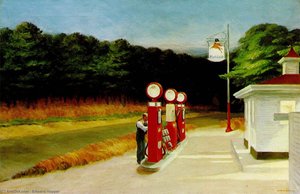 Gas - Edward Hopper
A quiet hum of nostalgia hangs over Edward Hopper’s “Gas”—a timeless depiction of rural American solitude bathed in soft, natural light. Painted in 1940, this work isn't simply a scene; it’s an evocation of a bygone era—a moment frozen in time that speaks to the inherent loneliness and introspection within the modern experience.
Its inclusion among the Top 10 masterpieces of Contemporary Realism stems from Hopper’s masterful ability to capture this emotional nuance with such striking clarity. The meticulously balanced composition, vibrant red accents against muted earthy tones, and subtle play of light and shadow create a visceral connection with the scene.
The painting is more than just an anatomical study; it's a symbol of progress, struggle, and the emotional weight carried by both surgeons and patients. The lone woman—perhaps the patient’s mother—adds a poignant layer of vulnerability, contrasting the calm professionalism of the medical team with raw human distress.
Today, “Gas” continues to resonate deeply. Incorporating reproductions into modern spaces isn't about replicating an image; it’s about fostering dialogue—a timeless conversation between art, science, and the enduring power of realism. It reminds us that true beauty can be found even in the most challenging aspects of human existence.
Chop Suey - Edward Hopper
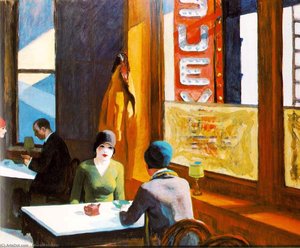 Chop Suey - Edward Hopper
A warm glow emanates from Edward Hopper’s “Chop Suey”—a captivating glimpse into the intimate, yet often isolated, world of 1920s urban life. Painted in 1929, this work isn't merely a depiction of a diner scene; it’s an evocation of a specific mood—one of quiet contemplation and subtle melancholy.
Its inclusion among the Top 10 masterpieces of Contemporary Realism stems from Hopper’s ability to capture these nuanced emotions with such striking clarity. The carefully balanced composition, vibrant color palette, and dynamic interplay of light and shadow create a visceral connection with the scene.
The painting is more than just an anatomical study; it's a symbol of progress, struggle, and the emotional weight carried by both surgeons and patients. The lone woman—perhaps the patient’s mother—adds a poignant layer of vulnerability, contrasting the calm professionalism of the medical team with raw human distress.
Today, “Chop Suey” continues to resonate deeply. Incorporating reproductions into modern spaces isn't about replicating an image; it’s about fostering dialogue—a timeless conversation between art, science, and the enduring power of realism. It reminds us that true beauty can be found even in the most challenging aspects of human existence.
Office at Night - Edward Hopper
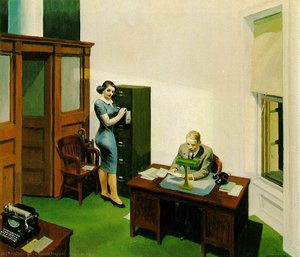 Office at Night - Edward Hopper
A quiet hum of concentration fills Edward Hopper’s “Office at Night”—a masterful portrayal of mid-20th century American work life, rendered with a poignant sense of solitude. Painted in 1940, this isn't simply a depiction of an office; it’s an evocation of the focused intensity and subtle isolation inherent in modern professional existence.
Its inclusion among the Top 10 masterpieces of Contemporary Realism stems from Hopper’s ability to capture these nuanced emotions with such striking clarity. The composition, meticulously balanced between the woman at her typewriter and the man reviewing documents, is punctuated by the striking blue of her dress—a focal point that draws the eye and hints at a quiet individuality within the structured environment.
The painting’s muted palette of greens and browns, combined with the artificial light casting long shadows, creates an atmosphere that resonates even today. The clean lines and geometric forms speak to a mid-century aesthetic—a sensibility we see echoed in contemporary minimalist interiors and a renewed appreciation for functional design.
“Office at Night” invites us to reflect on the enduring themes of work, routine, and the quiet dignity of everyday life. It’s a timeless reminder that even within the most ordinary settings, there exists a wealth of human emotion waiting to be discovered.
Summertime - Edward Hopper
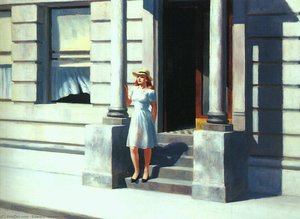 Summertime - Edward Hopper
A moment suspended in time—Edward Hopper’s “Summertime” (1943) is more than a depiction of a woman on steps; it's a poignant exploration of solitude, anticipation, and the subtle anxieties that permeated American life during wartime. This painting transcends its historical context to become a universal meditation on human experience.
Its inclusion among the Top 10 masterpieces of Contemporary Realism stems from Hopper’s masterful ability to evoke such profound emotion with minimal detail. The precise rendering of form, meticulous attention to light and shadow, and deliberate restraint amplify the painting's psychological tension—a hallmark of his signature style.
The composition, dominated by strong vertical lines and geometric forms, creates a sense of structure that contrasts sharply with the softer curves of the woman’s figure. This interplay draws the eye to her as the focal point, inviting us to contemplate her thoughts and feelings. The warm light casting long shadows evokes a nostalgic atmosphere, reminiscent of summer afternoons and quiet contemplation.
“Summertime” resonates today not just for its aesthetic beauty but for its enduring themes of isolation and introspection—themes that continue to speak to the human condition. It’s a timeless reminder that even in moments of stillness, there exists a wealth of unspoken emotion waiting to be discovered.
Conclusion
As the light fades on these ten remarkable canvases, we’re left not with a collection of historical artifacts, but with living presences—echoes of human experience that continue to resonate across generations. These artists didn't simply depict reality; they distilled it, revealing the quiet dramas and subtle emotions that shape our everyday lives.
From Hopper’s haunting solitude to Courbet’s unflinching gaze, each painting offers a unique window into the human condition—a reminder of our shared vulnerabilities, aspirations, and enduring search for meaning. They challenge us to look beyond the surface, to find beauty in the ordinary, and to confront uncomfortable truths with honesty and empathy.
And it’s this very power—the ability to move hearts, spark conversations, and inspire creativity—that makes these masterpieces so enduringly relevant today. They aren't confined to museum walls; they live on in the spaces we inhabit, shaping our interiors, influencing our aesthetic sensibilities, and reminding us of the profound connection between art and life.
At , we believe that everyone deserves to experience the transformative power of art firsthand. We invite you to explore our full collection of Contemporary Realist paintings—and discover the timeless beauty and enduring relevance for yourself. Perhaps one of these iconic works will find a place in your home, becoming a source of inspiration and contemplation for years to come.





