




Introduction
To gaze upon these ten masterpieces is to witness a revolution—a fracturing not just of form, but of perception itself. The Cubism movement, born in the early 20th century, wasn’t merely about *how* things were painted; it was a radical questioning of what painting *could be*. It dismantled centuries-old conventions and rebuilt them into something startlingly new.
Emerging from the workshops of Pablo Picasso and Georges Braque in Paris around 1907, Cubism arose as a response to a rapidly changing world. The Industrial Revolution had irrevocably altered society, while advancements in science—particularly Einstein’s theory of relativity—challenged established notions of space and time. Artists felt compelled to reflect this new reality, moving away from representational accuracy towards an exploration of multiple perspectives simultaneously.
Early Cubism, often referred to as Analytical Cubism, broke down objects into geometric shapes, analyzed them from various viewpoints, and reassembled them on the canvas in a fragmented manner. Later, Synthetic Cubism introduced collage elements and brighter colors, further blurring the lines between painting and sculpture, reality and illusion. These weren’t attempts to depict *what* an object looked like, but rather *how* it existed—its essence, its structure, its relationship to the surrounding space.
These ten works represent pivotal moments in this extraordinary journey. They are not simply beautiful objects; they are intellectual puzzles, emotional landscapes, and enduring symbols of artistic innovation. They continue to resonate today because they speak to a fundamental human desire: to understand the world around us, to see beyond the surface, and to challenge our own preconceived notions of reality.
Prepare to enter a realm where perspectives shift, forms collide, and the very act of seeing is transformed. We will now embark on a curated exploration of the ten masterpieces that defined Cubism—a movement that forever altered the course of art history.
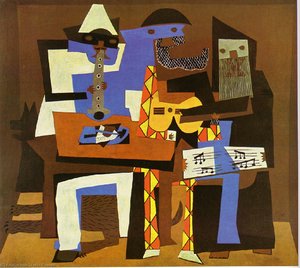
Three Musicians - Pablo Picasso
A silent concert frozen in time, Three Musicians by Pablo Picasso is a vibrant echo of post-war yearning and artistic rebirth.
Painted in 1921, this masterpiece isn’t simply a depiction of three figures; it's a profound exploration of form, color, and the very essence of Synthetic Cubism. Picasso abandons the analytical fragmentation of his earlier work for a bolder, more decorative approach, constructing Harlequin, Pierrot, and a monk from geometric planes that seem to vibrate with energy. The influence of Commedia dell'arte is palpable – these aren’t portraits in the traditional sense, but archetypes imbued with wit, pathos, and a touch of melancholy.
The flattened perspective and layered composition reject conventional representation, offering multiple viewpoints simultaneously—a hallmark of Cubism that continues to inspire contemporary interior design. Think of its angular lines and bold color blocking translated into striking textiles or graphic wall patterns. The painting’s muted blues, browns, and ochre tones evoke a sense of intimacy and contemplation, while the deliberate use of shape creates a dynamic yet contained visual experience.
More than just an aesthetic triumph, Three Musicians reflects Picasso's desire to rebuild after the devastation of World War I. It’s a testament to the enduring power of art—a celebration of creativity and performance that resonates deeply even today. This iconic work remains central to understanding the Cubism movement and its lasting impact on modern visual culture.
The Young Ladies of Avignon - Pablo Picasso
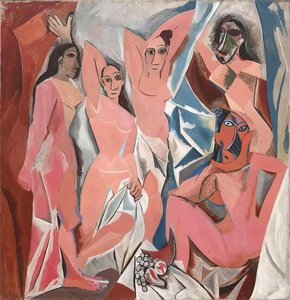 The Young Ladies of Avignon - Pablo Picasso
Before Les Demoiselles d’Avignon by Pablo Picasso, painting largely adhered to a tradition of illusion—a striving for realistic representation. This work shattered that illusion irrevocably.
Completed in 1907, this monumental canvas isn't simply a depiction of five female figures; it is the birth cry of Cubism and modern art itself. Picasso deliberately abandoned centuries-old conventions, fracturing forms, distorting anatomy, and presenting multiple perspectives simultaneously. The unsettling gazes and angular bodies confront the viewer, demanding engagement rather than passive observation.
The influence of African tribal masks and Iberian sculpture is palpable, reflecting a fascination with ‘primitive’ art that signaled a rejection of Western artistic norms. This wasn't merely about aesthetics; it was a quest for a more primal, authentic form of expression. The painting’s cool palette and fragmented composition evoke a sense of unease and mystery—a departure from the idealized beauty of earlier works.
Les Demoiselles d’Avignon remains central to understanding the Cubism movement because it dared to ask fundamental questions about representation, perception, and the very nature of art. At , we believe in making masterpieces accessible—our faithful reproductions capture not just the visual elements but also the revolutionary spirit of Picasso's iconic work, allowing you to experience its power within your own space.
I and the Village - Marc Chagall
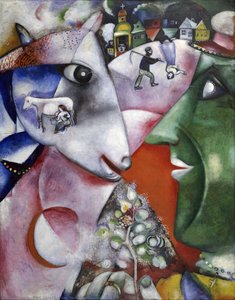 I and the Village - Marc Chagall
I and the Village by Marc Chagall is a hauntingly beautiful window into memory—a dreamscape where personal history and universal symbolism intertwine.
Created in 1911, this masterpiece transcends categorization, seamlessly blending Cubist fragmentation with Fauvist color and Symbolist depth. While exhibiting structural principles of Cubism – the flattened perspective, the broken forms – Chagall’s work is uniquely his own: a vibrant tapestry woven from childhood recollections of Vitebsk.
The painting isn't about *what* you see, but rather *how* it feels—the emotional resonance of place and belonging. Dominating figures merge with village scenes, creating a sense of fluidity and interconnectedness. The luminous color palette and Chagall’s fluid brushwork evoke an ethereal glow, inviting viewers into his deeply personal world.
This work remains central to understanding the Cubism movement because it demonstrates how artists could absorb influences while forging their own distinct language. Today, its dreamlike aesthetic inspires interiors that prioritize emotional connection—spaces filled with layered textures, bold colors, and a sense of whimsical nostalgia. At , we faithfully reproduce these nuances, allowing you to bring Chagall’s evocative vision into your home.
Guernica - Pablo Picasso
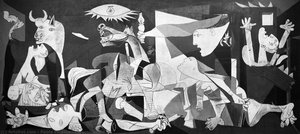 Guernica - Pablo Picasso
Guernica by Pablo Picasso is a silent scream against the darkness—a timeless testament to the horrors of war and the enduring power of human suffering.
Completed in 1937, this monumental work transcends its historical context as a response to the bombing of Guernica during the Spanish Civil War. It’s not merely a depiction of tragedy; it's an evocation of universal grief, rendered with breathtaking intensity and Cubist fragmentation.
The monochromatic palette—shades of grey, black, and white—amplifies the sense of despair, while distorted figures and fractured forms convey the chaos and brutality of conflict. The wounded horse, a recurring symbol in Picasso’s work, embodies the agony of innocent victims, and the screaming woman cradling her dead child is an image that resonates across generations.
Guernica remains central to understanding the Cubism movement because it demonstrates how artistic innovation can be harnessed for profound social commentary. Today, its stark beauty inspires interiors that prioritize emotional depth—spaces filled with contemplative energy and a sense of quiet resilience. At , we faithfully reproduce this masterpiece, allowing you to experience its power within your own home.
Women of Algiers (Version O) - Pablo Picasso
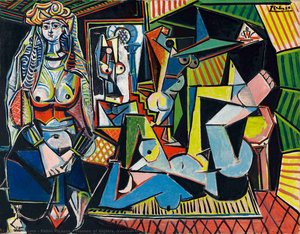 Women of Algiers (Version O) - Pablo Picasso
Before you stands not merely a painting, but an echo—a vibrant conversation across centuries, captured in Women of Algiers (Version O) by Pablo Picasso.
Completed in 1955, this masterpiece is part of a series that reimagines Eugène Delacroix’s iconic work through the lens of Cubism. It's a bold assertion of artistic freedom—a deconstruction of form and perspective that challenges conventional representations of beauty and femininity.
Picasso doesn’t simply *depict* women; he fragments them, presenting multiple viewpoints simultaneously on a single canvas. The cool blues, grays, and whites are punctuated by fiery oranges and reds, creating a dynamic tension that draws the eye. This isn't about replicating reality but rather exploring the act of seeing itself.
Women of Algiers (Version O) remains central to understanding the Cubism movement because it demonstrates how artists can engage with art history while forging their own unique language. Today, its vibrant energy and complex composition inspire interiors that prioritize intellectual curiosity—spaces filled with contemplative beauty and a sense of timeless sophistication. At , we faithfully reproduce this masterpiece, allowing you to experience its power within your own home.
Portrait of Ambroise Vollard - Pablo Picasso
 Portrait of Ambroise Vollard - Pablo Picasso
Imagine a quiet study, sunlight filtering through a window as Ambroise Vollard—the titan of the art world—dozes off mid-conversation. Portrait of Ambroise Vollard by Pablo Picasso isn’t simply a depiction of this moment; it's a revolutionary exploration of perception itself.
Painted in 1910, this artwork stands as a pivotal statement within the evolution of Analytical Cubism. Picasso dissects Vollard’s features into fragmented geometric planes, simultaneously revealing multiple perspectives and challenging the viewer to actively reconstruct the image. The result is not a likeness but an intellectual rendering—a visual deconstruction mirroring the complexities of modern life.
The limited palette – muted browns, grays, and ochres – reinforces the focus on form rather than vibrant color. Subtle tonal variations suggest texture, yet overall, the emphasis lies in the interplay of angular lines and overlapping planes. This isn't about capturing a physical resemblance; it’s about revealing a personality.
Portrait of Ambroise Vollard remains central to understanding the Cubism movement because it demonstrates how artists can challenge conventions and redefine portraiture itself. Today, its somber beauty inspires interiors that prioritize intellectual curiosity—spaces filled with contemplative energy and a sense of timeless sophistication. At , we faithfully reproduce this masterpiece, allowing you to experience its power within your own home.
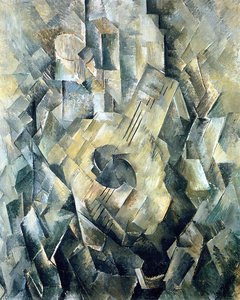
Mandola - Georges Braque
Gaze upon Mandola by Georges Braque and you’re not simply looking at a musical instrument; you're witnessing the very act of perception being dissected—a quiet revolution unfolding on canvas.
Painted in 1910, this artwork stands as a cornerstone of Analytical Cubism. Braque deconstructs the mandola into a complex interplay of geometric planes, fracturing its shape and challenging traditional notions of representation. The muted palette – grays, browns, and ochres – eschews vibrant color in favor of intellectual analysis.
The result isn’t about *seeing* a mandola; it's about understanding the underlying structure—the essence of form itself. Layers of paint build texture, revealing visible brushstrokes within each plane that add depth despite the overall flattening effect. This work reflects Braque’s fascination with Cézanne and his exploration of how painters represent light and perspective.
Mandola remains central to understanding the Cubism movement because it demonstrates how artists can challenge conventions and redefine our relationship with visual reality. At , we faithfully reproduce these nuances—allowing you to experience the quiet power of Braque’s masterpiece within your own space, preserving its emotional resonance and intellectual depth.
The Birthday - Marc Chagall
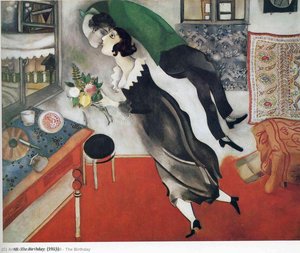 The Birthday - Marc Chagall
The Birthday by Marc Chagall is a soaring embrace—a testament to love and anticipation captured in a swirl of vibrant color and dreamlike imagery.
Painted in 1915, this captivating artwork transcends simple representation. It’s a celebration of the artist's impending marriage to Bella Rosenfeld, a relationship that profoundly shaped his artistic vision. Chagall blends elements of Russian folklore, Cubism, Expressionism, and Fauvism into a uniquely personal visual language.
The flattened perspective, distorted forms, and non-naturalistic color palette create an atmosphere of joyful liberation—a sense of floating above earthly constraints. The vibrant reds, oranges, and greens contrast beautifully with cooler blues and purples, amplifying the emotional intensity of the scene. This isn't merely a depiction of a moment; it’s an evocation of feeling.
The Birthday remains central to understanding the Cubism movement because it demonstrates how artists can synthesize diverse influences while forging their own distinct style. Today, its dreamlike aesthetic inspires interiors that prioritize emotional connection—spaces filled with poetic symbolism and a sense of timeless beauty. At , we faithfully reproduce these nuances, allowing you to experience Chagall’s masterpiece within your own home.
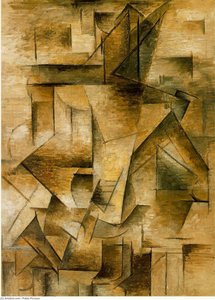
Man with a Guitar - Georges Braque
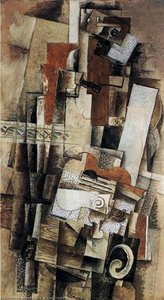 Man with a Guitar - Georges Braque
Unveiled to discerning eyes, Georges Braque’s “Man with a Guitar” (1914) is not merely a painting; it's a cornerstone of Cubist innovation—a testament to the movement’s revolutionary spirit and enduring legacy.
This masterpiece dismantles traditional representation, fracturing the figure and his instrument into a complex interplay of geometric planes. The restrained palette of browns, grays, and creams emphasizes form over hue, inviting intellectual contemplation rather than immediate emotional response. Executed with meticulous technique, subtle impasto effects reveal visible brushstrokes that add depth to the fragmented surface.
Created during a period of intense artistic ferment in Paris, “Man with a Guitar” embodies the avant-garde spirit of the time—challenging conventional norms and paving the way for future abstract movements. The artwork’s subtle clues to its subject matter hint at the complexities of human perception and the breakdown of traditional values.
Today, this iconic piece resonates within modern luxury interiors as a striking statement of refined taste and artistic legacy. Its intellectual rigor and timeless beauty continue to inspire collectors and art enthusiasts alike—a testament to Braque’s enduring influence on generations of artists.
Cubist Self-portrait - Salvador Dalí
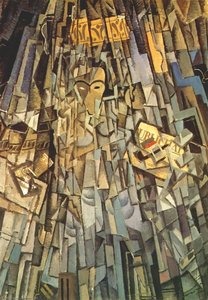 Cubist Self-portrait - Salvador Dalí
To encounter Salvador Dalí’s “Cubist Self-portrait” (1926) is to witness a nascent genius grappling with the very foundations of representation—a fragmented vision that foreshadows the dreamlike landscapes for which he would become renowned.
This artwork earns its place among the Top 10 by demonstrating Dalí’s early mastery of Cubist principles, infused with his own unique psychological depth. He dismantles the self into geometric planes, presenting multiple viewpoints simultaneously and challenging conventional notions of identity. The restrained palette of browns, grays, and ochres underscores the intellectual rigor of this exploration.
Beyond its stylistic merits, the painting evokes a mood of introspective melancholy—a sense that even familiar surroundings are subject to fragmentation and reinterpretation. This blurring of boundaries between self and environment speaks to a deeper psychological exploration, hinting at the anxieties inherent in modern life.
At , we believe great art should live within our spaces, enriching our daily lives. “Cubist Self-portrait” embodies this philosophy—a striking statement piece that invites contemplation and sparks conversation, transforming any interior into a sanctuary of refined taste and artistic expression.
Conclusion
As the echoes of these ten masterpieces—Picasso’s revolutionary angles, Braque’s intellectual rigor, Dalí’s fragmented self-exploration—linger in the mind's eye, we are reminded that art is not merely a record of history, but a living presence. These canvases continue to breathe with the spirit of their creators, shaping our interiors, challenging our perceptions, and igniting the flames of creativity within us.
To gaze upon these works is to connect with something profoundly human—a shared desire to understand the world around us, to express the inexpressible, and to find beauty amidst chaos. They are not distant relics confined to museum walls, but vibrant dialogues waiting to unfold within our own homes and hearts.
At , we believe that every masterpiece deserves a place in the world—a chance to be reborn as a hand-painted reproduction, crafted by skilled artists who honor the original’s soul and detail. We invite you to explore the full spectrum of Cubist innovation and discover the artwork that resonates with your own unique vision. Begin your journey through our full collection today, and allow these timeless treasures to transform your space into a sanctuary of beauty and inspiration.





