




The Genesis of Landscape: From Symbolic Ground to Immersive Views
 Alfred East Art Gallery
Discover Kettering's Alfred East Art Gallery – showcasing stunning British landscape paintings by Sir Alfred East and W B Gash, alongside engaging art workshops & local history exhibits. Free admission!
For millennia, the human impulse to depict the natural world was often subsumed within narrative—landscapes serving as backdrops for mythological tales or religious scenes. Early representations weren’t concerned with capturing a specific place, but rather with establishing symbolic meaning. The Minoan frescoes of around 1500 BCE offer tantalizing glimpses of stylized flora and fauna, yet these are less about the beauty of nature itself and more about its role within their culture's cosmology. Ancient Egypt similarly prioritized conveying agricultural abundance or the power of the Nile through carefully rendered details, but a holistic sense of landscape as an independent subject was largely absent. The Romans, however, began to experiment with broader panoramic views in Pompeii and Herculaneum, foreshadowing a shift towards appreciating spatial depth and atmospheric perspective – though even these were often integrated into larger decorative schemes.
The true revolution came with the Chinese tradition of shan shui (“mountain-water”) painting. Dating back over a thousand years, this art form elevated landscape to its highest expression, not as a mere setting but as a spiritual realm in itself. Artists sought to capture the essence of nature through meticulous brushwork and evocative compositions, often depicting distant vistas inhabited only by solitary figures – sages contemplating the universe. This emphasis on introspection and harmony with nature established a powerful aesthetic that would profoundly influence Western art centuries later. The key difference lay in intention: while early Western landscapes aimed for accurate representation within a narrative context, Chinese painters prioritized conveying an emotional or philosophical state through their depiction of the natural world.
This foundation laid the groundwork for the development of landscape painting as we understand it today – a genre capable of evoking not just visual beauty but also profound feelings of awe, tranquility, and connection to something larger than ourselves. The recognition of perspective, scaling distance, and atmospheric effects were crucial steps in this evolution, allowing artists to create increasingly immersive and believable depictions of the world around them.
Romanticism's Embrace of the Sublime: Nature as Emotional Catalyst
 Albertinum
Explore German art's evolution at the Albertinum in Dresden! From Romantic landscapes to Modernism & sculpture, witness masterpieces by Friedrich & Richter in a stunning Renaissance building.
The 18th century witnessed a seismic shift in artistic sensibilities with the rise of Romanticism. Rejecting the Enlightenment’s emphasis on reason, Romantics turned inward, prioritizing emotion, intuition, and the power of individual experience. This newfound focus found its most potent expression in their relationship with nature. No longer simply a picturesque backdrop, nature became an emotional catalyst – a source of inspiration, solace, and even terror.
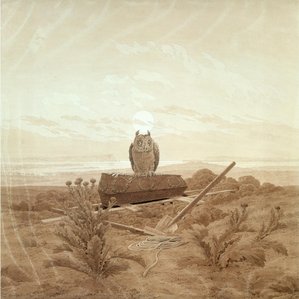
Central to this Romantic vision was the concept of the Sublime. Philosophers like Immanuel Kant explored the idea that encountering something vast and overwhelming—a towering mountain range, a raging storm—could evoke a sense of both awe and fear. This experience transcended rational understanding, forcing individuals to confront their own limitations in the face of nature’s power. Edmund Burke further theorized that the Sublime served as a reminder of humanity's insignificance, highlighting our vulnerability against the forces of the natural world. Artists like Caspar David Friedrich masterfully captured this duality in works such as “Wanderer above the Sea of Fog,” where a lone figure contemplates an expansive and mysterious landscape, embodying both human aspiration and existential solitude.
This fascination with the Sublime wasn’t merely about depicting dramatic scenery; it was about exploring the inner emotional states triggered by that scenery. Romantic artists sought to evoke feelings of melancholy, wonder, and spiritual connection through their use of light, color, and composition. The landscapes became mirrors reflecting the human soul, imbued with a sense of longing and the search for meaning in an increasingly industrialized world.
Constable, Church & Beyond: The Hudson River School and American Transcendentalism
Across the Atlantic, a distinctly American strain of Romantic landscape painting emerged in the mid-19th century with the Hudson River School. Artists like John Constable, though working slightly earlier in England, paved the way with his meticulous studies of Suffolk’s countryside, capturing the fleeting effects of light and atmosphere with unprecedented realism. His dedication to portraying nature as he observed it – not idealized or embellished – resonated deeply with American painters.
The Hudson River School artists, including Frederic Edwin Church and Thomas Cole, took Constable's approach a step further, focusing on the dramatic landscapes of the American frontier. They weren’t simply documenting scenery; they were celebrating the untamed beauty of the New World and its potential for spiritual renewal. Church’s monumental canvases, such as “Heart of the Andes,” are breathtaking examples of detailed realism combined with a sense of awe-inspiring grandeur. These paintings often served as visual manifestos for American Transcendentalism – a philosophical movement that emphasized the inherent goodness of both people and nature.
The Hudson River School artists believed that experiencing nature directly could lead to spiritual enlightenment, and their paintings were intended to evoke this same sense of wonder in viewers. They meticulously captured every detail—the texture of bark, the play of light on water, the distant peaks of mountains—creating immersive landscapes that transported audiences to these pristine wildernesses. This emphasis on realism wasn’t simply about accuracy; it was about conveying a deeper truth – the inherent beauty and spiritual power of the natural world.
Delacroix and Monticelli: Romantic Landscapes Across Borders
While the Hudson River School flourished in America, European artists continued to explore the possibilities of Romantic landscape painting. Eugène Delacroix, renowned for his historical paintings, also produced evocative landscapes that captured a sense of drama and emotional intensity. His “Landscape near Ante” (1856) exemplifies this approach, showcasing a serene French countryside bathed in warm light – a departure from his more turbulent compositions but still imbued with a Romantic sensibility.
Adolphe Monticelli, working later in the 19th century, represents a fascinating bridge between Romanticism and Impressionism. His “Rocky Landscape” is characterized by vibrant colors, atmospheric textures, and a solitary tree that embodies both resilience and isolation. Monticelli’s technique – thick impasto brushstrokes and a bold palette – foreshadowed the innovations of Post-Impressionism while retaining a distinctly Romantic emotional depth.
These artists demonstrate the enduring appeal of Romantic landscape painting across different cultures and generations. While their styles varied, they all shared a common desire to capture the beauty, power, and emotional resonance of nature. Delacroix’s landscapes offered moments of quiet contemplation amidst his more dramatic works, while Monticelli pushed the boundaries of technique to create intensely personal and evocative depictions of the natural world.
The Enduring Legacy: Contemporary Artists Reflecting on Nature’s Power
The legacy of Romantic landscape painting continues to resonate with contemporary artists. While modern art movements often prioritized abstraction and conceptual ideas, a renewed interest in nature has emerged in recent decades, driven by growing environmental concerns and a desire for connection to something authentic.
Artists today are exploring the complexities of our relationship with the natural world – not just its beauty but also its fragility. They’re using a variety of media—painting, photography, sculpture, installation—to address issues such as climate change, deforestation, and pollution. This contemporary engagement with nature often carries a sense of urgency and responsibility, reflecting a heightened awareness of our impact on the planet.
The spirit of Romanticism – its emphasis on emotion, intuition, and the power of individual experience – remains central to this contemporary dialogue. Artists are seeking to evoke feelings of awe, wonder, and even grief in response to the environmental challenges we face, prompting viewers to reconsider their own relationship with nature and their role in protecting it.
Commissioning Your Own Eden: Bringing Landscape Art Home with AllPaintingsStore
 Beyond Photographs: Commissioning Bespoke Paintings of Wedding Venues for Unforgettable Keepsakes
Transform your wedding venue into timeless art! Discover the beauty of bespoke paintings & commissions with 's expert artists. Create a unique, luxurious keepsake.
The desire to connect with nature through art is timeless. At AllPaintingsStore, we believe that everyone deserves to experience the beauty and emotional power of landscape painting. We specialize in handcrafted oil paintings, meticulously reproduced from masterpieces by iconic artists like Constable, Church, Friedrich, Delacroix, and Monticelli.
Whether you’re drawn to the serene landscapes of the Hudson River School or the dramatic vistas of Romantic Europe, we can bring your vision to life. Our skilled artists use professional-grade oils on 100% cotton canvas, following traditional techniques to ensure a museum-quality reproduction that will last for generations. We offer a wide range of sizes and customization options – from framing styles to personalized dimensions—allowing you to create a unique artwork that perfectly complements your space.
Beyond reproductions, we also offer bespoke paintings, transforming cherished photos into stunning artworks in the style of your favorite artist. Imagine capturing a beloved wedding venue or a memorable family vacation as a timeless oil painting – a treasured keepsake for years to come. At AllPaintingsStore, we’re committed to providing exceptional quality, personalized service, and a 100% satisfaction guarantee. Explore our collection today and discover the perfect landscape to bring your own Eden home.





