




The Precursors: Setting the Stage for Van Eyck's Revolution
 Wikipedia: Jan van Eyck
Jan van Eyck ( van EYEK; Dutch: [ˈjɑɱ vɑn ˈɛik]; c. before 1390 – 9 July 1441) was a Flemish painter active in Bruges who was one of the early innovators of what became known as Early Netherlandish painting, and one of the supreme figures of the Earl...
Before Jan van Eyck emerged as a pivotal figure in the 15th century, painting existed largely within established conventions – tempera reigned supreme, and realism, while aspired to, often felt distant. The artistic landscape of Northern Europe was poised for change, however, with artists like Robert Campin beginning to experiment with oil-based mediums. While Campin’s work laid crucial groundwork, it was Van Eyck who truly unlocked the potential of oil paint, transforming it from a promising alternative into a vehicle for unprecedented detail and luminosity. Born around 1390 in Maaseik, Van Eyck didn't simply inherit a tradition; he inherited an opportunity – one he seized with remarkable skill and vision. His early life remains shrouded in some mystery, but his appointment to the court of Philip the Bold, Duke of Burgundy, provided both patronage and access to a sophisticated network that fueled his artistic development. This wasn’t merely about technical innovation; it was about serving a discerning clientele who demanded increasingly lifelike representations, reflections of their status and piety.
A Master of Oil: Technique, Materials & the Illusion of Reality
Oil painting is a painting method involving the procedure of painting with pigments combined with a drying oil as the binder. It has been the most common technique for artistic painting on canvas, wood panel, or copper for several centuries. The adva...
The claim that Van Eyck “invented” oil painting is an oversimplification, yet his mastery of the medium remains unparalleled. Prior to his innovations, tempera paint – using egg yolk as a binder – offered limited depth and blending capabilities. Oil paints, utilizing drying oils like linseed or walnut oil, allowed for far greater flexibility, richer color saturation, and the ability to build up layers with subtle gradations. Van Eyck didn’t just *use* oil paint; he refined it, experimenting with varnishes and layering techniques to achieve an almost jewel-like quality in his works. This meticulous approach is evident in every brushstroke, creating a sense of depth and texture that was previously unattainable. Consider the way light plays across the surfaces in The Arnolfini Portrait, reflecting off the polished brass chandelier or illuminating the folds of the couple’s clothing. It wasn't simply about applying pigment; it was about manipulating light itself, creating an illusion of reality so convincing that viewers have long sought to decipher every detail within his compositions. The artist’s secret recipe for paint – a subject of fascination for centuries – remains elusive, but its effects are undeniable.
Decoding Symbolism: Unveiling Hidden Meanings in Van Eyck’s Art
Van Eyck's paintings aren’t merely beautiful objects; they are complex visual puzzles brimming with symbolism. While Erwin Panofsky’s interpretations of the Arnolfini Portrait as a strict wedding contract have been debated, his emphasis on “disguised symbolism” remains profoundly influential. Every object – from the single candle burning in daylight to the dog at the couple's feet – likely held deeper meaning for contemporary viewers. The discarded shoes could represent domesticity or a sacred space, while the oranges symbolize wealth and fertility. This wasn’t about overt religious iconography; it was about embedding layers of significance within everyday scenes, inviting contemplation and interpretation. The Rolin Madonna, for example, is rich with symbolic details relating to Chancellor Rolin's piety and status, subtly interwoven into a seemingly straightforward depiction of the Virgin Mary. Van Eyck’s skill lies in making these symbols feel organic and integrated, rather than imposed upon the scene.
Portraits and Patrons: Reflecting Society in Van Eyck’s Commissions
Van Eyck's portraits were revolutionary not just for their realism but also for their psychological depth. Unlike earlier portraiture which often focused on idealized representations of nobility, Van Eyck captured the individuality of his sitters – their strengths, vulnerabilities, and inner lives. Man in a Red Turban, though its identity remains debated, is striking for its direct gaze and intimate portrayal of character. These weren’t simply likenesses; they were statements about power, wealth, and social standing. His patrons—Philip the Bold, Chancellor Rolin, Giovanni Arnolfini—were not merely commissioning paintings; they were investing in their own legacies, seeking to immortalize themselves through art. The artist understood this dynamic perfectly, crafting portraits that reflected both the physical appearance and the aspirations of his clients. This close relationship with his patrons allowed Van Eyck a degree of artistic freedom, enabling him to push the boundaries of realism and symbolism.
The Ghent Altarpiece: A Monumental Achievement and Lasting Legacy
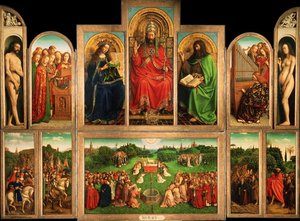
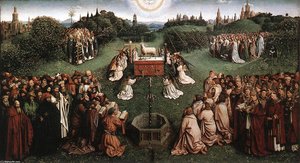
Perhaps Van Eyck’s most ambitious undertaking was the Ghent Altarpiece, completed in 1432 with his brother Hubert. This monumental polyptych, commissioned for Saint Bavo Cathedral, is a masterpiece of Early Netherlandish painting, showcasing the full extent of Van Eyck's technical skill and symbolic vision. The exterior panels depict the Annunciation and various saints, while the interior reveals scenes from the Book of Revelation, culminating in the adoration of the Lamb. The altarpiece isn’t simply a religious narrative; it’s a complex theological statement rendered with breathtaking detail and emotional power. The vibrant colors, intricate landscapes, and lifelike figures continue to captivate viewers centuries later. It established Van Eyck as the leading painter of his time and profoundly influenced generations of artists who followed.
Van Eyck's Enduring Influence on the Northern Renaissance
Jan van Eyck’s impact on the Northern Renaissance is immeasurable. His mastery of oil painting, coupled with his meticulous attention to detail and symbolic depth, set a new standard for artistic realism. Artists like Rogier van der Weyden and Jan Joest van Calcar built upon his innovations, further refining the techniques and exploring new avenues of expression. Even centuries later, artists continue to study Van Eyck’s work, marveling at his ability to capture light, texture, and emotion. His legacy extends beyond technique; it lies in his profound understanding of human psychology and his ability to imbue his paintings with a sense of life and presence. At AllPaintingsStore.com, we are proud to offer high-quality reproductions of Van Eyck’s masterpieces, allowing you to experience the beauty and complexity of his art firsthand. Explore our collection today and discover the enduring power of this revolutionary artist.





