

Introduction
To gaze upon these ten masterpieces is to step through a portal into an era of unprecedented artistic and intellectual flourishing – the Renaissance. More than just paintings, sculptures, and drawings, they are echoes of a world reborn, a testament to humanity’s enduring quest for beauty, knowledge, and self-understanding.
Emerging from the shadows of the Middle Ages in 14th-century Italy, the Renaissance (meaning ‘rebirth’) witnessed a renewed interest in classical antiquity – the art, literature, and philosophy of ancient Greece and Rome. This wasn’t merely imitation; it was a profound reinterpretation, infused with Christian beliefs and a burgeoning spirit of humanism. Artists began to prioritize observation, realism, and individual expression, moving away from the stylized forms of the past.
Florence, Venice, and Rome became vibrant hubs of creativity, fueled by wealthy patrons like the Medici family who commissioned groundbreaking works. The invention of oil painting allowed for greater detail and luminosity, while advancements in perspective created a sense of depth and illusionism that captivated audiences. The Renaissance wasn’t confined to Italy; it spread across Europe, transforming artistic landscapes from Flanders to Spain.
But why do these artworks continue to resonate centuries later? They offer us more than just aesthetic pleasure. They reveal the anxieties, aspirations, and beliefs of a society grappling with new ideas about the world and our place within it. They explore universal themes – love, loss, faith, power, mortality – that transcend time and culture.
Over the following pages, we will embark on a journey through ten iconic masterpieces that epitomize the Renaissance spirit. Prepare to be transported by their beauty, moved by their stories, and inspired by the genius of the artists who created them. Each work is a window into a remarkable period, offering insights into the minds and hearts of those who shaped our world.
The Last Supper - Leonardo da Vinci
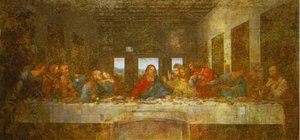 The Last Supper - Leonardo da Vinci
To encounter Leonardo da Vinci’s The Last Supper is to stand before a legend, a fresco that transcends mere representation and enters the realm of pure psychological drama.
Completed around 1495-1498 in Milan, this monumental work isn't simply a depiction of Christ’s final meal with his disciples; it’s an exploration of human emotion at its most raw. Da Vinci masterfully captures the precise moment Jesus announces that one among them will betray him, and the resulting wave of disbelief, anger, and confusion is palpable.
His innovative use of perspective draws the eye inexorably to Christ, while the dynamic grouping of the apostles – each a distinct personality reacting in their own way – creates a sense of unparalleled realism. The subtle gestures, the shifting gazes, the play of light and shadow… every detail contributes to the painting’s emotional power.
Though time has taken its toll on the fresco, its influence remains undiminished. The Last Supper continues to inspire artists and captivate audiences worldwide. Its enduring appeal lies not only in its technical brilliance but also in its profound exploration of universal themes – faith, betrayal, loyalty, and the complexities of human nature.
For those seeking to imbue their interiors with a sense of timeless elegance and intellectual depth, a reproduction of The Last Supper offers a powerful statement. It’s a reminder of the Renaissance ideals that continue to shape our world – beauty, knowledge, and the enduring power of the human spirit.
The Birth of Venus - Sandro Botticelli
 The Birth of Venus - Sandro Botticelli
To gaze upon Sandro Botticelli’s The Birth of Venus is to be transported to a realm of ethereal beauty and poetic grace – a vision that continues to captivate hearts centuries after its creation.
Completed around 1486, this iconic work isn't merely a painting; it’s an embodiment of the Renaissance spirit. Botticelli reimagines classical mythology with delicate lines, flowing forms, and a refined sense of elegance, depicting Venus emerging from the sea as a symbol of love, rebirth, and divine harmony.
The soft palette of warm tones – ochre, gold, and rose – evokes a sense of tranquility and wonder. The gentle breeze that carries Venus towards shore seems to whisper secrets of beauty and transformation. Every detail, from the scattering of roses to the delicate drapery, contributes to the painting’s ethereal quality.
The Birth of Venus redefined artistic ideals, embracing mythological subjects as vehicles for exploring philosophical concepts and celebrating the human form. Its inclusion among the Top 10 masterpieces is a testament to its enduring influence on generations of artists.
At , we believe that great art should be accessible – not confined to museums but woven into the fabric of everyday life. A reproduction of Botticelli’s masterpiece brings this timeless beauty into your home, creating a sanctuary of elegance and inspiration. It's an invitation to contemplate the power of love, the allure of beauty, and the enduring legacy of the Renaissance.
Lucretia - Paolo Veronese
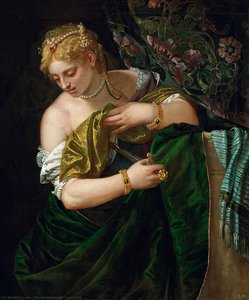 Lucretia - Paolo Veronese
Paolo Veronese’s Lucretia (1580) isn't simply a portrait; it’s an evocation of quiet dignity and profound emotion, rendered with the breathtaking color and detail that define the Venetian Renaissance.
The painting captures a noblewoman adorned in luxurious fabrics, her gaze hinting at inner contemplation. Veronese’s mastery of light and shadow creates a sense of depth and realism, while his rich palette – deep greens, gold accents, and contrasting dark tones – evokes an atmosphere of regal splendor.
This work earns its place among the Top 10 for its innovative use of color and composition. Veronese wasn’t merely depicting wealth; he was exploring the complexities of human experience through visual language. The intricate details—the flowing drapery, the delicate jewelry—speak to a world of refined taste and artistic skill.
Today, Lucretia resonates with those who appreciate timeless elegance and understated luxury. Its rich textures and harmonious colors offer inspiration for interior design, evoking a sense of warmth, sophistication, and quiet prestige. A reproduction of this masterpiece brings a touch of Venetian grandeur into any space, transforming it into a sanctuary of beauty and contemplation.
At , we believe that art should enrich our lives – not just as objects of admiration but as sources of inspiration and emotional connection. Lucretia is a testament to the enduring power of Renaissance artistry, inviting us to contemplate the complexities of human nature and the beauty of the world around us.
Portrait of Alfonso d`Avalos , in Armor with a Page - Titian
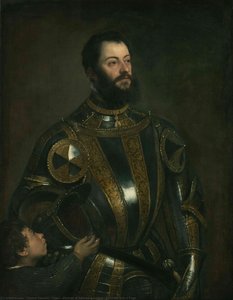 Portrait of Alfonso d`Avalos , in Armor with a Page - Titian
Titian’s Portrait of Alfonso d'Avalos, in Armor with a Page (1533) is more than just an image; it’s a statement of power, nobility, and the enduring allure of Renaissance masculinity. The painting captures not merely likeness but the very essence of a military leader – his dignity, authority, and quiet strength.
The gleaming armor, meticulously rendered with intricate gold details, dominates the composition, reflecting Titian’s unparalleled skill in depicting texture and light. Against a dark, somber background, d'Avalos emerges as a figure of imposing presence, while the young page adds a subtle layer of narrative depth.
This work rightfully claims its place among the Top 10 Renaissance masterpieces for its innovative use of color and composition. Titian’s mastery of chiaroscuro – the dramatic interplay of light and shadow – creates a sense of volume and realism rarely seen before.
Today, this portrait resonates with those who appreciate timeless elegance and sophisticated design. Its rich textures and harmonious colors offer inspiration for modern interiors, evoking a sense of grandeur and refinement. A reproduction of Portrait of Alfonso d'Avalos brings a touch of Venetian splendor into any space, transforming it into a sanctuary of style and contemplation.
At , we believe that art should be accessible – not confined to museums but woven into the fabric of everyday life. This masterpiece is an invitation to contemplate the complexities of power, the beauty of human form, and the enduring legacy of Renaissance artistry.
Concert Champetre - Titian
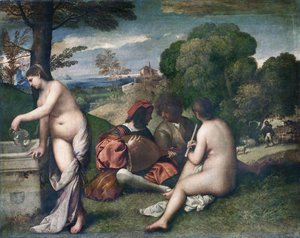 Concert Champetre - Titian
Imagine a sun-drenched meadow, alive with music and gentle conversation… This is the world Titian invites us into with Concert Champetre , a masterpiece of pastoral harmony that transcends mere depiction.
Four figures – three men and a woman – are gracefully intertwined in a moment of idyllic leisure. The painting isn’t simply about what they *are* doing; it's about the feeling they evoke: tranquility, beauty, and a profound connection to nature.
Titian’s masterful use of color is breathtaking. Warm earthy tones – greens, browns, and golds – create a sense of intimacy and warmth, while the soft light bathes the scene in a golden glow. The figures themselves are rendered with exquisite detail, their forms radiating sensuality and grace.
This work stands out for its innovative composition and emotional depth. It’s a celebration of human connection, artistic expression, and the beauty of the natural world – themes that continue to resonate today.
A reproduction of Concert Champetre brings this timeless serenity into your home, transforming any space into a sanctuary of calm and inspiration. Its harmonious colors and graceful forms offer a welcome respite from the demands of modern life, inviting you to pause, reflect, and reconnect with the beauty around you.
The battle of san romano - the counter-attack by mich - Paolo Uccello
 The battle of san romano - the counter-attack by mich - Paolo Uccello
To encounter Paolo Uccello’s The Battle of San Romano – The Counter-Attack by Mich is to step into a world where medieval chivalry meets Renaissance innovation. This panel, part of a larger series depicting the 1432 conflict between Florence and Siena, isn't merely a historical record; it’s a testament to humanity’s enduring fascination with power, courage, and spectacle.
Uccello’s distinctive style – characterized by bold lines, intricate details, and a pioneering use of perspective – creates a dynamic composition that draws the eye into the heart of the battle. The densely packed figures, rendered in rich earthy tones of red, orange, and gold, seem to surge forward with relentless energy.
What sets this work apart is its unique blend of realism and stylization. While Uccello meticulously depicts the armor and weaponry, he also employs a flattened perspective that adds to the painting’s dramatic impact. This innovative approach paved the way for future generations of artists.
A reproduction of The Battle of San Romano brings this timeless energy into your home, transforming any space into a sanctuary of strength and sophistication. Its rich colors and dynamic composition offer a welcome contrast to modern minimalism, evoking a sense of grandeur and historical significance.
At , we believe that art should inspire – not just admiration but also contemplation and connection. This masterpiece is an invitation to explore the complexities of human history and the enduring power of artistic expression.
Darmstadt Madonna - Hans Holbein the Younger
 Darmstadt Madonna - Hans Holbein the Younger
To gaze upon Hans Holbein the Younger’s Darmstadt Madonna is to encounter a world of quiet devotion and remarkable realism – a testament to the artist's unparalleled skill.
Created around 1526-1530, this exquisite oil painting depicts the Holy Family surrounded by Jakob Meyer zum Hasen, his wives, and daughter. Holbein’s mastery of composition is breathtaking; the figures are arranged in a harmonious pyramidal structure, drawing the eye to the serene expressions of Mary and the infant Jesus.
What sets this work apart is its meticulous attention to detail – from the intricate folds of the drapery to the subtle play of light and shadow. The rich color palette and sophisticated use of perspective create a sense of depth and realism rarely seen before.
The Darmstadt Madonna earns its place among the Top 10 Renaissance masterpieces for its innovative technique and emotional resonance. It’s a powerful exploration of faith, family, and personal devotion – themes that continue to inspire audiences today.
A reproduction of this timeless artwork brings a touch of elegance and tranquility into your home, transforming any space into a sanctuary of peace and contemplation. Its rich colors and harmonious composition offer a welcome respite from the demands of modern life, inviting you to pause, reflect, and reconnect with the beauty around you.
Self portrait detail face - Albrecht Dürer
 Self portrait detail face - Albrecht Dürer
To gaze into the eyes of Albrecht Dürer’s Self Portrait (detail face) is to encounter a profound sense of introspection and artistic mastery – a window into the soul of one of the Renaissance's greatest minds.
This exquisite close-up isn’t merely a likeness; it’s an exploration of human emotion, rendered with meticulous detail and unparalleled realism. The soft directional lighting accentuates the contours of his face, revealing both physical presence and inner thought.
Dürer's innovative technique – combining classical precision with a modern appreciation for psychological depth – sets this work apart. His masterful use of texture and shadow creates a lifelike quality rarely seen before, inviting viewers into a personal dialogue with the artist himself.
This portrait rightfully claims its place among the Top 10 Renaissance masterpieces for its enduring influence on visual culture. It’s a testament to the power of self-expression and the beauty of human form.
A reproduction of this timeless artwork brings a touch of elegance and contemplation into your home, transforming any space into a sanctuary of peace and inspiration. Its rich colors and harmonious composition offer a welcome respite from the demands of modern life, inviting you to pause, reflect, and reconnect with the beauty around you.
Clock with Heads of Prophets - Paolo Uccello
 Clock with Heads of Prophets - Paolo Uccello
Paolo Uccello’s Clock with Heads of Prophets isn't simply a depiction of time; it is time itself, rendered as a celestial dance of artistry and intellect.
This monumental fresco, adorning the Duomo in Florence, captivates with its unique blend of astronomical precision and profound symbolism. At its heart lies a dark sphere representing the cosmos, encircled by meticulously marked Roman numerals and astrological signs – a visual map of the ordered universe as understood during the Renaissance.
Uccello’s masterful application of fresco technique allows for vibrant colors and enduring detail, while his precise lines and geometric forms reflect the humanist ideals of the era. The flanking portraits of prophets embody wisdom and foresight, contemplating the mysteries of fate. His work is a testament to the Renaissance fascination with perspective, mathematics, and the divine .
The clock’s function transcends practicality; it serves as a metaphor for the interconnectedness of all things, reminding us that time is not merely measured but experienced – a concept that continues to resonate today. Its harmonious balance and intellectual curiosity inspire a sense of wonder, inviting contemplation on our place within the vast cosmos.
The Sermon of St John the Baptist (detail) - Pieter Bruegel the Elder
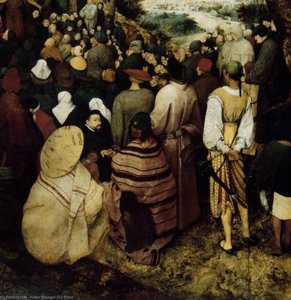 The Sermon of St John the Baptist (detail) - Pieter Bruegel the Elder
Unveiling Pieter Bruegel the Elder’s The Sermon of St John the Baptist is to encounter a world teeming with life, subtly subversive and profoundly human.
This 1566 masterpiece isn't merely a depiction of a religious event; it’s a vibrant panorama of 16th-century society, meticulously woven with social commentary. Bruegel presents us not with pious reverence, but with a bustling crowd preoccupied with earthly concerns – a cross-section of humanity rendered with individual character and expression.
The sheer density of figures is striking, each telling their own story within the larger narrative. Bruegel’s innovative technique employs a high vantage point, allowing us to survey the scene with an almost godlike perspective . This panoramic view emphasizes the vastness of life and the complexities of human nature.
Created during a period of religious upheaval in the Netherlands, this painting subtly encodes messages of resistance against oppressive authority. Its enduring legacy lies in its raw realism and keen observation – qualities that continue to inspire artists today. The work’s harmonious balance and intellectual curiosity evoke a sense of wonder, inviting contemplation on our place within the world.
Conclusion
As the light fades on these ten masterpieces, we are left not with relics of a distant past, but with living presences that continue to breathe and resonate across centuries.
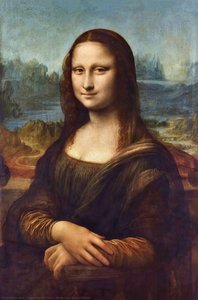
Each brushstroke—from the delicate sfumato of Leonardo’s Mona Lisa to the dynamic energy of Michelangelo’s Creation of Adam —carries a timeless conversation between artist and admirer. These works are not merely paintings; they are windows into the human soul, reflections of our deepest aspirations, fears, and joys.
To gaze upon them is to connect with the very essence of what it means to be human – to grapple with beauty, mortality, faith, and the enduring power of imagination. They remind us that art transcends time, bridging cultures and generations in a shared experience of wonder.
And so, we invite you to continue this journey of discovery. Explore the full breadth of the Renaissance movement—and countless other artistic traditions—in our full collection . May these works inspire your own creativity and enrich your life with their enduring beauty.