Introduction: The Ascendant World of Female Patrons
Patronage is the support, encouragement, privilege, or financial aid that an organization or individual bestows on another. In the history of art, art patronage refers to the support that princes, popes, and other wealthy and influential people have ...
The 18th century witnessed a subtle yet profound shift in the landscape of artistic patronage, moving beyond the traditionally dominant male figures to embrace the discerning tastes and financial power of women. While historical narratives often focus on kings and cardinals as arbiters of style, an increasing number of noblewomen – intelligent, ambitious, and possessing considerable wealth – began to exert significant influence over the creation and dissemination of art. These patrons weren’t merely collectors; they were active participants in shaping artistic trends, commissioning works that reflected their social standing, personal philosophies, and evolving identities. To understand this phenomenon is to appreciate a more nuanced picture of the period, one where female agency played a crucial role in defining aesthetic sensibilities and fostering creative innovation. Sarah Churchill, Countess of Essex, stands as a particularly compelling example of this ascendant class – a woman whose patronage extended beyond simple acquisition to become a deliberate act of self-fashioning and cultural authority.
Sarah Churchill's Early Life & Social Context: Shaping a Taste for Art
Born Sarah Millicent Hermione Spencer-Churchill in 1914, she was steeped in privilege from the outset. As the daughter of Winston and Clementine Churchill, her upbringing was one of both rigorous education and exposure to the highest echelons of British society. This environment instilled not only a sense of duty and public service – evident in her wartime contributions – but also an appreciation for the finer things in life. Her lineage connected her directly to earlier powerful women like Sarah Churchill, Duchess of Marlborough, a precedent that likely influenced her own approach to patronage. Educated at Notting Hill High School and North Foreland Lodge, she developed a refined sensibility, though details regarding the specific formative artistic experiences of her youth remain somewhat elusive. However, it’s clear that her social circle – populated by artists, writers, and prominent figures – provided fertile ground for cultivating an informed aesthetic judgment. Her early life was marked by a certain societal expectation to embody grace and refinement, qualities she skillfully projected through her carefully curated commissions.
Commissioning Identity: Portraits, Power, and the Representation of Status
 Sarah Judith De Castro
Elegant 18th-century portrait by Tilly Kettle featuring Sarah Judith de Castro. A serene Rococo masterpiece – exquisite detail & timeless beauty. Commission a hand-painted replica today!
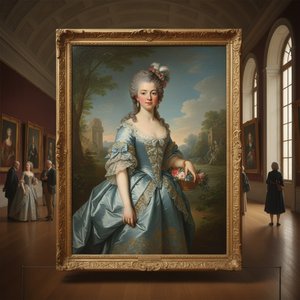
Portraits formed the cornerstone of Sarah Churchill’s patronage strategy. In an era where personal image was inextricably linked to social power, commissioning a portrait wasn't simply about preserving one’s likeness; it was about constructing a carefully crafted narrative for public consumption. Artists like Tilly Kettle, known for his elegant Rococo style, were favored for their ability to capture not just physical resemblance but also the sitter’s perceived virtues and status. Sarah Judith De Castro, painted by Kettle, exemplifies this approach – a serene composition that emphasizes her subject's composure and refined beauty. The choice of attire, setting, and even pose were deliberate signals of wealth, taste, and social standing. Later in life, her association with Henri Matisse, resulting in the striking Portrait de Sarah Stein, demonstrates an evolving artistic sensibility and a willingness to embrace modernism. This shift suggests a desire not only to be seen as fashionable but also as intellectually engaged and forward-thinking. The Matisse portrait, with its bold colors and expressive brushstrokes, stands in stark contrast to the more conventional portraits of her earlier years, revealing a complex personality unafraid to challenge established norms.
Beyond Portraiture: Sarah Churchill’s Broader Artistic Interests and Networks
 Wikipedia: Sarah Churchill (actress)
Sarah Millicent Hermione Touchet-Jesson, Baroness Audley (née Spencer-Churchill; 7 October 1914 – 24 September 1982), was an English actress and dancer and a daughter of Winston Churchill. == Early life == Sarah Churchill was born in London, the s...
While portraits undoubtedly occupied a central position in her collection, Sarah Churchill's patronage extended beyond this genre. Evidence suggests an interest in supporting the performing arts, particularly theatre and dance – pursuits she herself actively engaged in as an actress. This involvement likely fostered relationships with artists working in various mediums, broadening her aesthetic horizons. Furthermore, research indicates that women of her social standing often exerted influence through familial networks, commissioning works not just for themselves but also for their husbands or other relatives. The extent to which Sarah Churchill directly influenced architectural projects remains a subject of ongoing scholarly debate; however, the growing body of work on female architectural patronage in 18th-century Britain suggests that women like her played a more significant role than previously acknowledged. They often oversaw renovations, selected decorative elements, and even collaborated with architects on design schemes, subtly shaping the physical spaces they inhabited.
Rococo Aesthetics and the Duchess’s Vision: A Reflection of Personal Style
Rococo, less commonly Roccoco ( rə-KOH-koh, US also ROH-kə-KOH; French: [ʁɔkɔko] or [ʁokoko] ), also known as Late Baroque, is an exceptionally ornamental and dramatic style of architecture, art, and decoration which combines asymmetry, scrolling cu...
The Rococo style – characterized by its asymmetry, scrolling curves, delicate ornamentation, and pastel color palettes – perfectly aligned with Sarah Churchill's refined taste. Emerging as a reaction against the formality of Louis XIV’s Baroque aesthetic, Rococo emphasized intimacy, elegance, and playful sophistication. Its embrace of natural motifs, such as shells, flowers, and foliage, resonated with a growing appreciation for the picturesque and the idyllic. The interiors favored by patrons like Sarah Churchill were designed to create an atmosphere of delight and wonder, offering a respite from the constraints of public life. This preference wasn’t merely superficial; it reflected a broader philosophical shift towards valuing pleasure, sensibility, and individual expression. The Rococo aesthetic allowed for a degree of personal customization and artistic flair, enabling patrons to imbue their surroundings with their own unique character. The style's emphasis on light and color also contributed to its appeal, creating spaces that were both visually stunning and emotionally uplifting.
Legacy & Influence: The Enduring Impact of a Notable Patroness
Sarah Churchill’s legacy extends beyond the artworks she commissioned; it lies in her embodiment of a new type of female patron – one who actively shaped artistic trends, cultivated personal networks, and used art as a means of self-fashioning. Her willingness to embrace both traditional portraiture and modern styles like Matisse's demonstrates an intellectual curiosity and aesthetic openness that set her apart from many of her contemporaries. While the full extent of her influence may never be fully known, ongoing research continues to shed light on the crucial role women played in the 18th-century art world. Today, institutions like AllPaintingsStore.com allow a wider audience to appreciate and engage with the masterpieces she supported, ensuring that her contribution to artistic history is not forgotten. By commissioning works that reflected her social standing, personal philosophies, and evolving identity, Sarah Churchill left an indelible mark on the cultural landscape of her time – a testament to the enduring power of patronage and the transformative potential of art.