


The Seeds of Disruption: Contextualizing Late 19th-Century Shifts
Modernism was an early 20th-century movement in literature, visual arts, performing arts, and music that emphasized experimentation, abstraction, and subjective experience. Philosophy, politics, architecture, and social issues were all aspects of thi...
The dawn of Modernism wasn’t a sudden explosion, but rather the culmination of decades of simmering discontent and profound societal upheaval. To understand its radical departures, we must first acknowledge the world from which it sprang – a late 19th century grappling with rapid industrialization, secularization, and the burgeoning power of scientific inquiry. The Enlightenment's emphasis on rationalism, while initially liberating, began to feel insufficient in addressing the complexities of human experience. Traditional artistic academies, steeped in classical ideals and representational accuracy, found themselves increasingly at odds with a world that felt fragmented, uncertain, and deeply psychological. This wasn’t merely a stylistic shift; it was a fundamental questioning of purpose itself. The rise of photography challenged painting's role as the primary recorder of reality, freeing artists to explore inner worlds and subjective perceptions. Philosophical currents like Nietzsche’s proclamation of “God is dead” signaled a crisis of faith and morality, leaving a void that artists sought to fill with new systems of meaning – or, in some cases, embraced the beautiful chaos of meaninglessness.
Rejecting Tradition: The Avant-Garde's Challenge to Artistic Conventions
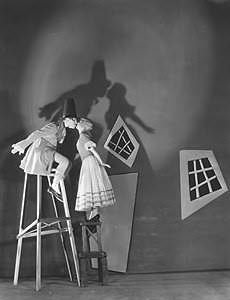 Wikipedia: Avant-garde
In the arts and literature, the term avant-garde (from French meaning 'advance guard' or 'vanguard') identifies an experimental genre or work of art, and the artist who created it, which usually is aesthetically innovative, whilst initially being ide...
From this fertile ground emerged the avant-garde – literally “advance guard” – a term borrowed from military strategy to describe those artists who boldly scouted new aesthetic territories, often at the expense of public acceptance. The avant-garde wasn’t simply about innovation for its own sake; it was a deliberate rejection of established norms, a provocation intended to shock and dismantle conventional ways of seeing and thinking. This spirit manifested in diverse movements like Symbolism, which prioritized emotional resonance over literal depiction, and later, more aggressively, in Futurism's celebration of speed, technology, and violence. Artists began to question the very definition of art itself. Was it about skillful representation? Or could it be about pure form, color, or concept? The rejection wasn’t uniform; some artists sought to dismantle tradition entirely, while others attempted to synthesize its elements with new approaches. This period saw a growing emphasis on experimentation – a willingness to fail, to push boundaries, and to redefine the relationship between artist, artwork, and audience.
Key Movements and Masters: Cubism, Futurism, and Beyond
The early 20th century witnessed an explosion of artistic movements, each with its distinct vocabulary and philosophical underpinnings. Cubism, pioneered by Pablo Picasso and Georges Braque, shattered the illusion of three-dimensional space, presenting objects from multiple perspectives simultaneously. Portrait of 'Bibi la Purée' (1901) exemplifies Picasso’s early explorations, hinting at the fragmentation that would define his later work. Simultaneously, Futurism in Italy embraced the dynamism of modern life, celebrating machines, speed, and the energy of urban centers. Artists like Umberto Boccioni sought to capture movement itself on canvas. Beyond these dominant forces, other significant movements flourished: Expressionism delved into raw emotion and psychological turmoil; Rayonism explored the interplay of light and color; and Analytical Realism, championed by Pavel Filonov, aimed for a deeply scientific understanding of visual perception. Natalia Goncharova’s work exemplifies this period's willingness to blend styles and explore new forms of abstraction. Fernand Léger’s Tails of comets (study for a screen) beautifully illustrates the fusion of geometric abstraction with organic forms, showcasing a pioneering vision of modern art.
Philosophical Undercurrents: Rationalism, Subjectivity, and the Search for Meaning
Underlying these artistic shifts were profound philosophical questions. The decline of religious certainty left artists grappling with existential anxieties and a search for new sources of meaning. The emphasis on subjective experience – the idea that reality is shaped by individual perception – became central to Modernist thought. This led to an exploration of the unconscious mind, influenced by the work of Sigmund Freud, and a rejection of objective truth in favor of personal interpretation. The concept of reflexivity—art reflecting upon itself and its own creation—became increasingly important. Artists weren’t simply depicting the world; they were examining the very process of depiction. Kazimir Malevich's Mystic (1908) embodies this search for pure, non-objective form, a spiritual quest expressed through abstraction. The rejection of absolute originality – the idea of creating something entirely new from nothing – also marked this period. Instead, artists embraced techniques like collage, appropriation, and parody, acknowledging that all creation builds upon what came before.
The Enduring Impact: Modernism’s Influence on Contemporary Art
Modernism wasn't a monolithic entity; it was a complex and often contradictory movement with internal debates and evolving ideologies. However, its impact on subsequent art history is undeniable. It shattered traditional hierarchies, expanded the definition of what constitutes art, and paved the way for countless artistic innovations. The legacy of Modernism can be seen in everything from Abstract Expressionism to Minimalism, Pop Art to Conceptual Art. Even today, artists continue to grapple with the questions raised by the Modernists – the relationship between form and content, the role of subjectivity, and the search for meaning in a fragmented world. At AllPaintingsStore.com, we celebrate this rich heritage by offering high-quality reproductions of masterpieces from this pivotal era, allowing you to bring the spirit of innovation and experimentation into your own home. Explore our collection today and discover the enduring power of Modernism – and perhaps even find inspiration for your own creative journey.





