





Introduction: The Allure of the Dreamscape in Art
From the earliest cave paintings depicting shamanistic visions to the complex allegories of Renaissance masters, humanity has always sought to represent the intangible—the realms of dreams, emotions, and the subconscious. This enduring fascination finds its most potent expression in art movements that deliberately eschew strict realism in favor of exploring inner landscapes. The appeal lies not merely in escaping the mundane but in confronting the profound mysteries that lie beneath the surface of our conscious experience. A yearning for something *more* than representation—a desire to capture the fleeting, illogical beauty of the mind—has driven artists for centuries, culminating in movements like Symbolism and Surrealism which fundamentally altered our understanding of what art could be.
Symbolism's Roots: From Romantic Visions to the Subconscious Mind
Symbolism or symbolist may refer to: Symbol, any object or sign that represents an idea == Arts == Artistic symbol, an element of a literary, visual, or other work of art that represents an idea Color symbolism, the use of colors within various cu...
The seeds of this exploration were sown in the late 19th century with the rise of Symbolism, a reaction against the perceived materialism and rigid naturalism of Realism. Artists like Gustave Moreau and Odilon Redon turned inward, rejecting depictions of everyday life for evocative imagery steeped in mythology, literature, and personal symbolism. They weren’t interested in *what* they painted so much as *how* it made you feel—the emotional resonance evoked by a particular color, form, or subject matter. This focus on subjective experience paved the way for a deeper investigation of the subconscious, influenced heavily by burgeoning psychological theories. While not explicitly focused on dream analysis, Symbolist artists intuitively understood the power of imagery to bypass rational thought and tap into primal emotions. The use of recurring motifs—serpents representing temptation, flowers embodying fragility and beauty—created a visual language that spoke directly to the viewer’s intuition.
Surrealism’s Revolution: Automatism and the Unveiling of Inner Worlds
Emerging in the aftermath of World War I, Surrealism took Symbolism's explorations several steps further. Born from the disillusionment and trauma of a generation, it sought to liberate art—and thought itself—from the constraints of reason and logic. Inspired by Sigmund Freud’s theories on psychoanalysis, particularly his work on dreams and the unconscious mind, Surrealist artists embraced automatism – a technique designed to bypass conscious control and allow unfiltered thoughts to flow onto the canvas. André Breton, the movement's founder, defined Surrealism as “pure psychic automatism,” aiming to unlock the creative potential hidden within the depths of the psyche. This wasn’t simply about painting dreams; it was about accessing a deeper reality—a *surreality*—that existed beyond the limitations of waking consciousness. The initial literary experiments with automatic writing quickly expanded into visual arts, challenging traditional notions of composition, perspective, and subject matter.
Key Figures & Techniques: Dalí, Magritte, and Beyond
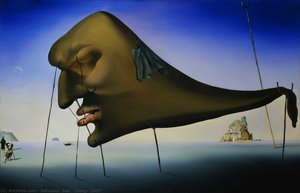
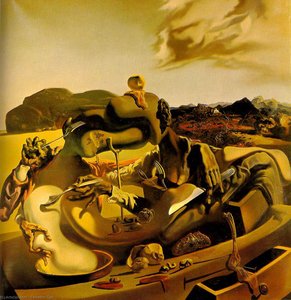
No discussion of Surrealism is complete without acknowledging the towering figures of Salvador Dalí and René Magritte. Dalí, with his meticulous technique and flamboyant persona, became synonymous with the movement’s most recognizable imagery—melting clocks, distorted landscapes, and bizarre juxtapositions. His iconic “The Persistence of Memory” (1931) isn't merely a depiction of a dreamscape; it’s a profound meditation on time, decay, and the fluidity of reality. Magritte, in contrast, approached Surrealism with a more philosophical bent. He challenged viewers’ perceptions through clever illusions and paradoxical imagery, as seen in “The Treachery of Images” (1929), where he painted a pipe accompanied by the inscription “Ceci n’est pas une pipe,” forcing us to question the relationship between representation and reality. Beyond these masters, artists like Max Ernst experimented with decalcomania and grattage—techniques that introduced chance and unpredictability into the creative process—while Joan Miró developed an abstract visual language filled with playful forms and organic shapes. These diverse approaches demonstrate the breadth of Surrealism’s exploration.
The Enduring Legacy: Dreamlike Qualities in Contemporary Art
While the core period of Surrealism may have passed, its influence continues to resonate deeply within contemporary art. Artists today continue to explore themes of the subconscious, dream imagery, and irrationality, often blending them with other styles and mediums. The legacy extends beyond painting and sculpture into photography, filmmaking, and digital art. We see echoes of Surrealist techniques in the hyperrealism of artists who create meticulously detailed depictions of impossible scenarios, as well as in abstract works that prioritize emotional impact over representational accuracy. The questioning of reality, the embrace of chance, and the exploration of inner worlds—these are themes that remain powerfully relevant in a world increasingly dominated by technology and information overload. The desire to connect with something deeper, more authentic, continues to drive artists towards the dreamlike qualities that Surrealism so brilliantly illuminated.
Color and Emotion: Evoking Mood Through Palettes in Ethereal Works
 The Emotional Palette: How Color Influences Mood & Meaning in Art
Explore the powerful connection between color & emotion in art history. Discover how master artists used color to evoke feelings and learn to select artwork that enhances your space.
Central to creating these ethereal atmospheres is a masterful understanding of color. Surrealist painters weren’t simply choosing colors for their descriptive accuracy; they were using them to evoke specific emotions and psychological states. The cool blues and greens often found in dreamscapes suggest tranquility or melancholy, while vibrant reds and oranges can convey passion or anxiety. The Emotional Palette, as it's sometimes called, is a powerful tool for artists seeking to bypass rational thought and connect directly with the viewer’s subconscious. Artists like Dalí often employed stark contrasts—the juxtaposition of warm and cool tones—to create a sense of unease or disorientation. Similarly, Magritte frequently used muted palettes and subtle gradations of color to enhance the enigmatic quality of his work. The careful selection and application of color is therefore not merely an aesthetic choice but a fundamental element in creating the dreamlike, otherworldly atmosphere that defines these iconic works. At AllPaintingsStore.com, we offer high-quality reproductions that faithfully capture the nuances of these palettes, allowing you to experience the emotional power of Surrealist art firsthand.





