

Early Life & Artistic Foundations: Philadelphia Roots and European Training
 Thomas Eakins
Discover Thomas Eakins (1844-1916), the pivotal American realist painter renowned for unflinching portraits, dynamic rowing scenes & anatomical precision. Explore his legacy now!
Thomas Cowperthwait Eakins, born in 1844, was inextricably linked to the burgeoning city of Philadelphia. Unlike many American artists of his generation who sought immediate immersion in European artistic traditions, Eakins’s formative years were steeped in a uniquely pragmatic environment. His father, Benjamin Eakins, a writing master and calligrapher, instilled in young Thomas a rigorous discipline and an appreciation for precise observation – skills that would become hallmarks of his mature style. This early training wasn't merely academic; it fostered a deep understanding of form and structure, laying the groundwork for his later explorations of anatomy and movement. While Philadelphia provided a fertile ground for artistic development, Eakins recognized the necessity of European study to fully hone his craft. His time in Paris, beginning in 1866, wasn’t about embracing fashionable trends but rather a focused pursuit of technical mastery under Jean-Léon Gérôme, known for his meticulous realism and historical accuracy. However, it was perhaps his studies with Léon Bonnat that proved most influential, reinforcing the importance of direct observation from life and anatomical precision – principles that would define his artistic trajectory.
The Pursuit of Realism: Eakins’s Methodological Approach to Painting from Life
... art must come from Europe, have not, until lately, been sufficiently honored. Such artists as. Thomas. Eakins . . . made American art history. Their works at.
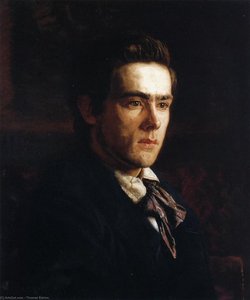
Eakins wasn't simply *interested* in realism; he was consumed by it. He rejected the romanticized, idealized depictions prevalent in much of 19th-century art, instead advocating for an unflinching portrayal of contemporary life and the human form. This commitment manifested in a remarkably methodical approach to painting. Unlike artists who relied on sketches or studio models, Eakins insisted on working “exactingly from life,” as noted by scholars. He believed that true representation demanded direct engagement with his subjects – friends, family, prominent Philadelphians, and even the bodies he studied through anatomy lessons at Jefferson Medical College. This dedication wasn’t merely about technical accuracy; it was a philosophical stance. Eakins sought to capture not just *what* things looked like but *how* they existed in space and time, with all their imperfections and complexities. He meticulously analyzed perspective, light, and shadow, striving for an almost scientific level of precision in his compositions.
Anatomy, Movement, and the Modern Figure: Pioneering Scientific Precision in Art
 Wikipedia: Thomas Eakins
Thomas Cowperthwait Eakins (; July 25, 1844 – June 25, 1916) was an American realist painter, photographer, sculptor, and fine arts educator. He is widely acknowledged to be one of the most important American artists. For the length of his profession...
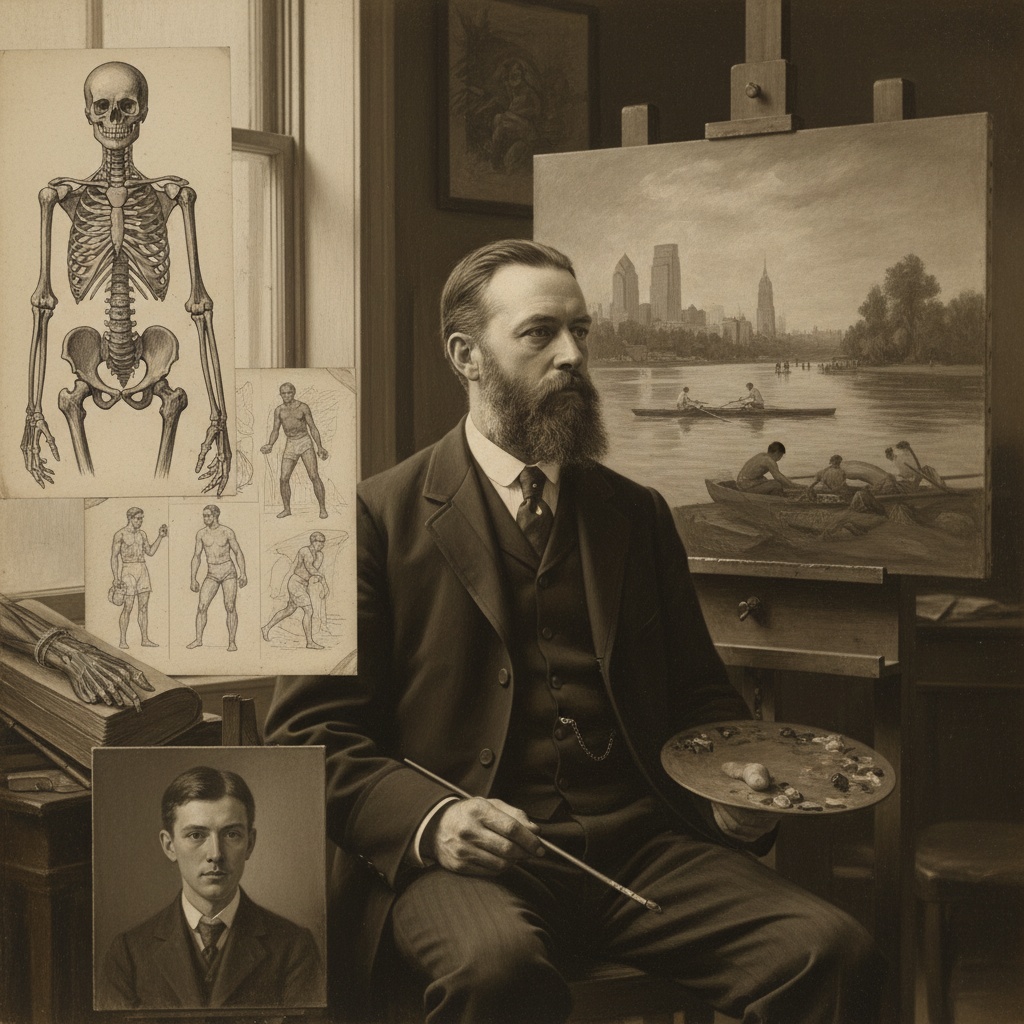
Eakins’s fascination with anatomy wasn't a detached intellectual pursuit; it was integral to his artistic vision. He saw the human body as a complex machine, governed by physical laws, and believed that understanding its structure was essential for accurately depicting movement and expression. His attendance at Jefferson Medical College, where he dissected cadavers alongside medical students, was groundbreaking – and controversial – for an artist of his time. This direct engagement with the human form allowed him to move beyond superficial representations and capture the underlying musculature and skeletal structure that dictated posture and gesture. This knowledge informed not only his portraits but also his dynamic depictions of rowing scenes, a subject he returned to repeatedly throughout his career. He wasn’t merely painting boats; he was capturing the raw power and coordinated effort of human bodies in motion, utilizing new photographic techniques to analyze each stroke and phase of movement.
Portraits as Social Commentary: Capturing Philadelphia's Intellectual Landscape
 Pennsylvania Academy of Fine Arts
Discover PAFA, America's oldest art museum & school! Explore 19th & 20th-century American masterpieces, including works by Eakins, and experience a vibrant artistic legacy in historic Philadelphia.
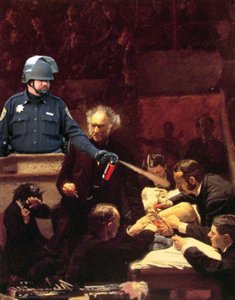
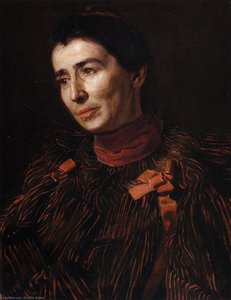
While Eakins is celebrated for his anatomical studies and rowing scenes, his portraits offer a fascinating glimpse into the intellectual life of late 19th-century Philadelphia. He didn’t paint aristocratic elites or idealized beauties; instead, he focused on friends, family members, scientists, doctors, clergy – individuals who represented the city's burgeoning professional class. These weren’t flattering likenesses in the traditional sense; Eakins sought to capture the *essence* of his subjects, their intelligence, character, and even their vulnerabilities. “The Gross Clinic” (1875), perhaps his most famous work, exemplifies this approach. It depicts Dr. Samuel D. Gross demonstrating a surgical procedure, not as a heroic act but as a clinical examination – a starkly realistic portrayal of medical practice. Similarly, his portraits often feature subjects engaged in their professions, offering a window into the world of Victorian-era Philadelphia and challenging conventional notions of portraiture.
Controversy & Legacy: Challenging Victorian Norms and Shaping American Realism
Eakins’s uncompromising realism wasn't always well-received. His insistence on painting nude figures, even in private lessons with both male and female students, scandalized many within the conservative Philadelphia society of his time. This led to accusations of indecency and ultimately curtailed his career as a professor at the Pennsylvania Academy of the Fine Arts. Despite facing professional setbacks, Eakins remained steadfast in his artistic principles. He continued to paint, explore new techniques – including photography – and mentor a small circle of devoted students. His influence on American art is undeniable. He paved the way for subsequent generations of Realists, notably those associated with the Ashcan School, who embraced similar themes of urban life and social commentary. While largely unrecognized during his lifetime, Eakins has since been celebrated as one of the most important American artists, a pioneer whose dedication to truthfulness and anatomical precision revolutionized portraiture and landscape painting.
Key Works & Lasting Influence: 'Mending the Net,' 'The Gross Clinic,' and Beyond
Works like 'Mending the Net' (1881), with its serene depiction of rural life, demonstrate Eakins’s mastery of light and atmosphere. The painting’s quiet beauty belies a meticulous attention to detail and a profound understanding of human labor. However, it is 'The Gross Clinic' that remains his most iconic work – a powerful statement about the intersection of science, art, and society. Beyond these celebrated pieces, Eakins produced hundreds of portraits, each offering a unique insight into the lives of his contemporaries. His legacy extends beyond specific paintings; it lies in his unwavering commitment to realism, his pioneering use of photography, and his profound influence on subsequent generations of American artists. His work continues to resonate today, challenging viewers to confront uncomfortable truths about the human condition and appreciate the beauty found in everyday life. Discover more about Thomas Eakins’s enduring impact at AllPaintingsStore.com, where you can explore high-quality reproductions of his masterpieces and delve deeper into his artistic journey.