Introduction
What does it mean for a work of art to be ‘classic’? It’s a question that echoes through centuries, resonating with our deepest desires for beauty, truth, and enduring meaning. These aren't simply paintings or sculptures; they are portals—windows into the souls of past generations, reflections of universal human experiences rendered in brushstrokes and form.
The notion of ‘classicism’ itself has evolved dramatically over time. Rooted in the art of ancient Greece and Rome – ideals of harmony, proportion, and reason – it found renewed expression during the Renaissance, a period obsessed with rediscovering these foundational principles. Later, movements like Neoclassicism consciously emulated this aesthetic, often as a reaction against perceived excess or frivolity. But ‘classic’ isn't merely about stylistic imitation; it’s about capturing something timeless, something that transcends its historical context.
The artworks we present here represent a diverse range of periods and styles, yet they share an undeniable quality: a power to move us, to provoke thought, and to connect us with the past. They speak to fundamental aspects of the human condition – love, loss, faith, mortality – themes that remain profoundly relevant today. They offer not just aesthetic pleasure but also insight into the values, beliefs, and anxieties of their creators and the societies they inhabited.
Over the following list, we’ll explore ten exceptional pieces that embody this ‘classic’ vibe or mood. Prepare to be transported—to wander through sun-drenched Italian landscapes, witness intimate moments of domestic life, and confront the weight of history. Each artwork is a story waiting to be rediscovered, a conversation across time.
Portrait of Giovanni Arnolfini and his Wife - Jan van Eyck
 Portrait of Giovanni Arnolfini and his Wife - Jan van Eyck
Imagine stepping into a quiet chamber in 15th-century Bruges, sunlight filtering through a leaded window onto a scene of profound intimacy. Jan van Eyck’s *Portrait of Giovanni Arnolfini and his Wife* isn't simply observed; it’s experienced—a world rendered with such breathtaking detail that you can almost feel the texture of velvet and smell the beeswax polish.
This 1434 masterpiece, a cornerstone of Early Netherlandish painting, transcends portraiture. Van Eyck’s revolutionary use of oil paint allowed for an unprecedented luminosity and realism; light doesn't just *illuminate* the scene, it seems to emanate from within it, caressing every surface with gentle warmth. Notice how each fold in the fabric, each strand of hair, is meticulously rendered —a testament to Van Eyck’s technical brilliance.
But beyond its visual splendor lies a wealth of symbolism. The small dog at their feet speaks of fidelity, while oranges hint at prosperity and fertility. The convex mirror, reflecting not only the couple but also two witnesses and scenes from the Passion of Christ, subtly links earthly love to divine devotion. This is a painting that rewards contemplation —a quiet meditation on marriage, faith, and the passage of time.
Today, *The Arnolfini Portrait* continues to captivate with its timeless elegance and enduring mystery. Its presence in a home evokes a sense of calm sophistication, inviting reflection on the beauty of everyday life and the power of lasting commitment—a true classic for those seeking art that speaks to the soul.
The School of Athens (detail 1) (Stanza della Segnatura) - Raphael
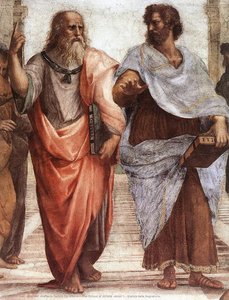 The School of Athens (detail 1) (Stanza della Segnatura) - Raphael
Imagine standing within the Vatican’s Stanza della Segnatura, sunlight streaming through the windows to illuminate a gathering of history's greatest minds. This detail from Raphael’s monumental fresco, *The School of Athens*, isn’t merely a painting; it’s an invitation—a visual celebration of human intellect and the pursuit of knowledge.
Here, Plato and Aristotle take center stage, embodying two distinct yet complementary approaches to understanding the world. Observe how Raphael masterfully employs *sfumato* – a delicate blurring of lines that creates an atmospheric depth and softens their forms. The muted, earthy color palette—ochres, browns, and reddish-oranges—enhances the sense of timelessness, punctuated by Plato’s vibrant robe which immediately draws your eye.
Plato gestures upwards, representing his Theory of Forms, while Aristotle points towards the earth, emphasizing empirical observation. This isn't a contradiction but rather a harmonious depiction of abstract thought and concrete experience—two essential paths to truth. The architectural setting, inspired by Roman baths, further grounds the scene in classical ideals.
Today, *The School of Athens* continues to inspire with its serene beauty and intellectual gravitas. Its presence evokes a sense of calm contemplation, inviting us to reflect on our own pursuit of knowledge—a true classic for those seeking art that elevates the mind and spirit.
Las Meninas (detail) - Diego Rodríguez de Silva y Velázquez
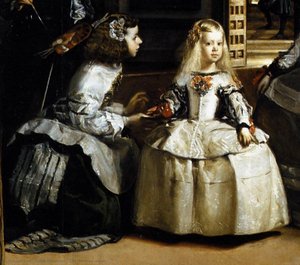 Las Meninas (detail) - Diego Rodríguez de Silva y Velázquez
Imagine a fleeting moment within the Spanish court—a quiet exchange between two young princesses, their faces illuminated by soft light. This detail from Diego Velázquez’s *Las Meninas* isn't simply a portrait; it’s a glimpse into a world of subtle power dynamics and unspoken emotions.
Velázquez’s revolutionary approach to Baroque painting is strikingly evident here. He eschews rigid formality for a remarkably naturalistic depiction, employing loose, broken brushstrokes that build form and texture with breathtaking realism. Notice how the light seems to caress their faces , revealing not just physical likeness but also a sense of inner life.
This isn’t merely about capturing beauty; it's about conveying a mood—a quiet contemplation tinged with melancholy. The muted palette of creams and browns enhances this feeling, while the sisters’ direct gaze draws you into their world. At , we strive to preserve this very essence in our faithful reproductions, allowing you to experience the emotion and texture of Velázquez's masterpiece within your own home.
*Las Meninas* stands as a testament to the power of observation—a timeless classic that continues to captivate with its quiet dignity and enduring mystery. It’s an invitation to reflect on the beauty of childhood, the complexities of court life, and the artistry of a true Baroque genius.
Christ Among the Doctors - Albrecht Dürer
 Christ Among the Doctors - Albrecht Dürer
Imagine stepping into a hushed chamber filled with the weight of knowledge and quiet contemplation. Albrecht Dürer’s *Christ Among the Doctors* isn't simply a depiction of a biblical scene; it’s an intimate exploration of faith, wisdom, and youthful authority.
This 1506 oil painting showcases Dürer’s exceptional skill in capturing realistic detail—note the delicate rendering of facial expressions and the intricate folds of drapery. Observe how light seems to emanate from within the scene , illuminating the faces of the learned men as they engage with the young Jesus.
Unlike the idealized beauty often found in High Renaissance art, Dürer prioritizes a raw, almost palpable realism, reflecting the artistic sensibilities prevalent in Northern Europe. The subdued color palette and compact composition create a sense of intimacy, inviting us to witness this profound intellectual exchange. At , we faithfully reproduce these nuances—preserving the texture and emotion that make Dürer’s work so captivating.
*Christ Among the Doctors* stands as a testament to the power of knowledge and the enduring mystery of faith—a true classic for those seeking art that elevates the mind and inspires quiet reflection. Its timeless appeal resonates today, bringing a sense of prestige and intellectual curiosity to any space.
Adam and Eve - Lucas Cranach the Elder
 Adam and Eve - Lucas Cranach the Elder
Imagine a world untouched by sorrow—a garden brimming with life and innocence. Lucas Cranach the Elder’s *Adam and Eve* isn't merely a depiction of a biblical story; it’s an invitation to contemplate the origins of humanity, rendered with breathtaking detail and profound symbolism.
This iconic painting captures the essence of the Northern Renaissance—a harmonious blend of human figures, wildlife, and lush vegetation. Notice how Cranach masterfully employs smooth, flowing lines and organic shapes , creating a sense of natural movement and grace. The earthy color palette, dominated by warm tones of browns and greens, is punctuated by the vibrant red of the apple—a subtle yet powerful symbol of temptation.
Cranach’s meticulous brushwork and attention to detail are remarkable; each texture—from the skin of Adam and Eve to the rough bark of the tree—is rendered with exquisite precision. This painting reflects the religious and moral themes prevalent during the Reformation, offering a visual commentary on human nature and divine judgment. At , we faithfully reproduce these nuances, allowing you to experience the serenity and contemplation that define Cranach’s masterpiece.
*Adam and Eve* stands as a testament to the enduring power of art—a timeless classic for those seeking beauty, meaning, and a connection to our shared human history. Its presence evokes a sense of tranquility and invites reflection on the delicate balance between innocence and knowledge.
The Art of Painting - Johannes Vermeer
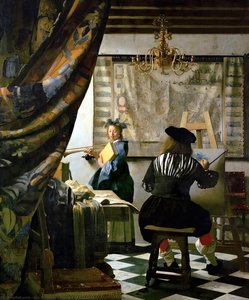 The Art of Painting - Johannes Vermeer
To encounter Johannes Vermeer’s *The Art of Painting* is to step into a world of quiet contemplation and exquisite detail—a glimpse into the very soul of artistic creation. This 1665 masterpiece isn't simply a painting; it’s an allegory, a profound meditation on the power of vision and the enduring allure of beauty.
With its richly detailed composition and masterful use of light, *The Art of Painting* captures the essence of the Dutch Golden Age. Observe how Vermeer employs soft, diffused illumination to enhance the textures and materials within the scene—the velvet curtains, the polished wood, the delicate skin of his subjects. The earthy color palette, accented with blues, reds, and golds, creates a warm and inviting atmosphere.
This painting reflects the era’s fascination with domestic scenes and intellectual pursuits, yet it transcends mere representation. At , we faithfully reproduce these nuances—preserving the luminosity and depth that make Vermeer’s work so captivating. *The Art of Painting* continues to inspire interior designers and art lovers alike, bringing a sense of refined elegance and timeless beauty to any space.
Its presence evokes a feeling of quiet prestige—a testament to the enduring power of art and the legacy of a true master.
Self-portrait at 22 - Albrecht Dürer
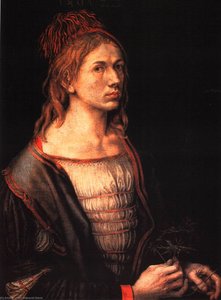 Self-portrait at 22 - Albrecht Dürer
To gaze upon Albrecht Dürer’s *Self-portrait at 22* is to encounter a young man poised on the cusp of greatness—a moment of quiet introspection captured with breathtaking detail and solemnity. This 1493 masterpiece isn't merely a likeness; it’s a window into the soul of an artist, revealing his burgeoning talent and profound emotional depth.
Dürer’s mastery of oil painting is strikingly evident in this early self-portrait. Observe how he employs fine, precise lines and meticulous brushwork to render every strand of hair, every subtle nuance of expression. The muted color palette—dominated by dark tones—creates a striking contrast with the lighter skin tones, drawing your eye to his face.
The thistle held in his hand is a symbol of resilience and suffering, hinting at the hardships that lay ahead. At , we faithfully reproduce these nuances—preserving the luminosity and texture that make Dürer’s work so captivating. *Self-portrait at 22* stands as a testament to the enduring power of art—a timeless classic for those seeking beauty, meaning, and a connection to the past.
Its presence evokes a sense of quiet dignity and invites reflection on the complexities of human experience—a true masterpiece that elevates any space.
Luncheon on the Grass - Édouard Manet
 Luncheon on the Grass - Édouard Manet
Imagine stepping into a sun-dappled forest clearing—a moment of carefree leisure captured with breathtaking audacity and revolutionary spirit. Édouard Manet’s *Luncheon on the Grass* isn't simply a painting; it’s a challenge to convention, a bold statement that forever altered the course of art history.
This 1863 masterpiece bridges the gap between Realism and Impressionism, employing loose yet precise brushwork and visible strokes that add texture and vibrancy. Observe how Manet masterfully uses natural light to create dappled shadows, enhancing the sense of time and place. The composition—a juxtaposition of fully dressed men and a nude woman—sparked outrage and admiration upon its debut.
At , we faithfully reproduce these nuances—preserving the luminosity and texture that make Manet’s work so captivating. *Luncheon on the Grass* continues to inspire modern design sensibilities, bringing a touch of rebellious elegance and timeless beauty to any space. Its presence evokes a sense of relaxed sophistication—a true classic for those seeking art that sparks conversation and challenges expectations.
Its legacy endures as a symbol of artistic freedom and innovation, reminding us of the power of vision and the courage to break boundaries.
Left - Portrait of Battista Sforza, Duc - Piero della Francesca
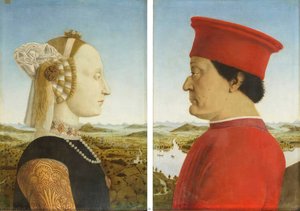 Left - Portrait of Battista Sforza, Duc - Piero della Francesca
A stillness radiates from Piero della Francesca’s *Portrait of Battista Sforza, Duchess of Urbino*, a moment of serene dignity frozen in time—a testament to Renaissance ideals and the enduring power of human beauty. Immortalized among the Top 10 for its exquisite balance of realism, composition, and emotional depth, this portrait transcends mere likeness.
Created in 1465, the painting exemplifies Early Renaissance artistry with meticulous brushwork and pioneering perspective. Observe how layered glazes create a luminous surface that enhances the naturalistic portrayal of Battista’s features—her regal bearing, intricate attire, and poised expression. The harmonious color palette of earth tones and subtle highlights underscores her noble stature.
Beyond its visual beauty, this work evokes themes of virtue, nobility, and enduring legacy. Its calm composure inspires admiration and respect, inviting viewers to reflect on the inner strength of a remarkable woman. For collectors seeking timeless elegance, *Portrait of Battista Sforza* brings a sense of refined sophistication—a quiet masterpiece that elevates any space.
The subtle textures and harmonious colors whisper stories of a bygone era, reminding us of the enduring power of art to capture not just appearance but also character and grace.
Stag Hunt of Elector Friedrich III the Wise - Lucas Cranach the Elder
 Stag Hunt of Elector Friedrich III the Wise - Lucas Cranach the Elder
Imagine a crisp autumn air, the scent of pine needles, and the distant call of hunting horns—a world where nobility and nature intertwine. Lucas Cranach the Elder’s *Stag Hunt of Elector Friedrich III the Wise* isn't merely a depiction of sport; it’s a vibrant tapestry woven with themes of power, virtue, and human mastery.
This 1529 masterpiece exemplifies Northern Renaissance artistry with meticulous brushwork and a slightly stylized decorative approach. Observe how Cranach brings textures to life —from the sleekness of water to the solidity of figures—creating a scene that feels both realistic and dreamlike. The balanced composition draws your eye across the landscape, culminating in distant castles that evoke a sense of place and social stature.
Immortalized among the Top 10 for its dynamic energy and symbolic richness, this painting invites viewers to explore themes of human dominance over nature and the virtues associated with noble pursuits. For collectors seeking art that sparks conversation and embodies timeless elegance, *Stag Hunt* brings a sense of vitality—a quiet reminder of the enduring connection between humanity and the natural world.
Its rich colors and intricate details evoke a feeling of harmony, inviting us to reflect on our own relationship with nature and the pursuit of excellence.
Conclusion
As the light fades on these ten masterpieces, we are left with more than just images—we hold echoes of centuries past, whispers of human emotion rendered in pigment and canvas. Each brushstroke is a conversation across time, a testament to the enduring power of art to transcend boundaries and connect souls.
These paintings aren’t simply historic treasures; they are living presences that continue to move hearts, shape interiors, and inspire creativity today. They remind us that beauty isn't confined by eras or styles, but resides in the shared human experience—in the quiet dignity of Battista Sforza, the rebellious energy of Manet’s luncheon, the harmonious pursuit of nature captured by Cranach.
To invite these artworks into your home is to welcome a legacy of contemplation and wonder. At , we believe in the transformative power of art—in the ability of a hand-painted reproduction to ignite conversation, evoke emotion, and create a sanctuary for the spirit. Explore our full collection and discover the timeless masterpiece that speaks to your soul.
May these echoes of beauty linger long after you’ve turned away, inspiring moments of quiet reflection and reminding us all of the enduring power of human creativity.