The Makovsky Family: A Dynasty of Russian Realism
 Konstantin Yegorovich Makovsky
Discover Konstantin Makovsky (1839-1915), a prominent Russian realist painter celebrated for his historical scenes, genre paintings of Russian life, and association with the Peredvizhniki movement. Explore iconic artworks today!
The name Makovsky resonates with a particular weight within the annals of 19th-century Russian art, representing not merely an individual talent but a veritable dynasty dedicated to capturing the spirit – and often, the stark realities – of their time. While Vladimir Yegorovich Makovsky stands as a prominent figure in his own right, understanding his artistic trajectory necessitates acknowledging the broader familial context. His father, Egor Ivanovich Makovsky, was a pioneering collector and one of the founders of the Moscow Art School, instilling within his sons a deep appreciation for visual culture and a commitment to fostering artistic expression. Vladimir’s brothers, Nikolay and Konstantin Makovsky, also achieved considerable renown as painters, each carving out distinct niches within the burgeoning realist movement. This familial constellation created an environment steeped in artistic discourse, competition, and mutual influence, shaping the aesthetic sensibilities of all three artists.
The collective impact of the Makovsky brothers extended beyond their individual canvases; they were instrumental in establishing a new paradigm for Russian art, one that prioritized authentic representation over academic idealism. Their shared commitment to depicting everyday life, often with an undercurrent of social critique, challenged the established norms and paved the way for a more democratic and accessible artistic landscape.
Early Life & Artistic Formation: Moscow Roots and Academic Training
 Wikipedia: Vladimir Makovsky
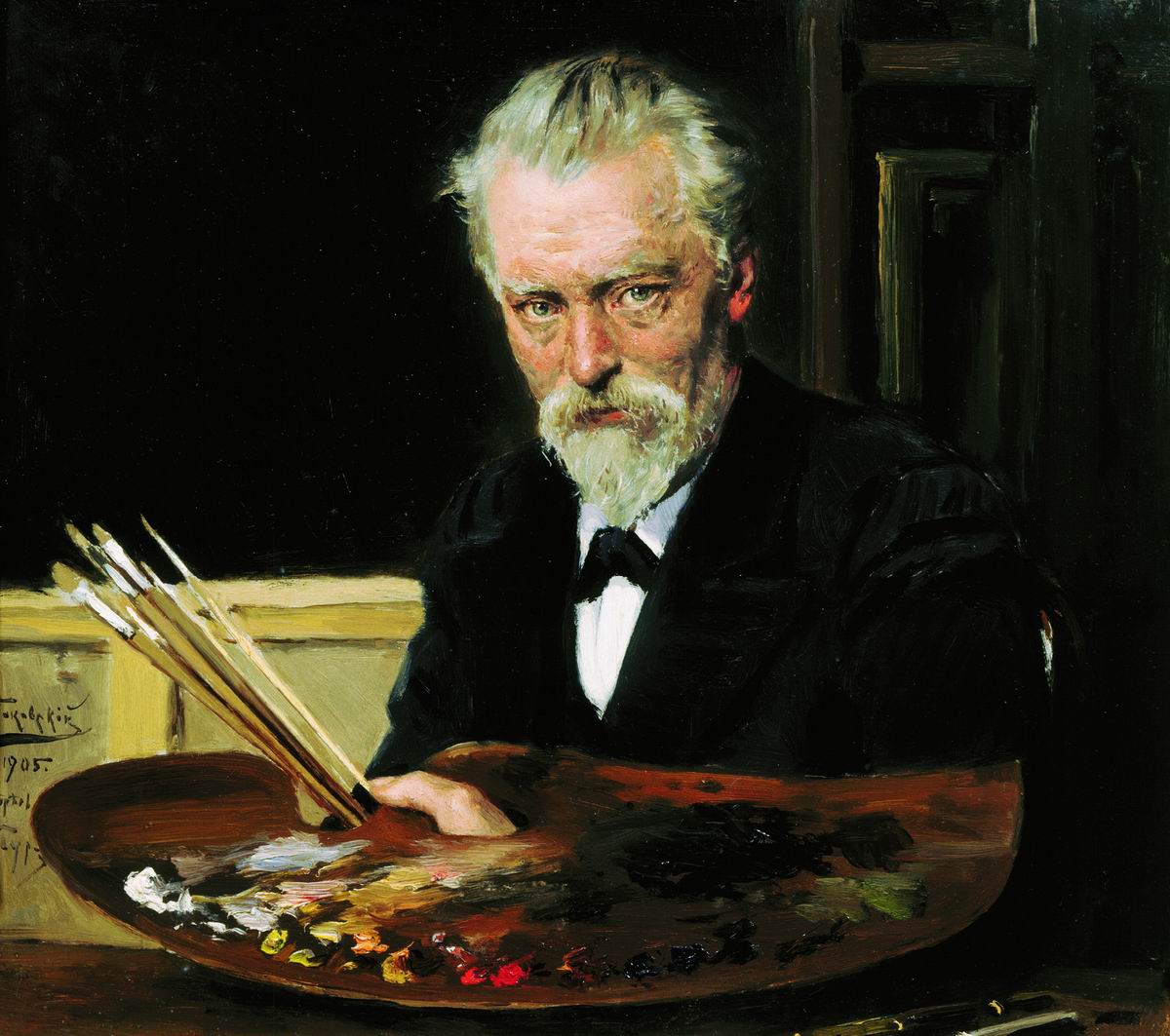
Vladimir Yegorovich Makovsky (Russian: Владимир Егорович Маковский; 7 February [O.S. 26 January] 1846 – 21 February 1920) was a Russian painter, art collector, and teacher. == Biography == Makovsky was the son of collector, Egor Ivanovich Makovsky,...
Born in 1846 in Moscow, Vladimir Makovsky’s early years were profoundly shaped by the city's vibrant cultural milieu. His father’s involvement with the Moscow Art School provided him with access to a rigorous artistic education from a young age. He enrolled at the school and diligently honed his skills, mastering the fundamentals of painting, sculpture, and composition. However, Makovsky’s artistic development wasn’t confined solely to technical proficiency; he also absorbed the prevailing intellectual currents of the time, including the growing dissatisfaction with academic restrictions and a burgeoning interest in portraying contemporary Russian society.
In 1869, Makovsky completed his studies and immediately became involved in a pivotal moment for Russian art. He was among the founding members of the Association of Travelling Art Exhibitions – known as the Peredvizhniki or “Wanderers” – a collective formed in protest against the constraints imposed by the Imperial Academy of Arts. This decision marked a turning point in his career, solidifying his commitment to realism and establishing him as a leading voice within a movement dedicated to bringing art directly to the people.
Depicting Everyday Russia: Themes, Style, and the Peredvizhniki Movement
Peredvizhniki (Russian: передви́жники, IPA: [pɪrɪˈdviʐnɪkɪ]), often called The Wanderers or The Itinerants in English, were a group of Russian realist artists who formed an artists' cooperative in protest of academic restrictions; it evolved into the...
The core tenet of the Peredvizhniki was a rejection of idealized subjects in favor of portraying the realities of Russian life. Makovsky wholeheartedly embraced this philosophy, focusing his attention on scenes of everyday existence – bustling marketplaces, intimate domestic interiors, and the lives of ordinary people. His style is characterized by meticulous detail, a keen eye for observation, and a masterful use of light and shadow to create evocative atmospheres.
Unlike some of his contemporaries who focused on grand historical narratives, Makovsky found beauty and significance in the mundane. Paintings like “Guitar Player” (1879) exemplify this approach, capturing a quiet moment of personal expression within the context of 19th-century Russian life. The painting isn’t about a heroic figure or a momentous event; it's about a man lost in music, offering a glimpse into the inner world of an individual and reflecting the broader cultural landscape.
Social Commentary and Ironic Scenes: Challenging Tsarist Society
 vladimir yegorovich makovsky
Vladimir Makovsky (1846-1920) was a leading Russian realist painter of the Peredvizhniki movement. Known for his insightful depictions of everyday life, social commentary, and ironic scenes of 19th-century Russia. Explore his works & legacy!
While Makovsky’s work is often celebrated for its realism, it’s crucial to recognize the underlying social commentary that permeates many of his canvases. He possessed a sharp wit and an uncanny ability to expose the hypocrisy and inequalities inherent in Tsarist society. His paintings frequently depict scenes of small-town life with a subtle yet biting irony, revealing the moral failings and societal contradictions of the time.
This critical perspective is evident in works like “At the Boulevard” (1887), where he captures a winter scene filled with social types and nuanced interactions. The painting isn’t simply a depiction of Russian winter life; it's a commentary on class distinctions, societal expectations, and the complexities of human relationships. Makovsky wasn’t afraid to challenge the status quo, using his art as a vehicle for exposing injustice and prompting reflection.
Key Works and Lasting Legacy: 'At the Boulevard,' 'Guitar Player,' and Beyond
 Guitar player
Immerse yourself in the quiet moment captured by Vladimir Makovsky's 'Guitar player.' This 1879 Realist painting depicts a man lost in music, offering a glimpse into 19th-century Russian life.
Throughout his prolific career, Vladimir Makovsky produced a vast body of work that continues to resonate with audiences today. “At the Boulevard” remains one of his most iconic paintings, celebrated for its masterful depiction of realism, brushstrokes, and evocative atmosphere. Similarly, “Guitar Player” offers a poignant glimpse into the lives of ordinary Russians, capturing a quiet moment of beauty amidst the complexities of everyday existence.
Beyond these well-known works, Makovsky’s oeuvre encompasses a diverse range of subjects and styles, reflecting his evolving artistic vision and unwavering commitment to social commentary. His influence on subsequent generations of Russian artists is undeniable, solidifying his place as a leading figure in the Peredvizhniki movement and a pivotal voice within 19th-century Russian art.
Makovsky's Influence & Place in Russian Art History
Vladimir Makovsky’s legacy extends far beyond the confines of individual paintings. He was not only a skilled artist but also an influential teacher, shaping the artistic sensibilities of countless students at the Moscow Art School. His commitment to realism and social commentary inspired a new generation of painters to challenge conventional norms and depict the realities of Russian life with honesty and integrity.
Today, Makovsky’s work is celebrated in museums and private collections around the world, offering a valuable window into 19th-century Russia. WahooArt proudly offers high-quality reproductions of his masterpieces, allowing art enthusiasts to experience the beauty and power of his vision firsthand. His paintings serve as a testament to the enduring power of art to reflect society, challenge injustice, and capture the human spirit in all its complexity. Explore our collection today and discover the captivating world of Vladimir Makovsky.