The Enduring Spirit of the Fang: Reliquary Figures and Masks from Equatorial Guinea
The art of the Fang people, known as fãn or pahouin, is more than mere craftsmanship; it’s a profound expression of spiritual belief woven into the fabric of life in equatorial guinea, northern gabon, and southern cameroon. While pinpointing an individual “artist” in the Western sense proves challenging within this cultural context – much of the work being communal and tied to ancestral traditions – understanding the collective artistry of the Fang offers a compelling glimpse into one of Africa’s most distinctive sculptural traditions. The Fang themselves represent the largest ethnic group in Equatorial Guinea, constituting roughly 85% of its population, and hold significant presence in Gabon as well, making up approximately a quarter of that nation's people. Their language, Fang, belongs to the northwest bantu branch of the niger-congo family, reflecting their deep roots within Central Africa’s linguistic landscape.
Ancestral Guardians: The Function and Symbolism of Reliquary Figures
At the heart of Fang artistic expression lie the *reliquary figures*, known as byeri*. These sculptures aren't simply decorative objects; they are potent vessels for containing the remains of revered ancestors, particularly skulls. The practice stems from a belief in the continued influence of the deceased on the well-being of their lineage and community. The byeri served as focal points for rituals intended to honor these ancestors, seek their guidance, and ensure protection against misfortune. These figures were housed within elaborate reliquaries – often boxes or baskets adorned with additional carvings and objects – and were treated with utmost reverence. The sculptures themselves are typically characterized by a polished dark wood surface, often featuring elongated necks, carefully rendered facial features, and arms embracing the body in a protective gesture. The smooth, almost abstract forms aren’t accidental; they represent an idealization of human beauty and strength, embodying the qualities desired for future generations.
Masks as Intermediaries: Ngil and Beyond
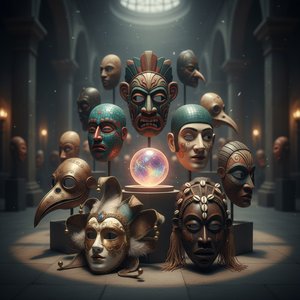
Alongside reliquary figures, *masks* play a crucial role in Fang ceremonies and social life. The most renowned is the Ngil*, a mask associated with male initiation rites and judicial proceedings. These masks are often distinguished by their white pigmentation – achieved through kaolin clay – representing purity and spiritual power. The Ngil isn’t merely worn; it *becomes* the spirit, allowing initiates to communicate with the ancestral realm and enforce societal norms. Beyond the Ngil, a diverse range of mask types exist, each serving specific purposes within Fang cosmology. Some masks are associated with healing rituals, others with agricultural fertility, and still others with warfare or protection. The creation of these masks is often shrouded in secrecy, undertaken by skilled artisans who undergo rigorous training and adhere to strict protocols.
Materials and Techniques: A Legacy of Woodworking
The artistry of the Fang is inextricably linked to their mastery of woodworking. They utilize a variety of locally sourced hardwoods, prized for their durability and aesthetic qualities. The process begins with selecting an appropriate tree – often one considered sacred or possessing specific spiritual properties. Once felled, the wood is carefully carved using axes, knives, and other traditional tools. Polishing is achieved through meticulous rubbing with abrasive materials like sand and plant fibers, resulting in the characteristic lustrous sheen seen on many Fang sculptures. The attention to detail extends beyond form; intricate geometric patterns are often incised onto surfaces, adding layers of meaning and visual complexity.
Historical Significance and Contemporary Relevance
While historically integrated into complex systems of belief and social practice, Fang art gained international recognition in the early 20th century through the collections of European explorers and missionaries. Initially viewed through a colonial lens as “primitive” or “fetishistic,” these sculptures gradually came to be appreciated for their aesthetic power and profound cultural significance. Today, Fang art is celebrated worldwide as a testament to human creativity and spiritual expression. The enduring appeal lies not only in the beauty of the forms but also in the stories they tell – stories of ancestors, spirits, and the interconnectedness of life and death. The continued creation of reliquary figures and masks by contemporary Fang artisans ensures that this rich artistic heritage will continue to thrive for generations to come, offering a powerful link to the past while adapting to the challenges and opportunities of the present.