Money-Back Guarantee · 100 days Free Worldwide Delivery
612,263artworks 52,888artists 5,406museums 32languages
Portrait of Henry Singleton

Henry Singleton Paintings: The Top 33 Most Famous, Ranked

Updated November 2026 · ranked by our popularity score (searches, visits and orders for each work) · 34 works by Henry Singleton in our catalogue

Quick answer

The most famous Henry Singleton painting is James Massy-Dawson (?) (1795); the original is in the National Gallery of Art, Washington. The Vicar of the Parish Receiving His Tithes (1792) and The Storming of the Bastille, July 14, 1789 (1789) are numbers two and three. Out of the 34 works by Henry Singleton in our catalogue, these are the 33 most famous, ranked, each with its year and museum, so you can choose the painting to order.

1766 – 1839, London Most works: Yale Center for British Art

Top 10 Henry Singleton paintings, ranked

1
James Massy-Dawson (?) (1795) by Henry Singleton

James Massy-Dawson (?)

1795 · Oil · National Gallery of Art, Washington

A Study in Chiaroscuro A single male figure emerges from an undifferentiated black background, his profile illuminated by a sharp, directional light source from the upper left. This high-contrast technique focuses attention entirely on the subject's features and the textures of his attire. The palette remains restrained, relying on shades of cream, white, sepia, and deep blacks to build form. Soft, blended brushwork defines the skin and the powdered wig,…

Hand-painted oil reproduction from $170 28 × 35 cm Same size as the original $270 59 × 74 cm Order at original size →
Order this painting Painting details
2
The Vicar of the Parish Receiving His Tithes (1792) by Henry Singleton

The Vicar of the Parish Receiving His Tithes

1792 · Oil On Canvas · Städel Museum, Frankfurt

In a dimly lit interior, a seated man in a powdered wig and dark attire focuses on a small wooden desk. He writes with a quill, his profile caught in a soft, natural light that filters from a background window. Facing him is a woman in period dress, her wide-brimmed straw hat and white gown contrasting against a dark bodice. Beside her, a young boy holds a basket, his gaze…

Hand-painted oil reproduction from $220 29 × 34 cm
Order a hand-painted copy About the painting
3
The Storming of the Bastille, July 14, 1789 (1789) by Henry Singleton

The Storming of the Bastille, July 14, 1789

1789 · Oil · Carnavalet Museum, Paris

The composition centers on the chaotic surge of a crowd against the dark, imposing silhouette of the Bastille fortress. Under a turbulent night sky, the scene captures the immediate violence of the French Revolution. Figures in the foreground are locked in a struggle, their forms expressing a spectrum of human response: grief, aggression, and sheer exhaustion. The lighting is theatrical, appearing to emanate from within the crowd itself, casting high-contrast…

Hand-painted oil reproduction from $520 35 × 28 cm Same size as the original $615 74 × 57 cm Order at original size →
Choose a size View details
4
The Marriage of George IV (1762-1830) when Prince of Wales (1795) by Henry Singleton

The Marriage of George IV (1762-1830) when Prince of Wales

1795 · Oil On Canvas · Royal Collection, London

The air in the grand hall feels heavy with the weight of ceremony. Light spills from the front left, cutting through the dimness to illuminate the central figures of this momentous occasion. The Prince of Wales, later George IV, stands at the heart of a crowded, theatrical assembly, surrounded by a semi-circle of aristocratic witnesses. Every eye and every line of composition pulls the viewer toward the center, where the…

Hand-painted oil reproduction from $595 35 × 28 cm Same size as the original $653 61 × 49 cm Order at original size →
Order this painting Painting details
5
The Marriage of the Duke and Duchess of York (1791) by Henry Singleton

The Marriage of the Duke and Duchess of York

1791 · Oil On Canvas · Minneapolis Institute of Art, Minneapolis

The Marriage of the Duke and Duchess of York is a large-scale historical group portrait by Henry Singleton. Executed about 1791, the work captures a significant ceremonial event through a formal Neoclassical lens. The composition centers on the Duke and Duchess of York, positioned amidst a gathering of high-ranking officials, clergy, and guests.

Hand-painted oil reproduction from $570 35 × 28 cm
Order this painting Painting details
6
The Storming of the Bastille (1790) by Henry Singleton

The Storming of the Bastille

1790 · Oil On Canvas · Museum of the French Revolution, Vizille

In this historical oil painting, Henry Singleton captures a pivotal moment of the French Revolution. Created about 1790, the work depicts the Storming of the Bastille, a scene defined by intense civil unrest. The canvas presents a chaotic and violent atmosphere, pulling the viewer into the immediate friction of the uprising.

Hand-painted oil reproduction from $520 37 × 27 cm Same size as the original $571 60 × 45 cm Order at original size →
Order this painting Painting details
7
The Wandering Sailor (1798) by Henry Singleton

The Wandering Sailor

1798 · Oil On Canvas · Yale Center for British Art, New Haven

The Wandering Sailor is a genre painting by Henry Singleton, dating to 1798. The work captures a quiet, domestic moment involving three figures: a man, a woman, and a child. They gather closely, their attention fixed upon a single piece of fabric or paper held between them. This small, shared focus anchors the scene in a sense of immediate, private connection.

Hand-painted oil reproduction from $220 29 × 34 cm Same size as the original $223 31 × 36 cm Order at original size →
Choose a size View details
8
Manto and Tiresias (1792) by Henry Singleton

Manto and Tiresias

1792 · Oil On Canvas

The painting Manto and Tiresias by Henry Singleton captures a quiet meeting between a father and daughter. First exhibited in 1792, the work centers on the mythological figures of Thebes. Manto, the daughter of the prophet Tiresias, stands beside him in a space defined by shadow. They exist together in a moment of shared presence, caught between the seen and the unseen.

Hand-painted oil reproduction from $170 23 × 43 cm Same size as the original $1065 132 × 241 cm Order at original size →
Choose a size View details
9
The Second Viscount Maynard (1794) by Henry Singleton

The Second Viscount Maynard

1794 · Oil

The Second Viscount Maynard is a portrait by the English artist Henry Singleton, executed about 1794. The sitter is Charles Maynard, 2nd Viscount Maynard, who succeeded to the title in 1775. Singleton, born in London in 1766, was a prolific figure within the Royal Academy, exhibiting nearly 300 works throughout a career that spanned from the late 18th century until his death in 1839.

Hand-painted oil reproduction from $170 29 × 34 cm Same size as the original $278 62 × 75 cm Order at original size →
Order a hand-painted copy About the painting
10
Palemon and Lavinia (1792) by Henry Singleton

Palemon and Lavinia

1792 · Oil On Canvas

is a work by Henry Singleton, executed in 1792. The composition draws its narrative from the poem The Seasons, specifically illustrating a scene of pastoral interaction. The figures are set within a tranquil landscape, featuring a meandering river and a distant village.

Hand-painted oil reproduction from $170 29 × 35 cm Same size as the original $176 32 × 37 cm Order at original size →
Order a hand-painted copy About the painting

Henry Singleton paintings ranked 11 to 33

11James Boswell and his Family (1786) by Henry SingletonJames Boswell and his Family1786 · Scottish National Portrait Gallery Choose a size from $170 →
12Sir Edward Vernon (1723–1794) (1790) by Henry SingletonSir Edward Vernon (1723–1794)1790 · National Maritime Museum Order a hand-painted copy from $170 →
13Richard Howe, 1st Earl Howe (1795) by Henry SingletonRichard Howe, 1st Earl Howe1795 · National Portrait Gallery Choose a size from $170 →
14An Officer of Light Dragoons Taking Leave of His Wife (1795) by Henry SingletonAn Officer of Light Dragoons Taking Leave of His Wife1795 Order this painting from $170 →
15Thomas Sandby (1721–1798) (1793) by Henry SingletonThomas Sandby (1721–1798)1793 Order this painting from $170 →
16The Surrender of the Two Sons of Tipu Sahib, Sultan of Mysore, to Sir David Baird (1800) by Henry SingletonThe Surrender of the Two Sons of Tipu Sahib, Sultan of Mysore, to Sir David Baird1800 · Yale Center for British Art Order a hand-painted copy from $170 →
17The Last Effort and Fall of Tippoo Sultan (1800) by Henry SingletonThe Last Effort and Fall of Tippoo Sultan1800 Order this painting from $170 →
18Sir Thomas Dyke Acland (1787–1871), 10th Bt, MP, His Wife Lydia Elizabeth Hoare (1786–1856), and Their Son, Later Sir Thomas Dyke Acland (1809–1898), 11th Bt (1812) by Henry SingletonSir Thomas Dyke Acland (1787–1871), 10th Bt, MP, His Wife Lydia Elizabeth Hoare (1786–1856), and Their Son, Later Sir Thomas Dyke Acland (1809–1898), 11th Bt1812 · National Trust Choose a size from $170 →
19Ariel on a Bat's Back (1819) by Henry SingletonAriel on a Bat's Back1819 · Tate Britain Order a hand-painted copy from $170 →
20John Linnell Bond (1764–1837) (1823) by Henry SingletonJohn Linnell Bond (1764–1837)1823 · Royal Institute of British Architects Order a hand-painted copy from $170 →
21LA FORET HANTEE THE HAUNTED GROVE, FROM BOCCACE by Henry SingletonLA FORET HANTEE THE HAUNTED GROVE, FROM BOCCACEThe Louvre Order this painting from $295 →
22LES DEUX RIVAUX by Henry SingletonLES DEUX RIVAUXThe Louvre Choose a size from $220 →
23Flora (1790) by Henry SingletonFlora1790 Order this painting from $170 →
24Recording Angels by Henry SingletonRecording AngelsNational Trust Order this painting from $170 →
25Lingo and Cowslip by Henry SingletonLingo and CowslipLaing Art Gallery Order this painting from $170 →
26The Tired Soldier by Henry SingletonThe Tired Soldier Order a hand-painted copy from $170 →
27'Camilla Fainting in the Arms of Her Father' (an illustration of a scene from Fanny Burney's 'Camilla, or a Picture of Youth', published in 1796) by Henry Singleton'Camilla Fainting in the Arms of Her Father' (an illustration of a scene from Fanny Burney's 'Camilla, or a Picture of Youth', published in 1796) Order a hand-painted copy from $170 →
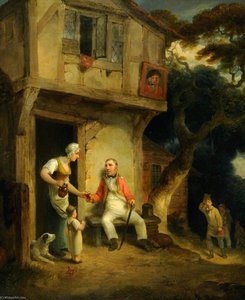
28At the Inn Door by Henry SingletonAt the Inn Door Order a hand-painted copy from $170 →
29'Camilla Recovering from Her Swoon' (an illustration of a scene from Fanny Burney's 'Camilla, or a Picture of Youth', published in 1796) by Henry Singleton'Camilla Recovering from Her Swoon' (an illustration of a scene from Fanny Burney's 'Camilla, or a Picture of Youth', published in 1796) Choose a size from $170 →
30Courtship by Henry SingletonCourtship Order a hand-painted copy from $170 →
31The Pastor's Fireside The family of Sir Thomas Acland, 10th Bt, Being Read to by the Vicar of Silverton by Henry SingletonThe Pastor's Fireside The family of Sir Thomas Acland, 10th Bt, Being Read to by the Vicar of SilvertonNational Trust Order this painting from $170 →
32Scene from The Adventures of David Simple in Search of a Faithful Friend by Sarah Fielding by Henry SingletonScene from The Adventures of David Simple in Search of a Faithful Friend by Sarah Fielding Order a hand-painted copy from $170 →
33John Fuller by Henry SingletonJohn FullerThe Royal Institution Order a hand-painted copy from $170 →

Henry Singleton paintings by period

Henry Singleton paintings by subject

The four most frequent subjects in this ranking, with the top painting for each.

Museums holding Henry Singleton's originals

The 8 museums that hold the most of the paintings on this page.

Museum City Works by Henry Singleton Paintings from this list
Yale Center for British Art, New HavenYale Center for British Art New Haven 2 The Wandering Sailor, The Surrender of the Two Sons of Tipu Sahib, Sultan of Mysore, to Sir David Baird
National Trust, ЕксетераNational Trust Ексетера 2 Sir Thomas Dyke Acland (1787–1871), 10th Bt, MP, His Wife Lydia Elizabeth Hoare (1786–1856), and Their Son, Later Sir Thomas Dyke Acland (1809–1898), 11th Bt, The Pastor's Fireside The family of Sir Thomas Acland, 10th Bt, Being Read to by the Vicar of Silverton
The Louvre, ParisThe Louvre Paris 2 LA FORET HANTEE THE HAUNTED GROVE, FROM BOCCACE, LES DEUX RIVAUX
National Gallery of Art, WashingtonNational Gallery of Art Washington 1 James Massy-Dawson (?)
Städel Museum, FrankfurtStädel Museum Frankfurt 1 The Vicar of the Parish Receiving His Tithes
Carnavalet Museum, ParisCarnavalet Museum Paris 1 The Storming of the Bastille, July 14, 1789
Royal Collection, LondonRoyal Collection London 1 The Marriage of George IV (1762-1830) when Prince of Wales
Minneapolis Institute of Art, MinneapolisMinneapolis Institute of Art Minneapolis 1 The Marriage of the Duke and Duchess of York

Henry Singleton by decade: the top painting of each

Works per decade

Select a decade to see its top painting.

Henry Singleton paintings: common questions

What is the most famous painting by Henry Singleton?Show answer

James Massy-Dawson (?) (1795), National Gallery of Art, Washington, ranks first, followed by The Vicar of the Parish Receiving His Tithes (1792) and The Storming of the Bastille, July 14, 1789 (1789).

What was Henry Singleton's age when James Massy-Dawson (?) was painted?Show answer

Henry Singleton was 29: James Massy-Dawson (?) is dated 1795, and Henry Singleton was born in 1766.

Which are the top 10 Henry Singleton paintings?Show answer

James Massy-Dawson (?), The Vicar of the Parish Receiving His Tithes, The Storming of the Bastille, July 14, 1789, The Marriage of George IV (1762-1830) when Prince of Wales, The Marriage of the Duke and Duchess of York, The Storming of the Bastille, The Wandering Sailor, Manto and Tiresias, The Second Viscount Maynard and Palemon and Lavinia. Year and museum for each are in the ranking above.

How many works by Henry Singleton do you list?Show answer

34 works by Henry Singleton are in our catalogue, dated 1786 to 1823.

Where are the original Henry Singleton paintings kept?Show answer

Mainly in Yale Center for British Art (New Haven), National Trust (Ексетера) and The Louvre (Paris). See the museum table above for the full list.

Which period produced Henry Singleton's most famous paintings?Show answer

In 1790s: 14 of the 33 paintings ranked here date from that time, including James Massy-Dawson (?).

Which are the earliest and latest famous Henry Singleton paintings?Show answer

Earliest on this page: James Boswell and his Family (1786). Latest: John Linnell Bond (1764–1837) (1823).

What are the main subjects of Henry Singleton's paintings?Show answer

Among the 33 paintings ranked here: Man (14), Woman (9) and People (5).

What medium are most Henry Singleton originals in?Show answer

Oil On Canvas, for 14 of the 33 paintings ranked here.

Which Henry Singleton originals are at the Yale Center for British Art?Show answer

The Yale Center for British Art, New Haven holds 2 of the paintings ranked here, including The Wandering Sailor and The Surrender of the Two Sons of Tipu Sahib, Sultan of Mysore, to Sir David Baird.

Can I order a Henry Singleton reproduction?Show answer

Yes. Every painting on this page can be ordered as a hand-painted oil reproduction or a print. Open the painting, choose the size and place your order.

About the artist: Henry Singleton

The Legacy of a Master Miniature and Portraitist

Born into the vibrant artistic tapestry of London in 1766, Henry Singleton was destined for a life defined by the brush and the palette. His early years were shaped by a profound familial connection to the arts; following the untimely loss of his father when he was just an infant, Singleton was raised under the watchful eye of his uncle, William Singleton. This mentorship provided more than just familial stability; it offered a direct lineage to the prestigious traditions of English miniature painting, having been trained under the esteemed Ozias Humphry. Growing up in an environment where art was the primary language—surrounded by uncles and sisters who were all recognized exhibitors at the Royal Academy—Singleton’s development was an organic progression of inherited skill and burgeoning individual talent.

As a young man, Singleton demonstrated a precocious command over both scale and subject. His formal education at the Royal Academy Schools began in his late teens, and by 1784, he had already secured the silver medal, signaling his arrival as a formidable talent. The pinnacle of his early academic recognition came in 1788, when his ambitious painting depicting John Dryden’s Alexander’s Feast earned him the prestigious gold medal. This achievement highlighted a period in his career where he sought to transcend the delicate confines of miniature work to tackle grand, sweeping historical and scriptural compositions. His ability to weave complex narratives from the Bible, Shakespeare, and contemporary history allowed him to command attention on the large-scale canvases demanded by the era's most significant institutions.

A Career of Enduring Presence

While his early ambitions leaned toward the monumental, Singleton’s professional journey was marked by a remarkable versatility that ensured his longevity in the competitive London art scene. He became a fixture of the Royal Academy, exhibiting approximately 300 works between 1784 and 1839. There is a poignant irony in his storied career: despite being commissioned by the Royal Academy in 1793 to paint a massive group portrait of forty academicians, he never attained the formal status of a member or an associate himself. Nevertheless, his presence was so constant and his skill so respected that he eventually became the Royal Academy's oldest living exhibitor, a testament to a lifetime of unwavering dedication to his craft.

His repertoire was as diverse as it was technically proficient, spanning several distinct modes of painting:

  • Portraiture: A mainstay of his career, where his ability to capture character and status made him a sought-after artist for the English elite.
  • Miniatures: Carrying on the family tradition, these intimate works showcased his precision and delicate touch.
  • Historical and Scriptural Works: Large-scale compositions that utilized dramatic lighting and narrative depth to explore religious and literary themes.

Beyond the Royal Academy, Singleton’s influence extended to the British Institution and the Society of British Artists, ensuring his work reached a broad spectrum of collectors and connoisseurs. His life came to a close in London in 1839, leaving behind a body of work that serves as a vital window into the aesthetic values of the late 18th and early 19th centuries. Through his portraits and historical scenes, Singleton captured not just the faces of his contemporaries, but the very spirit of an era defined by classical grandeur and the intimate beauty of the miniature.