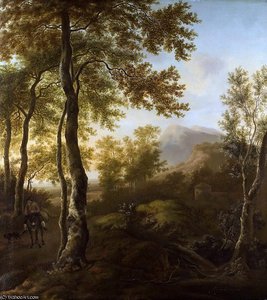
Jan Both (1610-1652): Master of Mediterranean Light
Jan Dirksz Both was a Dutch painter, draughtsman, and etcher who emerged as one of the foremost figures in the burgeoning “Italianate” landscape movement during the Dutch Golden Age. Born around 1615/1618 in Utrecht, he was the younger brother of Andries Both, and their father, Dirck Both, a glass painter or glazier, instilled in them an early appreciation for artistic craftsmanship. While biographical details remain somewhat sparse, scholarly research suggests that Jan’s training encompassed instruction from Abraham Bloemaert and Gerrit van Honthorst, marking him amongst the influential artists of his time.
Early Life & Training: Both's formative years were spent in Utrecht, where he honed his skills alongside his brother Andries, absorbing techniques from their father’s glazing practice – a craft deeply rooted in Flemish traditions.
Roman Influence: Around 1638, Jan and Andries embarked on a transformative journey to Rome via France, immersing themselves in the artistic fervor of the papal court and encountering luminaries like Bloemaert and Gerrit van Honthorst. This exposure profoundly shaped their stylistic sensibilities.
The Romanate Style & Collaboration with Lorrain
Rome proved to be a crucible for Both’s artistic development. While Andries focused on genre scenes in the manner of Pieter van Laer, Jan dedicated himself primarily to landscape painting—a style heavily indebted to Claude Lorrain—capturing the ethereal beauty of the Mediterranean region with an unparalleled mastery of light and color. Notably, he collaborated closely with Herman van Swanevelt on a monumental project for the Buen Retiro Palace in Madrid, demonstrating his ambition and artistic prowess within the highest echelons of European patronage. This partnership cemented Both’s reputation as a leading landscape innovator.
Notable Paintings & Artistic Characteristics
Both's oeuvre is characterized by expansive, imaginative landscapes bathed in a luminous golden light—a hallmark of Lorrain’s style and indicative of the broader artistic currents circulating throughout Europe. His masterpiece, “Landscape with Bandits Leading Prisoners” (Museum of Fine Arts, Boston), exemplifies this aesthetic brilliance. The diagonal road draws the eye into the scene, juxtaposing realistic figures against a backdrop of idyllic vistas populated by meticulously rendered vegetation. Recurring motifs include religious or mythological figures—as seen in “Judgement of Paris” (London, National Gallery)—often executed by fellow Utrecht artists like Cornelis van Poelenburch, underscoring Both’s engagement with humanist ideals and artistic conventions.
Legacy & Influence
Jan Both's brother Andries tragically succumbed to illness in Venice during their return journey from Rome. Despite the brevity of his life, Andries established himself as a respected artist specializing in peasant scenes—a genre reflecting the social realities of the time. Jan Both’s artistic legacy extends beyond individual paintings; he served as a teacher to talented pupils like Barend Bispinck and Willem de Heusch, ensuring that his stylistic innovations would continue to inspire generations of artists. His work remains celebrated for its evocative atmosphere, masterful technique, and contribution to the development of Dutch landscape painting—a testament to Both’s enduring influence on European art history.
Explore the captivating world of Jan Wijnants and Dutch Golden Age still life painting. Discover symbolism, masterful techniques & lasting influence on floral art history. Learn more!
Born in Chamagne around 1600, Claude Lorrain transformed the Roman Campagna into a luminous paradise, moving beyond the dramatic shadows of the Baroque.