The Master of Academic Elegance
Jules Joseph Lefebvre stands as a luminous figure in the history of nineteenth-century French art, a painter whose brush possessed the rare ability to capture both the physical perfection of the human form and a profound sense of ethereal grace. Born in Tournai in 1834, Lefebvre’s journey was one of disciplined mastery and artistic devotion. Moving to Paris at the young age of sixteen, he immersed himself in the rigorous atmosphere of the École nationale supérieure desBeaux-Arts. Under the guidance of the esteemed Léon Cogniet, Lefebvre did not merely learn technique; he inherited a tradition of classical excellence that would define his entire oeuvre. His early triumphs, most notably winning the prestigious Prix de Rome in 1861, signaled the arrival of an artist destined to become a cornerstone of the academic movement.
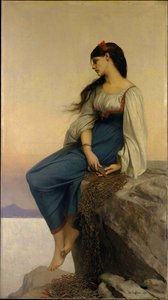
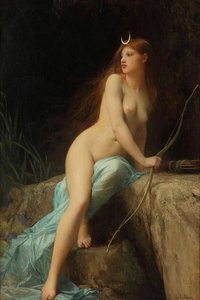
The essence of Lefebvre’s work lies in what critics often call "academic elegance." He possessed an unparalleled skill for rendering the female figure, treating the skin with a luminous quality that seemed to glow from within. His compositions were rarely about mere provocation; instead, they sought to elevate the subject through soft light and a delicate, harmonious color palette. In masterpieces such as Chloé, one can observe how he blends classical poise with an atmospheric connection to nature, creating a sense of timelessness that transcends the era in which it was painted. Whether depicting mythological figures or contemporary portraits, his work maintains a consistent reverence for beauty and a meticulous attention to the subtle textures of fabric and flesh.
A Legacy of Influence and Instruction
Beyond his individual canvases, Lefebvre’s historical significance is deeply rooted in his role as an educator and mentor. His studio became a crucible for the next generation of great painters, bridging the gap between traditional French academicism and the emerging movements of the late nineteenth century. His influence stretched far across borders, shaping the hands and eyes of students who would go on to define American Impressionism and European modernism. Among his most notable pupils were:
- Fernand Khnopff, whose Symbolist explorations carry echoes of Lefebvre’s atmospheric sensitivity;
- Edmund C. Tarbell, a key figure in the Boston School;
- Félix Vallotton, who would later push the boundaries of graphic art and composition;
- Kenyon Cox, who carried the torch of classical figurative excellence to the United States.
This pedagogical legacy ensured that while styles shifted toward Impressionism and beyond, the foundational principles of draftsmanship and light—the very pillars of Lefebvre’s own practice—remained vital. His prolific presence at the Paris Salon, with seventy-two works exhibited between 1855 and 1898, solidified his status as a pillar of the art establishment. Through works like the evocative Lady Godiva and the dignified Portrait of James A. Campbell, Lefebvre captured the spirit of an age, leaving behind a body of work that continues to enchant viewers with its sophisticated blend of realism, romanticism, and unparalleled technical virtuosity.
Questions & Answers
Where is Jules Joseph Lefebvre from?
Jules Joseph Lefebvre was born in France.
Where are Jules Joseph Lefebvre's artworks organized by color?
Jules Joseph Lefebvre's works can be explored by color on the artist's Spectral Index page.
In which historical period did Jules Joseph Lefebvre work?
Jules Joseph Lefebvre worked in the 19th-Century period. The period situates the artist's activity in history.