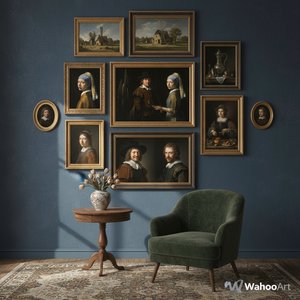
Martin Mijtens the Elder: A Portraitist of Privilege and Dramatic Vision
Martin Mijtens the Elder (1648 – 1736) stands as a pivotal figure in Dutch Baroque portraiture, embodying the opulent tastes and artistic sensibilities of his era. Born in The Hague, Netherlands, Mijtens’s life unfolded against the backdrop of a burgeoning cultural landscape shaped by royal patronage and an unwavering fascination with capturing aristocratic grandeur.
- Early Life & Training: Mijtens received his formative artistic education under Rembrandt Harmensz van Rijn, arguably the most influential painter of his time. This mentorship instilled in him a profound understanding of chiaroscuro – the masterful manipulation of light and shadow – a technique that would become synonymous with his distinctive style.
- Move to Stockholm & Royal Commissions: Recognizing the opportunities presented by Sweden’s ascendancy as a European power, Mijtens relocated to Stockholm in 1680. Here, he swiftly established himself as a favored artist of the Swedish royal court, securing commissions that showcased his ability to portray monarchs and nobility with breathtaking realism and psychological depth.
- Style & Technique: Mijtens’s artistic hallmark was undeniably his dramatic use of light and shadow, meticulously crafted to convey emotion and heighten visual impact. He employed a technique known as ‘tenebrism,’ intensifying darkness while highlighting key areas of illumination – a stylistic choice that mirrored the Baroque preoccupation with conveying spiritual fervor and theatrical grandeur.
- Notable Portraits: Among Mijtens’s most celebrated works are portraits of King Charles XII, Queen Christina Sophia Hedvig Elisabet Vasa, and numerous members of the Swedish nobility. These canvases exemplify his meticulous attention to detail, capturing not merely physical likeness but also inner character and aristocratic bearing. Particularly noteworthy is his depiction of Christina Vasa, a portrait that cemented Mijtens’s reputation as one of Sweden's foremost artists.
- Legacy & Influence: Mijtens’s influence extended beyond the Swedish court, shaping the artistic sensibilities of subsequent generations of painters. His masterful handling of light and shadow served as an inspiration for artists across Europe, contributing to the enduring legacy of Baroque portraiture. Today, his paintings reside in museums throughout Scandinavia and beyond, testifying to their timeless beauty and artistic significance.
Martin Mijtens’s oeuvre remains a testament to the power of observation and artistic innovation. He skillfully blended Rembrandt's influence with his own inventive approach, producing portraits that transcend mere representation—they are windows into the souls of their subjects and enduring symbols of aristocratic prestige.