Stephen Bone: Life and Art
Early Life and Education
- Born: Chiswick, United Kingdom (1904)
- Died: 1958
- Stephen Bone was the son of renowned artist Sir Muirhead Bone and writer Gertrude Helena Dodd. This familial artistic background profoundly influenced his early development.
- He received his education at Bedales School before enrolling at the Slade School of Fine Art in 1922.
- However, he became disillusioned with the academic approach at the Slade and left in 1924 to pursue book illustration.
Early Career & Artistic Development
- Bone initially achieved success as a woodcut illustrator, creating works for his mother and other writers. He won the gold medal for wood engraving at the International Exhibition in Paris in 1925.
- In 1926, he exhibited jointly with Rodney Joseph Burn and Robin Guthrie at the Goupil Gallery, marking a significant step in his artistic recognition.
- He painted a mural for the Piccadilly Circus underground station in 1928, demonstrating his versatility and expanding artistic scope.
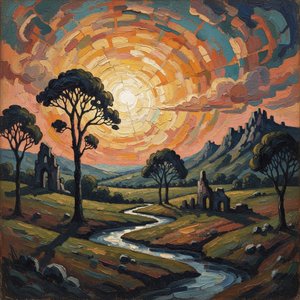
- Marriage to artist Mary Adshead in 1929 led to extensive travels across Britain and Europe. These journeys were crucial in developing his signature style of bright landscape painting, capturing scenes *en plein air* regardless of weather conditions.
The 1930s: Landscape Painting & Exhibitions
- During the 1930s, Bone exhibited widely at prestigious galleries including the Fine Art Society, Lefevre Gallery, and Redfern Gallery.
- In 1936, he presented a series of 41 paintings depicting British counties at the Ryman Gallery in Oxford, showcasing his dedication to capturing the essence of the British landscape.
- He also exhibited in Stockholm during 1936 and 1937, expanding his international exposure.
War Artist & WWII Contributions
- With the outbreak of World War II, Bone enlisted as an officer in the Civil Defence Camouflage Establishment.
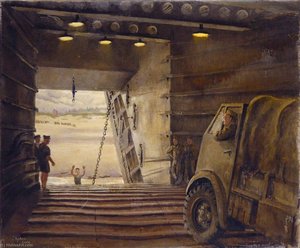
- In 1943, he was appointed a full-time salaried artist by the War Artists' Advisory Committee, specializing in Admiralty subjects. This role had previously been held by his father, Muirhead Bone, but was taken up by Stephen following the death of their son Gavin.
- Significant WWII Works: He produced numerous paintings depicting coastal installations and naval craft, including scenes painted aboard submarines.
- Bone witnessed and documented the Normandy landings in 1944, painting scenes in Caen and Courseulles. He also recorded the assault on Walcheren Island in the Netherlands.
- He travelled to Norway in late 1944, documenting the wreck of the *Tirpitz* and recording captured naval bases, as well as mass graves of prisoners of war.
Post-War Career & Legacy
- After the war, Bone found his style somewhat out of fashion. Despite continuing to paint, he faced difficulties exhibiting his work.
- He transitioned into art criticism, writing for the *Manchester Guardian*, and contributed humorous pieces to the *Glasgow Herald*.
- Bone also worked in television and radio for the BBC and collaborated with his wife on children's books. They jointly organized a mural painting course at Dartington.
- In 1957, he was appointed Director of the Hornsey College of Art.
- Death: Stephen Bone died of cancer on September 15, 1958, at St Bartholomew's Hospital, London.
- Stephen Bone’s work provides a valuable visual record of mid-20th century Britain, encompassing both the tranquility of its landscapes and the harsh realities of wartime.
Questions & Answers
Where can I find statistics about Stephen Bone's works?
The Stats page of Stephen Bone presents statistics computed from the artist's artworks listed on this website.
Can I browse Stephen Bone's works by movement?
The All Movements page groups Stephen Bone's artworks by art movement.
Where can I see Stephen Bone's artworks in chronological order?
Stephen Bone's artworks can be seen in chronological order on the artist's Artwork Timeline page.