Money-Back Guarantee · 100 days Free Worldwide Delivery
646,759artworks 53,420artists 5,406museums 32languages

Impressionist painters at a glance

100 Famous Impressionist Painters: The Complete List

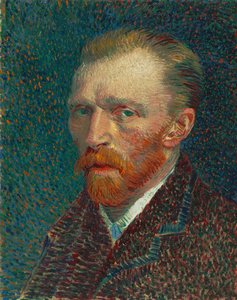
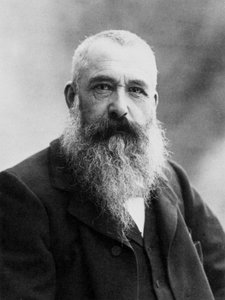
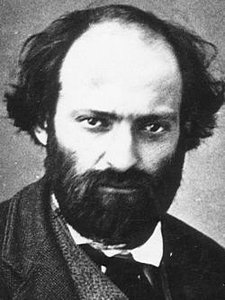
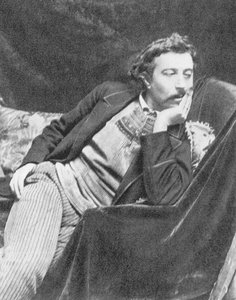
Vincent van Gogh (1853–1890) is the most famous Impressionist painter, best known for Starry Night (New York, MoMA) and Cafe Terrace on the Place du Forum, Arles, at Night. Then Claude Monet, Paul Cézanne, Paul Gauguin and Édouard Manet. The list covers 100 painters born between 1817 and 1913 in 22 countries, from Charles-François Daubigny to Amrita Sher-Gil.

Method. Scope: artists filed under Impressionist in our catalogue. Order: our artist fame ranking. Excluded: artists born after 1955 without a Wikidata identifier. Wikipedia figure: languages with an article, out of our 32.

  1. Starry Night (New York, MoMA) by Vincent van Gogh1Vincent van Gogh
  2. Impression, Sunrise by Claude Monet2Claude Monet
  3. The bathers Sun by Paul Cézanne3Paul Cézanne

Key data

Impressionist: key data

  • 100Artists
  • 1817–1913Years of birth
  • 22Countries of birth
  • 14Women
  • 38,001Works in our catalogue
Cities with most births
Paris (10), London (3), Zundert (2), Saint Petersburg (2)

Ranked list

100 Impressionist Painters, ranked with key works

1/ 100

Vincent van Gogh

b. Zundert Wikipedia 32/32

Vincent van Gogh

He moved through the circles of the avant-garde, meeting figures such as Émile Bernard and Paul Gauguin. Later, in 1890, he painted The Church at Auvers, capturing the architecture of the village under a wide, open sky.

Location To see the physical traces of his brushwork, one can travel to several specific collections.

Key works · Top 100 works

2/ 100

Claude Monet

French b. Paris Impressionism Wikipedia 32/32

Claude Monet

He was the most consistent and prolific practitioner of the movement's core philosophy, which sought to express a person's perceptions of nature. His 1873 painting, Impression, Sunrise, provided the name for the Impressionist movement, even as its loose handling and indistinct forms initially drew scorn from the establishment.

Trained by Eugène Louis Boudin #21, Johan Jongkind #27

Key works · Top 100 works

3/ 100

Paul Cézanne

French b. Aix-en-Provence Post-Impressionism Wikipedia 32/32

Paul Cézanne

The rejection from the École des Beaux-Arts was a setback, yet it led him to the Académie Suisse, where he could continue his development away from the rigid constraints of the academy. Between 1867 and 1870, he produced The Murder, a work characterized by a turbulent body of water and a nightmarish atmosphere.

Location The physical presence of his vision remains scattered across several major institutions, allowing the viewer to trace his evolution from the dark, expressive brushwork of his youth to the structured clarity of his later years.

Key works · Top 100 works

4/ 100

Paul Gauguin

French b. Paris ['Post-Impressionist', 'Symbolist', 'Synthetism', 'Primitivism'] Wikipedia 32/32

Paul Gauguin

In 1887, a shift in scenery brought him to Panama and Martinique alongside Charles Laval. Similarly, The Loss of Virginity, also known as The Awakening of Spring, invites viewers into a liminal space where the boundaries between the human soul and the natural world appear to dissolve.

Location In Paris, the Musée d'Orsay preserves a significant portion of his output, offering a glimpse into the evolution of his color and form.

Trained by Camille Pissarro #11

Key works · Top 100 works

5/ 100

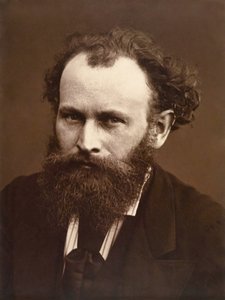
Édouard Manet

French b. former 10th arrondissement of Paris Realism, Impressionism, Avant-garde Wikipedia 31/32

Édouard Manet

Instead of smoothing away the evidence of the brush, there is a visible, energetic application of pigment known as facture. In 1867, he painted The Execution of the Emperor Maximilian of Mexico.

Trained Eva Gonzalès #50

Key works · Top 100 works

6/ 100

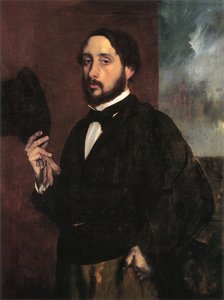
Edgar Degas

French b. Paris Realism Wikipedia 32/32

Edgar Degas

Light in a Degas composition is rarely natural. Scene from the Steeplechase: The Fallen Jockey, 1866.

Location The traces of Degas's observation remain scattered across major institutions, preserved in the quiet halls of Paris and beyond.

Key works · Top 100 works

7/ 100

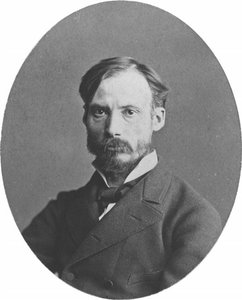
Pierre-Auguste Renoir

French b. Limoges Impressionism Wikipedia 32/32

Pierre-Auguste Renoir

Dance at Le Moulin de la Galette, 1876. This period of experimentation led to the lively energy found in Dance at Le Moulin de la Galette, painted in 1876.

Location The distribution of his canvases across the globe reflects the widespread reach of his influence.

Key works · Top 100 works

8/ 100

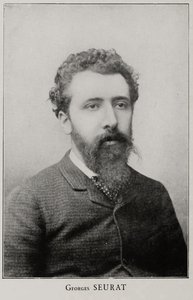
Georges Seurat

French b. former 5th arrondissement of Paris ['Neo-Impressionism', 'Post-Impressionism', 'Pointillism', 'Divisionism', 'Chromoluminarism'] Wikipedia 30/32

Georges Seurat

By utilizing Divisionism, he separated local color into individual dots, relying on the viewer’s eye to achieve optical blending. In Young Woman Powdering Herself (1889-1890), he applied his technique to a single subject, exploring the artifice of human vanity through a highly constructed setting.

Key works · Top 100 works

10/ 100

Henri De Toulouse-Lautrec

French b. Albi Post-Impressionism Wikipedia 31/32

Henri De Toulouse-Lautrec

La Goulue Arriving at the Moulin Rouge with Two Women. Other significant works include Divan Japonais and La Passagère du 54, ou Promenade en Yacht, created in 1896.

Location The Musée Toulouse-Lautrec, housed within the Palais de la Berbie, maintains the most significant collection, containing over 1000 works that trace his evolution from an aristocratic youth to a chronicler of the Parisian night.

Key works · Top 100 works

11/ 100

Camille Pissarro

Danish-French b. Charlotte Amalie ['Impressionism', 'Neo-Impressionism', 'Post-Impressionism'] Wikipedia 31/32

Camille Pissarro

This curiosity extends into his later years when he engages with Neo-Impressionism. By 1872, his gaze turned to the architecture of the outskirts in The House of Monsieur Musy, Route de Marly, Louveciennes.

Location The weight of Pissarro's influence is felt most heavily in Paris.

Trained Paul Gauguin #4

Key works · Top 100 works

12/ 100

Alfred Sisley

British b. former 4th arrondissement of Paris Impressionism Wikipedia 31/32

Alfred Sisley

His path took him through Paris and Louveciennes, and he spent significant time in Marly-le-Roi, Sèvres, Veneux-les-Sablons, and Moret-sur-Loing. In 1870, he produced The Saint Martin Canal in Paris, a work that reflects his early interest in the waterways of the city.

Location In Paris, his presence is felt strongly within the Musée d'Orsay, which holds a significant number of his canvases.

Key works · Top 100 works

13/ 100

John Singer Sargent

American b. Florence Impressionism Wikipedia 27/32

John Singer Sargent

In 1874, at the age of eighteen, Sargent entered the Paris studio of Carolus-Duran. These works demonstrate a technical flexibility that allowed him to transition from the heavy, formal requirements of a commission to the light-filled atmosphere of a garden or a dance. 1882: El Jaleo. 1885: Carnation, Lily, Lily, Rose.

Key works · Top 100 works

14/ 100

Paul Signac

French b. Paris Neo-Impressionism, Pointillism Wikipedia 29/32

Paul Signac

Instead, he adopted a technique known as Pointillism, or Divisionism, where he applied tiny, distinct dots of pure color directly onto the surface. His 1886 work, Boulevard de Clichy, captures a winter scene in Paris, where the snowy boulevard is rendered through the meticulous application of small dots of pure color.

Location The Musée d'Orsay holds nine of his works, offering a significant gathering of his vision.

Key works · Top 100 works

15/ 100

Pierre Bonnard

French b. Fontenay-aux-Roses Post-Impressionism, Intimism, Les Nabis Wikipedia 27/32

Pierre Bonnard

He was a leading figure in the transition from Impressionism to Modernism, navigating the space between the fleeting light of the previous generation and the more structured, subjective explorations of the new century. His late work continued this exploration until the very end; The Almond Tree in Blossom, painted about 1946, remains a significant example of his preoccupation with the interplay of light and nature.

Location The physical presence of Bonnard’s vision remains scattered across several major institutions, allowing his specific approach to light and domesticity to be studied in various contexts.

Key works · Top 100 works

16/ 100

Mary Cassatt

American b. Allegheny Impressionism Wikipedia 32/32

Mary Cassatt

Her training expands as she moves through Courance and Écouen, studying under Édouard Frère and Paul Soyer. In 1883, Lady at the Tea Table appears in the Metropolitan Museum of Art, New York, capturing a quiet, private ritual through a sophisticated palette of muted creams, deep browns, and luminous blue accents.

Key works · Top 100 works

18/ 100

Frédéric Bazille

French b. Montpellier Impressionism Wikipedia 28/32

Frédéric Bazille

While sharing their fascination with plein air painting – working outdoors to directly capture the nuances of natural light – his compositions often exhibited a more structured quality than Monet’s or Renoir’s.

Key works · Top 100 works

19/ 100

Gustave Caillebotte

French b. Paris Realism and Impressionism Wikipedia 26/32

Gustave Caillebotte

His technique often felt closer to the heavy, grounded depictions of Courbet or Millet than the atmospheric experiments of Monet or Morisot. Similarly, The Bather, or The Diver (1877) demonstrates his ability to handle light and atmosphere without sacrificing the structural integrity of the subject.

Location The Musée d'Orsay holds a substantial portion of his output, including the large-scale Boating Party and the gritty, realistic The Floor Scrapers.

Key works · Top 100 works

20/ 100

Joaquín Sorolla

Spanish b. Valencia Luminism, Impressionism, Social Realism Wikipedia 27/32

Joaquín Sorolla

There is a certain dexterity in how he handled the landscape, often placing people within a bright, Spanish sun that seems to dissolve the boundaries between the sea and the sky. The work brought him a level of recognition that would change his life, leading to him being named a Knight of the Legion of Honour in 1900.

Location For those wishing to walk through the spaces that shaped his life, the Museo Sorolla in Madrid offers a rare glimpse into his private world.

Key works · Top 100 works

21/ 100

Eugène Louis Boudin

French b. Honfleur Precursor to Impressionism Wikipedia 26/32

Eugène Louis Boudin

In 1835, the family moved to Le Havre, where his father opened a shop that sold stationery and picture frames. In 1867, he painted Honfleur, the Saint Catherine Market Place, a work that captures the activity of a village scene.

Location In Paris, the Musée d’Orsay preserves several of his canvases, allowing viewers to stand before the very brushstrokes that once inspired a generation of painters.

Key works · Top 100 works

23/ 100

Maurice Denis

French b. Granville Nabis, Symbolism Wikipedia 26/32

Maurice Denis

Initially inspired by the vibrant colors and flattened forms of Gauguin and Japanese prints, he later turned towards the more structured compositions of Paul Cézanne, seeking a new form of classicism rooted in modern sensibilities.

Key works · Top 100 works

24/ 100

Édouard Vuillard

French b. Cuiseaux Les Nabis, Intimism Wikipedia 23/32

Édouard Vuillard

In 1885, he began taking courses at the Académie Julian, and he frequently frequented the studios of William-Adolphe Bouguereau and Robert-Fleury to refine his technique. The Salon of Madame Aron (1904, reworked 1934).

Location The quiet, patterned interiors that defined his career are preserved in several major international collections.

Key works · Top 100 works

25/ 100

Amrita Sher-Gil

Hungarian-Indian b. Budapest Modern Indian art, Avant-garde Wikipedia 20/32

Amrita Sher-Gil

Amrita Sher-Gil’s style is instantly recognizable for its bold use of color, simplified forms, and expressive figures. Young Girls (1932): A pivotal early work that brought her international recognition.

Key works · Top 100 works

26/ 100

Charles-François Daubigny

French b. Paris Barbizon School, Impressionism precursor Wikipedia 28/32

Charles-François Daubigny

He studied under Jean-Victor Bertin, Jacques Raymond Brascassat, and Paul Delaroche. In 1851, he completed The Harvest, a work now held at the Musée d'Orsay in Paris.

Location Walking through the Musée d'Orsay in Paris, one finds much of his output.

Key works · Top 100 works

28/ 100

Maurice Utrillo

French b. 18th arrondissement of Paris Post-Impressionism, School of Paris Wikipedia 25/32

Maurice Utrillo

He was not interested in the bright colors of a bustling city, but rather in the quiet, pale light that settled on the stone and mortar of the buildings. 1910: place pigalle. 1913: The Lapin Agile [Le Lapin Agile]. 1917: Rue Saint-Vincent and the Lapin Agile. One such place was the Lapin Agile, a cabaret in Montmartre that served as a gathering point for many artists and writers.

Location To experience the quiet, textured streets of Montmartre through his eyes, one can travel to several major institutions.

Trained by Suzanne Valadon #22

Key works · Top 100 works

30/ 100

Félix Vallotton

Swiss and French b. Lannes Post-Impressionism, Symbolism, Les Nabis

Félix Vallotton

His style blended elements of Post-Impressionism and Symbolism, often resulting in a look that felt both modern and strangely still. In 1892, he produced The Sick Girl, a work that reflects his ability to handle human subjects with a sense of realism.

Location To encounter the quiet tension of Vallotton’s interiors, one might travel to the Cantonal Museum of Fine Arts in Lausanne, Switzerland, where The Red Room is kept.

Key works · Top 100 works

31/ 100

Max Liebermann

German b. Berlin Impressionism Wikipedia 27/32

Max Liebermann

Recognizing the stifling constraints imposed by the traditional art establishment, he became a driving force behind the Berlin Secession in 1898, leading this avant-garde group for over a decade.

Key works · Top 100 works

32/ 100

Lovis Corinth

German b. Gvardeysk Impressionism & Expressionism Wikipedia 24/32

Lovis Corinth

Paintings like “In the Slaughterhouse” (1878), with its unflinching depiction of animal carcasses, demonstrate this commitment to realistic representation, yet even here, a nascent emotional intensity begins to surface. Female Semi-Nude with Hat (1906): Demonstrates Corinth’s ability to blend classical motifs with impressionistic techniques, creating a sensuous and psychologically compelling portrait.

Key works · Top 100 works

33/ 100

Valentin Serov

Russian b. Saint Petersburg Impressionism, Art Nouveau Wikipedia 27/32

Valentin Serov

His portrait of Maxim Gorky (1904) exemplifies this shift, presenting a powerful and unconventional depiction of the writer as a man of the people. He absorbed influences from the Old Masters during visits to European museums, studying Rembrandt, Velázquez, and Veronese, learning their techniques for rendering light, shadow, and texture.

Key works · Top 100 works

34/ 100

Peder Severin Krøyer

Danish b. Stavanger Realism, Impressionism Wikipedia 24/32

Peder Severin Krøyer

Born in 1851 in Stavanger, Norway, Krøyer’s early life was marked by an unusual upbringing; raised not by his biological mother but by her sister and brother-in-law, the Danish zoologist Henrik Nikolai Krøyer, he found himself transplanted to Copenhagen and immersed in a world of scientific inquiry alongside artistic cultivation. Krøyer became central to this community, forging close friendships with artists like Michael and Anna Ancher, and writer Holger Drachmann.

Key works · Top 100 works

35/ 100

Giovanni Boldini

Italian b. Ferrara Impressionism, Belle Époque Wikipedia 20/32

Giovanni Boldini

Boldini’s brushwork possessed a restless, kinetic energy that earned him the moniker "Master of Swish." His method relied on a sophisticated tension between precision and spontaneity. In his 1884 work, The Mondona Singer, he utilized impasto brushstrokes—a combination of short staccato marks and smooth, flowing legato passages—to evoke the sound of music.

Location In Ferrara, Italy, the Museo Giovanni Boldini resides within the Palazzo Massari.

Key works · Top 100 works

36/ 100

Tom Thomson

Canadian b. Claremont Canadian Modernism Wikipedia 18/32

Tom Thomson

This period proved formative; it wasn’t merely about acquiring technical proficiency in penmanship and design at firms like Maring & Ladd, but also about encountering individuals who would later become central figures in the burgeoning Canadian art scene – J.E.H.

Key works · Top 100 works

41/ 100

Emily Carr

Canadian b. Victoria Modernism, Post-Impressionism

Emily Carr

A pivotal moment in her development came through her encounters with the First Nations communities along the British Columbia coast. Kispiox Village (oil): An iconic painting that embodies Carr's unique style and her deep connection to the landscapes and communities of British Columbia.

Key works · Top 100 works

42/ 100

Childe Hassam

American b. Dorchester American Impressionism Wikipedia 15/32

Childe Hassam

His path took him through the United Kingdom, the Netherlands, France, Italy, Switzerland, and Spain. Between 1916 and 1919, he turned his attention to the American flag, producing a series of paintings that documented the patriotic fervor of the era.

Location The physical presence of Hassam’s vision remains scattered across several significant American institutions.

Key works · Top 100 works

44/ 100

Giovanni Segantini

Italian b. Arco Symbolism, Divisionism Wikipedia 19/32

Giovanni Segantini

Key Influences: His work was significantly influenced by Anton Mauve and Jean-François Millet, introduced to him through Vittorio Grubicy de Dragon, who became his advisor and dealer. Early Success: His painting "The Chancel of Sant'Antonio" gained recognition for its powerful quality and was acquired by Milan’s Società per le Belle Arti.

Key works · Top 100 works

45/ 100

Paul Sérusier

French b. Paris Post-Impressionism, Nabis, Synthetism Wikipedia 21/32

Paul Sérusier

In works like Celtic Tale (1894), this method produces an arresting visual effect through the use of intensified colors. In 1890, he produced Portrait of Paul Ranson, a work that solidified his presence within his artistic circle.

Location It holds The Talisman, the work that defined his early departure from academicism.

Key works · Top 100 works

47/ 100

Konstantin Korovin

Russian b. Moscow Impressionism Wikipedia 23/32

Konstantin Korovin

Polenov introduced Korovin to Savva Mamontov's Abramtsevo Circle, a haven for artists, craftsmen, and intellectuals dedicated to fostering a uniquely Russian artistic identity.

Key works · Top 100 works

48/ 100

Henri Edmond Cross

French b. Douai Neo-Impressionism Wikipedia 21/32

Henri Edmond Cross

Simultaneously, recurring bouts of rheumatism led him to seek solace in the warmer climate of southern France, beginning in 1883 and culminating in a permanent settlement in Saint-Clair in 1891. Several works stand out as particularly representative of Cross’s artistic vision: Before the Storm (aka The Storm): A quintessential example of his Neo-Impressionist landscapes, capturing dramatic skies and hinting at underlying anarchist themes.

Key works · Top 100 works

49/ 100

Emile Claus

Belgian b. Sint-Eloois-Vijve Luminism, Impressionism Wikipedia 15/32

Emile Claus

The move to Zonneschijn (“Sunshine”), a charming cottage near Deinze in 1883, proved to be a crucial turning point. Similarly, The Beet Harvest (1890) showcases his masterful use of broken brushstrokes and vibrant hues to convey the energy and drama of rural labor.

Key works · Top 100 works

50/ 100

Eva Gonzalès

French b. Paris Impressionism Wikipedia 20/32

Eva Gonzalès

Her painting Une loge aux théâtre italiens (1874), rejected by the Salon jury for its "masculine vigor" – ironically questioning its authenticity as a woman's work – demonstrates a boldness and compositional strength that defied expectations.

Trained by Édouard Manet #5

Key works · Top 100 works

52/ 100

William Merritt Chase

American b. Nineveh American Impressionism Wikipedia 13/32

William Merritt Chase

Chase’s technical evolution reveals a deliberate shift from the heavy, dark tonalities of his Munich training toward the light-filled clarity of French Impressionism. Even in his more abstract explorations, such as A Study in Curves, the intent remained focused on the physical properties of the subject rather than mere decoration.

Location Chase’s presence in major American collections remains substantial, ensuring his technical influence is physically accessible to anyone studying the evolution of American Impressionism.

Key works · Top 100 works

53/ 100

Armand Guillaumin

French b. Paris Impressionism Wikipedia 22/32

Armand Guillaumin

Born Jean-Baptiste Armand Guillaumin on February 16, 1841, in Paris, the man who would become known as Ferdinand Guillaumin spent his early years balancing labor with a quiet interest in drawing. Among these is Place Valhubert, Paris, which he created in 1872.

Key works · Top 100 works

54/ 100

Louis Anquetin

French b. Étrépagny Cloisonnism & Rubensian Style Wikipedia 19/32

Louis Anquetin

Alongside his contemporary Henri de Toulouse-Lautrec, he navigated the vibrant, often chaotic art circles of Paris, shaped by the mentorship of Fernand Cormon, yet he always maintained a stylistic independence that would eventually redefine the boundaries of modern composition.

Key works · Top 100 works

56/ 100

Frank Weston Benson

American b. Salem American Impressionism Wikipedia 14/32

Frank Weston Benson

The influence of seventeenth-century masters Johannes Vermeer and Diego Velázquez remains visible in his approach to light and composition. This focus on his immediate circle extends to formal portraiture, such as Eleanor, currently held at the Museum of Fine Arts, Boston, and the 1899 oil on canvas Gertrude, also housed in the same institution.

Location Benson's canvases reside in various museums and private collections, scattered across the landscape of American art.

Key works · Top 100 works

57/ 100

Walter Sickert

British b. Munich Post-Impressionism Wikipedia 19/32

Walter Sickert

Walter Richard Sickert, born in Munich in 1860, was a figure perpetually caught between worlds – German by birth, British by adoption, and an artist forever oscillating between the established traditions of painting and the burgeoning currents of modernism.

Key works · Top 100 works

59/ 100

John Lavery

Irish b. Belfast Impressionism Wikipedia 10/32

John Lavery

He was particularly influenced by James McNeill Whistler, adopting a sense of tonal harmony that brought a refined, quiet elegance to his compositions.

Location In London, the National Portrait Gallery holds several of his studies and portraits, capturing the faces of the people who moved through his social circles.

Key works · Top 100 works

61/ 100

Thomas Thompson

Canadian b. Claremont Impressionism

Thomas Thompson

Born in Claremont, Ontario, amidst a family steeped in farming traditions, Thomson’s artistic journey began with an instinctive fascination for the natural world, particularly the rugged beauty of Algonquin Park. Crucially, Thomson’s formative years coincided with the influence of William Brodie, a naturalist who instilled in him a deep respect for scientific observation and encouraged him to immerse himself in the intricacies of Ontario's flora and fauna.

Key works · Top 100 works

62/ 100

John Fraser

British Realistic Landscape Painting

John Fraser

John Arthur Fraser began his days in London, England, born on January 9th, 1838. His father, a tailor from Portsoy, Scotland, carried the political weight of the Chartist movement into their home, while his maternal grandparents had settled in Stanstead, Lower Canada, years earlier. His paintings of the Rockies, such as Fishing Camp, the Rockies, captured the heavy presence of mountains like Mt.

Key works · Top 100 works

64/ 100

Marie Bracquemond

French b. Landunvez Impressionism Wikipedia 19/32

Marie Bracquemond

Married Félix Bracquemond, a printmaker who introduced her to Japanese art (Japonisme) and encouraged her exploration of new techniques. Style: Characterized by loose brushstrokes, vibrant colors, and a focus on domestic scenes and garden views.

Key works · Top 100 works

66/ 100

Olga Boznańska

Polish b. Kraków Impressionism Wikipedia 21/32

Olga Boznańska

The Influence of Pastel and Oil: Her ability to manipulate different mediums allowed her to achieve both the soft, powdery textures of light and the rich, heavy shadows of deep emotion.

Key works · Top 100 works

67/ 100

Willem Witsen

Dutch b. Amsterdam Amsterdam Impressionism

Willem Witsen

Descended from prominent figures in Dutch Golden Age governance – including Cornelis Jan and Nicolaes Witsen – he inherited not only social standing but also a deep connection to Amsterdam’s history and character. His early artistic training at the Rijksakademie van Beeldende Kunsten in Amsterdam from 1876 to 1884 provided a solid foundation, further broadened by studies at academies in Antwerp.

Key works · Top 100 works

69/ 100

Richard Edward Miller

American b. St. Louis American Impressionism

Richard Edward Miller

Louis, Missouri, Richard Edward Miller emerged as a defining figure of American Impressionism, weaving a visual tapestry that captured the delicate essence of light and leisure. Under the guidance of masters such as Jean-Paul Laurens and Jean-Joseph Benjamin-Constant, he absorbed the sophisticated techniques of the French tradition, a period of study that would forever inform his approach to color and composition.

Key works · Top 100 works

71/ 100

John Peter Russell

Australian b. Darlinghurst Impressionism Wikipedia 16/32

John Peter Russell

Born in Sydney in 1858, Russell's path diverged from the typical colonial trajectory when, at eighteen, he embarked for Europe – initially to pursue engineering, but swiftly drawn into the vibrant world of art. His early education at Goulburn School provided a foundation, yet it was his studies under Alphonse Legros at the Slade School of Fine Art in London (1881-1883) that truly ignited his artistic ambitions.

Key works · Top 100 works

72/ 100

Henry Scott Tuke

English b. York Impressionism Wikipedia 15/32

Henry Scott Tuke

While living in Paris, Tuke encountered Jules Bastien-Lepage. One of his most recognized paintings, August Blue (about 1893–94), shows this preoccupation with light and the youthful form in a way that defined much of his output.

Location To find his paintings, one often looks to the major institutions in London.

Key works · Top 100 works

73/ 100

Jacques-Émile Blanche

French b. 16th arrondissement of Paris Impressionism Wikipedia 13/32

Jacques-Émile Blanche

Influenced by the aesthetics of Edouard Manet and James McNeill Whistler, his work balances a sense of modern spontaneity with a sophisticated control of color. In 1923, he painted " Eton Bridge, Windsor and the Horse Guards," a composition that captures a bustling tableau of London life, from the military precision of the parade to the skyline of Windsor Castle.

Location His presence in the art world persists through the physical remains of his canvases, held in various public institutions across Europe.

Key works · Top 100 works

75/ 100

Henry Ossawa Tanner

American b. Pittsburgh Realism, Symbolism Wikipedia 12/32

Henry Ossawa Tanner

Paintings such as Christ Walking on the Water, The Resurrection of Lazarus, and The Good Shepherd are not merely depictions of scripture; they are profound meditations on spirituality, rendered with masterful control of light, composition, and emotional nuance. Daniel in the Lions’ Den (1896): The painting that catapulted Tanner to international acclaim.

Key works · Top 100 works

76/ 100

Willard Metcalf

American b. Lowell American Impressionism Wikipedia 15/32

Willard Metcalf

Metcalf’s formal artistic education began at the School of the Museum of Fine Arts in Boston, where he honed his foundational skills until 1878. Upon returning to the United States in 1889, Metcalf began to forge his own distinct style, blending academic training with the lessons learned from European masters and his growing sensitivity to the American landscape.

Key works · Top 100 works

78/ 100

Cecilia Beaux

American b. Philadelphia Impressionism, Portraiture Wikipedia 14/32

Cecilia Beaux

Cecilia Beaux, born Eliza Cecilia Beaux on May 1st, 1855, in Philadelphia, emerged as a pivotal figure in American portraiture during the Gilded Age. Undeterred, Beaux persevered, securing a place at the prestigious Pennsylvania Academy of the Fine Arts in 1876.

Key works · Top 100 works

79/ 100

Fritz von Uhde

German b. Wolkenburg Impressionism Wikipedia 15/32

Fritz von Uhde

His style lay between Realism and Impressionism, marking him as one of the first artists to champion plein-air painting in Germany—a bold departure from the studio tradition dominant at the time.

Key works · Top 100 works

83/ 100

William Henry Holmes

American b. Harrison County Scientific Illustration Wikipedia 11/32

William Henry Holmes

William Henry Holmes was born on a farm near Cadiz, in Harrison County, Ohio, to Joseph and Mary Heberling Holmes on December 1, 1846. Received an honorary Doctor of Science degree from The George Washington University in 1918. Helped produce Hayden’s Geological and Geographical Atlas of Colorado (1877, 1881).

Key works · Top 100 works

85/ 100

Luigi Loir

French b. Gorizia Impressionism Wikipedia 9/32

Luigi Loir

Luigi Loir, born Aloys François Joseph Loi in the heart of Paris in 1845, remains one of the most evocative chroniclers of the French capital's golden age. His work serves as a visual diary of 19th-century Paris, documenting the architectural majesty and the fleeting, atmospheric shifts of light that define the Seine and the bustling streets of Montmartre.

Key works · Top 100 works

86/ 100

William Brymner

Canadian b. Greenock Impressionism & Naturalism

William Brymner

The Brymner family's emigration to Melbourne, Lower Canada (present-day Quebec) in 1857, and their subsequent move to Montreal in 1864, planted the seeds of his connection to the land that would become central to his artistic vision. Brymner’s influence can be seen in the work of Emily Coonan, a student who embraced Impressionistic techniques.

Key works · Top 100 works

87/ 100

Janis Rozentāls

Latvian b. Saldus Impressionism, Art Nouveau Wikipedia 15/32

Janis Rozentāls

Born on March 18, 1866, in the humble surroundings of Bebri Farmstead in Courland Governorate, then part of the Russian Empire, Rozentāls’s journey from the son of a blacksmith to a celebrated artist is a testament to his dedication and talent. His impact extends far beyond his paintings; the Janis Rozentāls Art High School in Riga stands as a testament to his dedication to artistic education, and a memorial museum located in the building he designed in Saldus preserves his life and work for future generations.

Key works · Top 100 works

89/ 100

Tom Roberts

Australian b. Dorchester Impressionism Wikipedia 13/32

Tom Roberts

Born in Dorchester, England, on March 8th, 1856, Thomas William Roberts would become a pivotal figure in the development of a distinctly Australian artistic identity. Roberts' time in Europe, particularly his studies at the Royal Academy in London, exposed him to the latest artistic currents, including the burgeoning Impressionist movement.

Key works · Top 100 works

90/ 100

Jack Butler Yeats

Irish b. London Expressionism Wikipedia 14/32

Jack Butler Yeats

Jack Butler Yeats, born in London in 1871, was more than just a painter; he was a storyteller, a poet of the canvas, and a uniquely Irish voice resonating within the broader currents of modern art. He married Mary Cottenham in 1894, establishing a home in County Wicklow, where he gradually transitioned from illustration to oil painting around 1906, marking a pivotal moment in his artistic development.

Key works · Top 100 works

97/ 100

Federico Zandomeneghi

Italian b. Venice Impressionism Wikipedia 14/32

Federico Zandomeneghi

Works such as At the Café (Femme au bar) offer compelling glimpses into late 19th-century Parisian society, capturing not just the physical appearance of the subjects but also their mood and interactions. His series depicting Venetian scenes – exemplified by Vue de Venise – showcase his mastery of light and shadow, transforming familiar landscapes into evocative compositions.

Key works · Top 100 works

98/ 100

Max Slevogt

German b. Landshut Impressionism Wikipedia 16/32

Max Slevogt

Born in Landshaw, Bavaria, in 1868, he embarked on an artistic journey that would see him evolve from dark, academic tonal sketches into vibrant canvases brimming with light and color —a stylistic shift emblematic of the broader movement reshaping European art at the turn of the century.

Key works · Top 100 works

100/ 100

Adolphe Joseph Thomas Monticelli

French b. Marseille Romanticism, Pre-Impressionism Wikipedia 14/32

Adolphe Joseph Thomas Monticelli

Inspired by Antoine Watteau's elegant fêtes galantes, he often depicted courtly scenes, still lifes, portraits, and Orientalist themes, imbuing them with a dreamlike quality.

Key works · Top 100 works

Best-known works

Famous Impressionist paintings by artist

  1. Starry Night (New York, MoMA) by Vincent van Gogh

    Starry Night (New York, MoMA)

    Vincent van Gogh

    1889 · MOMA - Museum of Modern Art, New York City

  2. Impression, Sunrise by Claude Monet

    Impression, Sunrise

    Claude Monet

    1872 · Musée Marmottan Monet, Paris

  3. The bathers Sun by Paul Cézanne

    The bathers Sun

    Paul Cézanne

  4. Children in the Pasture (also known as Orchard below Bihorel Church) by Paul Gauguin

    Children in the Pasture (also known as Orchard below Bihorel Church)

    Paul Gauguin

    1884 · Thyssen-Bornemisza Museum, Madrid

  5. The Picnic (Le Déjeuner sur l'Herbe) by Édouard Manet

    The Picnic (Le Déjeuner sur l'Herbe)

    Édouard Manet

  6. Dancers in Pink by Edgar Degas

    Dancers in Pink

    Edgar Degas

    1885 · Hill-Stead Museum, Farmington

  7. Luncheon of the Boating Party by Pierre-Auguste Renoir

    Luncheon of the Boating Party

    Pierre-Auguste Renoir

    1881 · The Phillips Collection, Washington, D.C.

Chronology

Impressionist chronology

  1. 1860
  2. 1864
  3. 1870
  4. 1872
  5. 1879
  6. 1882
  7. 1884
  8. 1884
  9. 1887
  10. 1889
  11. 1889
  12. 1890
  13. 1893
  14. 1897

Statistics

Counts by country, period and museum

Index

Full list of 100 famous Impressionist painters

  1. 1Vincent van GoghVincent van Gogh1853–1890
  2. 2Claude MonetClaude MonetFrench · 1840–1926
  3. 3Paul CézannePaul CézanneFrench · 1839–1906
  4. 4Paul GauguinPaul GauguinFrench · 1848–1903
  5. 5Édouard ManetÉdouard ManetFrench · 1832–1883
  6. 6Edgar DegasEdgar DegasFrench · 1834–1917
  7. 7Pierre-Auguste RenoirPierre-Auguste RenoirFrench · 1841–1919
  8. 8Georges SeuratGeorges SeuratFrench · 1859–1891
  9. 9Berthe MorisotBerthe MorisotFrench · 1841–1895
  10. 10Henri De Toulouse-LautrecHenri De Toulouse-LautrecFrench · 1864–1901
  11. 11Camille PissarroCamille PissarroDanish-French · 1830–1903
  12. 12Alfred SisleyAlfred SisleyBritish · 1839–1899
  13. 13John Singer SargentJohn Singer SargentAmerican · 1856–1925
  14. 14Paul SignacPaul SignacFrench · 1863–1935
  15. 15Pierre BonnardPierre BonnardFrench · 1867–1947
  16. 16Mary CassattMary CassattAmerican · 1844–1926
  17. 17Émile BernardÉmile Bernard1868–1941
  18. 18Frédéric BazilleFrédéric BazilleFrench · 1841–1870
  19. 19Gustave CaillebotteGustave CaillebotteFrench · 1848–1894
  20. 20Joaquín SorollaJoaquín SorollaSpanish · 1863–1923
  21. 21Eugène Louis BoudinEugène Louis BoudinFrench · 1824–1898
  22. 22Suzanne ValadonSuzanne ValadonFrench · 1865–1938
  23. 23Maurice DenisMaurice DenisFrench · 1870–1943
  24. 24Édouard VuillardÉdouard VuillardFrench · 1868–1940
  25. 25Amrita Sher-GilAmrita Sher-GilHungarian-Indian · 1913–1941
  26. 26Charles-François DaubignyCharles-François DaubignyFrench · 1817–1878
  27. 27Johan JongkindJohan JongkindDutch · 1819–1891
  28. 28Maurice UtrilloMaurice UtrilloFrench · 1883–1955
  29. 29Anders ZornAnders ZornSwedish · 1860–1920
  30. 30Félix VallottonFélix VallottonSwiss and French · 1865–1925
  31. 31Max LiebermannMax LiebermannGerman · 1847–1935
  32. 32Lovis CorinthLovis CorinthGerman · 1858–1925
  33. 33Valentin SerovValentin SerovRussian · 1865–1911
  34. 34Peder Severin KrøyerPeder Severin KrøyerDanish · 1851–1909
  35. 35Giovanni BoldiniGiovanni BoldiniItalian · 1842–1931
  36. 36Tom ThomsonTom ThomsonCanadian · 1877–1917
  37. 37Winston ChurchillWinston Churchill1874–1965
  38. 38Anna AncherAnna AncherDanish · 1859–1935
  39. 39Jean BéraudJean BéraudFrench · 1849–1935
  40. 40Frits ThaulowFrits ThaulowNorwegian · 1847–1906
  41. 41Emily CarrEmily CarrCanadian · 1871–1945
  42. 42Childe HassamChilde HassamAmerican · 1859–1935
  43. 43Felix ZiemFelix ZiemFrench · 1821–1911
  44. 44Giovanni SegantiniGiovanni SegantiniItalian · 1858–1899
  45. 45Paul SérusierPaul SérusierFrench · 1864–1927
  46. 46Vanessa BellVanessa BellBritish · 1879–1961
  47. 47Konstantin KorovinKonstantin KorovinRussian · 1861–1939
  48. 48Henri Edmond CrossHenri Edmond CrossFrench · 1856–1910
  49. 49Emile ClausEmile ClausBelgian · 1849–1924
  50. 50Eva GonzalèsEva GonzalèsFrench · 1849–1883
  51. 51Bruno LiljeforsBruno LiljeforsSwedish · 1860–1939
  52. 52William Merritt ChaseWilliam Merritt ChaseAmerican · 1849–1916
  53. 53Armand GuillauminArmand GuillauminFrench · 1841–1927
  54. 54Louis AnquetinLouis AnquetinFrench · 1861–1932
  55. 55Theo van RysselbergheTheo van RysselbergheBelgian · 1862–1926
  56. 56Frank Weston BensonFrank Weston BensonAmerican · 1862–1951
  57. 57Walter SickertWalter SickertBritish · 1860–1942
  58. 58Elin Danielson-GambogiElin Danielson-GambogiFinnish · 1861–1919
  59. 59John LaveryJohn LaveryIrish · 1856–1941
  60. 60Roger FryRoger FryBritish · 1866–1934
  61. 61Thomas ThompsonThomas ThompsonCanadian · 1877–1917
  62. 62John FraserJohn FraserBritish · 1838–1898
  63. 63Tivadar Csontváry KosztkaTivadar Csontváry KosztkaHungarian · 1853–1919
  64. 64Marie BracquemondMarie BracquemondFrench · 1840–1916
  65. 65Maximilien LuceMaximilien LuceFrench · 1858–1941
  66. 66Olga BoznańskaOlga BoznańskaPolish · 1865–1940
  67. 67Willem WitsenWillem WitsenDutch · 1860–1923
  68. 68Louise AbbémaLouise AbbémaFrench · 1853–1927
  69. 69Richard Edward MillerRichard Edward MillerAmerican · 1875–1943
  70. 70Achille LaugéAchille LaugéFrench · 1861–1944
  71. 71John Peter RussellJohn Peter RussellAustralian · 1858–1930
  72. 72Henry Scott TukeHenry Scott TukeEnglish · 1858–1929
  73. 73Jacques-Émile BlancheJacques-Émile BlancheFrench · 1861–1942
  74. 74Hendrik Willem MesdagHendrik Willem MesdagDutch · 1831–1915
  75. 75Henry Ossawa TannerHenry Ossawa TannerAmerican · 1859–1937
  76. 76Willard MetcalfWillard MetcalfAmerican · 1858–1925
  77. 77Alfred Émile Léopold StevensAlfred Émile Léopold Stevens1823–1906
  78. 78Cecilia BeauxCecilia BeauxAmerican · 1855–1942
  79. 79Fritz von UhdeFritz von UhdeGerman · 1848–1911
  80. 80George InnessGeorge InnessAmerican · 1825–1894
  81. 81George Hendrik BreitnerGeorge Hendrik BreitnerDutch · 1857–1923
  82. 82Lilla Cabot PerryLilla Cabot PerryAmerican · 1848–1933
  83. 83William Henry HolmesWilliam Henry HolmesAmerican · 1846–1933
  84. 84Edward Henry PotthastEdward Henry PotthastAmerican · 1857–1927
  85. 85Luigi LoirLuigi LoirFrench · 1845–1916
  86. 86William BrymnerWilliam BrymnerCanadian · 1855–1925
  87. 87Janis RozentālsJanis RozentālsLatvian · 1866–1916
  88. 88Theodore RobinsonTheodore RobinsonAmerican · 1852–1896
  89. 89Tom RobertsTom RobertsAustralian · 1856–1931
  90. 90Jack Butler YeatsJack Butler YeatsIrish · 1871–1957
  91. 91Joos Vincent De VosJoos Vincent De VosDutch · 1853–1890
  92. 92Pekka HalonenPekka HalonenFinnish · 1865–1933
  93. 93Duncan GrantDuncan GrantScottish · 1885–1978
  94. 94Moïse KislingMoïse KislingPolish-French · 1891–1953
  95. 95Edward SeagoEdward SeagoBritish · 1910–1974
  96. 96Charles Henry SimsCharles Henry SimsBritish · 1873–1928
  97. 97Federico ZandomeneghiFederico ZandomeneghiItalian · 1841–1917
  98. 98Max SlevogtMax SlevogtGerman · 1868–1932
  99. 99Albert LebourgAlbert LebourgFrench · 1849–1928
  100. 100Adolphe Joseph Thomas MonticelliAdolphe Joseph Thomas MonticelliFrench · 1824–1886

FAQ

Impressionist: quick answers

Guides

AllPaintingsStore.com guides

Other lists

Famous artists by movement

By period

Famous artists by period

Famous paintings

Famous paintings by movement

Related lists

Related rankings