Money-Back Guarantee · 100 days Free Worldwide Delivery
646,759artworks 53,420artists 5,406museums 32languages

The Neoclassicist shortlist

100 Famous Neoclassicist Artists: The Complete List

Jacques-Louis David (1748–1825) is the most famous Neoclassicist artist, best known for The Oath of the Horatii and The Death of Marat. Then Jean-Auguste-Dominique Ingres, Élisabeth Louise Vigée Le Brun, Joshua Reynolds and Antonio Canova. The list covers 100 artists born between 1667 and 1863 in 16 countries, from Jonathan Richardson the Elder to Herbert James Draper.

Method. Scope: artists filed under Neoclassicist in our catalogue. Order: our artist fame ranking. Excluded: artists born after 1955 without a Wikidata identifier. Wikipedia figure: languages with an article, out of our 32.

  1. The Oath of the Horatii by Jacques-Louis David1Jacques-Louis David
  2. The Vow of Louis XIII by Jean-Auguste-Dominique Ingres2Jean-Auguste-Dominique Ingres
  3. Queen Marie-Antoinette great court dress, a rose in hand by Élisabeth Louise Vigée Le Brun3Élisabeth Louise Vigée Le Brun

Key data

Neoclassicist: key data

  • 100Artists
  • 1667–1863Years of birth
  • 16Countries of birth
  • 5Women
  • 15,323Works in our catalogue
Cities with most births
Paris (13), Rome (3), London (3), Dublin (3)
Museums holding the most key works
The Louvre (15), Metropolitan Museum of Art (13), National Portrait Gallery (8), Hermitage Museum (7)

Ranked list

100 Neoclassicist Artists, ranked with key works

1/ 100

Jacques-Louis David

French b. Paris Neoclassicism Wikipedia 31/32

Jacques-Louis David

The Lictors Returning to Brutus the Bodies of his Sons (1789). Between 1801 and 1805, he painted Napoleon Crossing the Alps, presenting the leader as a figure of mythic strength.

Location The physical presence of David’s oeuvre is scattered across the major repositories of European and international art.

Trained by Joseph Marie Vien #19 · Trained Christoffer Wilhelm Eckersberg #29, Jean-Baptiste Isabey #74

Key works · Top 100 works

2/ 100

Jean-Auguste-Dominique Ingres

French b. Montauban Neoclassicism Wikipedia 32/32

Jean-Auguste-Dominique Ingres

Having won the Grand Prix de Rome in 1801, Ingres arrives in Rome to begin a residency that will define his middle years. With The Ambassadors of Agamemnon in the Tent of Achilles, he secures the Prix de Rome, a victory that signals his command over classical narrative.

Location The traces of his hand remain scattered across major global institutions.

Trained by Jacques-Louis David #1 · Trained Hippolyte Flandrin #54

Key works · Top 100 works

3/ 100

Élisabeth Louise Vigée Le Brun

French b. Paris Rococo and Neoclassical Wikipedia 30/32

Élisabeth Louise Vigée Le Brun

Louise Élisabeth Vigée Le Brun enters a city defined by the strict hierarchies of the Ancien Régime. Even as she moves through different social circles, her ability to render personality remains constant, as seen in the 1791 portrait of Hyacinthe Gabrielle Roland.

Location Vigée Le Brun remains a pioneer for women in the arts, having navigated a professional landscape almost exclusively reserved for men.

Key works · Top 100 works

4/ 100

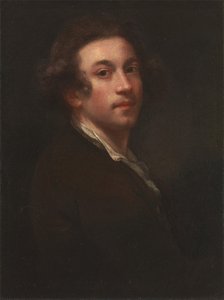
Joshua Reynolds

British b. Plympton Grand Style Wikipedia 31/32

Joshua Reynolds

This period of study allowed him to immerse himself in the works of the Old Masters, absorbing the techniques and compositions that would define his later career.

Trained by Thomas Hudson #67

Key works · Top 100 works

5/ 100

Antonio Canova

Italian b. Possagno Neoclassicism Wikipedia 30/32

Antonio Canova

International Acclaim: Commissions from across Europe, including a statue of Theseus and the Minotaur for Girolamo Zulian (Venetian ambassador to Rome), cemented his status as one of the most celebrated artists in Europe. Notable Sculptures: Beyond those already mentioned, Canova’s significant works include Venus Italica, La Musa Polyhymnia, The Three Graces Dancing, and his poignant depiction of Eurydice.

Key works · Top 100 works

6/ 100

Anton Raphael Mengs

German-Bohemian b. Ústí nad Labem Neoclassical painting Wikipedia 27/32

Anton Raphael Mengs

Born in 1728 in Ústí nad Labem, Bohemia – a region now part of the Czech Republic – his artistic journey was profoundly shaped by both his lineage and the intellectual currents of the Enlightenment. His father, Ismael Mengs, a Danish painter who found patronage at the Dresden court, recognized young Anton’s exceptional talent early on.

Key works · Top 100 works

7/ 100

Angelica Kauffmann

Swiss b. Chur Neoclassical Painting Wikipedia 27/32

Angelica Kauffmann

Her arrival in London marked a transformative chapter; her debut at the Society of Artists in 1765 signaled the emergence of a professional force that would soon reshape the British art scene.

Key works · Top 100 works

8/ 100

Antoine-Jean Gros

French b. Paris Neoclassicism & Romanticism Wikipedia 26/32

Antoine-Jean Gros

While he initially adhered to David's emphasis on precise draftsmanship, clarity of form, and classical subject matter—evident in early works like The Combat of Nazareth (an esquisse that won the Prix de Rome)—he gradually infused his paintings with a heightened sense of drama, emotion, and color.

Trained by Jacques-Louis David #1

Key works · Top 100 works

10/ 100

Anne-Louis Girodet

French b. Montargis Neoclassicism & Romanticism Wikipedia 23/32

Anne-Louis Girodet

Anne-Louis Girodet de Roussy-Trioson, a name perhaps less instantly recognizable than his teacher Jacques-Louis David, nevertheless occupies a pivotal position in the transition from Neoclassicism to Romanticism. Born in Montargis, France, in 1767, Girodet’s artistic journey was one of both rigorous academic training and burgeoning emotional expression —a delicate balance that defined his unique style and secured his place as a significant figure in French art.

Trained by Jacques-Louis David #1

Key works · Top 100 works

11/ 100

Thomas Lawrence

British b. Bristol Regency portraiture Wikipedia 22/32

Thomas Lawrence

Born amidst the bustling port city of Bristol in 1769, Sir Thomas Lawrence emerged as a prodigious talent, a child prodigy whose artistic gifts blossomed with astonishing speed. He quickly established himself as a portrait painter in oils, securing his first royal commission – a portrait of Queen Charlotte in 1789 – and catapulting him into the heart of London society.

Key works · Top 100 works

12/ 100

John Singleton Copley

American-born British b. Boston Neo-Classicism, Rococo Wikipedia 22/32

John Singleton Copley

He did not merely replicate the decorative flourishes of his predecessors; he tempered them with a rigorous, Neo-Classical vision. His most ambitious undertaking in this vein was The Death of Major Peirson, a work that attempted to capture the chaos of the Battle of Jersey.

Key works · Top 100 works

13/ 100

Benjamin West

American b. Springfield Township Neoclassical, Romanticism Wikipedia 19/32

Benjamin West

Other notable pieces like Thetis Bringing the Armor to Achilles, The Three Sisters, The Fright of Astyanax, and The Cave of Despair demonstrate his versatility and mastery across a range of mythological and historical themes.

Trained John Trumbull #24

Key works · Top 100 works

14/ 100

Robert Adam

Scottish b. Kirkcaldy Neoclassical Wikipedia 29/32

Robert Adam

His father, William Adam, was a prominent figure in shaping the Scottish landscape, and young Robert’s initial education wasn't confined to academic pursuits like Latin at Edinburgh’s Royal High School; it was interwoven with the practical realities of building design and construction through apprenticeship under his father’s tutelage.

Trained by Giovanni Battista Piranesi #63

Key works · Top 100 works

16/ 100

Gilbert Stuart

American b. North Kingstown Neoclassical Wikipedia 19/32

Gilbert Stuart

His most famous work is the unfinished portrait of George Washington, known as the Athenaeum Portrait (begun in 1796). He painted portraits of several other prominent figures including John Adams, Thomas Jefferson, James Madison, and many members of the Federalist elite.

Trained Thomas Sully #42

Key works · Top 100 works

17/ 100

Karl Friedrich Schinkel

Prussian b. Neuruppin Neoclassical, Gothic Revival Wikipedia 30/32

Karl Friedrich Schinkel

He received early mentorship under Friedrich Gilly and his father David Gilly, both influential architects in Berlin, absorbing their classical principles while simultaneously encountering more experimental ideas – a crucial blend that shaped his developing aesthetic sensibilities.

Key works · Top 100 works

18/ 100

George Romney

British b. Dalton-in-Furness Romanticism, Neoclassicism Wikipedia 22/32

George Romney

Portrait of Sir Chaloner Ogle, 1st Baronet (1782).

Location The distribution of Romney’s surviving canvases reflects the geographic arc of his life, from his northern roots to his eventual prominence in the capital.

Key works · Top 100 works

19/ 100

Joseph Marie Vien

Spanish b. Montpellier Still-life painting Wikipedia 15/32

Joseph Marie Vien

Born into a family of Kyoto grocers, Jakuchū’s artistic journey began under the tutelage of Ōoka Shunboku, a renowned Kano school artist known for his exquisite bird and flower paintings.

Trained Jacques-Louis David #1

Key works · Top 100 works

20/ 100

Karl Bryullov

b. Saint Petersburg Wikipedia 27/32

Karl Bryullov

His work demonstrates influences from artists like Raphael, Michelangelo, and Caravaggio, particularly in their dramatic use of light and shadow and mastery of anatomical detail. " Princess Yuliya Pavlovna Samoilova Leaving a Ball with Adopted Daughter Amacilia Pacini " (1832) – A stunning example of his portraiture skills.

Key works · Top 100 works

21/ 100

Hubert Robert

French b. Paris Romanticism, Neoclassicism Wikipedia 21/32

Hubert Robert

Born in Paris in 1733, Hubert Robert entered a world where his family's social standing was tied to the service of others. Around 1795, he produced The Grande Galerie, a work that captured a specific, transformative moment in Parisian history.

Location The preservation of Robert’s prolific output is spread across several major international institutions, reflecting the reach of his influence during the late eighteenth century.

Key works · Top 100 works

22/ 100

François Gérard

French b. Rome Rococo Wikipedia 25/32

François Gérard

He immersed himself in the works of Venetian painters like Titian and Veronese, absorbing their vibrant color palettes, dynamic compositions, and masterful use of light.

Trained by Jacques-Louis David #1 · Trained Joseph Karl Stieler #36

Key works · Top 100 works

23/ 100

Pierre Narcisse Guérin

French b. Paris Neoclassical Wikipedia 23/32

Pierre Narcisse Guérin

His influence can be traced through the works of legendary painters such as: Eugène Delacroix, who drew upon Guérin’s dramatic compositions and emotional intensity to pioneer the Romantic movement.

Trained by Jean-Baptiste Regnault #39

Key works · Top 100 works

24/ 100

John Trumbull

American b. Lebanon Historical painting Wikipedia 18/32

John Trumbull

In 1780, he embarked on a journey to London, seeking tutelage under the esteemed Benjamin West, an American expatriate who had achieved prominence as a history painter. Other significant works include The Surrender of Cornwallis at Yorktown, The Surrender of General Burgoyne, and George Washington before the Battle of Trenton.

Trained by Benjamin West #13

Key works · Top 100 works

25/ 100

Samuel Finley Breese Morse

American b. Charlestown Romanticism Wikipedia 32/32

Samuel Finley Breese Morse

Born in Charlestown, Massachusetts, on April 27, 1791, into a family steeped in intellectual and religious fervor – his father, Jedidiah Morse, was a prominent Calvinist minister and geographer – young Samuel’s early life was shaped by a rigorous upbringing that instilled in him a deep sense of purpose.

Key works · Top 100 works

26/ 100

Charles Willson Peale

American b. Chester Neoclassical painting Wikipedia 18/32

Charles Willson Peale

A crucial period in his development was his time studying under Benjamin West in London (1767-1770). The Staircase Group (c. 1795): A striking example of trompe l'oeil, depicting his sons Raphael and Titian as if they were part of the architectural setting.

Key works · Top 100 works

27/ 100

Pierre-Paul Prud'hon

French b. Cluny Neoclassicism & Romanticism Wikipedia 21/32

Pierre-Paul Prud'hon

Revolutionary Allegories: Prud’hon's work gained prominence during the French Revolution, producing vignettes, book illustrations, and allegorical paintings that resonated with republican ideals. Madame Georges Anthony and Her Two Sons (1796): An early example of his portraiture skills, showcasing a refined elegance.

Key works · Top 100 works

28/ 100

Henry Raeburn

Scottish b. Stockbridge Portraiture, Realism Wikipedia 17/32

Henry Raeburn

The Young Polo Player, for example, is not simply a depiction of a sporting gentleman; it’s an energetic snapshot of youthful vitality and aristocratic leisure.

Key works · Top 100 works

29/ 100

Christoffer Wilhelm Eckersberg

Danish b. Blåkrog Neoclassical, Realism Wikipedia 22/32

Christoffer Wilhelm Eckersberg

Christoffer Wilhelm Eckersberg, born in 1783 in the small Duchy of Schleswig – a landscape that would forever imprint itself upon his artistic sensibility – stands as a monumental figure in the history of Danish art.

Trained by Nicolai Abildgaard #30, Jacques-Louis David #1

Key works · Top 100 works

30/ 100

Nicolai Abildgaard

Danish b. Copenhagen Neoclassical & Romanticism Wikipedia 26/32

Nicolai Abildgaard

During these formative years at the Academy, Abildgaard benefited from the tutelage of Johan Edvard Mandelberg and Johannes Wiedewelt, absorbing their techniques and perspectives while simultaneously forging his own unique path.

Trained Christoffer Wilhelm Eckersberg #29

Key works · Top 100 works

31/ 100

Joseph Siffred Duplessis

French b. Carpentras Rococo, Neoclassicism Wikipedia 17/32

Joseph Siffred Duplessis

His appointment as peintre du Roi in 1771, coupled with commissions such as the portrait of the Dauphine, solidified his position at court and ushered in a period of prolific output.

Key works · Top 100 works

32/ 100

John William Godward

b. Wimbledon Wikipedia 21/32

John William Godward

Key Influences: He was heavily influenced by Sir Lawrence Alma-Tadema and Frederic Leighton, both prominent figures in Victorian Neo-Classicism. Royal Academy Exhibitions: Godward first exhibited at the Royal Academy in 1887, marking the beginning of his public recognition.

Key works · Top 100 works

33/ 100

Johann Zoffany

b. Frankfurt Wikipedia 15/32

Johann Zoffany

He was also popular with Austrian imperial family and created a baron of the Holy Roman Empire in 1776 by Empress Maria Theresa. Dr William Hunter Teaching Anatomy at the Royal Academy (1779): A fascinating portrayal of medical education and scientific inquiry.

Key works · Top 100 works

34/ 100

Anselm Feuerbach

German b. Speyer Neoclassical Wikipedia 21/32

Anselm Feuerbach

Anselm Feuerbach (1829-1880) stands as a monumental figure in the tapestry of German Romanticism and Neoclassicism, embodying a rare and harmonious fusion of these two powerful artistic currents.

Key works · Top 100 works

35/ 100

Marcello Bacciarelli

Italian b. Rome ['Late-Baroque', 'Neoclassicism'] Wikipedia 23/32

Marcello Bacciarelli

Baroque Influence: His earlier works reveal influences from the Baroque style, characterized by dramatic lighting and intense colors, a testament to his training under Marco Benefial. Royal Castle in Warsaw: Bacciarelli’s most notable commissions were for King Stanisław II Augustus of Poland, primarily housed within the Royal Castle in Warsaw.

Key works · Top 100 works

36/ 100

Joseph Karl Stieler

German b. Mainz Neoclassical Wikipedia 19/32

Joseph Karl Stieler

In the grand tapestry of nineteenth-century European art, few threads shine with as much refined luster as the works of Joseph Karl Stieler. Born in November 1781 in the historic city of Mainz, Stieler was destined for a life steeped in the meticulous traditions of craftsmanship.

Trained by François Gérard #22

Key works · Top 100 works

37/ 100

François André Vincent

French b. Paris Neoclassical Wikipedia 19/32

François André Vincent

Born in Paris in 1746 into a lineage of artistic distinction—his father, François-Elie Vincent, was a renowned miniaturist—Vincent was destined for a life defined by the brush and the canvas.

Trained by Joseph Marie Vien #19 · Trained Charles Meynier #100

Key works · Top 100 works

38/ 100

Carle Vernet

French b. Bordeaux Neoclassical, Battle scenes Wikipedia 18/32

Carle Vernet

Works like The Battle of Marengo (1804), now housed at Versailles, stand as testaments to this period – vast canvases teeming with soldiers, cavalry charges, and the chaos of battle rendered with remarkable precision and dramatic intensity.

Key works · Top 100 works

39/ 100

Jean-Baptiste Regnault

British b. Paris Landscape painting Wikipedia 19/32

Jean-Baptiste Regnault

Academic Legacy: His role in shaping the aesthetic standards of the French Academy and influencing the trajectory of 19th-century European art.

Trained by Joseph Marie Vien #19 · Trained Louis Hersent #96

Key works · Top 100 works

41/ 100

Louis Léopold Boilly

French b. La Bassée Genre painting, Portraiture Wikipedia 19/32

Louis Léopold Boilly

Largely self-taught, his initial training included trompe-l’oeil painting under Dominique Doncre. The Arrival of a Mail-Coach in the Courtyard of the Messageries – A vibrant depiction of Parisian life and transportation.

Key works · Top 100 works

42/ 100

Thomas Sully

British-American b. Horncastle Romanticism, Neoclassicism Wikipedia 13/32

Thomas Sully

He quickly established himself in Philadelphia, becoming a leading portraitist and capturing the likenesses of prominent figures like Thomas Jefferson, John Quincy Adams, and Andrew Jackson – men who shaped the nation's destiny.

Trained by Gilbert Stuart #16

Key works · Top 100 works

43/ 100

Rembrandt Peale

American b. Bucks County Neoclassicism Wikipedia 10/32

Rembrandt Peale

Rembrandt Peale, born in Bucks County, Pennsylvania, in 1778, emerged from a family deeply entrenched in the burgeoning artistic landscape of early America. The very bestowal of the name “Rembrandt,” echoing the Dutch master Harmenszoon van Rijn, signaled Charles Willson Peale's aspirations for his son—a hope that he would carry forward a tradition of artistic excellence.

Key works · Top 100 works

45/ 100

Joseph Anton Koch

Austrian b. Elbigenalp Neoclassicism & Romanticism Wikipedia 15/32

Joseph Anton Koch

Influenced by the monumental compositions of masters like Nicolas Poussin and Claude Lorrain, Koch developed a unique way of organizing space, where dramatic lighting and vast, rugged terrains created a sense of awe.

Key works · Top 100 works

47/ 100

William Beechey

British b. Burford Portraiture, Neoclassical Wikipedia 14/32

William Beechey

Despite his uncle's aspirations, Beechey gravitated towards painting, an inclination that ultimately led him to London and admission into the Royal Academy Schools in 1772.

Key works · Top 100 works

48/ 100

Adélaïde Labille-Guiard

French b. Paris Rococo to Neoclassicism Wikipedia 20/32

Adélaïde Labille-Guiard

Adélaïde Labille-Guiard (1749–1803) stands as a remarkable figure in the history of French art, not merely for her exquisite portraits but also for her courageous challenge to the restrictive conventions that governed women’s roles within the artistic world. Other notable works include portraits of prominent figures such as Madame Adélaïde and Victoire, the elder sisters of Louis XVI, and numerous studies of drapery, reflecting her technical expertise and keen eye for detail.

Trained by François André Vincent #37

Key works · Top 100 works

50/ 100

John Ramage

Irish-American b. Dublin Portrait Miniatures

John Ramage

Miniature Portraits of Prominent New York Families: Works commissioned by the Pintards, Gerrys, Ludlows, Van Rensselaers, and Van Cortlands, offering glimpses into colonial society.

Key works · Top 100 works

51/ 100

Guillaume Guillon Lethiere

French b. Sainte-Anne Neoclassical Wikipedia 15/32

Guillaume Guillon Lethiere

His father, Pierre Guillon, was a Royal Notary, representing the authority of colonial administration, while his mother, Marie-Françoise Dupepaye, was a woman of African descent, described as free but navigating a world deeply marked by racial prejudice. He then moved to Paris and entered the prestigious Académie Royale de Peinture et de Sculpture, becoming a student of Gabriel François Doyen.

Key works · Top 100 works

53/ 100

David Allan

Scottish b. Alloa Neoclassicism & Rococo Wikipedia 14/32

David Allan

David Allan, born in Alloa, Scotland, in 1744, emerged as a significant figure during a period of profound artistic and intellectual change. This path led him, in 1764, to Rome – a pivotal journey for any aspiring artist of the time.

Key works · Top 100 works

55/ 100

John Hoppner

British b. Whitechapel Wikipedia 15/32

John Hoppner

He was much influenced by Reynolds, adopting a way of working that mirrored the established master's sensibilities. His ability to navigate high-society commissions led to his portraits of the Prince of Wales, the Duke and Duchess of York, Lord Rodney, and Lord Nelson being hung in the state apartments at St James's Palace.

Location Hoppner’s presence in major international collections confirms his reach beyond the British Isles.

Key works · Top 100 works

56/ 100

John Peter Russell

Australian b. Darlinghurst Impressionism Wikipedia 16/32

John Peter Russell

Born in Sydney in 1858, Russell's path diverged from the typical colonial trajectory when, at eighteen, he embarked for Europe – initially to pursue engineering, but swiftly drawn into the vibrant world of art. His early education at Goulburn School provided a foundation, yet it was his studies under Alphonse Legros at the Slade School of Fine Art in London (1881-1883) that truly ignited his artistic ambitions.

Key works · Top 100 works

57/ 100

Jonathan Richardson the Elder

English Portraiture

Jonathan Richardson the Elder

Botolph parish on January 12th, 1667, Richardson’s journey was one shaped by both personal hardship and an extraordinary intellectual curiosity. Influenced by the dramatic chiaroscuro of Rembrandt and the meticulous observation found in the works of later masters like Wright of Derby, Richardson possessed a unique ability to capture the quiet dignity of his subjects.

Key works · Top 100 works

58/ 100

Jacques Laurent Agasse

Swiss b. Geneva Romanticism Wikipedia 16/32

Jacques Laurent Agasse

Born in Geneva amidst the burgeoning Enlightenment, Agasse’s artistic journey began with formal training at the École des Beaux-Arts de Genève, establishing him firmly within the classical tradition. His work garnered considerable acclaim during his lifetime and continues to inspire admiration for its technical brilliance and artistic integrity.

Key works · Top 100 works

59/ 100

Anton Graff

Swiss b. Winterthur Neoclassical painting Wikipedia 19/32

Anton Graff

Anton Graff, born in Winterthur, Switzerland in 1736, emerged as one of the most celebrated portraitists of his era—a period defined by the Enlightenment’s intellectual fervor and the burgeoning Neoclassical aesthetic. Graff's beginnings were humble; he received his initial training in Winterthur under Johann Ulrich Schellenberg before venturing to Augsburg where his talent quickly outpaced the local guild’s comfort level.

Key works · Top 100 works

60/ 100

Fyodor Alekseyev

Russian b. Saint Petersburg Neoclassical Wikipedia 16/32

Fyodor Alekseyev

Fedor Yakovlevich Alekseev (1753-1824) stands as a cornerstone of 18th-century Russian art, recognized primarily for his breathtaking depictions of Moscow and St.

Key works · Top 100 works

61/ 100

Jean-Baptiste Pigalle

French b. Tournus Baroque & Neoclassical

Jean-Baptiste Pigalle

Born in Tournus, France, in 1714, Jean-Baptiste Pigalle emerged as a pivotal figure in the transition between the exuberant drama of the Baroque and the emerging clarity of Neoclassicism. He honed his skills in Lyon before moving to Paris, immersing himself in the study of live models at the Royal Academy – though his early efforts weren’t universally acclaimed, hinting at the independent spirit that would define his trajectory.

Key works · Top 100 works

62/ 100

Auguste Couder

French b. London Neoclassical, Historical painting Wikipedia 13/32

Auguste Couder

This period saw Couder honing his skills in portraiture too, demonstrating an exceptional ability to capture not only physical likeness but also the inner character of his subjects. Perhaps his most renowned painting is the Siege of Yorktown (1781), a vivid depiction of a pivotal moment in the American Revolutionary War.

Key works · Top 100 works

63/ 100

Giovanni Battista Piranesi

b. Mogliano Veneto

Giovanni Battista Piranesi

This tendency toward the monumental reflects the Neoclassical movement’s fascination with classical architecture, yet his hand was never purely clinical.

Key works · Top 100 works

64/ 100

Marguerite Gérard

French b. Grasse Genre painting, Rococo Wikipedia 15/32

Marguerite Gérard

The atmosphere within the Fragonard household was undoubtedly stimulating, a crucible where artistic talent could flourish.

Key works · Top 100 works

65/ 100

Louis Jean François Lagrenée

French b. Paris Rococo, Neoclassical

Louis Jean François Lagrenée

It is impossible to discuss Louis-Jean-François Lagrenée without acknowledging the parallel career of his younger brother, Jean-Jacques Lagrenée.

Key works · Top 100 works

66/ 100

Johann Georg Edlinger

Austrian b. Graz Rembrandtian portraiture

Johann Georg Edlinger

Johann (Josef) Georg Edlinger, born in the Austrian city of Graz on March 1st, 1741, emerged from a modest background—his father was a gardener named Josef Edlinger, and his mother, Therese. His portraits of eminent Bavarians were engraved by Friedrich John and published in 1821 under the title Sammlung von Bildnissen denkwürdiger Männer.

Key works · Top 100 works

68/ 100

Paul Sandby

English b. Nottingham Landscape Painting

Paul Sandby

Born in Nottingham to Thomas Sandby, a textile worker, Paul’s early life was marked by self-education and an innate fascination with observation—qualities that would prove instrumental in shaping his extraordinary career as both a mapmaker and painter.

Key works · Top 100 works

69/ 100

Fyodor Stepanovich Rokotov

Russian b. Moscow Psychological Portrait

Fyodor Stepanovich Rokotov

In the grand, sweeping tapestry of eighteenth-century Russian art, where many painters sought to capture the sheer opulence of the Romanov era through gilded frames and theatrical grandeur, Fyodor Stepanovich Rokotov emerged as a singular, introspective voice.

Key works · Top 100 works

70/ 100

Gavin Hamilton

Scottish b. Lanarkshire Neoclassical Wikipedia 10/32

Gavin Hamilton

Andromache Bewailing the Death of Hector: In this poignant scene, Hamilton explores the depths of grief, using the classical setting to universalize the personal loss of a widow.

Key works · Top 100 works

73/ 100

Anselm Friedrich Feuerbach

German b. Speyer Neoclassicism, Romanticism

Anselm Friedrich Feuerbach

Feuerbach stands as a leading figure of German Neoclassicism, yet to categorize him solely within that framework would be an oversimplification. Hafiz at the Fountain, created during his Parisian period in 1852, is an early masterpiece demonstrating his burgeoning style and fascination with exotic subjects.

Key works · Top 100 works

74/ 100

Jean-Baptiste Isabey

French b. Nancy First Empire, Restoration, Portraiture Wikipedia 17/32

Jean-Baptiste Isabey

Whether working on a tiny head for a breast-pin or a sweeping portrait of an Emperor, his technique balanced grandeur with meticulous precision.

Trained by Jacques-Louis David #1

Key works · Top 100 works

75/ 100

Jens Juel

English b. Balslev Parish English school Wikipedia 17/32

Jens Juel

At just twenty years old, Juel moved to Copenhagen to attend the Royal Danish Academy of Art, where his brilliance was quickly recognized.

Key works · Top 100 works

76/ 100

Johann Baptist von Lampi the Elder

Austrian-Italian b. Romeno Neoclassical Wikipedia 14/32

Johann Baptist von Lampi the Elder

It was in these regions that he began to synthesize the dramatic flair of the Italian Baroque with the more restrained, disciplined precepts of Neoclassicism.

Key works · Top 100 works

77/ 100

François Marius Granet

French b. Aix-en-Provence Tonal Painting Wikipedia 12/32

François Marius Granet

François Marius Granet, born in Aix-en-Provence on December 17, 1775, emerged from humble beginnings.

Trained by Jacques-Louis David #1

Key works · Top 100 works

80/ 100

Sarah Goodridge

American b. Templeton Portrait miniatures Wikipedia 14/32

Sarah Goodridge

In the quiet, industrious landscape of early nineteenth-century New England, a singular talent emerged from the shadows of economic hardship to redefine the intimacy of American portraiture. Sarah Goodridge (1788–1853) was not merely a painter; she was a pioneer who navigated the rigid social constraints of her era to become one of the most accomplished miniaturists of her time.

Key works · Top 100 works

81/ 100

Étienne Maurice Falconet

French b. Paris Baroque, Rococo, Neoclassical

Étienne Maurice Falconet

Étienne Maurice Falconet stands as a pivotal figure in the late Baroque, Rococo, and early Neoclassical periods of French sculpture. Born in Paris in 1716, his journey from a humble apprenticeship to becoming one of the most celebrated artists of his time is a testament to talent, ambition, and an extraordinary ability to capture both power and grace.

Key works · Top 100 works

82/ 100

George Dawe

English b. St James's Neoclassicism and Romanticism

George Dawe

In many respects, his work can be viewed through the lenses of both Neoclassicism and Romanticism: Neoclassical Precision: In works such as his portrait of Dmitry V.

Key works · Top 100 works

84/ 100

Jan Adam Kruseman

Dutch b. Haarlem Realism Wikipedia 10/32

Jan Adam Kruseman

Jan Adam Kruseman (February 12, 1804 – March 17, 1862) stands as a pivotal figure in 19th-century Dutch art history —a painter celebrated for his meticulous portraits that captured the essence of aristocratic life and established him as one of the era’s foremost realist artists.

Key works · Top 100 works

86/ 100

Adolf Ulrik Wertmüller

Swedish b. Stockholm Neoclassical Painting Wikipedia 10/32

Adolf Ulrik Wertmüller

Adolf Ulrik Wertmüller (1751-1811) stands as a pivotal figure in Swedish art history, recognized primarily for his elegant portraits—particularly those depicting royalty—and his groundbreaking exploration of female nudes within the burgeoning neoclassical movement.

Trained by Joseph Marie Vien #19

Key works · Top 100 works

87/ 100

Georges Rouget

French Neoclassical

Georges Rouget

Born into the burgeoning energy of late 18th-century Paris, Marie-Georges Louis Rouget was destined to become a silent architect of visual history. His journey began within the prestigious halls of the École des Beaux-Arts, where he first learned the rigors of classical form under masters such as Jean-Victor Carrier Sabre and Alexandre François Bouchardy.

Key works · Top 100 works

88/ 100

Massimo d'Azeglio

Italian b. Turin Romanticism Wikipedia 17/32

Massimo d'Azeglio

Born into a noble Piedmontese family in Turin in 1798, Massimo d'Azeglio’s early life was shaped by both aristocratic privilege and a burgeoning artistic sensibility.

Key works · Top 100 works

89/ 100

Francisco Bayeu Y Subias

Spanish b. Zaragoza Neoclassical

Francisco Bayeu Y Subias

Born in the historic city of Zaragoza in 1734, Bayeu emerged not merely as a painter, but as a central architect of the Spanish Neoclassical aesthetic. Through his studies at the Academia Real de Bellas Artes de San Fernando, Bayeu began to shed the heavy shadows of the past in favor of a more luminous, structured clarity.

Key works · Top 100 works

90/ 100

William Henry Pyne

English b. London Romanticism

William Henry Pyne

In the vibrant, shifting landscape of late Georgian and early Victorian England, few artists captured the pulse of national identity as intimately as William Henry Pyne. Born in London in 1769, Pyne emerged from the intellectual ferment of the Enlightenment to become much more than a mere painter; he was a writer, an illustrator, and a meticulous observer of the social fabric.

Key works · Top 100 works

93/ 100

Charles Lock Eastlake

British b. Plymouth Neoclassical, Romanticism Wikipedia 11/32

Charles Lock Eastlake

Born in the coastal reaches of Plymouth, Sir Charles Lock Eastlake was a man whose life was an intricate tapestry of artistic creation and scholarly devotion. As the son of an Admiralty lawyer, his early years were steeped in the traditions of England, yet his spirit wandered toward the sublime landscapes of the Mediterranean.

Key works · Top 100 works

94/ 100

Albert Ernest Carrier Belleuse

French b. Anizy-le-Château Neoclassical & Realist

Albert Ernest Carrier Belleuse

In the vibrant, shifting landscape of nineteenth-century French art, few figures possessed the versatility and technical mastery of Albert Ernest Carrier Belleuse. Born in 1824 in Anizy-le-Château, his journey into the world of fine art began not with the grand marble of academies, but with the delicate, precise hands of a goldsmith’s apprentice.

Key works · Top 100 works

95/ 100

William Hamilton

British b. Chelsea Rococo Painting Style

William Hamilton

In the vibrant, intellectually charged atmosphere of Georgian Britain, few figures embodied the era's unique synthesis of aesthetic grace and scientific rigor quite like William Hamilton. Born in Chelsea, London, in 1751, Hamilton was far more than a mere painter; he was a true polymath whose life’s work bridged the gap between the delicate nuances of Neoclassical art and the precise observations of natural science.

Key works · Top 100 works

96/ 100

Louis Hersent

French b. Paris Neoclassicism Wikipedia 14/32

Louis Hersent

Hersent’s historical paintings, such as Peter I Of Russia And Louis XV Of France, similarly demonstrate his ability to depict grand narratives with clarity and dramatic impact.

Trained by Jacques-Louis David #1, Jean-Baptiste Regnault #39 · Trained Hippolyte Flandrin #54

Key works · Top 100 works

99/ 100

James Peale

American b. Chestertown Neoclassical Wikipedia 9/32

James Peale

James Peale, born in the burgeoning colonial landscape of Chestertown, Maryland, in 1749, occupies a fascinating, often understated position within the pantheon of early American art. It was upon Charles’ return from London, having studied under Benjamin West, that James found his true calling, becoming his brother's assistant and embarking on a path of formal artistic training.

Key works · Top 100 works

Best-known works

Famous Neoclassicist paintings by artist

  1. The Oath of the Horatii by Jacques-Louis David

    The Oath of the Horatii

    Jacques-Louis David

    1784 · The Louvre, Paris

  2. The Vow of Louis XIII by Jean-Auguste-Dominique Ingres

    The Vow of Louis XIII

    Jean-Auguste-Dominique Ingres

    1824 · Cathedral of Notre-Dame, Montauban

  3. Queen Marie-Antoinette great court dress, a rose in hand by Élisabeth Louise Vigée Le Brun

    Queen Marie-Antoinette great court dress, a rose in hand

    Élisabeth Louise Vigée Le Brun

  4. Admiral Paul Henry Ourry (1719–1783), MP, with 'Jersey' by Joshua Reynolds

    Admiral Paul Henry Ourry (1719–1783), MP, with 'Jersey'

    Joshua Reynolds

    1748 · National Trust, Plymouth

  5. Cupid and Psyche by Antonio Canova

    Cupid and Psyche

    Antonio Canova

    1793 · The Louvre, Paris

  6. Parnassus (study) by Anton Raphael Mengs

    Parnassus (study)

    Anton Raphael Mengs

    1760 · Hermitage Museum, Saint Petersburg

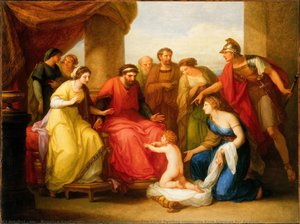
  7. The Child Pyrrhos imploring King Glaucus for Asylum by Angelica Kauffmann

    The Child Pyrrhos imploring King Glaucus for Asylum

    Angelica Kauffmann

    1794 · Szépművészeti Múzeum, Budapest

Chronology

Neoclassicist chronology

  1. 1748
  2. 1761
  3. 1763
  4. 1768
  5. 1773
  6. 1782
  7. 1784
  8. 1789
  9. 1794
  10. 1796
  11. 1809
  12. 1814
  13. 1817
  14. 1820

Statistics

Counts by country, period and museum

Index

Full list of 100 famous Neoclassicist artists

  1. 1Jacques-Louis DavidJacques-Louis DavidFrench · 1748–1825
  2. 2Jean-Auguste-Dominique IngresJean-Auguste-Dominique IngresFrench · 1780–1867
  3. 3Élisabeth Louise Vigée Le BrunÉlisabeth Louise Vigée Le BrunFrench · 1755–1842
  4. 4Joshua ReynoldsJoshua ReynoldsBritish · 1723–1792
  5. 5Antonio CanovaAntonio CanovaItalian · 1757–1822
  6. 6Anton Raphael MengsAnton Raphael MengsGerman-Bohemian · 1728–1779
  7. 7Angelica KauffmannAngelica KauffmannSwiss · 1741–1807
  8. 8Antoine-Jean GrosAntoine-Jean GrosFrench · 1771–1835
  9. 9Bertel ThorvaldsenBertel Thorvaldsen1770–1844
  10. 10Anne-Louis GirodetAnne-Louis GirodetFrench · 1767–1824
  11. 11Thomas LawrenceThomas LawrenceBritish · 1769–1830
  12. 12John Singleton CopleyJohn Singleton CopleyAmerican-born British · 1738–1815
  13. 13Benjamin WestBenjamin WestAmerican · 1738–1820
  14. 14Robert AdamRobert AdamScottish · 1728–1792
  15. 15Pompeo BatoniPompeo BatoniItalian · 1708–1787
  16. 16Gilbert StuartGilbert StuartAmerican · 1755–1828
  17. 17Karl Friedrich SchinkelKarl Friedrich SchinkelPrussian · 1781–1841
  18. 18George RomneyGeorge RomneyBritish · 1734–1802
  19. 19Joseph Marie VienJoseph Marie VienSpanish · 1716–1809
  20. 20Karl BryullovKarl Bryullov1799–1852
  21. 21Hubert RobertHubert RobertFrench · 1733–1808
  22. 22François GérardFrançois GérardFrench · 1770–1837
  23. 23Pierre Narcisse GuérinPierre Narcisse GuérinFrench · 1774–1833
  24. 24John TrumbullJohn TrumbullAmerican · 1756–1843
  25. 25Samuel Finley Breese MorseSamuel Finley Breese MorseAmerican · 1791–1872
  26. 26Charles Willson PealeCharles Willson PealeAmerican · 1741–1827
  27. 27Pierre-Paul Prud'honPierre-Paul Prud'honFrench · 1758–1823
  28. 28Henry RaeburnHenry RaeburnScottish · 1756–1823
  29. 29Christoffer Wilhelm EckersbergChristoffer Wilhelm EckersbergDanish · 1783–1853
  30. 30Nicolai AbildgaardNicolai AbildgaardDanish · 1743–1809
  31. 31Joseph Siffred DuplessisJoseph Siffred DuplessisFrench · 1725–1802
  32. 32John William GodwardJohn William Godward1861–1922
  33. 33Johann ZoffanyJohann Zoffany1733–1810
  34. 34Anselm FeuerbachAnselm FeuerbachGerman · 1829–1880
  35. 35Marcello BacciarelliMarcello BacciarelliItalian · 1731–1818
  36. 36Joseph Karl StielerJoseph Karl StielerGerman · 1781–1858
  37. 37François André VincentFrançois André VincentFrench · 1746–1816
  38. 38Carle VernetCarle VernetFrench · 1758–1836
  39. 39Jean-Baptiste RegnaultJean-Baptiste RegnaultBritish · 1754–1829
  40. 40William SalterWilliam SalterBritish · 1804–1875
  41. 41Louis Léopold BoillyLouis Léopold BoillyFrench · 1761–1845
  42. 42Thomas SullyThomas SullyBritish-American · 1783–1872
  43. 43Rembrandt PealeRembrandt PealeAmerican · 1778–1860
  44. 44Herbert James DraperHerbert James DraperBritish · 1863–1920
  45. 45Joseph Anton KochJoseph Anton KochAustrian · 1768–1839
  46. 46Jean-Antoine HoudonJean-Antoine HoudonFrench · 1741–1828
  47. 47William BeecheyWilliam BeecheyBritish · 1753–1839
  48. 48Adélaïde Labille-GuiardAdélaïde Labille-GuiardFrench · 1749–1803
  49. 49Johann Heinrich Wilhelm TischbeinJohann Heinrich Wilhelm TischbeinBritish · 1751–1829
  50. 50John RamageJohn RamageIrish-American · 1748–1802
  51. 51Guillaume Guillon LethiereGuillaume Guillon LethiereFrench · 1760–1832
  52. 52Andrea AppianiAndrea AppianiItalian · 1754–1817
  53. 53David AllanDavid AllanScottish · 1744–1796
  54. 54Hippolyte FlandrinHippolyte FlandrinFrench · 1809–1864
  55. 55John HoppnerJohn HoppnerBritish · 1758–1810
  56. 56John Peter RussellJohn Peter RussellAustralian · 1858–1930
  57. 57Jonathan Richardson the ElderJonathan Richardson the ElderEnglish · 1667–1745
  58. 58Jacques Laurent AgasseJacques Laurent AgasseSwiss · 1767–1849
  59. 59Anton GraffAnton GraffSwiss · 1736–1813
  60. 60Fyodor AlekseyevFyodor AlekseyevRussian · 1755–1824
  61. 61Jean-Baptiste PigalleJean-Baptiste PigalleFrench · 1725–1805
  62. 62Auguste CouderAuguste CouderFrench · 1789–1873
  63. 63Giovanni Battista PiranesiGiovanni Battista Piranesi1720–1778
  64. 64Marguerite GérardMarguerite GérardFrench · 1761–1837
  65. 65Louis Jean François LagrenéeLouis Jean François LagrenéeFrench · 1756–1827
  66. 66Johann Georg EdlingerJohann Georg EdlingerAustrian · 1741–1819
  67. 67Thomas HudsonThomas Hudson1701–1779
  68. 68Paul SandbyPaul SandbyEnglish · 1798–1863
  69. 69Fyodor Stepanovich RokotovFyodor Stepanovich RokotovRussian · 1730–1808
  70. 70Gavin HamiltonGavin HamiltonScottish · 1723–1798
  71. 71Joseph Benoit SuvéeJoseph Benoit SuvéeDanish · 1743–1807
  72. 72Thomas PhillipsThomas PhillipsBritish · 1770–1845
  73. 73Anselm Friedrich FeuerbachAnselm Friedrich FeuerbachGerman · 1829–1880
  74. 74Jean-Baptiste IsabeyJean-Baptiste IsabeyFrench · 1767–1855
  75. 75Jens JuelJens JuelEnglish · 1745–1802
  76. 76Johann Baptist von Lampi the ElderJohann Baptist von Lampi the ElderAustrian-Italian · 1751–1830
  77. 77François Marius GranetFrançois Marius GranetFrench · 1775–1849
  78. 78Vincenzo CamucciniVincenzo CamucciniItalian · 1771–1844
  79. 79Lemuel Francis AbbottLemuel Francis AbbottEnglish · 1760–1802
  80. 80Sarah GoodridgeSarah GoodridgeAmerican · 1788–1853
  81. 81Étienne Maurice FalconetÉtienne Maurice FalconetFrench · 1716–1791
  82. 82George DaweGeorge DaweEnglish · 1781–1829
  83. 83Alexandre Denis Abel de PujolAlexandre Denis Abel de PujolFrench · 1825–1861
  84. 84Jan Adam KrusemanJan Adam KrusemanDutch · 1804–1862
  85. 85Benjamin WilsonBenjamin WilsonBritish · 1721–1788
  86. 86Adolf Ulrik WertmüllerAdolf Ulrik WertmüllerSwedish · 1751–1811
  87. 87Georges RougetGeorges RougetFrench · 1783–1869
  88. 88Massimo d'AzeglioMassimo d'AzeglioItalian · 1798–1866
  89. 89Francisco Bayeu Y SubiasFrancisco Bayeu Y SubiasSpanish · 1734–1795
  90. 90William Henry PyneWilliam Henry PyneEnglish · 1769–1843
  91. 91Sir Martin Archer SheeSir Martin Archer SheeIrish · 1769–1850
  92. 92Jean Baptiste Ii LemoyneJean Baptiste Ii Lemoyne1704–1778
  93. 93Charles Lock EastlakeCharles Lock EastlakeBritish · 1793–1865
  94. 94Albert Ernest Carrier BelleuseAlbert Ernest Carrier BelleuseFrench · 1824–1887
  95. 95William HamiltonWilliam HamiltonBritish · 1751–1801
  96. 96Louis HersentLouis HersentFrench · 1777–1860
  97. 97Augustus Saint-GaudensAugustus Saint-GaudensIrish-American · 1848–1907
  98. 98James BarryJames BarryIrish · 1799–1865
  99. 99James PealeJames PealeAmerican · 1749–1831
  100. 100Charles MeynierCharles MeynierFrench · 1763–1832

FAQ

Neoclassicist: quick answers

Guides

AllPaintingsStore.com guides

Other lists

Famous artists by movement

By period

Famous artists by period

Famous paintings

Famous paintings by movement

Related lists

Related rankings