Money-Back Guarantee · 100 days Free Worldwide Delivery
646,759artworks 53,420artists 5,406museums 32languages

The Expressionist shortlist

Famous Expressionist Painters — Top 100 List

Wassily Kandinsky (1866–1944) is the most famous Expressionist painter, best known for Composition VIII and Several Circles, Solomon R. G. Then Edvard Munch, Jean Michel Basquiat, Paul Klee and Jackson Pollock. The list covers 100 painters born between 1849 and 1960 in 31 countries, from Christian Rohlfs to Jean Michel Basquiat.

Method. Scope: artists filed under Expressionist in our catalogue. Order: our artist fame ranking. Excluded: artists born after 1955 without a Wikidata identifier. Wikipedia figure: languages with an article, out of our 32.

  1. Composition VIII by Wassily Kandinsky1Wassily Kandinsky
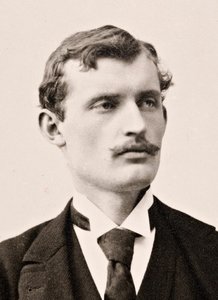
  2. Madonna by Edvard Munch2Edvard Munch
  3. Untitled - Skull, (Broad Collection, LA) by Jean Michel Basquiat3Jean Michel Basquiat

Key data

Expressionist: key data

  • 100Artists
  • 1849–1960Years of birth
  • 31Countries of birth
  • 10Women
  • 6Living artists
  • 16,739Works in our catalogue
Cities with most births
Vienna (3), Berlin (3), New York City (3), Dresden (2)

Ranked list

100 Expressionist Painters, ranked with key works

1/ 100

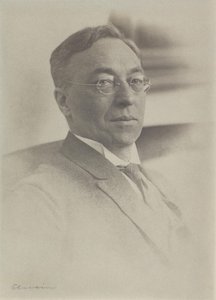
Wassily Kandinsky

Russian b. Moscow ['Expressionism', 'Abstract painting', 'Der Blaue Reiter'] Wikipedia 32/32
Wassily Kandinsky

He sought out the Anton Ažbe School and the Academy of Fine Arts to learn the mechanics of his chosen craft. In 1903, he painted The Blue Rider, a work where a dark-blue cloaked figure rides a horse through a sparse, verdant landscape.

Location His canvases are scattered across several major institutions, inviting a close look at how his use of color and form evolved.

Key works · Top 100 works

2/ 100

Edvard Munch

Norwegian b. Ådalsbruk ['Expressionism', 'Symbolism']

Edvard Munch

Munch did not aim to replicate the physical world as it appeared to the eye. Munch sought to capture the recurring cycles of human existence through a series of works he called The Frieze of Life.

Location The Munch Museum is the primary guardian of his legacy, housing a vast collection that spans the full range of his artistic output.

Key works · Top 100 works

3/ 100

Jean Michel Basquiat

American b. Park Slope Neo-Expressionism Wikipedia 29/32

Jean Michel Basquiat

By the early 1980s, Basquiat transitioned from graffiti to canvas, rapidly gaining recognition within the New York art world. Here are some defining works that encapsulate Basquiat’s artistic vision: Untitled (Skull): A powerful representation of mortality and the African diaspora, achieving record-breaking auction prices.

Key works · Top 100 works

4/ 100

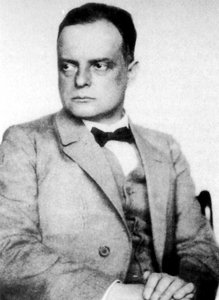
Paul Klee

German and Swiss b. Münchenbuchsee Expressionism, Cubism, Surrealism Wikipedia 31/32

Paul Klee

Klee was a natural draftsman who possessed a deep, almost scientific understanding of color theory. In 1915, he painted Woman Knitting, a piece that captures a sense of quiet, rhythmic movement.

Location To find the traces of his prolific output, one might travel to Bern, Switzerland.

Key works · Top 100 works

5/ 100

Jackson Pollock

American b. Cody Abstract Expressionism Wikipedia 31/32

Jackson Pollock

By 1947, a profound shift had taken hold in the way he approached the canvas. This approach is evident in Number 1, 1949, a work that captures a raw outpouring of energy, and in Lavender Mist, Number 1, 1950, which remains a significant piece of his output.

Location In New York City, the Museum of Modern Art holds several of his canvases, allowing viewers to stand before the sprawling, uncentered compositions that defined his era.

Key works · Top 100 works

6/ 100

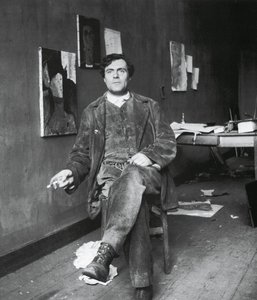
Amedeo Modigliani

Italian b. Livorno Expressionism Wikipedia 32/32

Amedeo Modigliani

In 1907, he also attended the Paul Gauguin retrospective at the Salon d'Automne, an event that left a mark on his developing vision.

Location In the United States, the Metropolitan Museum of Art in New York holds significant pieces, including a portrait of Jeanne Hebuterne from 1918.

Key works · Top 100 works

7/ 100

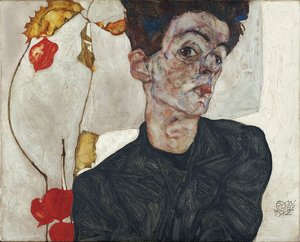
Egon Schiele

Austrian b. Tulln an der Donau Austrian Expressionism Wikipedia 32/32

Egon Schiele

Portrait of the Art Critic, Arthur Roessler, 1910. In 1915, he paints Portrait of Edith Schiele, capturing his wife in a way that reflects his specific expressive language.

Location The weight of Schiele’s output is felt most heavily in Vienna.

Key works · Top 100 works

8/ 100

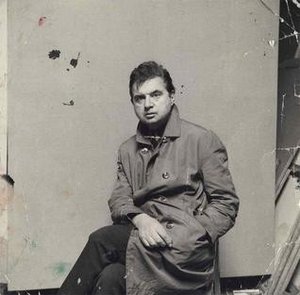
Francis Bacon

Irish b. Dublin Expressionism, Cubism, Surrealism Wikipedia 30/32

Francis Bacon

Three Studies for Figures at the Base of a Crucifixion (1944). In 1945, he exhibited Three Studies for Figures at the Base of a Crucifixion, a work that helped establish his reputation.

Key works · Top 100 works

10/ 100

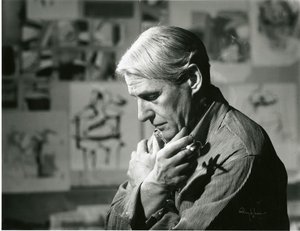
Willem de Kooning

Dutch-American b. Rotterdam Abstract Expressionism Wikipedia 30/32

Willem de Kooning

From his teenage years until 1924, he attends these classes in Rotterdam, balancing the demands of work with the study of formal art. Around 1938, he produces Two Standing Men, a work that captures a sense of the figure before the total dismantling of form takes hold.

Key works · Top 100 works

13/ 100

Franz Marc

German b. Kreuzstraße German Expressionism Wikipedia 31/32

Franz Marc

His time in France, specifically during visits to Paris in 1903 and 1907, acted as a catalyst for this departure. In 1911, he produced The Large Blue Horses, a work that established his preference for non-naturalistic color.

Location The Franz Marc Museum in Kochel am See, Germany, functions as a primary site for his legacy, housing over 150 of his works.

Key works · Top 100 works

14/ 100

Oskar Kokoschka

Austrian, Czech, British b. Pöchlarn Expressionism, Viennese Avant-Garde Wikipedia 29/32

Oskar Kokoschka

He developed a nervously animated style, using bold lines and imagery that drew inspiration from Medieval compositions. In his early years, this manifested in works like The Dreaming Boys, painted about 1908, which showed a departure from the polished realism of his contemporaries.

Key works · Top 100 works

15/ 100

Ernst Ludwig Kirchner

German b. Aschaffenburg German Expressionism Wikipedia 32/32

Ernst Ludwig Kirchner

This transient existence saw the family living in Frankfurt/Main from 1886, following a period spent in Perlen near Lucerne, Switzerland, between 1887 and 1889. This piece, along with his 1919 oil painting Der Maler, Selbstporträt, reveals a man confronting his own vulnerability through a piercing, intense gaze.

Location The physical presence of Kirchner’s vision is scattered across several major institutions, reflecting the international reach of his influence.

Key works · Top 100 works

16/ 100

Arshile Gorky

Armenian-American b. Dilkaya Abstract Expressionism, Surrealism Wikipedia 24/32

Arshile Gorky

His practice was not confined to the classroom; he spent much of his time at the Museums of Fine Arts, Boston, studying the old masters. This tendency to pull from the past is evident in the Nighttime, Enigma, and Nostalgia series, created between 1930 and 1934.

Location To see the physical traces of his hand, one might travel to Washington, D.C.

Key works · Top 100 works

17/ 100

Emil Nolde

German-Danish b. Nolde German Expressionism Wikipedia 28/32

Emil Nolde

His parents were Danish and Frisian peasants, and the rhythms of rural life shaped his early years. In 1912, he produced Man, Woman and Cat, a work that reflects his interest in the forms of objects and figures.

Location Tracing his presence in public collections reveals a scattered but significant trail.

Key works · Top 100 works

18/ 100

Otto Dix

German b. Untermhaus ['Neue Sachlichkeit', 'Dadaism', 'Expressionism'] Wikipedia 28/32

Otto Dix

Dix enters an apprenticeship under the painter Carl Senff, a period of study that lasts until 1910. Portrait of the Journalist Sylvia Von Harden, painted in 1926, captures the specific character of the era.

Location The physical presence of Dix’s vision remains scattered across major international institutions.

Key works · Top 100 works

19/ 100

James Ensor

Belgian b. Ostend ['Symbolism', 'Expressionism'] Wikipedia 25/32

James Ensor

His identity was shaped by a specific cultural intersection: his father, James Frederic Ensor, was born in Brussels to English parents, while his mother, Maria Catherina Haegheman, was Belgian. His 1882 work The Oyster Eater demonstrates a different facet of his ability to handle light and color, depicting his sister Mitche in a scene that challenged the conservative sensibilities of the Antwerp Salon.

Location Ensor’s presence in major international collections confirms his lasting impact on the development of modernism.

Key works · Top 100 works

21/ 100

Max Beckmann

German b. Leipzig Expressionism, New Objectivity Wikipedia 27/32

Max Beckmann

As he matured, Beckmann found himself drawn to the Old Masters.

Location Finding the physical traces of Beckmann's life requires traveling through the cities that shaped his exile and his later years.

Key works · Top 100 works

23/ 100

Anselm Kiefer

German b. Donaueschingen Neo-Expressionism Wikipedia 23/32

Anselm Kiefer

Anselm Kiefer stands as one of the most profound and distinctive voices within Neo-Expressionism, an artistic movement that emerged in the late 1970s and early 1980s as a powerful reaction against the austerity of Minimalism and Conceptual Art. Born in Donaueschingen, Germany, in 1945, Kiefer’s very existence is inextricably linked to the aftermath of World War II.

Key works · Top 100 works

24/ 100

Lucian Freud

British b. Berlin Realism, Figurative art Wikipedia 23/32

Lucian Freud

Works like Girl with a Kitten (1947) demonstrate this early development, while later pieces such as Benefits Supervisor Sleeping (1995) exemplify his mature style—an unflinching gaze upon the human condition.

Key works · Top 100 works

26/ 100

Georges Rouault

French b. 19th arrondissement of Paris Expressionism, Fauvism Wikipedia 23/32

Georges Rouault

Georges Rouault, born in Paris in 1871 amidst the turmoil of the Commune, lived a life deeply etched by hardship and spiritual seeking. He simultaneously pursued formal training at the École des Beaux-Arts, where he became a devoted pupil of Gustave Moreau, whose Symbolist leanings further nurtured Rouault's inclination towards emotionally charged subject matter.

Key works · Top 100 works

29/ 100

Helen Frankenthaler

American b. Manhattan Abstract Expressionism, Color Field Wikipedia 19/32

Helen Frankenthaler

While celebrated for her pioneering work with stain painting, Helen Frankenthaler was an artist of relentless experimentation.

Trained by Hans Hofmann #72

Key works · Top 100 works

31/ 100

Lyonel Feininger

German-American b. New York City Expressionism, Cubism Wikipedia 23/32

Lyonel Feininger

Notable Works: Some of his significant works include " Werder I " (watercolor), " Gaberndorf II " (paper), and " Boats " (cubism, oil on canvas). Early Marine Paintings: During summer vacations on the island of Usedom (1909-1918), Feininger created numerous marine paintings depicting the Baltic Sea, showcasing his evolving style.

Key works · Top 100 works

32/ 100

Barnett Newman

American b. New York City Abstract Expressionism Wikipedia 23/32

Barnett Newman

Barnett Newman, born in 1905 in New York City to Jewish immigrant parents from Poland, emerged as a pivotal figure in the landscape of American art. Initially studying at the Art Students League and later at the City College of New York, Newman absorbed the influences of his time – the burgeoning Cubism of Picasso and the vibrant color palettes of Matisse were early touchstones.

Key works · Top 100 works

33/ 100

František Kupka

Czech b. Opočno ['Realism', 'Symbolism', 'Orphism', 'Cubism', 'Abstraction'] Wikipedia 24/32

František Kupka

By 1906, he had settled in Puteaux, a suburb of Paris. His 1911 work, Disks of Newton, Study for Fugue in Two Colors, shows an interest in the intersection of scientific observation and musical rhythm.

Location To see his canvases in person, one might travel to New York City.

Key works · Top 100 works

34/ 100

Paula Modersohn-Becker

German b. Dresden Expressionism Wikipedia 24/32

Paula Modersohn-Becker

Born Minna Hermine Paula Becker on February 8, 1876, in Dresden, Germany, her life was tragically short – she passed away November 30, 1907, in Worpswede – yet within those three decades, she forged a path of remarkable artistic innovation and personal courage.

Key works · Top 100 works

37/ 100

Lee Krasner

American b. Brooklyn Abstract Expressionism Wikipedia 17/32

Lee Krasner

Born Lena Krassner on October 27, 1908, in the vibrant streets of Brooklyn, New York, the woman who would become Lee Krasner emerged as a transformative force within the landscape of American modernism.

Key works · Top 100 works

39/ 100

Hans Hartung

German-French b. Leipzig Gestural Abstract Expressionism Wikipedia 15/32

Hans Hartung

His formative years were steeped in the emotive power of European Expressionism, drawing strength from the works of Rembrandt and the raw, visceral energy of German painters such as Lovis Corinth and Emil Nolde.

Key works · Top 100 works

41/ 100

Robert Motherwell

American b. Aberdeen Abstract Expressionism Wikipedia 16/32

Robert Motherwell

The Surrealist Encounter: A pivotal moment arrived in 1940 when Motherwell relocated to New York City and enrolled at Columbia University under Meyer Shapiro’s guidance.

Trained Cy Twombly #30

Key works · Top 100 works

42/ 100

Franz Kline

American b. Wilkes-Barre Abstract Expressionism Wikipedia 17/32

Franz Kline

De Kooning suggested projecting one of Kline’s sketches onto a wall using a Bell-Opticon projector – an act that dramatically enlarged and transformed the image, reducing it to its essential strokes.

Trained Cy Twombly #30

Key works · Top 100 works

45/ 100

August Macke

German b. Meschede Expressionism, Fauvism, Orphism, Cubism Wikipedia 28/32

August Macke

He found a way to weave the dynamism of Italian Futurism into his compositions, imbuing his scenes with a sense of movement and modern energy. In 1913, he produced Woman in a Green Jacket, a work that radiates a certain vitality through its bold palette and confident brushwork.

Location To walk through the rooms where his spirit remains, one might travel to Bonn, Germany.

Key works · Top 100 works

46/ 100

Alexej von Jawlensky

Russian b. Torzhok Expressionism Wikipedia 23/32

Alexej von Jawlensky

He began to strip away the unnecessary, focusing on the essential shapes and colors that define his unique visual language. 1908: View of Murnau Village. 1909: The Yellow House.

Location Finding the traces of Jawlensky's life requires traveling through several European cities where his presence remains felt.

Key works · Top 100 works

48/ 100

Lovis Corinth

German b. Gvardeysk Impressionism & Expressionism Wikipedia 24/32

Lovis Corinth

Paintings like “In the Slaughterhouse” (1878), with its unflinching depiction of animal carcasses, demonstrate this commitment to realistic representation, yet even here, a nascent emotional intensity begins to surface. Female Semi-Nude with Hat (1906): Demonstrates Corinth’s ability to blend classical motifs with impressionistic techniques, creating a sensuous and psychologically compelling portrait.

Key works · Top 100 works

52/ 100

Stanisław Ignacy Witkiewicz

Polish b. Warsaw Symbolism, Surrealism Wikipedia 27/32

Stanisław Ignacy Witkiewicz

Stanisław Ignacy Witkiewicz, known to most as Witkacy, remains a pivotal yet often enigmatic figure in the landscape of 20th-century art. His tragic death in 1939, upon learning of the Soviet invasion of Poland, cemented his status as a symbol of artistic integrity and resistance against oppressive forces.

Key works · Top 100 works

55/ 100

Marianne von Werefkin

Russian-German-Swiss b. Tula Expressionism, Symbolism Wikipedia 21/32

Marianne von Werefkin

It was in Munich that Werefkin truly came into her own, becoming a central figure in a vibrant circle of artists including Wassily Kandinsky, Alexej von Jawlensky, Gabriele Münter, and Franz Marc – individuals who would collectively shape the landscape of early Expressionism. Fantastic Night (circa 1906-1907): A tempera painting that blends reality with fantasy, demonstrating her move towards Expressionism.

Key works · Top 100 works

58/ 100

Nadežda Petrović

Serbian b. Čačak Expressionism & Fauvism Wikipedia 27/32

Nadežda Petrović

Nadežda Petrović (Serbian Cyrillic: Надежда Петровић; 11/12 October 1873 – 3 April 1915) was a Serbian painter and one of the women war photography pioneers in the region. Among her most celebrated works are “ Ksenija Atanasijević,” a portrait imbued with melancholic beauty and psychological depth, and “ Gračanica Monastery,” which exemplifies her masterful use of color and texture to depict Serbian Orthodox spirituality.

Key works · Top 100 works

60/ 100

Constant Permeke

Belgian b. Antwerp Flemish Expressionism Wikipedia 16/32

Constant Permeke

Constant Permeke, born in Antwerp in 1886, stands as a monumental figure in Belgian art history – not merely as a painter and sculptor, but as the very embodiment of Flemish Expressionism. He initially pursued formal studies at the Bruges Academy (1903-1906) and later at the Ghent Academy (1906-1908), but found himself increasingly stifled by traditional methods.

Key works · Top 100 works

62/ 100

Christian Rohlfs

German b. Groß Niendorf Expressionism Wikipedia 15/32

Christian Rohlfs

Patroclus in Soest ” (1912) reveal his fascination with architectural forms and their symbolic weight, while " The Temptation of Christ " (1914) showcases his exploration of religious narratives through an Expressionist lens.

Key works · Top 100 works

63/ 100

Wilhelm Lehmbruck

German b. Duisburg Expressionism

Wilhelm Lehmbruck

Wilhelm Lehmbruck (1881-1919) stands as a pivotal figure in German sculpture, embodying the spirit of Expressionism while retaining an undeniable connection to Naturalistic principles. Lehmbruck’s journey into art began with studies at the School of Applied Arts in Düsseldorf, fueled by a generous municipal stipend, allowing him to pursue his passion for sculpture alongside broader artistic explorations.

Key works · Top 100 works

64/ 100

Ossip Zadkine

Russian-French b. Vitebsk Cubism, Modernism Wikipedia 23/32

Ossip Zadkine

Initially, Zadkine embraced Cubism from 1914 to 1925, demonstrating a clear understanding of its principles in his early works. The Destroyed City (1951-1953): Arguably Zadkine’s most famous work, this powerful sculpture serves as a memorial to the devastation of Rotterdam during World War II.

Key works · Top 100 works

67/ 100

Richard Diebenkorn

American b. Portland ['Abstract Expressionism', 'Bay Area Figurative', 'Lyrical Abstraction'] Wikipedia 9/32

Richard Diebenkorn

This innate passion led him to Stanford University in 1940, where he encountered pivotal mentors like Victor Arnautoff, who instilled a rigorous classical discipline with oil paint, and Daniel Mendelowitz, who shared his admiration for the evocative realism of Edward Hopper.

Key works · Top 100 works

71/ 100

Aaron Siskind

American b. New York Abstract Expressionism

Aaron Siskind

Aaron Siskind, born in the vibrant heart of New York City in 1903, stands as a pivotal figure in American photography—a bridge between the documentary impulse and the burgeoning world of Abstract Expressionism.

Key works · Top 100 works

72/ 100

Hans Hofmann

German-American b. Weißenburg in Bayern Abstract Expressionism Wikipedia 14/32

Hans Hofmann

Arriving in 1904, Hofmann immersed himself in the vibrant avant-garde scene, forging friendships with luminaries like Matisse, Picasso, Braque, and Delaunay. However, with the rise of political unrest in Europe, Hofmann made a pivotal decision in 1932: he emigrated to the United States, permanently settling and bringing his European modernist sensibility to American shores.

Key works · Top 100 works

76/ 100

Jean-Paul Riopelle

Canadian b. Montreal Lyrical Abstraction Wikipedia 14/32

Jean-Paul Riopelle

Move to Paris (1947): His relocation to Paris proved transformative, leading to his first solo exhibition at Galerie La Dragonne in 1949. La Joute: A significant sculptural work featuring a fountain with alternating water jets and fire elements, originally installed at the Olympic Park in Montreal.

Key works · Top 100 works

77/ 100

Gabriele Münter

German b. Berlin Expressionism Wikipedia 18/32

Gabriele Münter

From early training to her pivotal role in Der Blaue Reiter (The Blue Rider), Münter’s life was inextricably linked with artistic exploration and a commitment to pushing the boundaries of what painting could be.

Trained by Wassily Kandinsky #1

Key works · Top 100 works

80/ 100

Ad Reinhardt

American b. Buffalo Abstract Expressionism, Minimalism Wikipedia 12/32

Ad Reinhardt

Ad Reinhardt, born Adolph Friedrich Reinhardt in Buffalo, New York, on December 24, 1913, was a figure who dedicated his life not merely to creating art, but to defining what art could be.

Key works · Top 100 works

84/ 100

Heinrich Campendonk

German/Dutch b. Krefeld Der Blaue Reiter Wikipedia 13/32

Heinrich Campendonk

Born in Krefeld, Germany, in 1889, into a family connected to the textile industry – a world of intricate patterns and vibrant hues – Campendonk’s artistic journey began not with formal training but with an apprenticeship, a grounding in craft that would later inform his deeply symbolic approach.

Key works · Top 100 works

88/ 100

Wilhelm Morgner

German b. Soest Expressionism Wikipedia 11/32

Wilhelm Morgner

Born on January 27, 1891, in the Westphalian town of Soest, Morgner’s life was a short but brilliant arc of creative evolution, cut tragically short by the ravages of war. Morgner’s journey into the heart of the avant-garde began in 1908, when, guided by the wisdom of Otto Modersohn, he moved to the renowned artists' colony of Worpswede.

Key works · Top 100 works

92/ 100

Armand Schonberger

French Cubism

Armand Schonberger

Armand Schonberger (1885–1974) stands as a captivating figure in the tapestry of early 20th-century modernism, a painter whose brush bridged the delicate light of Impressionism with the fractured, rhythmic energy of Cubism. Born in Galgóc and later finding his artistic soul within the vibrant bohemian circles of Munich and Budapest, Schonberger’s life was a continuous dialogue between tradition and the avant-garde.

Key works · Top 100 works

93/ 100

Werner Peiner

German b. Dusseldorf New Objectivity & Realism

Werner Peiner

Werner Peiner (20 July 1897 – 19 August 1984) was a German painter whose artistic journey spanned from the expressive currents of early Expressionism to the increasingly formalized aesthetic dictated by the Third Reich, ultimately cementing his position as one of its most prominent official artists.

Key works · Top 100 works

95/ 100

Frits Van Den Berghe

Belgian b. Ghent Expressionism, Surrealism Wikipedia 10/32

Frits Van Den Berghe

Frits Van den Berghe died in Ghent in 1939, leaving behind a rich and complex body of work that continues to captivate viewers with its haunting beauty and psychological depth.

Key works · Top 100 works

97/ 100

Etel Adnan

American b. Beirut ['Assemblage', 'Pop Art', 'Neo-Dada'] Wikipedia 17/32

Etel Adnan

al-hallaj, qasaid, a piece showcasing her experimentation with japanese paper, is a testament to her versatility. her visual art, often characterized by its abstract and introspective nature, reflects her poetic inclinations. view more of ethel n. adnan's works on AllPaintingsStore: [https://AllPaintingsStore.com/@/ethel-n-adnan](https://AllPaintingsStore.com/@/ethel-n-adnan).

Key works · Top 100 works

99/ 100

Mstislav Dobuzhinsky

Russian-Lithuanian b. Novgorod Expressionism, Cityscapes

Mstislav Dobuzhinsky

Born in Novgorod and carrying Lithuanian heritage, he carved out a unique artistic voice defined by a haunting exploration of urban decay, industrial landscapes, and the psychological toll of modernity. “ October Idyll ” (1905) is a particularly striking example of his expressive style, depicting a brutal urban scene of violence and poverty rendered in bold lines and intense reds – a testament to the unsettling realities of industrial Russia.

Key works · Top 100 works

Best-known works

Famous Expressionist paintings by artist

  1. Composition VIII by Wassily Kandinsky

    Composition VIII

    Wassily Kandinsky

    1923 · Solomon R. Guggenheim Museum, New York City

  2. Madonna by Edvard Munch

    Madonna

    Edvard Munch

    1894 · Munch Museum, Oslo

  3. Untitled - Skull, (Broad Collection, LA) by Jean Michel Basquiat

    Untitled - Skull, (Broad Collection, LA)

    Jean Michel Basquiat

    1981

  4. Woman Knitting by Paul Klee

    Woman Knitting

    Paul Klee

    1915 · Boca Raton Museum of Art

  5. One. Number 31, 1950 by Jackson Pollock

    One. Number 31, 1950

    Jackson Pollock

  6. Reclining Nude with Loose Hair by Amedeo Modigliani

    Reclining Nude with Loose Hair

    Amedeo Modigliani

    1917

  7. Death and the Maiden by Egon Schiele

    Death and the Maiden

    Egon Schiele

    1915 · Austrian Gallery Belvedere, Vienna

Chronology

Expressionist chronology

  1. 1887
  2. 1908
  3. 1909
  4. 1915
  5. 1917
  6. 1917
  7. 1921
  8. 1933
  9. 1944
  10. 1949
  11. 1950
  12. 1965
  13. 1966
  14. 1967

Statistics

Counts by country, period and museum

Index

Full list of 100 famous Expressionist painters

  1. 1Wassily KandinskyWassily KandinskyRussian · 1866–1944
  2. 2Edvard MunchEdvard MunchNorwegian · 1863–1944
  3. 3Jean Michel BasquiatJean Michel BasquiatAmerican · 1960–1988
  4. 4Paul KleePaul KleeGerman and Swiss · 1879–1940
  5. 5Jackson PollockJackson PollockAmerican · 1912–1956
  6. 6Amedeo ModiglianiAmedeo ModiglianiItalian · 1884–1920
  7. 7Egon SchieleEgon SchieleAustrian · 1890–1918
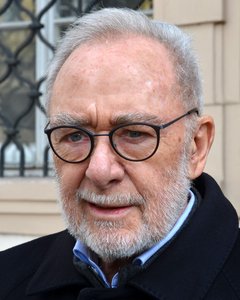
  8. 8Francis BaconFrancis BaconIrish · 1909–1992
  9. 9Gerhard RichterGerhard RichterGerman · born 1932
  10. 10Willem de KooningWillem de KooningDutch-American · 1904–1997
  11. 11Jasper JohnsJasper JohnsAmerican · born 1930
  12. 12Mark RothkoMark RothkoAmerican · 1903–1970
  13. 13Franz MarcFranz MarcGerman · 1880–1916
  14. 14Oskar KokoschkaOskar KokoschkaAustrian, Czech, British · 1886–1980
  15. 15Ernst Ludwig KirchnerErnst Ludwig KirchnerGerman · 1880–1938
  16. 16Arshile GorkyArshile GorkyArmenian-American · 1904–1948
  17. 17Emil NoldeEmil NoldeGerman-Danish · 1867–1956
  18. 18Otto DixOtto DixGerman · 1891–1969
  19. 19James EnsorJames EnsorBelgian · 1860–1949
  20. 20Chaim SoutineChaim SoutineFrench · 1893–1943
  21. 21Max BeckmannMax BeckmannGerman · 1884–1950
  22. 22Friedensreich HundertwasserFriedensreich HundertwasserAustrian · 1928–2000
  23. 23Anselm KieferAnselm KieferGerman · born 1945
  24. 24Lucian FreudLucian FreudBritish · 1922–2011
  25. 25Käthe KollwitzKäthe KollwitzGerman · 1867–1945
  26. 26Georges RouaultGeorges RouaultFrench · 1871–1958
  27. 27Alexander CalderAlexander CalderScottish-American · 1898–1976
  28. 28David Alfaro SiqueirosDavid Alfaro SiqueirosMexican · 1896–1974
  29. 29Helen FrankenthalerHelen FrankenthalerAmerican · 1928–2011
  30. 30Cy TwomblyCy TwomblyAmerican · 1928–2011
  31. 31Lyonel FeiningerLyonel FeiningerGerman-American · 1871–1956
  32. 32Barnett NewmanBarnett NewmanAmerican · 1905–1970
  33. 33František KupkaFrantišek KupkaCzech · 1871–1957
  34. 34Paula Modersohn-BeckerPaula Modersohn-BeckerGerman · 1876–1907
  35. 35Julian SchnabelJulian SchnabelAmerican · born 1951
  36. 36Georg BaselitzGeorg BaselitzGerman · 1938–2026
  37. 37Lee KrasnerLee KrasnerAmerican · 1908–1984
  38. 38Karl Schmidt-RottluffKarl Schmidt-RottluffGerman · 1884–1976
  39. 39Hans HartungHans HartungGerman-French · 1904–1989
  40. 40Frank AuerbachFrank AuerbachBritish · 1931–2024
  41. 41Robert MotherwellRobert MotherwellAmerican · 1915–1991
  42. 42Franz KlineFranz KlineAmerican · 1910–1962
  43. 43Peter DoigPeter DoigScottish · born 1959
  44. 44M.F. HusainM.F. HusainIndian · 1915–2011
  45. 45August MackeAugust MackeGerman · 1887–1914
  46. 46Alexej von JawlenskyAlexej von JawlenskyRussian · 1864–1941
  47. 47Philip GustonPhilip GustonCanadian-American · 1913–1980
  48. 48Lovis CorinthLovis CorinthGerman · 1858–1925
  49. 49Alice NeelAlice NeelAmerican · 1900–1984
  50. 50Zao Wou-KiZao Wou-Ki1920–2013
  51. 51Johannes IttenJohannes IttenSwiss · 1888–1967
  52. 52Stanisław Ignacy WitkiewiczStanisław Ignacy WitkiewiczPolish · 1885–1939
  53. 53Erich HeckelErich HeckelGerman · 1883–1970
  54. 54Arnold SchoenbergArnold SchoenbergAustrian-American · 1874–1951
  55. 55Marianne von WerefkinMarianne von WerefkinRussian-German-Swiss · 1860–1938
  56. 56Max PechsteinMax PechsteinSpanish · 1881–1955
  57. 57Vilmos Aba-NovakVilmos Aba-NovakHungarian · 1894–1941
  58. 58Nadežda PetrovićNadežda PetrovićSerbian · 1873–1915
  59. 59Otto MuellerOtto MuellerGerman · 1874–1930
  60. 60Constant PermekeConstant PermekeBelgian · 1886–1952
  61. 61Jules PascinJules Pascin1885–1930
  62. 62Christian RohlfsChristian RohlfsGerman · 1849–1938
  63. 63Wilhelm LehmbruckWilhelm LehmbruckGerman · 1881–1919
  64. 64Ossip ZadkineOssip ZadkineRussian-French · 1888–1967
  65. 65Clyfford StillClyfford StillAmerican · 1904–1980
  66. 66Richard GerstlRichard GerstlAustrian · 1883–1908
  67. 67Richard DiebenkornRichard DiebenkornAmerican · 1922–1993
  68. 68John MarinJohn MarinAmerican · 1870–1953
  69. 69Charles Henry SimsCharles Henry SimsBritish · 1873–1928
  70. 70Yannis TsarouchisYannis TsarouchisGreek · 1910–1989
  71. 71Aaron SiskindAaron SiskindAmerican · 1903–1991
  72. 72Hans HofmannHans HofmannGerman-American · 1880–1966
  73. 73Arthur SegalArthur SegalRomanian · 1875–1944
  74. 74Albin Egger-LienzAlbin Egger-Lienz1868–1926
  75. 75Adolph GottliebAdolph GottliebAmerican · 1903–1974
  76. 76Jean-Paul RiopelleJean-Paul RiopelleCanadian · 1923–2002
  77. 77Gabriele MünterGabriele MünterGerman · 1877–1962
  78. 78Yoo YoungkukYoo YoungkukKorean · 1916–2002
  79. 79Wojciech WeissWojciech WeissPolish · 1875–1950
  80. 80Ad ReinhardtAd ReinhardtAmerican · 1913–1967
  81. 81Karl BlossfeldtKarl BlossfeldtGerman · 1865–1932
  82. 82Max KurzweilMax KurzweilAustrian · 1867–1916
  83. 83Bernard BuffetBernard BuffetFrench · 1928–1999
  84. 84Heinrich CampendonkHeinrich CampendonkGerman/Dutch · 1889–1957
  85. 85Mark TobeyMark TobeyAmerican · 1890–1976
  86. 86John BellanyJohn BellanyScottish · 1942–2013
  87. 87Jan SluijtersJan SluijtersDutch · 1881–1957
  88. 88Wilhelm MorgnerWilhelm MorgnerGerman · 1891–1917
  89. 89Paul JenkinsPaul JenkinsAmerican · 1923–2012
  90. 90Kerry James MarshallKerry James MarshallAmerican · born 1955
  91. 91Gustave De SmetGustave De SmetBelgian · 1877–1943
  92. 92Armand SchonbergerArmand SchonbergerFrench · 1885–1974
  93. 93Werner PeinerWerner PeinerGerman · 1897–1984
  94. 94Mary AscherMary AscherBritish · 1900–1988
  95. 95Frits Van Den BergheFrits Van Den BergheBelgian · 1883–1939
  96. 96Ernst BarlachErnst Barlach1870–1938
  97. 97Etel AdnanEtel AdnanAmerican · 1925–2021
  98. 98Lynd WardLynd WardAmerican · 1905–1985
  99. 99Mstislav DobuzhinskyMstislav DobuzhinskyRussian-Lithuanian · 1875–1957
  100. 100Heinrich NauenHeinrich NauenGerman · 1880–1940

FAQ

Expressionist: quick answers

Guides

AllPaintingsStore.com guides

Other lists

Famous artists by movement

By period

Famous artists by period

Famous paintings

Famous paintings by movement

Related lists

Related rankings