- Home

- Oil Painting Reproduction
- Max Beckmann
- Great Scene of Agony

 Buy print
 Send
Send Share
Share
 Details

 Download
 Similars
 X-Ray
X-Ray Diaporama
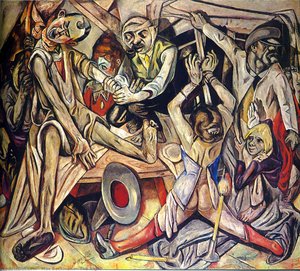
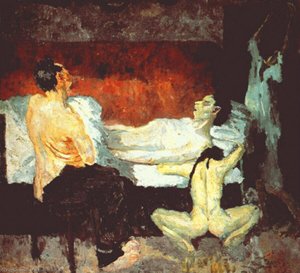
Great Scene of Agony
 Oil On Canvas
- WallArt
- Expressionism
 1906
1906- Modern
 141.0 x 131.0 cm
 Read More
Hand Made Oil Reproduction
Hand-painted oil on canvas in your size and frame, made to order by our artists.




P118B $10

P118H $10

P118W $10

P438Z $10

P508JH $12

P508YH $12

P805H $10

P805Z $10

P919BZ $10

P919G $10

P919XJ $10

P959ZH $10

P968JZ $12

W106C $8

W218G $10

W218JH $8

W218Y $10

W307PJ $10

W316G $10

W316PJ $8

W316Y $10

W398PJ $8

W4111J $10

W500HY $15

W500JH $15

W692G $12

W849H $8

W940BG $15

W953PJ $8




Pick from our preset sizes that match the artwork's original proportions.

You may enter your own dimensions to fit a specific frame or space. If your selected size does not match the original image's proportions, we will either crop the artwork or extend the painting with additional hand-painted elements. A digital mockup will be sent for your approval before production begins.
Please note that the on-screen preview does not reflect the actual cropping or extension. Only the mockup will accurately show the final composition.
While custom sizes are available, we recommend selecting a dimension from the predefined list to preserve the original proportions.
After order, AllPaintingsStore.com team will email client for instructions and provide a mockup preview
Worldwide Delivery () in 3/4 weeks instead of standard 5 weeks. (16 July). No compromise on quality.

Free Worldwide Express Shipping

High-Quality Linen Canvas

Full Shipping Insurance

Customs Tax Refund Guarantee

True Color Matching Guarantee

60-Day Return Policy (Defects Only)

100% Money-Back Guarantee

Bulk Discount Offer
 Glass option is only available in size under 110 CM

Great Scene of Agony
Reproduction Medium
Reproduction Size
-


Total Price
-
Artwork Description
A Haunting Vision of Human Condition
Painted in 1906, this powerful work by Max Beckmann stands as a pivotal example of early Expressionism, foreshadowing the anxieties and psychological explorations that would define much of 20th-century art. More than just a depiction of figures, it’s a visceral exploration of vulnerability, isolation, and perhaps even mortality.
Subject & Composition: Intimacy and Unease
The canvas presents three nude male figures within an ambiguous interior space. A seated figure dominates the foreground, facing a reclining form that evokes fragility and exhaustion. A third, spectral figure stands partially obscured, adding to the scene’s unsettling atmosphere. The composition is deliberately unbalanced; the triangular arrangement feels precarious, mirroring the emotional instability at the heart of the work. This dynamic arrangement, coupled with the figures' intertwined yet distant poses, suggests a complex relationship – are they companions in suffering, observers of despair, or fragmented aspects of a single psyche?
Expressionist Style & Technique: Raw Emotion on Canvas
Beckmann’s masterful use of Expressionist techniques amplifies the painting’s emotional impact. He eschews precise representation in favor of distorted forms and bold brushwork. The thick impasto – layers of paint applied with visible texture – creates a tactile surface that conveys physicality and raw energy. A muted palette of browns, ochres, grays, and greens reinforces the somber mood, while touches of blue-green offer only fleeting contrast. This deliberate restraint in color serves to heighten the sense of unease and psychological tension.
Historical Context: Precursors to a Troubled Era
Created on the cusp of profound societal upheaval, this artwork reflects the growing anxieties of early 20th-century Europe. While predating the full horrors of World War I, it anticipates the disillusionment and existential questioning that would characterize the post-war period. Beckmann’s work, even at this early stage, demonstrates a rejection of traditional artistic conventions in favor of expressing inner psychological states – a hallmark of the burgeoning Expressionist movement.
Symbolism & Interpretation: Layers of Meaning
The symbolism within the painting is open to interpretation, inviting viewers to engage with its emotional core. The reclining figure’s pallor and limp posture suggest illness or death, while the ethereal quality of the standing figure hints at memory, a spirit, or an internal aspect of one of the other figures. The lack of a clear narrative allows for personal resonance; each viewer can project their own experiences and interpretations onto this haunting scene.
Emotional Impact & Lasting Legacy
“Great Scene of Agony” is not merely a painting to be observed, but an experience to be felt. Its power lies in its ability to evoke a sense of melancholy, contemplation, and even anxiety. As a cornerstone of Beckmann’s oeuvre and a significant work within the Expressionist canon, this piece continues to captivate and challenge audiences today. Owning a reproduction allows you to bring this emotionally resonant artwork into your space, sparking conversation and offering a poignant reflection on the human condition.
Related Artworks


Artist Biography
early life and artistic development
max beckmann, a renowned german painter, draftsman, printmaker, sculptor, and writer, was born on february 12, 1884, in leipzig, saxony. his artistic journey began with academically correct depictions, which later transformed into distorted figures and spaces, reflecting his altered vision of humanity after serving as a medical orderly in world war i.artistic style and influences
beckmann's style, rooted in the imagery of medieval stained glass, was influenced by various artists, including cézanne, van gogh, blake, rembrandt, and rubens. he also drew inspiration from northern european artists of the late middle ages and early renaissance, such as bosch, bruegel, and matthias grünewald.notable works and exhibitions
* the bark (acquired by the national gallery in berlin) * self-portrait in tuxedo (purchased in 1928) * retrospectives at the städtische kunsthalle mannheim (1928) and in basle and zurich (1930)later life and exile
beckmann's fortunes changed with the rise of adolf hitler, leading to his dismissal from the art school in frankfurt and the confiscation of over 500 of his works. he lived in self-imposed exile in amsterdam for ten years, failing to obtain a visa for the united states.legacy
* taught at the art schools of washington university in st. louis and the brooklyn museum * first retrospective in the united states took place in 1948 at the city art museum, saint louis * max-slevogt galerie, germany, features a collection of his works key dates: * born: february 12, 1884 * died: december 27, 1950
Max Beckmann
1884 - 1950 , Germany
Quick Facts
- Artistic Movement Or Style: Expressionism
- Artists Or Movements Influenced By This Artist:
- Rembrandt
- Bosch
- Artists Who Influenced This Artist:
- Georges Seurat
- Vincent van Gogh
- Date Of Birth: February 12, 1884
- Date Of Death: December 27, 1950
- Full Name: Max Carl Friedrich Beckmann
- Nationality: German
- Notable Artworks:
- The Bark
- Self-Portrait in Tuxedo
- Place Of Birth: Leipzig, Germany
Related Articles
Figurative Expressionism: Emotional Intensity & Subjective Reality in 20th-Century Art
Explore the powerful world of Figurative Expressionism with AllPaintingsStore. Discover key artists like Kirchner & Beckmann, understand its emotional depth, and learn how to collect this influential 20th-century art movement.
The Eloquent Body: A Historical & Artistic Exploration of Figures in Painting & Sculpture
Explore the rich history of figure painting & sculpture! Discover classical masterpieces, modern interpretations, and expert insights for art lovers & collectors. AllPaintingsStore offers museum-quality reproductions.

Max Beckmann: Navigating Trauma & Modernity Through a Distorted Lens
Explore the powerful world of Max Beckmann's art – a journey through trauma, modernity & distortion. Discover his key works, influences, and lasting legacy with expert analysis.

The Eloquent Form: A Historical & Aesthetic Exploration of the Nude in Art
Explore the captivating history of the nude in art! From ancient Greece to modern masters, discover its evolving symbolism, techniques & enduring beauty. Expert insights for collectors and enthusiasts.

The Enduring Appeal of Figurative Painting: A Historical Survey of Representation, Emotion & Modern Interpretations
Explore the rich history of figurative painting, from ancient masterpieces to contemporary works. Discover key movements, artists & techniques shaping this enduring art form. Expert insights for collectors and enthusiasts.