Money-Back Guarantee · 100 days Free Worldwide Delivery
646,759artworks 53,420artists 5,406museums 32languages

Top list · Romanticism

Famous Romanticism Paintings: The Top 100

1771 – 1895

Ask for the most famous Romanticism paintings and you will hear of Eugène Delacroix's Liberty Leading the People (1830, Musée du Louvre), Francisco Goya's Saturn Devouring His Son (1819–1823, Museo del Prado), Théodore Géricault's The Raft of the Medusa (1818, The Louvre), Eugène Delacroix's Liberty Leading the People (1831, The Louvre) and John Constable's The Hay Wain (1821, National Gallery). Below, all 100 of them — painted from 1771 to 1895 by 53 artists — with their date, their size and the museum that keeps them.

Liberty Leading the People by Eugène Delacroix, 1830, Musée du Louvre — famous Romanticism painting
No. 1 · Eugène DelacroixLiberty Leading the People1830 · Musée du Louvre, Paris
100paintings
53painters listed · Joseph Wright of Derby – Ivan Aivazovsky
47museums, 28 cities
9held at the The Louvre

Top 100

Famous Romanticism paintings, No. 1 to No. 100

Artist, date, original size, museum and the price of a reproduction for every painting.

  1. Liberty Leading the People by Eugène Delacroix, 1830, Musée du Louvre
    1

    260 × 325 cm1830Oil on canvasMusée du Louvre, Paris

    The painting dramatically portrays the July Revolution of 1830 – a three-day uprising against King Charles X’s reactionary policies. Delacroix doesn't offer a detached observation; he plunges us directly into the heart of the conflict, amidst smoke, rubble, and determined revolutionaries. The Worker with a Saber: Symbolizing the working class’s vital role in the uprising. Due to its scale and emotional weight, Liberty Leading the People requires a prominent display.

    Detailsallegorical figure of Libertybarricadediverse group of revolutionaries

    Oil painting from $170 Print — from $42

  2. Saturn Devouring His Son by Francisco Goya, 1819–1823, Museo del Prado
    2

    143.5 × 81.4 cm1819–1823Oil on canvasMuseo del Prado, Madrid

    Departing from the Neoclassical conventions of his earlier career, Goya embraced the burgeoning Romantic movement, prioritizing emotional intensity and subjective experience over idealized form. Goya’s interpretation is far from a classical rendering; it's a brutal and terrifying scene.

    Detailspowertyrannydestruction

    Oil painting from $170 Print — from $42

  3. The Raft of the Medusa by Théodore Géricault, 1818, The Louvre
    3

    491 × 716 cm1818Oil on canvasThe Louvre, Paris

    The sinking of the Méduse wasn’t simply a nautical accident. Géricault’s artistic approach is firmly rooted in the burgeoning Romantic movement, rejecting Neoclassical restraint for raw emotion and dramatic intensity.

    Detailsshipwreck of the Méduse frigatesurvivors adriftpolitical scandal

    Oil painting from $320 Print — from $42

  4. Liberty Leading the People by Eugène Delacroix, 1831, The Louvre
    4

    260 × 325 cm1831Oil on canvasThe Louvre, Paris

    Painted in 1830, this monumental piece commemorates the July Revolution that toppled King Charles X, marking a pivotal moment in French history. The emotional impact is palpable—expressions of determination and anguish convey the high stakes and intensity of the moment.

    Detailsmixed social classes among revolutionariesdramatic use of light and shadowred flag of the French Revolution

    Oil painting from $320 Print — from $42

  5. The Hay Wain by John Constable, 1821, National Gallery
    5

    130 × 185 cm1821Oil on canvasNational Gallery, London

    Rooted firmly within the Romantic movement, this artwork exemplifies the era’s fascination with nature and emotion. As industrialization rapidly transformed the nation, artists like Constable turned to the countryside as a source of solace and inspiration.

    Detailshorse-drawn cartcottagedramatic sky

    Oil painting from $170 Print — from $42

  6. The Third of May 1808 (Execution of the Defenders of Madrid) by Francisco Goya, 1814, Museo del Prado
    6

    266 × 345 cm1814Oil on canvasMuseo del Prado, Madrid

    In response to the uprising, the French executed hundreds of Spanish insurgents and civilians. Embracing the tenets of Romanticism, Goya eschews Neoclassical ideals of order and restraint in favor of raw emotion and dramatic intensity.

    Detailsfaceless soldierscentral figure with raised armsdramatic lighting

    Oil painting from $345 Print — from $42

  7. Wanderer above the Sea of Fog by Caspar David Friedrich, 1818, Hamburger Kunsthalle
    7

    94.8 × 74.8 cm1818Oil on canvasHamburger Kunsthalle

    The landscape itself is imbued with symbolic significance. “Wanderer above the Sea of Fog” emerged during a pivotal moment in European intellectual history—the early 19th century—when artists and writers were actively challenging Enlightenment dogma.

    Oil painting from $170 Print — from $42

  8. The Third of May by Francisco Goya, 1808
    8

    1808Oil on canvas

    When Spanish citizens bravely revolted against the French occupation, Napoleon responded with ruthless retribution. On May 3rd, hundreds of suspected rebels were summarily executed – a calculated act of terror designed to crush Spanish defiance.

    Detailsfaceless firing squadlantern lightcorpses

    Oil painting from $220 Print — from $42

  9. The Ninth Wave by Ivan Aivazovsky, 1850
    9

    221 × 332 cm1850Oil on canvas

    The composition is dominated by turbulent waves and a fiery sky, creating a sense of chaos and impending danger. The Ninth Wave reflects the Romantic movement's emphasis on emotion, drama, and the sublime power of nature.

    Detailssmall boat struggling against overwhelming forceschristian metaphor for salvation from earthly sinturbulent waves and intense, fiery sky

    Oil painting from $170 Print — from $42

  10. NIGHTMARE (THE INCUBUS) by Henry Fuseli, 1781, Detroit Institute of Arts
    10

    101 × 127 cm1781Oil on canvasDetroit Institute of Arts

    The central figure is a woman in deep sleep, her body contorted in an unnatural position that suggests distress or fear. The painting reflects the folkloric beliefs of the time, particularly Germanic tales about demons and witches that tormented sleepers.

    Detailsthe contorted pose of the sleeping womanthe demonic incubus crouching on her chestthe spectral horse emerging from the curtains

    Oil painting from $170 Print — from $42

  11. The Kiss by Francesco Hayez, 1859, Pinacoteca di Brera
    11

    112 × 88 cm1859Oil on canvasPinacoteca di Brera, Milan

    However, the painting’s power lies in its meticulously constructed composition. The color palette, dominated by earthy tones and punctuated by the vibrant blue of the woman’s dress, contributes significantly to the painting's emotional impact.

    Detailspassionate embrace

    Oil painting from $170 Print — from $42

  12. Death of Sardanapalus by Eugène Delacroix, 1827, The Louvre
    12

    395 × 496 cm1827Oil on canvasThe Louvre, Paris

    The painting draws upon accounts by Diodorus Siculus, detailing Sardanapalus’s legendary decision to destroy all his possessions – including concubines, horses, and treasures – rather than allow them to fall into enemy hands.

    Oil painting from $220 Print — from $42

  13. 3rd May 1808 in Madrid by Francisco Goya, 1808, Museo del Prado
    13

    1808Oil on canvasMuseo del Prado

    WahooArt is proud to offer meticulously crafted, hand-painted reproductions of Goya’s “The Third of May 1808.” These reproductions capture not only the painting's visual power but also its emotional depth.

    Detailsfiring squadcrowd

    Oil painting from $170 Print — from $42

  14. Fishermen at Sea by J. M. W. Turner, 1796, Tate Gallery
    14

    91 × 122 cm1796Oil on canvasTate Gallery, London

    Turner was influenced by the tradition of nocturnal subjects popularized by artists such as Horace Vernet, Philip James de Loutherbourg, and Joseph Wright of Derby. This style emphasized the dramatic effects of moonlight and the contrast between light and darkness.

    Detailsmoonlight effect

    Oil painting from $170 Print — from $42

  15. Man and Woman Contemplating the Moon by Caspar David Friedrich, 1824, Nationalgalerie
    15

    34 × 44 cm1824Oil on canvasNationalgalerie, Berlin

    This evocative painting captures the essence of Romanticism —an era that celebrated nature's sublime beauty and the emotional depth of human experience. The central path draws the viewer's eye into the scene, creating a sense of depth and mystery.

    Detailsgnarled treescentral pathcontemplative figures

    Oil painting from $195 Print — from $42

  16. Pandemonium by John Martin, 1841, Musée du Louvre
    16

    123 × 184 cm1841Oil on canvasMusée du Louvre, Paris

    The viewer is immediately confronted by the sheer, terrifying scale of Hell’s capital, where the architecture of a fallen civilization rises amidst a landscape of fire and shadow.

    Detailsdemonic figuresfiery lavalightning

    Oil painting from $170 Print — from $42

  17. The Naked Maja by Francisco Goya, 1798, Museo del Prado
    17

    97 × 190 cm1798Oil on canvasMuseo del Prado, Madrid

    Painted at the cusp of the 19th century, this work reflects a period of social and artistic transformation. The painting’s boldness challenged societal taboos and ecclesiastical censorship, symbolizing themes of female empowerment, naturalism, and artistic freedom.

    Detailsrealistic depiction of a reclining nude womanmasterful use of lightshadow

    Oil painting from $170 Print — from $42

  18. Newton by William Blake, 1795
    18

    William BlakeRomanticism

    Newton

    46 × 60 cm1795Monotype, ink and watercolor on paper

    Created during the height of the Enlightenment, “Newton” exists as both a product and a critique of its time. While celebrating reason and scientific inquiry, the Enlightenment also faced growing criticism for neglecting spiritual and emotional dimensions of human experience.

    Detailsscrollnude figurerocky outcrop

    Oil painting from $170 Print — from $42

  19. Rain Steam and Speed, the Great Western Railway by J. M. W. Turner, 1843, National Gallery
    19

    121 × 90 cm1843Oil on canvasNational Gallery, London

    This innovative approach allowed Turner to convey both the tangible presence of the train and the intangible power of nature. The Great Western Railway, engineered by Isambard Kingdom Brunel, symbolized progress and modernity.

    Detailsvibrant warm tones and cool misty backgrounddepiction of a train crossing Maidenhead Railway Bridgesymbolic hare running along the track

    Oil painting from $170 Print — from $42

  20. The Sea of Ice by Caspar David Friedrich, 1824, Hamburger Kunsthalle
    20

    97 × 127 cm1824Oil on canvasHamburger Kunsthalle

    While Friedrich never journeyed to the Arctic himself, he drew inspiration from accounts of polar expeditions, transforming factual observation into a powerfully evocative vision.

    Detailsice floesshipwreckarctic seascape

    Oil painting from $170 Print — from $42

  21. The Massacre at Chios by Eugène Delacroix, 1824, The Louvre
    21

    419 × 354 cm1824Oil on canvasThe Louvre, Paris

    Completed in 1824, this colossal canvas – measuring over four meters tall – plunges the viewer directly into the heart of a horrific event: the Ottoman Empire's merciless assault on the island of Chios. Delacroix, deeply moved by accounts of the atrocities, sought to capture not just the facts of the battle but also its devastating emotional consequences.

    Detailssuffering figures

    Oil painting from $170 Print — from $42

  22. Washington Crossing the Delaware by Emanuel Leutze, 1851, Metropolitan Museum of Art
    22

    379 × 648 cm1851Oil on canvasMetropolitan Museum of Art, New York

    Completed in 1851, the painting presents a group of soldiers crowded into boats. This version met a violent end during the chaos of World War II, when a British bombing raid in 1942 destroyed the work.

    Oil painting from $170 Print — from $42

  23. Young Christian Martyr by Paul Delaroche, 1855, The Louvre
    23

    171 × 148 cm1855Oil on canvasThe Louvre, Paris

    The muted color palette —predominantly browns, grays, and blacks—creates an immediate sense of somberness and twilight. The figure on horseback, often interpreted as a Roman soldier or official, represents the forces of oppression and persecution that confronted early Christians.

    Detailschiaroscurohalo

    Oil painting from $170 Print — from $42

  24. View of Dresden in the moonlight by Johan Christian Dahl, 1839, Staatliche Kunstsammlungen Dresden
    24

    78 × 130 cm1839Oil on canvasStaatliche Kunstsammlungen Dresden

    View of Dresden in the moonlight is an oil on canvas landscape painting created by Johan Christian Dahl. The work was executed in 1839. The work was acquired by the collection in 1937.

    Oil painting from $170 Print — from $42

  25. The Last Day of Pompeii by Karl Bryullov, 1830–1833, The State Russian Museum
    25

    466 × 651 cm1830–1833Oil on canvasThe State Russian Museum, St. Petersburg

    The monumental historical canvas was commissioned by Anatoly Demidov. This work captures the catastrophic eruption of Mount Vesuvius in 79 AD. The artist, Karl Bryullov, focused on the destruction of the ancient city.

    Oil painting from $170 Print — from $42

  26. La maja desnuda by Francisco Goya, 1797–1800, Museo del Prado
    26

    1797–1800Oil on canvasMuseo del Prado, Madrid

    Goya's technique in La maja desnuda is characterized by fluid, organic lines that follow the natural contours of the figure's body. Goya's work not only upset ecclesiastical authorities but also extended the artistic horizon of the day.

    Detailsfull frontal nude depictioncontrast with La maja vestidabold gaze of the model

    Oil painting from $170 Print — from $42

  27. The Fighting 'Temeraire' by J. M. W. Turner, 1838, National Gallery
    27

    91 × 122 cm1838Oil on canvasNational Gallery, London

    Turner’s brushwork is loose and expressive, contributing to the painting’s overall dynamism. The tugboat, representing industrial progress, pulls the ship towards its fate, symbolizing the inexorable march of modernity.

    Detailsship's demise

    Oil painting from $170 Print — from $42

  28. Two Men Contemplating the Moon by Caspar David Friedrich, 1819, Gemäldegalerie
    28

    35 × 44 cm1819Oil on canvasGemäldegalerie, Dresden

    Two Men Contemplating The Moon is not simply a landscape; it is an emotional threshold.

    Oil painting from $170 Print — from $42

  29. The Cornfield by John Constable, 1826, National Gallery
    29

    143 × 122 cm1826Oil on canvasNational Gallery, London

    The composition is carefully orchestrated to draw the viewer into the scene. "The Cornfield" emerged during the Romantic era, a period that emphasized emotion, individualism, and the sublime power of nature.

    Oil painting from $170 Print — from $42

  30. The Witches' Sabbath by Francisco Goya, 1821, Museo del Prado
    30

    44 × 31 cm1821Oil on plaster (originally mural)Museo del Prado, Madrid

    The central figure, dressed in dark robes, commands attention, suggesting themes of power, mystery, and the occult. Goya's "Witches' Sabbath" is a quintessential example of Dark Romanticism, a movement that embraced the mysterious, the macabre, and the emotionally charged.

    Detailscoven of witches in a moonlit landscapeinverted symbols and dark atmospherecentral figure of a goat-like Satan

    Oil painting from $370 Print — from $42

  31. Seventh Plague of Egypt by John Martin, 1823, Museum of Fine Arts
    31

    144.1 × 214 cm1823Oil on canvasMuseum of Fine Arts, Boston

    The palette is somber and heavy, dominated by deep browns, charcoal greys, and blacks that swallow the light. This use of color reinforces the atmosphere of gloom and despair that permeates the entire scene.

    Oil painting from $395 Print — from $42

  32. The Progress of Love: the Meeting by Jean-Honoré Fragonard, 1773, The Frick Collection
    32

    317.5 × 243.8 cm1773Oil on canvasThe Frick Collection, New York City

    The pavilion itself was conceived as an escape from the formality of Versailles, designed to celebrate beauty and pleasure. Floral motifs dominate the composition – roses, lilies, and jasmine – representing purity, devotion, and fertility.

    Oil painting from $170 Print — from $42

  33. Joan of Arc by John Everett Millais, 1865
    33

    82 × 62 cm1865Oil on canvas

    It draws the eye inexorably toward that face, where dramatic, directional lighting carves out planes of emotion. For those seeking to infuse a room with narrative depth and artistic gravitas, this piece offers unparalleled emotional resonance.

    Oil painting from $170 Print — from $42

  34. Stańczyk by Jan Matejko, 1862, Muzeum Narodowe
    34

    Jan MatejkoRomanticism

    Stańczyk

    88 × 120 cm1862Oil on canvasMuzeum Narodowe, Warsaw

    The composition is a masterclass in Romantic Grandeur, where every element serves to heighten the emotional tension. Matejko utilizes a striking color palette dominated by the vibrant, commanding crimson of Stańczyk’s robe.

    Oil painting from $170 Print — from $42

  35. Lunar night on Capri by Ivan Aivazovsky, 1841
    35

    26 × 38 cm1841Oil

    The ocean breathes in deep, rhythmic swells under the watchful eye of a full moon. In this nocturnal scene, a large sailing vessel glides through the dark expanse, its silhouette cutting a steady path across the water.

    Oil painting from $170 Print — from $42

  36. The Nude Maja (La Maja Desnuda) by Francisco Goya, 1800, Museo del Prado
    36

    98 × 191 cm1800Oil on canvasMuseo del Prado, Madrid

    The use of light and shadow is dramatic, intensifying the sense of drama and highlighting Maja's form. Goya, influenced by the burgeoning Romantic movement, rejected the stiff formality of court portraiture, opting instead to capture a moment of intimate vulnerability.

    Detailsnudityfigures

    Oil painting from $170 Print — from $42

  37. Samson and the Philistines by Carl Bloch, 1863, Statens Museum For Kunst
    37

    245.5 × 184 cm1863Oil on canvasStatens Museum For Kunst, Copenhagen

    To behold a Bloch original is to witness the transformative power of oil paint. The artist employed a sophisticated layering technique, building up pigments to achieve a luminous depth that seems to radiate from within the canvas itself.

    Oil painting from $170 Print — from $42

  38. The Lunatic of Étretat by Hugues Merle, 1871
    38

    1871Oil on canvas

    The composition is stark, marked by the presence of a weathered log and the suggestion of a crumbling stone wall. The piece was completed during a period of immense upheaval for France, following the defeat in the Franco-Prussian War.

    Oil painting from $170 Print — from $42

  39. Angelica attached to the rock by Jules Louis Machard
    39

    Oil on canvas

    The canvas captures a moment of suspended terror. This scene draws its breath from the epic verses of Orlando Furioso, translating poetic drama into the language of oil and pigment.

    Oil painting from $170 Print — from $42

  40. A Ruined Gothic Church beside a River by Moonlight by Sebastian Pether, 1841, National Trust
    40

    112 × 142 cm1841Oil on canvasNational Trust, Basingstoke

    It is a work of significant scale, presented in a landscape format with original dimensions of 112.0 x 142.0 cm. This work belongs to the Romantic movement in British landscape art.

    Oil painting from $170 Print — from $42

  41. Elohim Creating Adam by William Blake, 1795, Tate Gallery
    41

    420 × 535 cm1795WatercolorTate Gallery, London

    Blake’s genius lies not simply in his technical skill – though his mastery of watercolor is undeniable – but in his ability to imbue a familiar narrative with layers of symbolic meaning. The prone figure of Adam, lying on the earth, represents humanity’s vulnerability and dependence upon a higher power. Blake, along with artists like Turner and Wordsworth, rejected the Enlightenment’s emphasis on reason and embraced emotion, imagination, and individualism.

    Detailssymbolic depthdynamic movement

    Oil painting from $170 Print — from $42

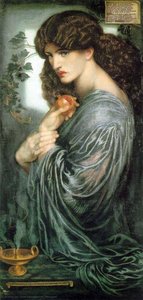
  42. Proserpine by Dante Gabriel Rossetti, 1874, Tate Gallery
    42

    61 × 125 cm1874Oil on canvasTate Gallery, London

    The central figure, draped in an elegant, flowing blue garment, gazes out with a look that captures the very essence of longing and quiet resignation.

    Oil painting from $170 Print — from $42

  43. Declaration of Independence by John Trumbull, 1817, United States Capitol
    43

    366 × 549 cm1817Oil on canvasUnited States Capitol, Washington, D.C.

    While Trumbull’s work possesses a certain neoclassical grandeur in its accuracy, there is an undeniable pulse of Romantic idealism flowing through his brushstrokes.

    Oil painting from $170 Print — from $42

  44. Cross in the Mountains by Caspar David Friedrich, 1808, Gemäldegalerie
    44

    115 × 110 cm1808Oil on canvasGemäldegalerie, Dresden

    The composition deliberately lacks a traditional foreground, drawing the viewer directly into the scene and fostering a sense of awe and isolation. Reflects the emotional turmoil and spiritual yearning inherent in the human condition.

    Detailscrossmountainspine trees

    Oil painting from $170 Print — from $42

  45. A Storm (Shipwreck) by J. M. W. Turner, 1805, Tate Gallery
    45

    171 × 240 cm1805Oil on canvasTate Gallery, London

    Created in 1805, "The Shipwreck" reflects a period marked by significant maritime activity and frequent shipwrecks. Reflects 19th-century Britain’s significant maritime trade and the inherent risks associated with sea travel.

    Oil painting from $295 Print — from $42

  46. Henri Iv Et Ses Enfants by Pierre Révoil
    46

    Oil on canvas

    Sunlight streams through a curtained window, casting a soft glow over a checkered floor that anchors this intimate scene. In the center of this quiet drama, a woman holds a small child, her posture radiating a quiet strength.

    Oil painting from $170 Print — from $42

  47. The Acrobats by Gustave Doré, 1874, Musée d'Art Roger-Quilliot
    47

    225 × 184 cm1874Oil on canvasMusée d'Art Roger-Quilliot, Clermont-Ferrand

    Doré’s work reflects this era's fascination with both the grandeur of the aristocracy and the struggles of the urban poor. Doré's illustrations were frequently commissioned for novels and religious texts, reflecting the Victorian obsession with storytelling and moral instruction.

    Detailsdetailed sceneobjects

    Oil painting from $170 Print — from $42

  48. El Gran Dragón Rojo y la Mujer Vestida de Sol by William Blake, 1805–1810, WahooArt.com
    48

    1805–1810Hand-painted oil reproductionWahooArt.com

    The composition immediately commands attention with its dramatic interplay of figures. Beneath this monstrous figure lies a woman, draped in radiant sunlight, symbolizing purity, divinity, and hope.

    Detailsred dragonwoman in sun

    Oil painting from $170 Print — from $42

  49. The Barque of Dante by Eugène Delacroix, 1822, Musée du Louvre
    49

    189 × 241.5 cm1822Oil on canvasMusée du Louvre, Paris

    The Barque of Dante, painted in 1822 by Eugène Delacroix, is a pivotal work marking the dramatic transition from Neoclassicism to Romanticism. Instead, he embraced emotion, drama, and a vibrant palette inspired by masters like Peter Paul Rubens and Titian.

    Detailsdamned Soulsriver Styxdante

    Oil painting from $220 Print — from $42

  50. The slave ship by J. M. W. Turner, 1840, Museum of Fine Arts
    50

    90.8 × 122.6 cm1840Oil on canvasMuseum of Fine Arts, Boston

    It was first exhibited at the Royal Academy in 1840. It was exhibited at the Royal Academy in 1840 to coincide with the World Anti Slavery Convention held in London.

    Oil painting from $170 Print — from $42

  51. Bathory at Pskov by Jan Matejko, 1872, Nicolaus Copernicus Museum
    51

    322 × 512 cm1872Oil on canvasNicolaus Copernicus Museum, Frombork

    The papal legate, Antonio Possevino, is also depicted, highlighting the role of the Catholic Church in these historical events. Jan Matejko (1838–1893) was a leading 19th-century exponent of history painting, known for depicting nodal events from Polish history.

    Detailspresence of papal legate Antonio Possevinoallegorical representation of historical events

    Oil painting from $570 Print — from $42

  52. The Sirens and Ulysses by William Etty, 1837, Manchester Art Gallery
    52

    297 × 442.5 cm1837Oil on canvasManchester Art Gallery

    The artist’s use of texture adds a tactile dimension to the viewing experience. Through thick, expressive brushstrokes and a rich application of paint, Etty achieves a sense of organic vitality.

    Oil painting from $220 Print — from $42

  53. Ophelia by John William Waterhouse, 1894
    53

    John William WaterhousePre-Raphaelite Romanticism

    Ophelia

    73 × 124 cm1894Oil on canvas

    Lily pads float serenely on the water's surface, mirroring Ophelia’s passive acceptance of her fate. A recurring motif in art associated with mourning and sorrow, the willow tree’s drooping branches mirror Ophelia's despair and foreshadow her drowning.

    Detailsfloral motifswillow

    Oil painting from $170 Print — from $42

  54. The Stages of Life (Die Lebensstufen) by Caspar David Friedrich, 1835, Museum der bildenden Künste
    54

    72 × 94 cm1835Oil on canvasMuseum der bildenden Künste, Leipzig

    The painting’s setting on a Baltic Sea port near Friedrich’s birthplace imbues it with personal significance, blending autobiographical elements with universal themes. Every element in this artwork is imbued with symbolic meaning.

    Detailsallegorical figuresmaritime sceneships at different distances

    Oil painting from $170 Print — from $42

  55. Asmodea by Francisco Goya, 1820–1823, Museo del Prado
    55

    Francisco GoyaRomanticism

    Asmodea

    123 × 265 cm1820–1823Oil on canvasMuseo del Prado, Madrid

    As one of Goya's last major works, it offers a glimpse into the artist's inner turmoil and his unique vision of the world. French soldiers take aim at a group of people, likely refugees fleeing from the war.

    Detailschaotic landscape belowred cloak of the female figurefrench soldiers aiming at refugees

    Oil painting from $195 Print — from $42

  56. Satan Summoning His Legions by Thomas Lawrence, 1797, Royal Academy of Arts
    56

    432 × 274 cm1797Oil on canvasRoyal Academy of Arts, UK

    Every element, from the strategically placed drapery to the various mythical creatures emerging from the darkness, contributes to the narrative of defiance.

    Detailsshadowchiaroscurodramatic light

    Oil painting from $170 Print — from $42

  57. Coalbrookdale by Night by Philip James de Loutherbourg, 1801, Science Museum
    57

    68 × 107 cm1801Oil on canvasScience Museum, London

    Abraham Darby’s pioneering use of coke smelting in 1709 revolutionized iron production, transforming the landscape of Britain's economy and ushering in an era of unprecedented industrial growth. The Madeley Wood Furnaces, depicted here, were at the forefront of this transformation.

    Detailsindustrial scene

    Oil painting from $170 Print — from $42

  58. Napoleon Bonaparte on the Battlefield of Eylau by Antoine-Jean Gros, 1808, The Louvre
    58

    521 × 784 cm1808Oil on canvasThe Louvre, Paris

    However, Gros’s deliberate inclusion of Napoleon's gesture—reaching out towards one soldier—suggests an affirmation of humanity amidst devastation. Napoleon on the Battlefield of Eylau - Wikipedia Napoleon Bonaparte on the Battlefield of Eylau by GROS...

    Oil painting from $170 Print — from $42

  59. The Leaping Horse by John Constable, 1825, Roy Miles gallery
    59

    142 × 187 cm1825Oil on canvasRoy Miles gallery, London

    This isn’t a static landscape; it’s imbued with an undeniable sense of energy and life. Executed in oil on canvas, “The Leaping Horse” measures 142 x 187 cm.

    Detailsatmospheric depthloose brushwork

    Oil painting from $170 Print — from $42

  60. Sea view by Ivan Aivazovsky, 1895
    60

    74 × 100 cm1895Oil painting

    It reflects the artist's lifelong engagement with the sea, a subject informed by his origins in the Crimean port of Feodosia, Ukraine. In 1850, he produced The Ninth Wave, a work focusing on the turbulent energy of the ocean.

    Oil painting from $170 Print — from $42

  61. The Lovers' Whirlwind by William Blake, 1824, Birmingham Museum and Art Gallery
    61

    374 × 530 cm1824Pen & ink, watercolorBirmingham Museum and Art Gallery

    Housed within the Birmingham Museum and Art Gallery, this monumental canvas—measuring an impressive 374 x 530 cm—commands attention not just for its scale but for the turbulent energy radiating from its central figures. The painting immediately plunges the viewer into chaos. Artists like Dante Gabriel Rossetti and Edward Burne-Jones drew inspiration from Blake's work, embracing similar themes of love, loss, and spiritual yearning.

    Detailsdemonsangels

    Oil painting from $170 Print — from $42

  62. Faust's Vision by Luis Ricardo Falero, 1878
    62

    145.4 × 117.5 cm1878Oil on canvas

    As they interact amidst swirling, turbulent clouds, there is an undeniable sense of movement—a rhythmic, almost ritualistic dance that suggests a moment frozen in time during a cosmic upheaval.

    Detailsa horsenude figuresbirds

    Oil painting from $320 Print — from $42

  63. The Stray Kitten by William Collins
    63

    Oil on panel

    The children lean inward, their bodies angled toward the animal, while the woman observes the group from a slight distance. Created in 1835, this work belongs to the tradition of genre painting, which focuses on scenes of everyday life.

    Oil painting from $220 Print — from $42

  64. Cathedral in Winter by Ernst Ferdinand Oehme, 1821, Staatliche Kunstsammlungen Dresden
    64

    127 × 100 cm1821Oil on canvasStaatliche Kunstsammlungen Dresden

    The ground is a white shroud, smoothing the edges of the earth. The following elements define the visual experience: The sharp, vertical lines of the flying buttresses against a pale sky.

    Oil painting from $170 Print — from $42

  65. The Appearance of Christ Before the People by Alexander Ivanov, 1847, Tretyakov Gallery
    65

    540 × 750 cm1847Oil on canvasTretyakov Gallery, Moscow

    He remained active in his craft until his death in 1858 at the age of 52. In the center of the composition, John the Baptist stands upon the banks of the River Jordan.

    Oil painting from $945 Print — from $42

  66. The Hülsenbeck Children by Philipp Otto Runge, 1805, Hamburger Kunsthalle
    66

    131 × 143 cm1805Oil on canvasHamburger Kunsthalle

    Created in 1805 by the renowned German Romantic artist Philipp Otto Runge, this work exemplifies the meticulous realism and emotional depth characteristic of early 19th-century European painting.

    Detailsnaturalistic color palettechildhood innocencefamilial bonds

    Oil painting from $220 Print — from $42

  67. Island of the Dead by Arnold Böcklin, 1886, Museum der bildenden Künste
    67

    Arnold BöcklinSymbolist Romanticism

    Island of the Dead

    80 × 150 cm1886PaintingMuseum der bildenden Künste, Leipzig

    This technique, honed during Böcklin’s time studying at the Düsseldorf Academy, contributes significantly to the painting's dreamlike quality. A Silent Chorus The dark cypress trees are perhaps the most potent symbol within the painting.

    Detailslight/shadow

    Oil painting from $170 Print — from $42

  68. Prize Sheep by William Henry Davis
    68

    55 × 68 cmOil on canvas

    The scene unfolds through William Henry Davis's Prize Sheep, an oil on canvas that captures a quiet moment of agricultural pride. This meticulous attention to detail brings a tangible quality to the animal's massive stature and the man's steady grip.

    Oil painting from $170 Print — from $42

  69. Snowdon from Capel Curig by John Finnie, 1870, Walker Art Gallery
    69

    90 × 150 cm1870Oil on canvasWalker Art Gallery, Liverpool

    The mountains rise from the earth with a heavy, silent permanence. Trees are scattered across the landscape, their dark forms anchoring the composition against the shifting light of the clouds.

    Oil painting from $170 Print — from $42

  70. Cenotaph to the Memory of Sir Joshua Reynolds by John Constable, 1836, National Gallery
    70

    132 × 108 cm1836Oil on canvasNational Gallery, London

    Represents reverence and contemplation The Urn Symbol: Represents mortality and remembrance Completed in 1836, Cenotaph marks a pivotal moment in Constable’s artistic career—the culmination of his lifelong devotion to capturing the essence of English landscape.

    Oil painting from $170 Print — from $42

  71. Seacape with Full Moon by Ivan Aivazovsky, 1857–1858, Sakıp Sabancı Museum
    71

    64 × 95.5 cm1857–1858Oil on canvasSakıp Sabancı Museum, Istanbul

    Aivazovsky firmly belonged to the Romantic movement, a period characterized by an intense emotional response to nature. The full moon itself is a potent symbol within the painting.

    Detailsfull moon glow

    Oil painting from $170 Print — from $42

  72. The Dreamer by Caspar David Friedrich, 1840, Hermitage Museum
    72

    27 × 21 cm1840Oil on canvasHermitage Museum, Saint Petersburg

    The stone arches add an architectural element, while the man's contemplative pose suggests a deep connection with nature. The Gothic arches symbolize transition, memory, and the passage of time.

    Oil painting from $170 Print — from $42

  73. Great Day of His Wrath by John Martin, 1851, Tate Britain
    73

    303 × 196 cm1851Oil on canvasTate Britain, London

    The scene captures the precise moment of biblical apocalypse, where the heavens fracture and the earth itself seems to dissolve into fire and shadow.

    Oil painting from $170 Print — from $42

  74. Titania and Bottom with the Ass's Head by Henry Fuseli
    74

    Oil paint on canvas

    This collision of opposites explores themes of love, madness, and the unpredictable power of dreams.

    Oil painting from $220 Print — from $42

  75. The Colossus by Francisco Goya, 1812, Museo del Prado
    75

    116 × 105 cm1812OilMuseo del Prado, Madrid

    Created during the Romantic period, this painting exemplifies the movement’s emphasis on emotion, drama, and individual expression. The limited yet powerful color palette, dominated by dark tones punctuated with warm highlights, intensifies the mood of tension and reverence.

    Detailsstormy skydramatic contrastmuscular detail

    Oil painting from $195 Print — from $42

  76. La Grande Galerie du Louvre by Hubert Robert, 1795, The Louvre
    76

    37 × 41 cm1795Oil on canvasThe Louvre, Paris

    Painted between 1794 and 1796, during a period of immense social and political upheaval, this black-and-white image captures an atmosphere both serene and subtly charged with the energy of a nation undergoing transformation.

    Detailsvisionariesruins

    Oil painting from $170 Print — from $42

  77. The Apotheosis of Homer by Jean-Auguste-Dominique Ingres, 1827, The Louvre
    77

    386 × 512 cm1827Oil on canvasThe Louvre, Paris

    Ingres eschews strict realism in favor of a deliberately flattened perspective, prioritizing the overall narrative impact over photographic accuracy. Even seemingly minor details—the instruments of musical composition, the scrolls containing Homer’s epics—contribute to the painting's complex web of meaning.

    Detailsmourningwinged figure

    Oil painting from $570 Print — from $42

  78. Paddle Steamer 'countess of Lonsdale' by Joseph Heard
    78

    Oil

    At the heart of the tumult, the paddle steamer Countess of Lonsdale cuts through the choppy waters, its two smokestacks exhaling thick plumes of dark smoke into a sky heavy with the weight of an impending storm.

    Oil painting from $170 Print — from $42

  79. Erastus Torrey by Samuel Finley Breese Morse, 1816
    79

    1816Oil on canvas

    The sitter sits with hands clasped, a posture of quiet gravity that defines the early 19th-century portrait. The composition focuses heavily on the individual, utilizing a dark, formal palette to emphasize the subject's presence.

    Oil painting from $170 Print — from $42

  80. Shipping off Greenock by Robert Salmon, 1818
    80

    39 × 64 cm1818Oil on panel

    The composition includes boats of various sizes and positions, ranging from large vessels in the foreground to smaller boats scattered throughout the water. This work is currently held at the McLean Museum and Art Gallery in Scotland.

    Oil painting from $170 Print — from $42

  81. The Path through the Woods by Ivan Shishkin, 1880, The State Russian Museum
    81

    59 × 48 cm1880Oil on canvasThe State Russian Museum, St. Petersburg

    It is an image steeped in tranquility, where the dappled light filtering through the canopy seems to illuminate not just the forest floor, but the very spirit of contemplation. Shishkin, whose career was so deeply intertwined with the depiction of Russian nature, possessed an unparalleled ability to render atmosphere.

    Oil painting from $170 Print — from $42

  82. Hecate by William Blake
    82

    William BlakeRomanticism

    Hecate

    Watercolor

    The artwork depicts Hecate, the Greek goddess of magic, witchcraft, crossroads, and the unseen world. Blake rejected the prevailing Neoclassical style, favoring instead a deeply personal and symbolic approach to art.

    Detailsthree-faced figure symbolizing the moon's phases

    Oil painting from $195 Print — from $42

  83. Skarga`s Sermon by Jan Matejko, 1864, National Museum in Warsaw
    83

    224 × 397 cm1864Oil on canvasNational Museum in Warsaw

    As a work of historical painting, it was designed to stir the soul and remind the viewer of the complexities of the Polish spirit.

    Oil painting from $170 Print — from $42

  84. Winter Landscape by Caspar David Friedrich, 1811, Staatliches Museum Schwerin
    84

    32.5 × 45 cm1811Oil on canvasStaatliches Museum Schwerin

    The scene is a somber, snow-covered woodland, where the earth is draped in heavy, white mantles that smooth over the rugged terrain. The light is low and diffused, as if filtered through a heavy, overcast night or a moonlit sky.

    Oil painting from $170 Print — from $42

  85. Napoleon Bonaparte Visiting the Plague-stricken at Jaffa by Antoine-Jean Gros, 1799, The Louvre
    85

    523 × 715 cm1799Oil on canvasThe Louvre, Paris

    Notably, the composition borrows heavily from Jacques-Louis David’s “Oath of the Horatii,” employing a similar three-tiered arrangement to emphasize the importance of the central action – Napoleon's touch.

    Detailsred clothinghorse

    Oil painting from $170 Print — from $42

  86. Man Proposes, God Disposes by Edwin Landseer, 1864, Royal Holloway
    86

    91 × 244 cm1864Oil on canvasRoyal Holloway, Egham

    In this frozen expanse, two polar bears dominate the landscape, their massive forms creating a sense of raw, primal energy. One bear stands tall upon the rocks, its powerful silhouette etched against the distant, hazy mountains.

    Oil painting from $170 Print — from $42

  87. The Grand Canal, Venice by J. M. W. Turner, 1835, Metropolitan Museum of Art
    87

    91 × 122 cm1835Oil on canvasMetropolitan Museum of Art, New York

    Turner, already a celebrated figure in the Romantic movement, was deeply fascinated by Venice. “The Grand Canal” is steeped in symbolism, reflecting Turner's broader artistic concerns. Venice itself represents a fading empire—a city of beauty and grandeur facing decline.

    Oil painting from $170 Print — from $42

  88. The Alchymist by Joseph Wright of Derby, 1771, Derby Museum and Art Gallery
    88

    127 × 101.6 cm1771Oil on canvasDerby Museum and Art Gallery

    First exhibited in 1771, the work captures a specific moment of scientific transition. One hand rests upon his knee while the other is held parallel to the earth.

    Oil painting from $270 Print — from $42

  89. The Blind Girl by John Everett Millais, 1856, Birmingham Museum and Art Gallery
    89

    62 × 82 cm1856Oil on canvasBirmingham Museum and Art Gallery

    This dedication to realism was a deliberate rebellion against the idealized representations favored by earlier artistic traditions. The women themselves, positioned close together, suggest intimacy and companionship.

    Detailssymbolismbirds

    Oil painting from $170 Print — from $42

  90. The Magic Flute Opera by Karl Friedrich Schinkel, Kupferstichkabinett
    90

    61 × 46 cmWatercolor/gouacheKupferstichkabinett, Berlin

    The opera’s intricate symbolism is deeply rooted in Freemasonry, a fraternal organization popular among intellectuals and artists of the time. The design’s remarkable symmetry—a hallmark of Schinkel's style—immediately establishes a sense of order and stability.

    Detailssymmetrycontrast hues

    Oil painting from $170 Print — from $42

  91. HMS Black Joke by Nicholas Matthews Condy
    91

    Likely oil paints on canvas or paper

    The ocean stretches out in a muted, grayscale expanse, a vast stage for a sudden and violent encounter. Two vessels dominate the center of the frame, their silhouettes cutting through the calm, heavy air.

    Oil painting from $195 Print — from $42

  92. Dobozi and his Spouse by Viktor Madarász, 1868, Hungarian National Gallery
    92

    116 × 310 cm1868Oil on canvasHungarian National Gallery, Budapest

    The composition utilizes a wide horizontal format, with the low line of clouds at sunset emphasizing the deadly speed of the race. The work reflects the influence of French Romanticism, specifically the dramatic energy found in the works of Delacroix.

    Oil painting from $170 Print — from $42

  93. Le château de Bomy by Narcisse Berchère
    93

    Oil paint on canvas

    In the foreground, a dirt path winds toward a cluster of grazing cows, their forms rendered with loose, organic shapes. A small stream cuts through the lower terrain, its movement suggested by subtle shifts in color.

    Oil painting from $220 Print — from $42

  94. The Monk by the Sea by Caspar David Friedrich, 1800, Alte Nationalgalerie
    94

    110 × 171.5 cm1800Oil on canvasAlte Nationalgalerie, Berlin

    This arrangement emphasizes the scale of the natural world against the smallness of the human presence. The work belongs to the German Romantic tradition, focusing on the emotional weight of the landscape.

    Oil painting from $170 Print — from $42

  95. Ulysses and the Sirens by John William Waterhouse, 1891, National Gallery of Victoria
    95

    201 × 100 cm1891Oil on canvasNational Gallery of Victoria, Melbourne

    This oil painting is housed at the National Gallery of Victoria in Melbourne, Australia. The artwork measures 201 x 100 cm and is a quintessential example of Romanticism.

    Oil painting from $170 Print — from $42

  96. Charles IV of Spain and his family by Francisco Goya, 1800, Museo del Prado
    96

    280 × 336 cm1800Oil on canvasMuseo del Prado, Madrid

    The painting served not only as a formal portrait but also as a reflection of the Spanish monarchy's image during this turbulent era. However, Goya departs from the strict formality often seen in royal portraits.

    Oil painting from $170 Print — from $42

  97. Portrait of the Artist's wife by Ivan Aivazovsky, 1882, Feodosia National Gallery I. K. Aivazovsky
    97

    73 × 62 cm1882Oil on canvasFeodosia National Gallery I. K. Aivazovsky, Feodosiia

    The painting titled Portrait of the Artist's Wife Anna Burnazyan was executed by the artist Ivan Aivazovsky in 1882. The subject is identified in historical records as Anna Burnazyan-Sarkisova.

    Oil painting from $170 Print — from $42

  98. Reverend Dr Robert Walker (1755–1808) Skating on Duddingston Loch by Henry Raeburn, 1795, Scottish National Gallery
    98

    76 × 64 cm1795Oil on canvasScottish National Gallery, Edinburgh

    Behind him, the landscape stretches toward distant, rugged mountains, their peaks softened by the pale light of a Scottish sky. It is a study of movement held in suspense, a single breath caught before the skater completes his turn.

    Oil painting from $170 Print — from $42

  99. The Destruction of Jerusalem by Titus by Wilhelm von Kaulbach, 1846, Neue Pinakothek
    99

    585 × 705 cm1846Oil on canvasNeue Pinakothek, Munich

    The composition employs diagonals and curves that guide the eye across the densely populated figures, emphasizing the chaos and divine presence within the narrative.

    Detailsdramatic compositiondivine figureschaos

    Oil painting from $345 Print — from $42

  100. Ship 'earl of Lonsdale' in a Storm Off Whitehaven by Joseph Heard
    100

    Oil

    The ship’s sails are tattered, snapping like broken wings in the gale. Dark clouds press down from a bruised sky, pierced by sudden streaks of lightning. This tactile approach makes the salt air feel heavy and damp.

    Oil painting from $170 Print — from $42

Index

Famous Romanticism paintings by sub-movement

Locations

Where the famous Romanticism paintings are

100 paintings: 12 in Paris, 9 at the The Louvre.

Artists

Most represented Romanticism painters

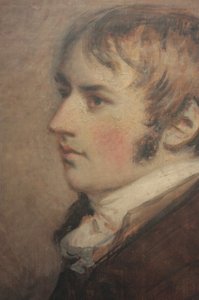
Portrait of J. M. W. Turner

J. M. W. Turner

1775–1851 · United Kingdom · 6

British Romanticist of luminous landscapes and turbulent seascapes, using expressive color and light to capture the raw power of nature.

14. Fishermen at Sea, 19. Rain Steam and Speed, the Great Western Railway, 27. The Fighting 'Temeraire', 45. A Storm (Shipwreck), 50. The slave ship, 87. The Grand Canal, Venice

Portrait of Eugène Delacroix

Eugène Delacroix

1798–1863 · France · 5

French Romantic leader known for dramatic color, loose brushwork, and intense emotional energy in scenes of revolution and North African life.

1. Liberty Leading the People, 4. Liberty Leading the People, 12. Death of Sardanapalus, 21. The Massacre at Chios, 49. The Barque of Dante

Portrait of Ivan Aivazovsky

Ivan Aivazovsky

1817–1900 · Ukraine · 5

Russian Romantic marine painter of luminous, translucent waves and dramatic, moonlit seascapes.

9. The Ninth Wave, 35. Lunar night on Capri, 60. Sea view, 71. Seacape with Full Moon, 97. Portrait of the Artist's wife

Portrait of William Blake

William Blake

1757–1827 · United Kingdom · 5

English Romantic visionary known for mystical illuminated prints and symbolic relief etching, blending poetry and image into a single form.

18. Newton, 41. Elohim Creating Adam, 48. El Gran Dragón Rojo y la Mujer Vestida de Sol, 61. The Lovers' Whirlwind, 82. Hecate

Portrait of John Constable

John Constable

1776–1837 · United Kingdom · 4

British Romantic landscape painter of the Stour Valley, known for textured impasto and capturing the shifting light of the English countryside.

5. The Hay Wain, 29. The Cornfield, 59. The Leaping Horse, 70. Cenotaph to the Memory of Sir Joshua Reynolds

+46more painters represented Top Romanticism Artists Ranked list

FAQ

Famous Romanticism paintings — FAQ

Point at a question for the answer.

What are the top 10 Romanticism paintings?

Can I own a copy of a famous Romanticism painting?

100 of these 100 paintings are available hand-painted in oil, from $170, and 100 as a canvas print, from $42.

What techniques were used in Romanticism paintings?

92 of the 100 are oil paintings, 0 use tempera and 0 are frescoes; 2 are painted on wood and 85 on canvas.

Where can I see the most famous Romanticism paintings?

Most of them are in Paris (12), London (12) and Madrid (9). The museums with the most are the The Louvre, the Museo del Prado and the National Gallery.

How is this ranking made?

By recognition: Wikipedia articles in the most languages (Wikidata sitelinks), our manual ranking and page visits. Several records of one painting count once; details, copies and studies are excluded.

Order

100 paintings available as oil reproductions

100 of the 100 are in stock as hand-painted oil reproductions, from $170. Trade and volume orders welcome.

Liberty Leading the People by Eugène DelacroixSaturn Devouring His Son by Francisco GoyaThe Raft of the Medusa by Théodore GéricaultLiberty Leading the People by Eugène DelacroixThe Hay Wain by John Constable

Shop Romanticism paintings

Ranking method

Which paintings: all Romanticism paintings in our catalogue. In which order: the best-known first — counted by Wikipedia articles in different languages, our own ranking and page visits. Each painting once; no details, copies or studies.

Other movements

Paintings by period